



Nvidia’s RTX Spark and Qualcomm’s Snapdragon X2 Elite are shaping up to be two very different answers to the same question: what kind of chip should power the next wave of AI focused Windows PCs? Early signs suggest Nvidia has the stronger option for AI content creation, graphics work, and gaming, while Qualcomm may have the advantage in everyday productivity and agent based AI tasks.
The comparison matters because Windows on Arm is no longer only a laptop story. At Computex, Arm powered Windows mini PCs became a much bigger part of the conversation, especially as Microsoft, Nvidia, Qualcomm, and PC makers prepare for more local AI workloads.
These systems are not just meant to run office apps. They are expected to handle AI agents, local model inference, AI assisted content creation, productivity tools, and in some cases gaming. That makes the choice of chip more complicated than simply asking which one has the fastest CPU or GPU.
RTX Spark and Snapdragon X2 Elite are both Arm based platforms, but they are built for different strengths.
Qualcomm looks stronger for CPU focused work
Qualcomm’s Snapdragon X2 Elite Extreme uses custom Oryon Gen 3 CPU cores. That gives Qualcomm more control over CPU design compared with a more standard Arm core layout. The highest end version runs at up to 4.4GHz and includes 18 cores.
Nvidia’s RTX Spark platform, meanwhile, uses the N1X CPU, developed with MediaTek. It reportedly combines 10 Cortex X925 extreme cores with 10 Cortex A725 performance cores. That gives Nvidia a large 20 core layout, but not every core is equally powerful.
| Category | Likely advantage | Reason |
|---|---|---|
| Single core CPU work | Snapdragon X2 Elite | Strong custom Oryon cores |
| General productivity | Snapdragon X2 Elite | Better fit for browser, Office, and responsiveness |
| Agentic AI control tasks | Snapdragon X2 Elite | CPU may matter more for agent coordination |
| Graphics performance | RTX Spark | RTX 5070 class integrated GPU |
| AI content creation | RTX Spark | Nvidia GPU, CUDA ecosystem, large shared memory |
| Gaming | RTX Spark | Stronger GPU and Nvidia developer support |
Single core performance could be the key advantage for Qualcomm. Productivity apps, browser responsiveness, spreadsheet work, and many everyday tasks still depend heavily on strong single core output. Early numbers suggest Snapdragon X2 Elite Extreme could sit close to Apple’s M4 Pro in Geekbench 6 single core results, which would make it very strong for a compact Windows system.
That could also help with agentic AI. AI agents do not always rely only on GPU power. They often involve repeated decision making, tool use, planning, and task coordination, where CPU responsiveness may matter. If that becomes a major category for Windows PCs, Qualcomm could have a real edge.
Nvidia should win easily in graphics and AI creation
The RTX Spark platform looks much stronger on the GPU side. Nvidia’s chip includes 6,144 Blackwell RTX cores, putting it roughly in RTX 5070 class territory. That is far beyond what Qualcomm’s integrated graphics are expected to deliver.
That advantage matters for gaming, but it may matter even more for AI creation. Video editing, image generation, local model work, 3D workflows, and accelerated creative apps already lean heavily on Nvidia hardware. Nvidia has spent years building relationships with developers and optimizing software around CUDA, RTX, DLSS, and AI acceleration.
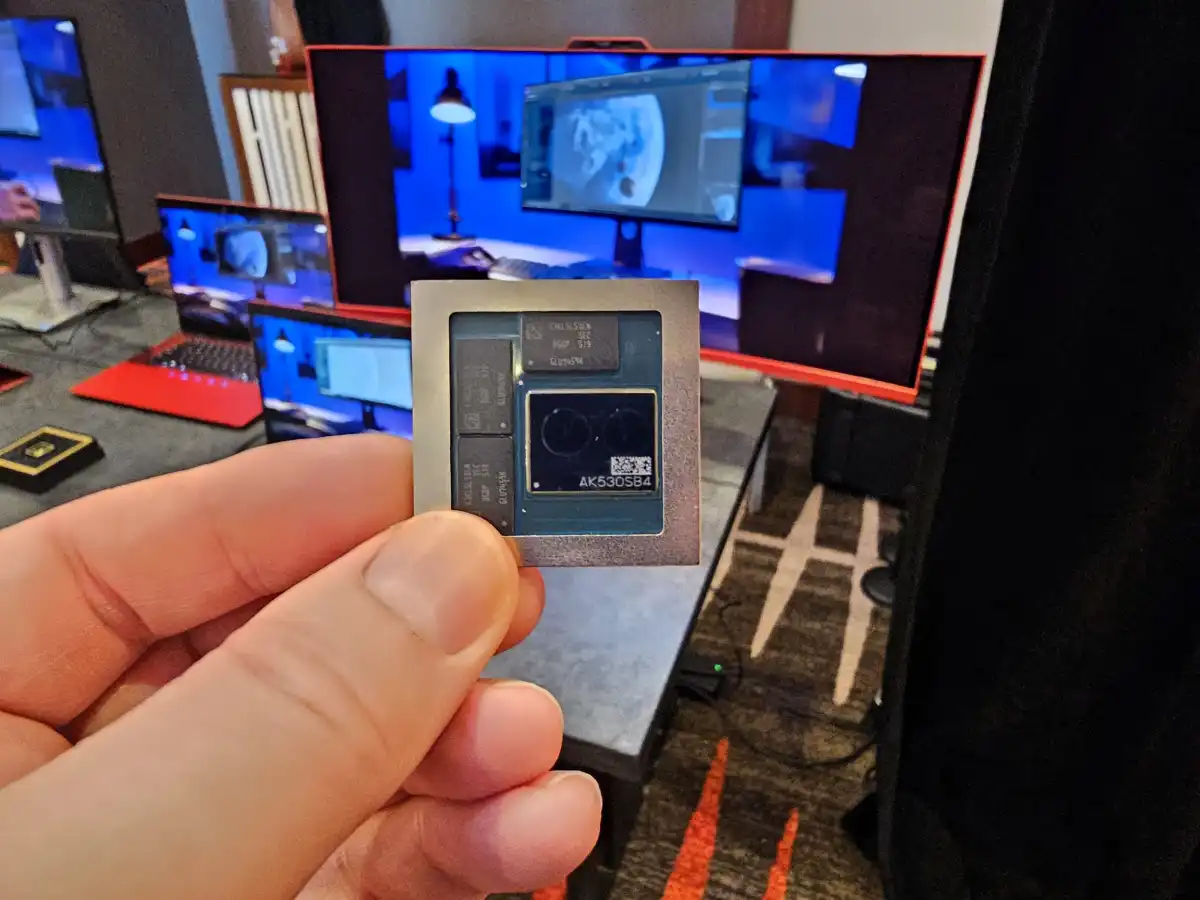
Qualcomm has made progress, and its second generation Windows on Arm gaming performance appears much better than before. But it is still not likely to compete with Nvidia in raw GPU performance.
The RTX Spark platform also benefits from 128GB of shared embedded memory. That could make a big difference for local AI workloads, especially when running larger models or working with AI based creative tools.
For people who want a mini PC that can generate images, edit video, run local AI models, or play games, RTX Spark looks like the safer bet.
Compatibility remains the shared question
Both chips face the same larger challenge: Arm compatibility on Windows. The situation is much better than it used to be. Microsoft 365, many Adobe apps, browsers, VPNs, and common productivity tools now run natively or well through emulation.
Still, not everything works perfectly. Some apps remain unavailable on Arm, while others run through Microsoft’s Prism emulation with reduced performance. That may not matter for basic work, but it can matter for professional apps, older tools, games, and specialized utilities.
Gaming is more complicated. Most PC games are still built for x86 processors. Arm systems can run many games through emulation, but compatibility with anti cheat, DRM, drivers, and performance layers can vary. Nvidia’s strong GPU helps RTX Spark, but it cannot fully erase every software issue caused by Arm translation.
For AI apps, Nvidia again has the clearer advantage. Many AI tools are built around CUDA and Nvidia GPUs. Qualcomm can use ONNX, its NPU, and optimized software paths, but power users are more likely to find immediate support on Nvidia hardware.
The better chip depends on what you want your AI PC to do
There is no single winner for every buyer. Snapdragon X2 Elite looks like a better fit for people who want a responsive, efficient, productivity focused mini PC. It could be ideal for office work, web apps, multitasking, light AI features, and agent based workflows.
RTX Spark looks better for people who want a small but powerful AI creation box. If your work involves graphics, gaming, video, 3D, local AI models, or accelerated creative apps, Nvidia’s GPU advantage is hard to ignore.
Price and power use will also matter. A mini PC with RTX Spark may be more powerful, but it could cost more and consume more energy. A Snapdragon X2 Elite mini PC may be more efficient and practical for everyday work, but it may not satisfy creators who need GPU horsepower.
The broader story is that Windows PCs are entering a more competitive phase. AMD, Intel, Nvidia, and Qualcomm will all have distinct CPU and GPU approaches in the market. That gives buyers more choice, but it also makes the buying decision more specific.
For now, the early read is clear. Choose Snapdragon X2 Elite if you want a fast, efficient productivity machine with strong CPU performance. Choose RTX Spark if you want a compact AI creation and graphics machine with serious GPU power. The real winner will depend on pricing, software support, and how well these systems perform once they reach full testing.



Discussion (0)
Be the first to comment.