In the Fall of 2019, we tested Sony Xperia 10. It was an interesting mid-range smartphone that featured an ultrawide 21:9 screen, which was (and still is) something different from what you get on most Android smartphones. This year, Sony has released the Xperia 10 II, which comes with a newer chipset, more RAM, a triple-camera system instead of a dual-camera one, a larger battery, and an OLED display that keeps the same 21:9 wide aspect ratio. Do these upgrades make the new version of Xperia 10 better than the initial model? Read this review to see what the new Sony Xperia 10 II has to offer:
Sony Xperia 10 II: Who is it good for?
Sony Xperia 10 II is a good choice for people who:
Like watching movies and fancy a 21:9 cinematic OLED screen
Want a smartphone that looks good, is well built, and has dust and water resistance certifications
Are looking for a mid-range Android that stands out of the crowd
Pros and cons
Here are some of the best things about the Sony Xperia 10 II:
Beautiful design, and above-average build quality
Dust and water-resistance P65/68 certifications
It has a wide 21:9 OLED display that's rare in the world of Android smartphones
The hardware is good enough for all the apps commonly used on smartphones
The hybrid power button/fingerprint reader is a nice touch
It comes with Android 10 and an almost stock experience (no bloatware included)
The battery is large enough to give you at least a day of use between charges
There are also some downsides to consider:
Gaming is not great on the Xperia 10 II
At a similar price, you can find alternatives with better hardware or cameras
Product rating4/5
Verdict
Sony Xperia 10 II made a good impression during testing. We like the way it looks and its solid build quality. The fact that it's also certified for Ingress Protection against dust and water is an added benefit that you don't often see on mid-range Android smartphones. What we like most about the Sony Xperia 10 II is its ultrawide 21:9 OLED screen that looks gorgeous and gives you a lot of space without making the smartphone feel large. If you're looking for a mid-range Android smartphone but are not particularly interested in gaming or top-notch photography, the Sony Xperia 10 II is a good choice that you should consider.
Unboxing the Sony Xperia 10 II
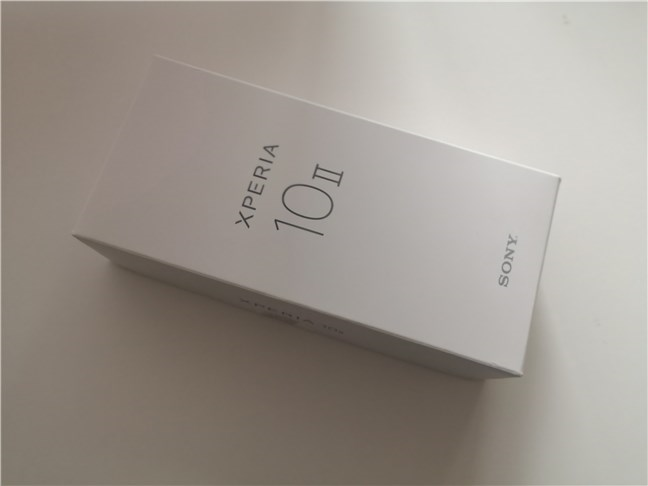
The Sony Xperia 10 II Android smartphone is packaged in a neat and minimalistic white cardboard box. On the top of the box, you see the Xperia 10 II name and the Sony brand printed in elegant light gray font.
The box of the Sony Xperia 10 II
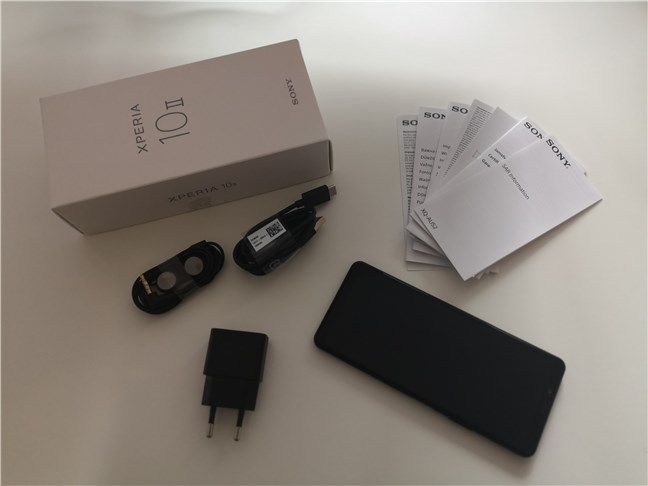
Inside the box, you find the smartphone, a travel charger, a detachable USB 2.0 Type-A to Type-C cable, a pair of black in-ear headphones, the user manual, warranty card, and other leaflets.
Sony Xperia 10 II: What's inside the box
Unboxing the Sony Xperia 10 II is a pleasant experience, and the box has everything you need, including a pair of headphones, which is rare these days.
Design and build quality
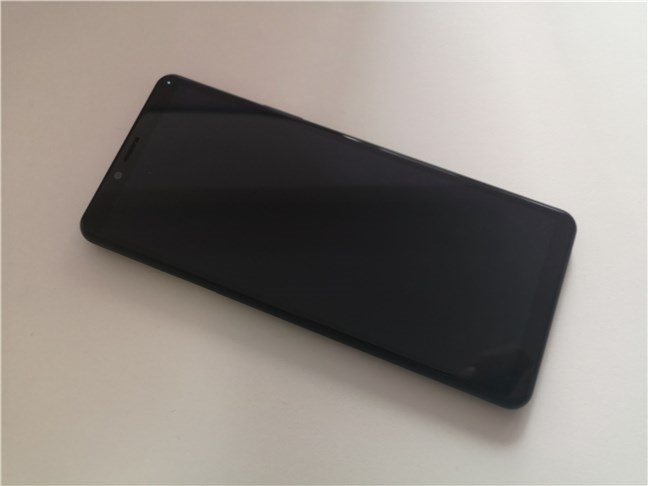
The Sony Xperia 10 II follows the same design principles we've seen on the first iteration of this model. It comes with a cinematic 21:9 display that's great for movies but also makes the phone longer than most people are accustomed to. It reminds us of the old HTC smartphones, and we like this aspect ratio. However, some people might not feel the same way as we do, because the elongated body of the Xperia 10 II might not fit in every pocket. 🙂
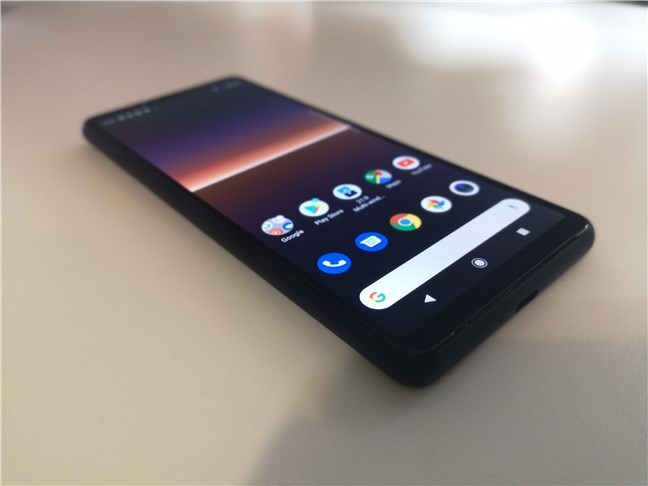
The Sony Xperia 10 II
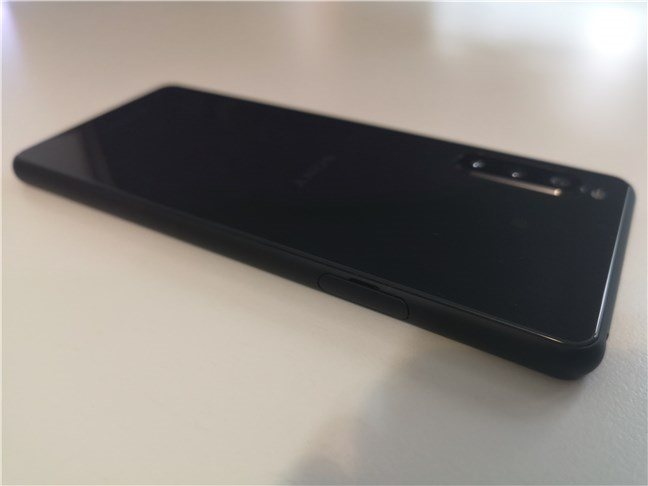
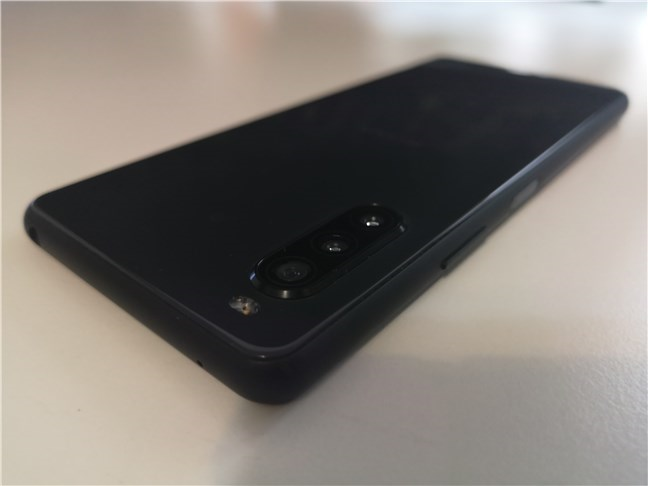
Sony Xperia 10 II is also thin and lightweight. That's because its body is made of plastic materials covered in glass not only on the display but also on its backside. The edges of the smartphone seem to be made of metal but are soft and silky at touch, black colored, and slightly rounded. It doesn't brag with rounded screen edges like many smartphones do, and it doesn't have a fancy no-bezels screen. You could say that the Xperia 10 II keeps everything traditional.
Sony Xperia 10 II: View from the back
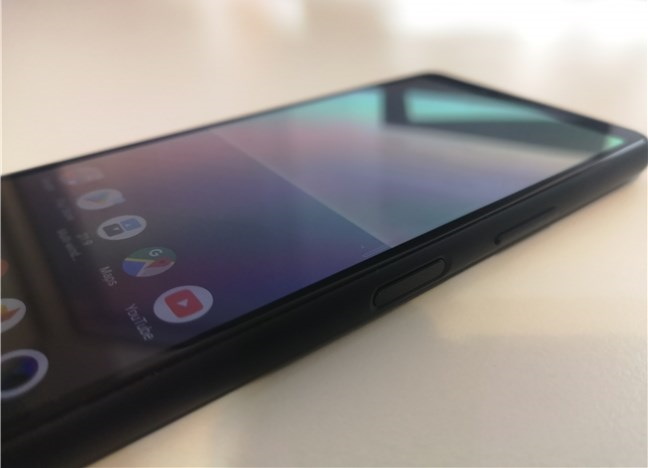
The controls are also conservative: both the volume rocker and the power button are found on the right edge of the smartphone. What's interesting is that Sony chose to combine the power button with the fingerprint reader, creating a hybrid of sorts. Touching the power button makes the smartphone read your fingerprint (if you've added it) while pressing it acts as a power switch. We like this approach and find it more useful than any back or under-the-display fingerprint reader.
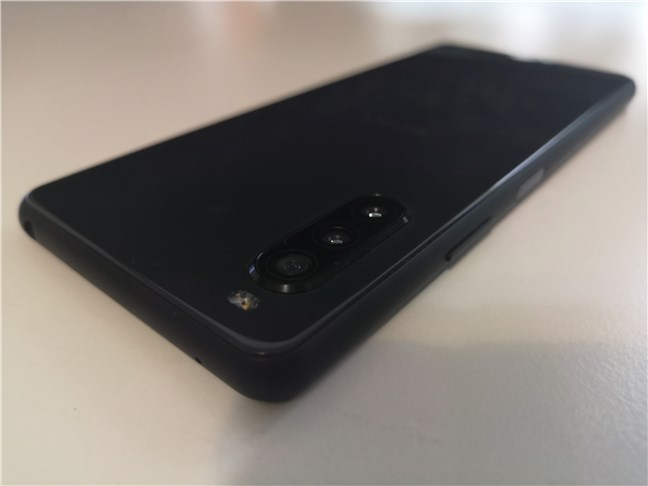
Sony Xperia 10 II: The triple-camera system
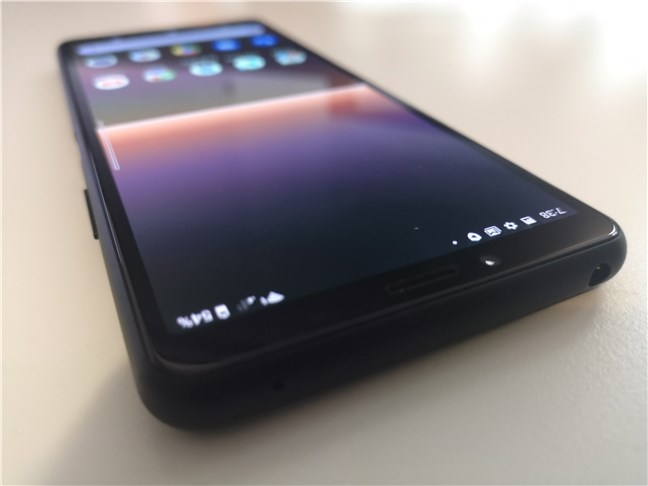
One other thing that you don't often see on modern smartphones, but the Sony Xperia 10 II has, is a 3.5 mm audio jack. It's found on the top edge, and many people - us included - will be happy about it.
Sony Xperia 10 II: The top bezel
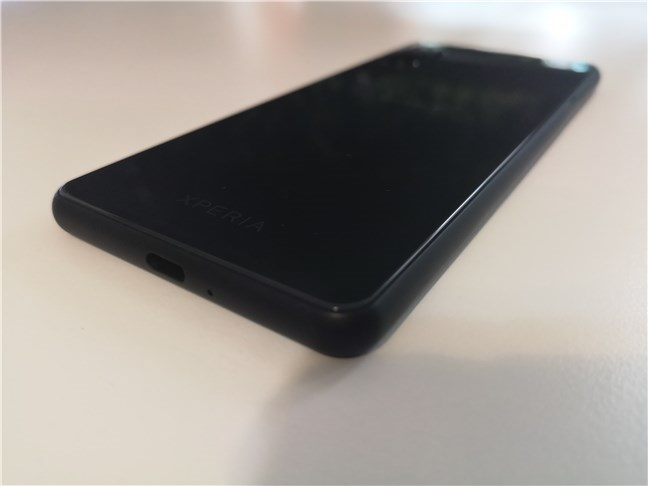
The SIM card and/or microSD slot is the only thing found on the left edge of the smartphone, while the bottom edge holds just the USB-C port and a microphone hole.
Sony Xperia 10 II: The bottom edge
Unfortunately, although the 21:9 screen is excellent for watching movies, the Sony Xperia 10 II comes with just one loudspeaker. It's placed on the bottom bezel of the screen, right on the edge. Seeing that the top bezel is also quite large, we're wondering why Sony did not put a second loudspeaker there also.
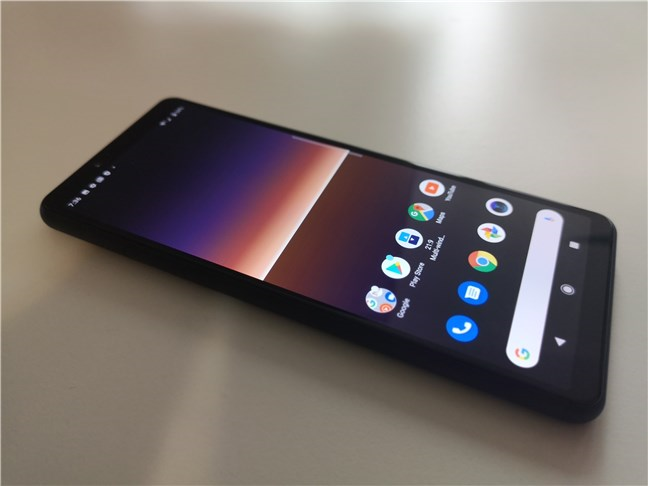
Sony Xperia 10 II: Perspective view
What might make the difference between the Sony Xperia 10 II and other Android smartphones with similar prices and specs is the fact that it's dust and water-resistant. It was tested and certified both for IP65 and IP68, which is something pretty rare for smartphones in this price segment.
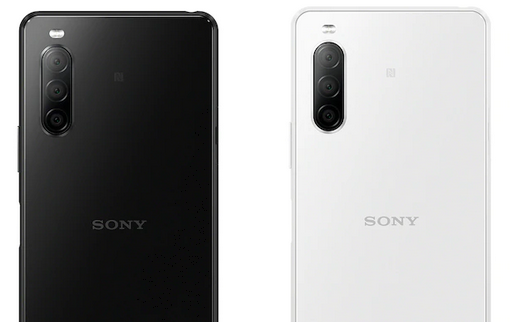
Finally, before we move on to the hardware specs section of the review, we'd also like to point out that the Sony Xperia 10 II is available in black and white color variations, and both look stylish. The one we tested was the black one.
Sony Xperia 10 II: Black and white color variations
The Xperia 10 II looks good and feels reliable, just as you'd expect from any device made by Sony. Although its design is rather traditional, the 21:9 cinematic display and the power/fingerprint hybrid button make it stand out of the crowd. Also, the IP65/68 certifications ensure you that this smartphone is well built.
Hardware specifications
Sony Xperia 10 II features a 6-inch OLED display with a cinematic ultra-wide 21:9 aspect ratio. Its Full HD+ resolution of 1080 x 2520 pixels gives a high pixel density of about 457 ppi, which means that any images and fonts shown on it are detailed and smooth. The screen is protected by Gorilla Glass 6 against superficial scratches and drops from small heights. Compared to its predecessor - Sony Xperia 10 - it has a better display (OLED vs. IPS) and a newer version of Gorilla Glass (version 6 vs. 5).
A look at the Sony Xperia 10 II
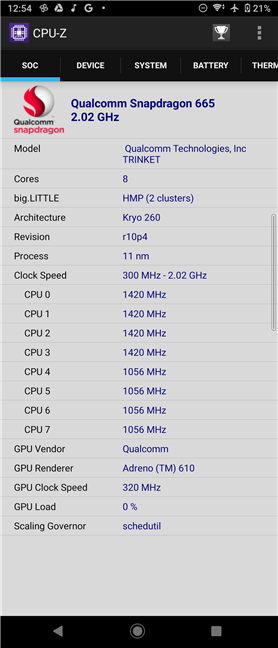
The Xperia 10 II uses a Qualcomm SDM665 Snapdragon 665 chipset with an octa-core processor running at a speed of up to 2 GHz. The graphics are handled by an Adreno 610 GPU that supports Vulkan 1.0 and 1.1, OpenGL ES 3.2, OpenCL 2.0, and Direct3D 12.
The chipset found on the Sony Xperia 10 II
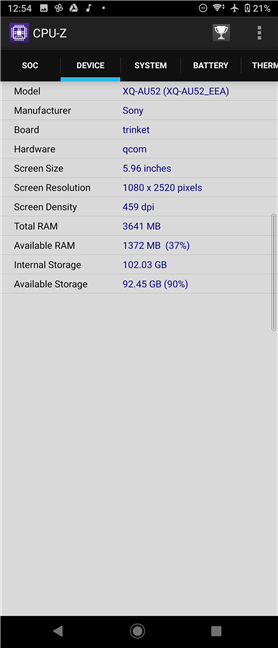
The Sony Xperia 10 II comes with 128 GB of internal storage memory and 4 GB of RAM and also supports microSD cards of up to 1TB in size. Compared to the first Sony Xperia 10, you get 1GB more RAM and double the size of the flash storage. It's quite an improvement!
Hardware details about the Sony Xperia 10 II
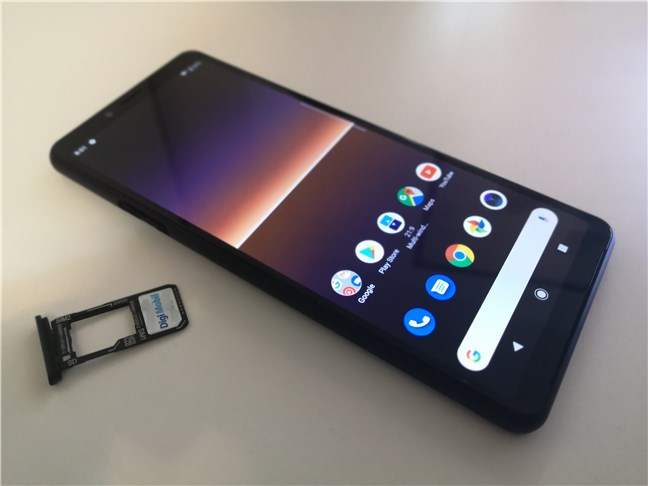
Sony Xperia 10 II is sold in two versions: a single SIM variant, and a dual SIM one. The Dual-SIM version uses a Dual SIM Dual Standby implementation, meaning that both SIM cards are active when you're not using them, but once you take a call on one SIM, the other one becomes inactive. Both variants of the Sony Xperia 10 II use Nano-SIM cards. On the Dual SIM model, the slot for the second SIM is a hybrid one, meaning that you can either use it for a SIM or a microSD card.
Sony Xperia 10 II's SIM and microSD cards tray
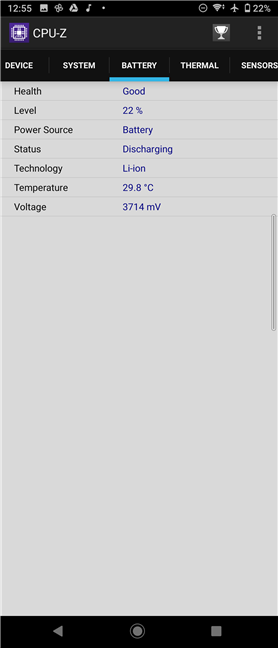
As for its autonomy, the Sony Xperia 10 II comes with a non-removable Li-Ion battery with a rated capacity of 3600 mAh, which is 700 mAh more than the first Sony Xperia 10. It also supports Qualcomm Quick Charge 3.0 at up to 18W. Unfortunately, the bundled Sony UCH20 travel charger doesn't support fast charging. So, if you want rapid charging for the Xperia 10 II, you need to buy a charger that supports that, like a Sony UCH32C.
Details about the battery found inside the Sony Xperia 10 II
On its back, the Sony Xperia 10 II has a triple-lens camera system: one with a 12-megapixel sensor (f/2.0 aperture, 77° field of view), one with an 8-megapixel sensor (f/2.4 aperture, 45° field of view, 2x optical zoom), and another one with 8 megapixels (f/2.2 aperture, 120° field of view). The cameras have an LED flash low-light photography, support HDR and panorama modes, and also Sony's SteadyShot technology for image stabilization. On the front, you get an 8-megapixel selfie camera with an f/2.0 lens and an 84° field of view.
The triple-camera system on the Sony Xperia 10 II
Sony Xperia 10 II has a USB 2.0 Type-C port, Bluetooth 5.0, NFC, and dual-band (2.4GHz and 5GHz) wireless with support for 802.11 a/b/g/n/ac standards. You also get a fingerprint sensor that's built in the power button found on the right edge of the phone, accelerometer, proximity, and compass sensors.
The smartphone is lightweight (5.33 ounces or 151 grams), but its size is fairly large: 6.18 x 2.72 x 0.32 inches (157 x 69 x 8.2 mm) in length x width x thickness. For more details about Sony Xperia 10 II's hardware specifications and features, visit its official webpage: Sony Xperia 10 II Specs.
The Sony Xperia 10 II looks neat with its cinematic 21:9 display, and its build quality and durability seem to be excellent. The processing power doesn't impress but should be enough to offer a good experience in everyday tasks. Also, the battery seems well calibrated to the hardware, so it should keep you going for a day between charges.
Check the next page to find out more about the smartphone experience offered by the Sony Xperia 10 II, its cameras, bundled apps, and performance in benchmarks.
The smartphone experience on the Sony Xperia 10 II
I used the Sony Xperia 10 II for approximately a week, and, during this time, I had more than enough time to make an opinion on how it performs in everyday use. Its mid-range processor and 4 GB of RAM were enough to offer a good experience in the apps I regularly use, such as Gmail, Chrome, and Firefox for Android, Facebook, Slack, Whatsapp, Netflix, or Microsoft Word. I didn't see the Xperia 10 II stutter or lag like the first Xperia 10 smartphone did. The better chipset and the additional 1 GB of RAM do the trick apparently. 🙂
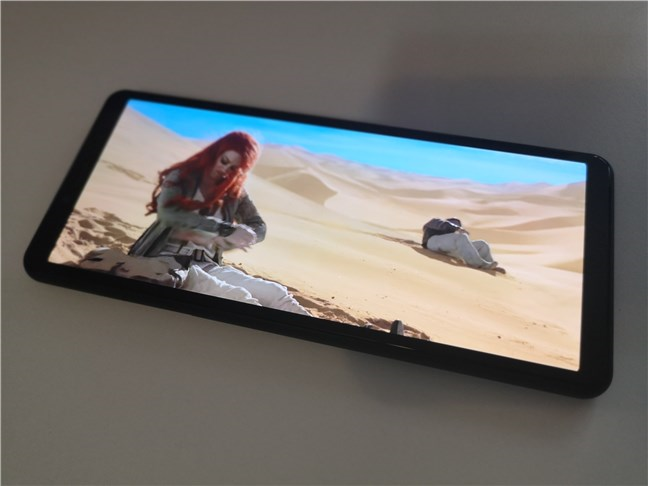
Watching a movie with 21:9 aspect ratio on the Sony Xperia 10 II
The fingerprint reader that's built into the hybrid power button worked unexpectedly well too. I can say that, in 99% of the cases, it registered my fingerprint correctly, which is quite an achievement. I can't say the same about most smartphones I've used and tested, so this is a big positive for the Xperia 10 II from my point of view.
Sony Xperia 10 II: the hybrid power and fingerprint reader button
Phone calls were also of excellent quality, clear and crisp, even though the area where I live is mountainous, so the mobile coverage is far from great.
Making a phone call on the Sony Xperia 10 II
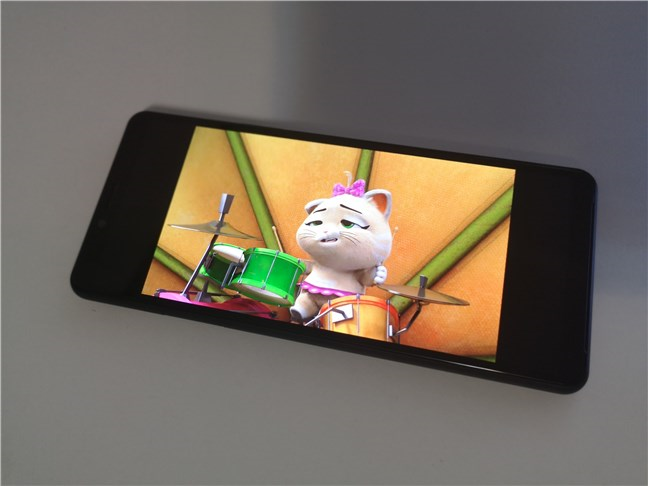
Just like on the first Xperia 10, the 21:9 screen found on the Xperia 10 II is excellent for watching movies. The OLED panel looks gorgeous, its colors are vibrant, and the brightness levels are high. Unfortunately, to enjoy it to the max, you must first find movies that are filmed and available in this ultrawide 21:9 aspect ratio. For all the others, you get thick black bars on the left and right sides of the screen. It's a shame, but it has nothing to do with Sony, but rather with Netflix, HBO, and the other movie streaming platforms.
Watching videos that are not available in 21:9 ratio on the Sony Xperia 10 II
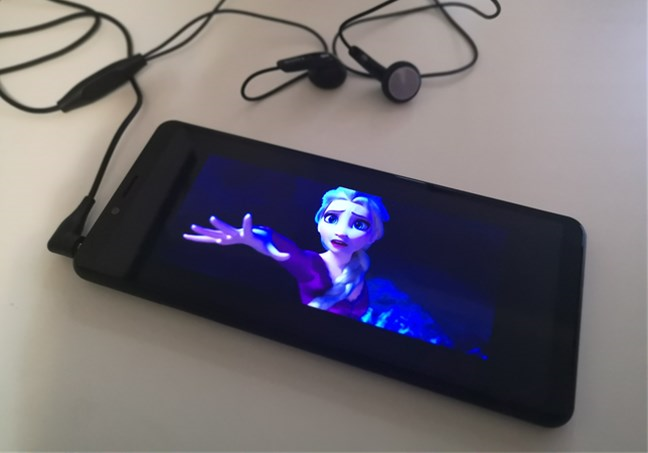
The 3.5 mm audio jack is a thing I and probably many other people like seeing on any smartphone. Some say that it belongs in the past. But being able to charge my smartphone while using a pair of wired headphones is something I want to be able to do. I dislike having to use Bluetooth headphones or USB-C audio adapters, and that's why I love Sony for giving us that old 3.5 mm audio jack on the Xperia 10 II.
Sony Xperia 10 II has a 3.5 mm audio jack and a pair of in-ear headphones
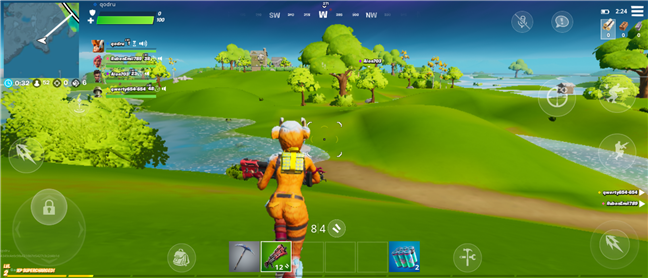
As far as games are concerned, I'm not a big fan of smartphone gaming and, if you're not either, you won't be bothered by the low-key performance offered by the Sony Xperia 10 II in this area. I tried playing a few games on it - Fortnite and Asphalt 9 Legends - for testing purposes. Unfortunately, it didn't do great in either of them. They are playable, but only if you can do with low framerates and low-quality visuals.
Playing Fortnite on the Sony Xperia 10 II
The Sony Xperia 10 II is a good Android smartphone for everyday use and for multimedia. Its interface is fluid, apps run without lag, phone calls are of excellent quality, and its display is gorgeous, especially for movies. However, gaming is not great at all, and if you want to play demanding games with high-quality visuals, you're going to be disappointed.
The camera experience on the Sony Xperia 10 II
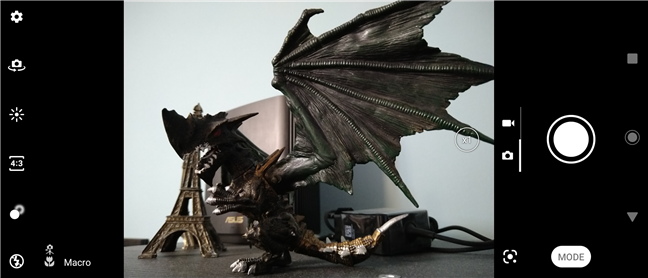
On its backside, the Sony Xperia 10 II holds a triple camera system. The primary camera has a 12-megapixel sensor, f/2.0 aperture, autofocus, and a field of view of 77 degrees. The secondary camera also has 12 megapixels, f/2.4 aperture, and 2x optical zoom lens, but no autofocus. The third camera comes with a wide-angle lens - 120 degrees field of view - but no autofocus either. To see how good the triple-camera system of the Xperia 10 II is, we took several photos. We tried to get photos in various lighting conditions and with different subjects. We only used the automatic settings. What we wanted to know was what the Xperia 10 II could offer to regular people who don't fiddle with manual settings.
The camera app on the Sony Xperia 10 II
Unfortunately, the smartphone's camera system often focuses incorrectly, except for when it automatically determines that the main camera should be used. Also, it's pretty slow at saving the photos you take. Regarding image quality, shooting outdoors in good lighting conditions gives you good quality photographs, with detail, accurate colors, and usually just the right exposure (although it tends to oversaturate photos taken in bright light). But, in low light, the Xperia 10 II did not manage to take good photos. In such conditions, it struggled to focus properly, and our pictures were often grainy, lacking sharpness and lacking detail. Similarly, the selfie camera does a decent job in good lighting, but not in low light.
Here is a couple of photos that we've shot with the Sony Xperia 10 II in various conditions, indoors and outdoors, in daylight and in the evening, with landscapes, as well as closeups and selfies:
Sony Xperia 10 II is capable of recording video at a maximum of 4K resolution using the mp4 H.264 video format. Here's an example of a video we took from a moving car so that you can get an idea of the smartphone's performance when filming moving objects:
Furthermore, here's another sample that we filmed to help you get a clearer picture of the smartphone's performance when shooting videos with less movement:
Sony Xperia 10 IIis able to shoot good quality photos if the lighting conditions are also good. However, it's triple-camera system is not that great in low light and also has a tendency to oversaturate photos taken in bright light. Overall, the Xperia 10 II comes with a decent camera system, although it could have been better considering its price tag.
Android 10 and bundled apps
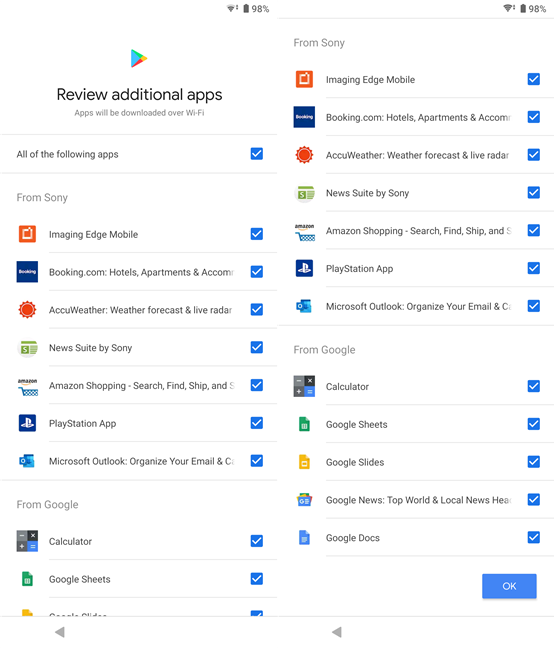
Sony Xperia 10 II comes with Android 10 and just a few apps bundled by the manufacturer. It does recommend some other apps when you configure your smartphone for the first time, but it doesn't force you to install them unless you want to. Here is the list of recommended apps:
Apps recommended by Sony for the Xperia 10 II
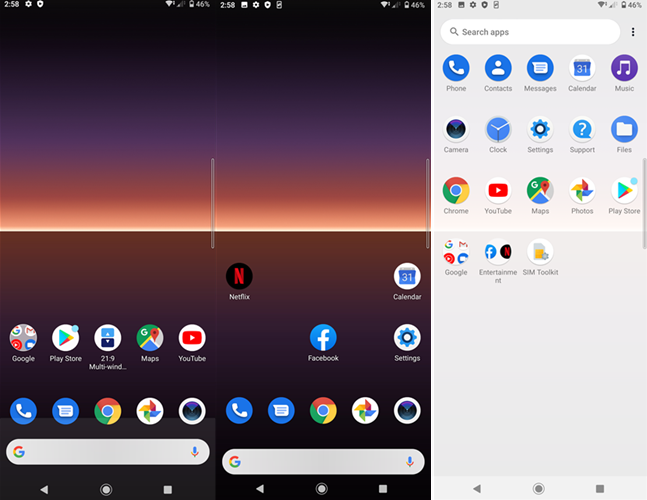
If you didn't select any of the recommended apps, Sony only preinstalls Facebook and Netflix, besides the default Google apps found on any Android smartphone. That means that you get an almost stock Android environment, which is great.
Default app preinstalled on the Sony Xperia 10 II
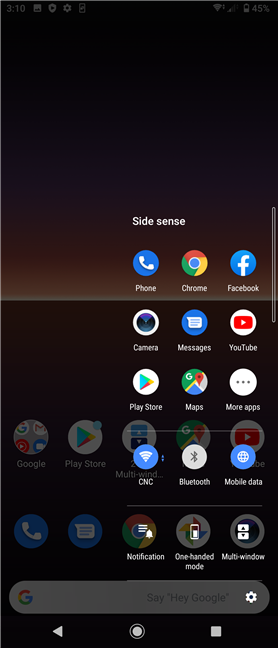
Regarding the user interface, the only thing that obviously is not stock Android is Sony's Side sense. It's a tool created to give you easier access to your commonly-used apps when you're using only one hand. On the first Xperia 10, we found Side sense to be useful but also annoying. On the Xperia 10 II, it is just useful! 🙂 In the past, Side sense used to open with a single touch, and we often accidentally launched it instead of other things. On the Xperia 10 II, Side sense opens when you double-tap on it, so it's much harder to launch it unwillingly.
Side sense on the Sony Xperia 10 II
We love Sony's approach when it comes to the apps bundled on the Xperia 10 II. The fact that it doesn't bundle apps that you might not want, and instead gives you the choice of selecting what recommended apps you get is great. Also, the Side sense tool is better than on the first Xperia 10.
Performance in benchmarks
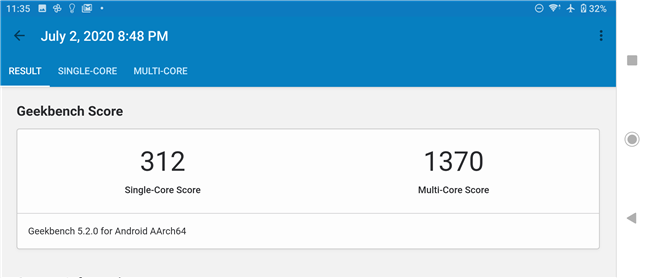
The first benchmark we ran was Geekbench 5. It shows how fast the processor is: we got a score of 312 points in Single-Core and 1370 in Multi-Core. Although the scores are not those of a high-end smartphone, they are decent for today's Android world. Both scores are almost identical to those achieved by Xiaomi Redmi Note 8 and Nokia 5.3, two smartphones that use the same processor.
Sony Xperia 10 II: Benchmark results in Geekbench 5
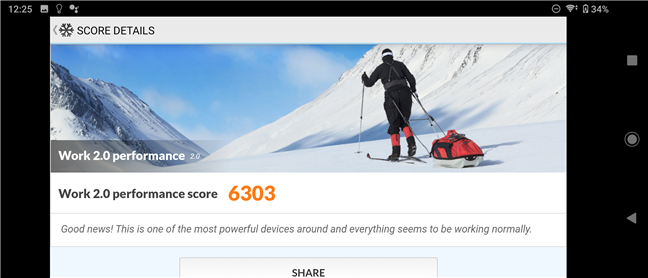
Next, we ran the PCMark Work 2.0 performance benchmark. This benchmark app tests the performance offered by smartphones in daily usage, and it includes tests for browsing speed, video, and photo editing, as well as working with documents and data. Sony Xperia 10 II's 6303 score was, again, close to those of the Xiaomi Redmi Note 8 and Nokia 5.3. In other words, this is a good mid-range Android smartphone if what you're interested in is using it for work as well as for multimedia.
Sony Xperia 10 II: Benchmark results in PCMark Work 2.0 performance
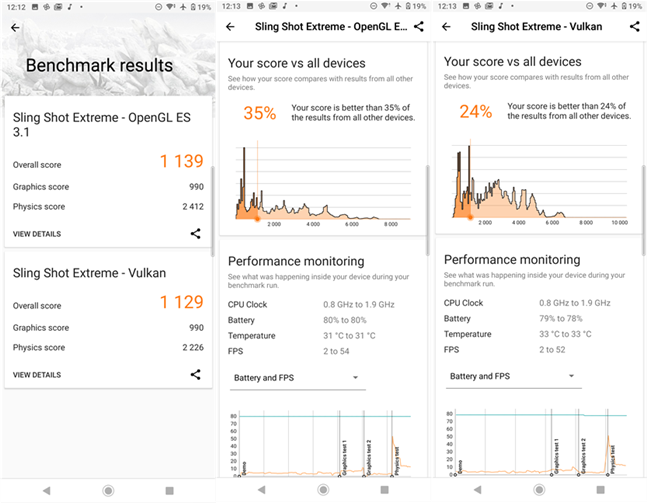
We then ran some gaming benchmarks, and the first one was 3DMark with its Sling Shot Extreme tests. Sony Xperia 10 II scored 1139 points with OpenGL ES 3.1 and 1129 points with Vulkan. Both scores are average, similar to those of a Xiaomi Redmi Note 8 or a Nokia 5.3, both for OpenGL ES 3.1 and Vulkan.
Sony Xperia 10 II: Benchmark results in 3DMark
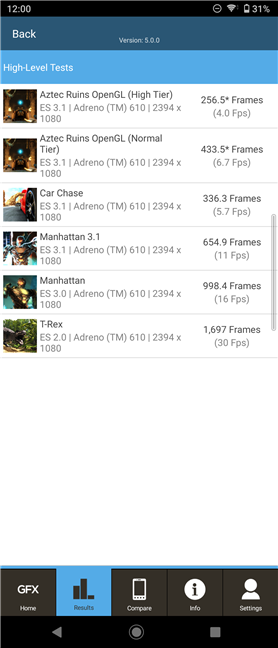
GFXBench, another gaming benchmark, showed that the Sony Xperia 10 II doesn't have the power required to run modern games at maxed visuals. The smartphone managed to render just four fps in Aztec Ruins OpenGL High Tier and 6.7 fps in Normal Tier, 5.7 fps in Car Chase, 11 and 16 fps in Manhattan 3.1 and Manhattan 3.0. The only test in which it did great was T-Rex - 30 frames per second - which shows that the phone does well in older games and those with lower hardware requirements.
Sony Xperia 10 II: Benchmark results in GFXBench
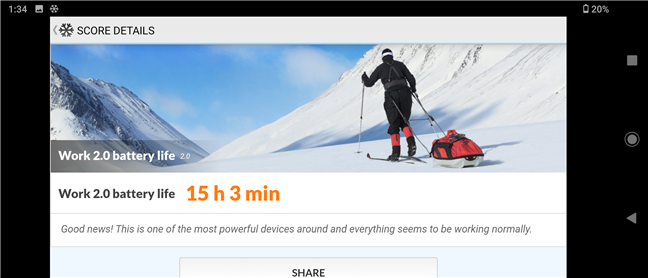
Finally, we also benchmarked the battery of the Sony Xperia 10 II using PCMark's Work 2.0 battery life test with the phone's display brightness set to auto. The good news is that the smartphone managed to keep on running for an impressive amount of time: 15 hours and 3 minutes. That's an excellent result - even if you're a heavy user, you should be able to use this phone for at least a day without having to charge it.
Sony Xperia 10 II: Battery benchmark result in PCMark Work 2.0 battery life
Although the Sony Xperia 10 II is not a high-end Android smartphone, it manages to offer decent performance. After seeing its results in benchmarks, we don't recommend it to gamers, but we do believe it is a good choice for anyone else.
Do you like the Sony Xperia 10 II Android smartphone?
Now you know what we like and what we don't like at the Sony Xperia 10 II. We love its cinematic screen, and we like both its design and build quality. On the other hand, the cameras didn't impress us, and gaming was not a great experience. Before closing this review, tells us if you agree with us. What are your thoughts regarding Sony Xperia 10 II? Would you buy it for yourself or your loved ones?














Discussion (0)
Comments are closed.