



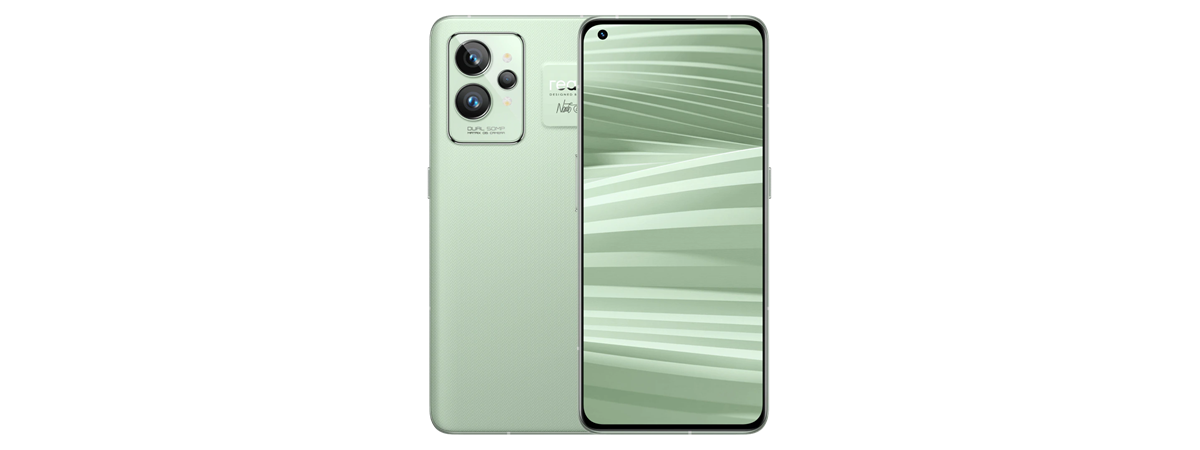
Realme GT2 Pro is the latest flagship smartphone from the Chinese manufacturer that is part of the BBK group alongside other brands like OnePlus and Oppo. And quite the flagship it is! Realme has put all sorts of goodies in this smartphone: the world’s first 2K AMOLED flat display with LTPO 2.0 technology, the latest Snapdragon 8 Gen 1 chipset, all powered by a 5000 mAh battery. But beyond the specs, can the Realme GT2 Pro hold its own against the likes of Samsung and Xiaomi? Read on to find out:
![Verdict]()

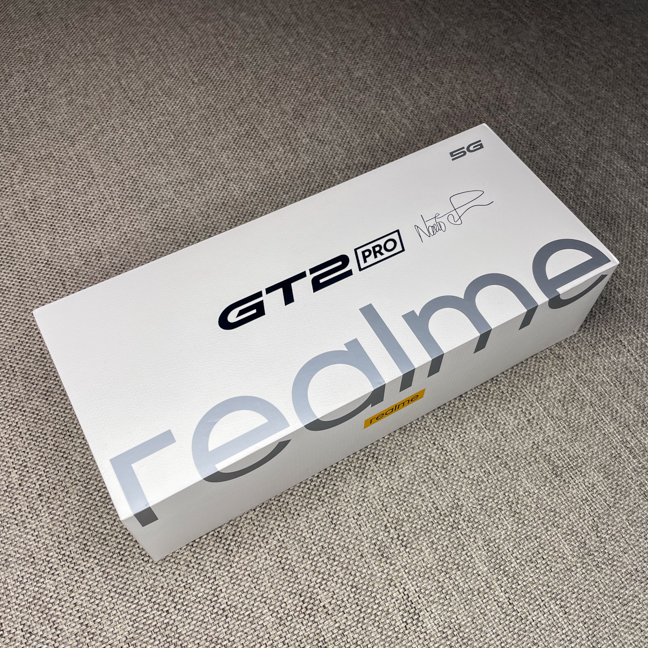
 The box of the Realme GT2 Pro
The box displays the usual branding, with the name of the product front and center, and a summary of features and tech specs on the bottom of the package.
The box of the Realme GT2 Pro
The box displays the usual branding, with the name of the product front and center, and a summary of features and tech specs on the bottom of the package.
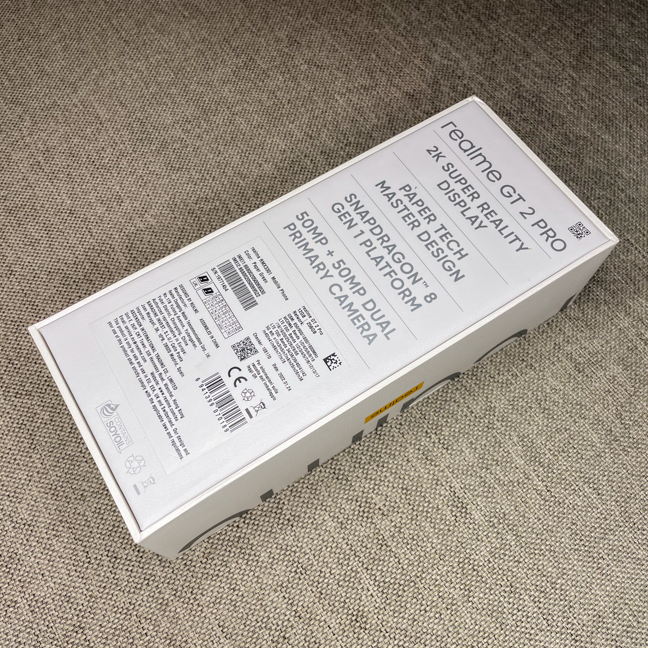 The bottom of the box presents several key features
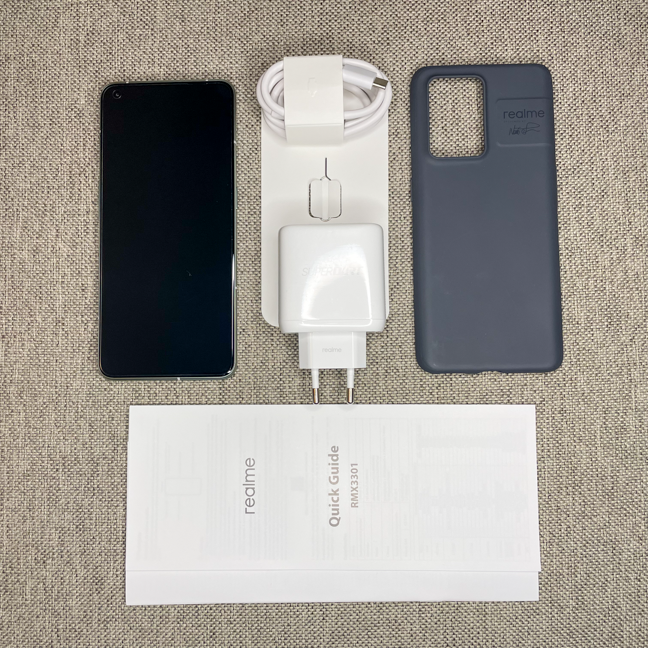
Inside, apart from the smartphone, you will find a rather rare assortment of accessories: a USB cable, a fast charger (65W), a SIM tray tool, and a protective case for the smartphone. My sample also came with a pre-applied screen protector, so bonus points for that. Naturally, there’s also a quick guide and a warranty leaflet. Since the smartphone doesn’t come with a headphone jack, no headphones are included.
The bottom of the box presents several key features
Inside, apart from the smartphone, you will find a rather rare assortment of accessories: a USB cable, a fast charger (65W), a SIM tray tool, and a protective case for the smartphone. My sample also came with a pre-applied screen protector, so bonus points for that. Naturally, there’s also a quick guide and a warranty leaflet. Since the smartphone doesn’t come with a headphone jack, no headphones are included.
 Realme GT2 Pro: what's in the box
The unboxing of the Realme GT2 Pro provided the first few pleasant surprises: the presence of a fast charger and a protective case. The contents are well-packaged, and the box is sturdy and well-designed.
Realme GT2 Pro: what's in the box
The unboxing of the Realme GT2 Pro provided the first few pleasant surprises: the presence of a fast charger and a protective case. The contents are well-packaged, and the box is sturdy and well-designed.
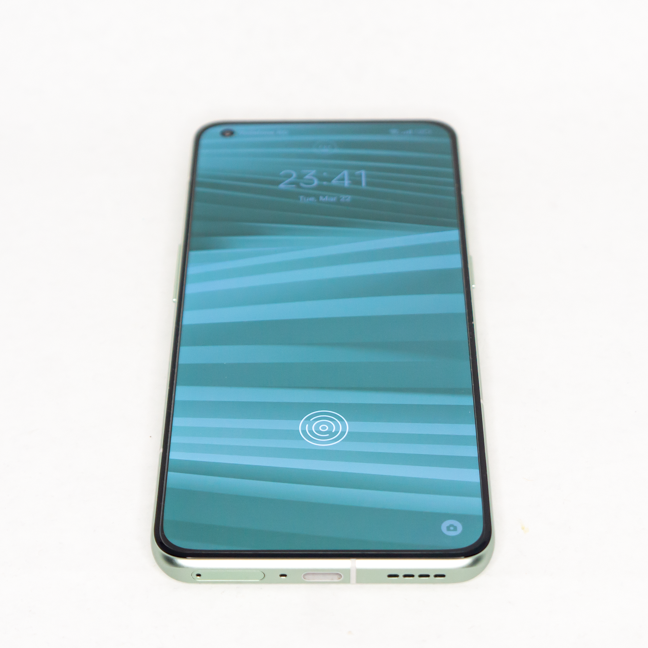 The front of the Realme GT2 Pro
The back of the device has quite a few distinctive features. Realme boasts the GT2 Pro as the first bio-based polymer smartphone design, made in collaboration with Naoto Fukasawa, a renowned Japanese designer. Indeed, his signature is all over the phone, both in terms of sustainable design and as a literal signature on the back. The camera cluster is the other distinctive feature, with three cameras and a dual-LED dual-tone flash.
The front of the Realme GT2 Pro
The back of the device has quite a few distinctive features. Realme boasts the GT2 Pro as the first bio-based polymer smartphone design, made in collaboration with Naoto Fukasawa, a renowned Japanese designer. Indeed, his signature is all over the phone, both in terms of sustainable design and as a literal signature on the back. The camera cluster is the other distinctive feature, with three cameras and a dual-LED dual-tone flash.
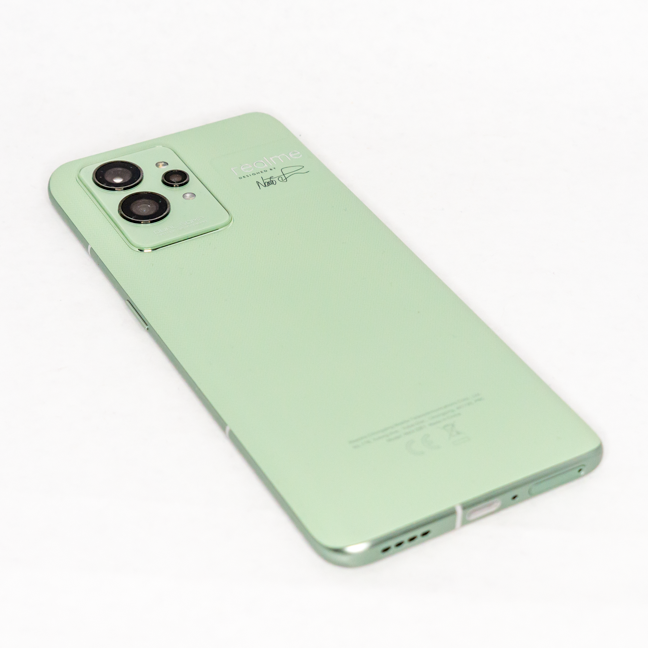 The design team focused on the way the Realme GT2 feels to touch
There are three colors available for the Realme GT2 Pro. The texture of the Paper White and Paper Green variants imitates the feel of rough paper, while the Steel Black variant has a glass back cover with a frosted look and feel. The Asian markets also get a Titanium Blue version, which has similar characteristics with the black one. Interestingly, the white and green variants are 10 grams lighter and more environmentally friendly. According to the manufacturer, every million GT 2 Pro smartphones produced should save the equivalent of 3.5 million plastic bottles in terms of non-degradable materials.
The design team focused on the way the Realme GT2 feels to touch
There are three colors available for the Realme GT2 Pro. The texture of the Paper White and Paper Green variants imitates the feel of rough paper, while the Steel Black variant has a glass back cover with a frosted look and feel. The Asian markets also get a Titanium Blue version, which has similar characteristics with the black one. Interestingly, the white and green variants are 10 grams lighter and more environmentally friendly. According to the manufacturer, every million GT 2 Pro smartphones produced should save the equivalent of 3.5 million plastic bottles in terms of non-degradable materials.
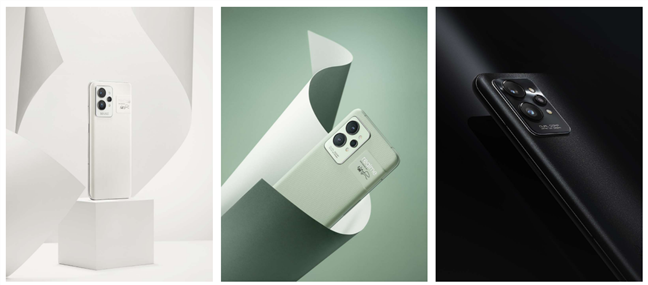
 Three colors are available for European and American markets
The sides are almost devoid of features. The button placement reminds me of iPhones, with the volume rocker on the left…
Three colors are available for European and American markets
The sides are almost devoid of features. The button placement reminds me of iPhones, with the volume rocker on the left…
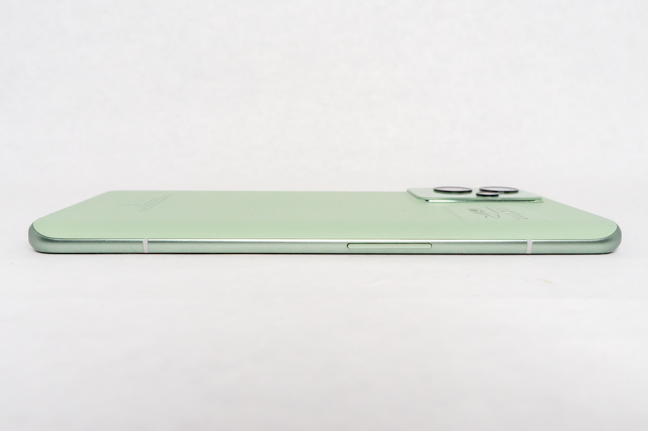
 The left side of the Realme GT2 Pro
…and the power button on the right side. The only other features visible on the sides are the plastic inserts that allow for better signal reception.
The left side of the Realme GT2 Pro
…and the power button on the right side. The only other features visible on the sides are the plastic inserts that allow for better signal reception.
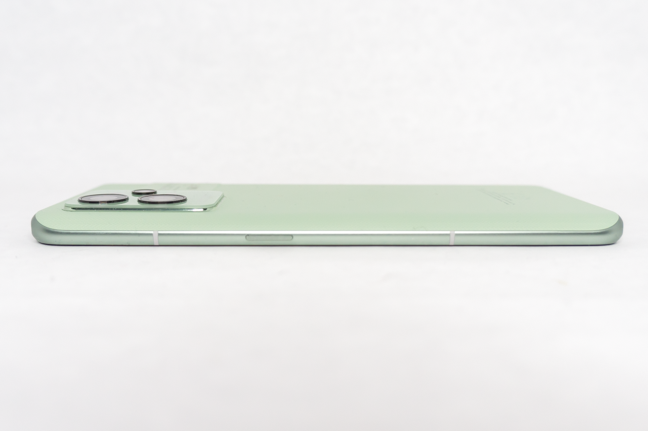 The right side of the Realme GT2 Pro
Similar inserts are present on the top of the smartphone. You can also find a microphone here that is used to cancel out environmental noise during calls.
The right side of the Realme GT2 Pro
Similar inserts are present on the top of the smartphone. You can also find a microphone here that is used to cancel out environmental noise during calls.
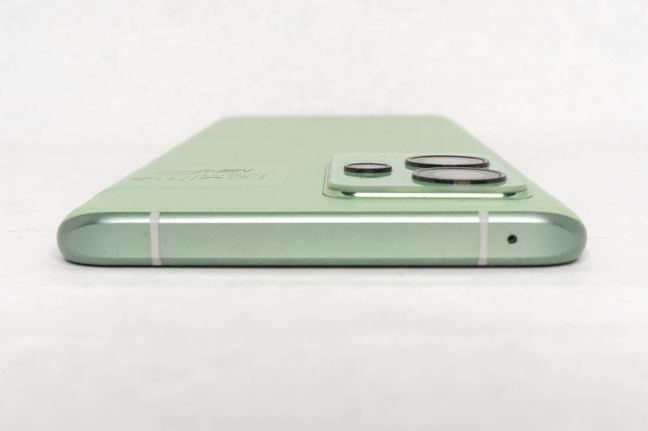 The top of the Realme GT2 Pro
The bottom of the smartphone is its “busiest” part. Close to the SIM tray, there’s a microphone hole, but thankfully, the one for inserting the SIM tool is on the other side of the tray. Next to the microphone, there’s the USB-C port, and next to that, a speaker.
The top of the Realme GT2 Pro
The bottom of the smartphone is its “busiest” part. Close to the SIM tray, there’s a microphone hole, but thankfully, the one for inserting the SIM tool is on the other side of the tray. Next to the microphone, there’s the USB-C port, and next to that, a speaker.
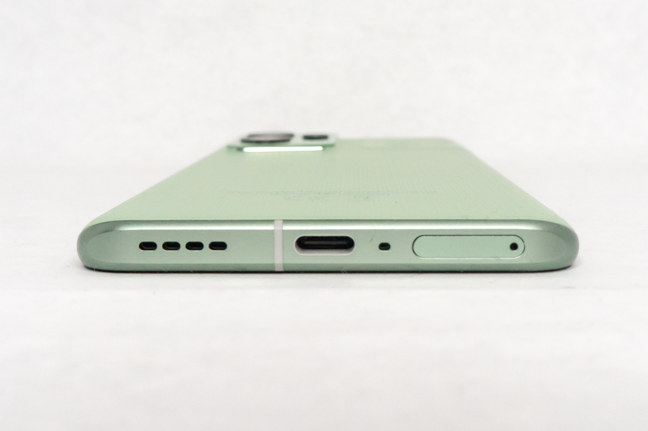 The bottom of the Realme GT2 Pro
There is no IP resistance rating in the spec sheet, which is an unfortunate omission for a flagship device. As you noticed from the pictures, I received the Paper Green variant, and the color is a welcome variation from the traditional solid color scheme present on other flagship devices. The Realme GT2 Pro feels thin, thanks to its rounded edges, and while the plastic back doesn’t scream “opulence,” it is very grippy and has the potential to hide scratches well. Additionally, the included protective case doesn’t feel cheap and matches the smartphone's color.
The design of the Realme GT2 Pro is sufficiently different and unique for a flagship device. I like the fact that Realme didn’t settle on classic materials and textures, opting instead for an eco-friendly and, at the same time, visually appealing design.
The bottom of the Realme GT2 Pro
There is no IP resistance rating in the spec sheet, which is an unfortunate omission for a flagship device. As you noticed from the pictures, I received the Paper Green variant, and the color is a welcome variation from the traditional solid color scheme present on other flagship devices. The Realme GT2 Pro feels thin, thanks to its rounded edges, and while the plastic back doesn’t scream “opulence,” it is very grippy and has the potential to hide scratches well. Additionally, the included protective case doesn’t feel cheap and matches the smartphone's color.
The design of the Realme GT2 Pro is sufficiently different and unique for a flagship device. I like the fact that Realme didn’t settle on classic materials and textures, opting instead for an eco-friendly and, at the same time, visually appealing design.
 The hardware is Realme GT2 Pro's strong point
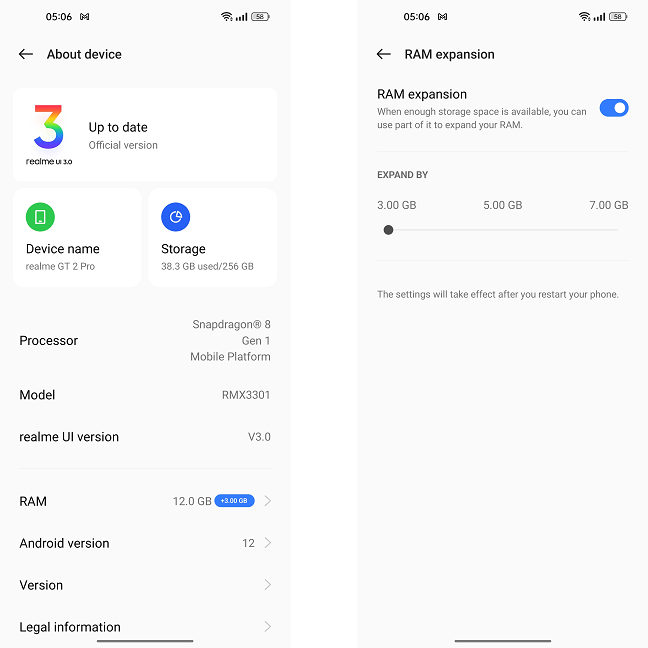
I tested the 12 GB / 256 GB variant, as you can see in the screenshots above. Apart from the memory and storage, the rest of the specs are identical. The 6.7 inch AMOLED display is sourced from Samsung and has an excellent resolution of 1440 x 3216 pixels (WQHD+). If you do the math, the resulting pixel density is more than 500 ppi, which is an excellent value. Equally excellent is the declared peak brightness of 1400 nits. The HDR10+ capable panel is made using LTPO 2.0 technology (low-temperature polycrystalline silicon), which means that its refresh rate can change, depending on the content displayed, from 1 Hz up to 120 Hz. Furthermore, it has a touch sampling rate of up to an amazing 1000Hz, which gives the Realme GT2 Pro an edge in fast-paced games where input lag is crucial for achieving the best experience. For media playback, the Realme has stereo speakers with Dolby Atmos support.
The hardware is Realme GT2 Pro's strong point
I tested the 12 GB / 256 GB variant, as you can see in the screenshots above. Apart from the memory and storage, the rest of the specs are identical. The 6.7 inch AMOLED display is sourced from Samsung and has an excellent resolution of 1440 x 3216 pixels (WQHD+). If you do the math, the resulting pixel density is more than 500 ppi, which is an excellent value. Equally excellent is the declared peak brightness of 1400 nits. The HDR10+ capable panel is made using LTPO 2.0 technology (low-temperature polycrystalline silicon), which means that its refresh rate can change, depending on the content displayed, from 1 Hz up to 120 Hz. Furthermore, it has a touch sampling rate of up to an amazing 1000Hz, which gives the Realme GT2 Pro an edge in fast-paced games where input lag is crucial for achieving the best experience. For media playback, the Realme has stereo speakers with Dolby Atmos support.
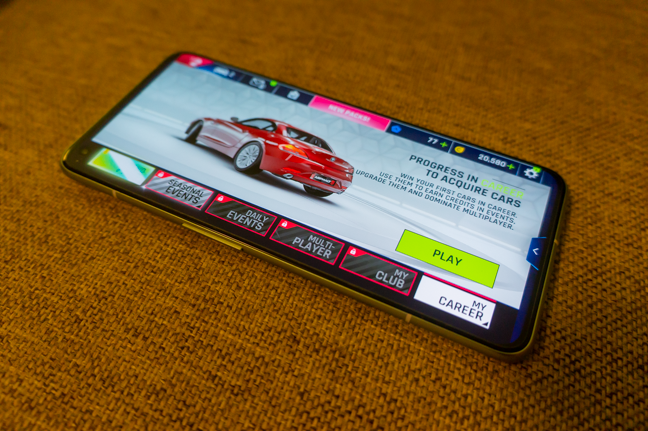 The bright screen is one of the few with LTPO 2.0 technology
The camera department is where the Realme GT2 Pro misses a few opportunities. It has three cameras:
The bright screen is one of the few with LTPO 2.0 technology
The camera department is where the Realme GT2 Pro misses a few opportunities. It has three cameras:
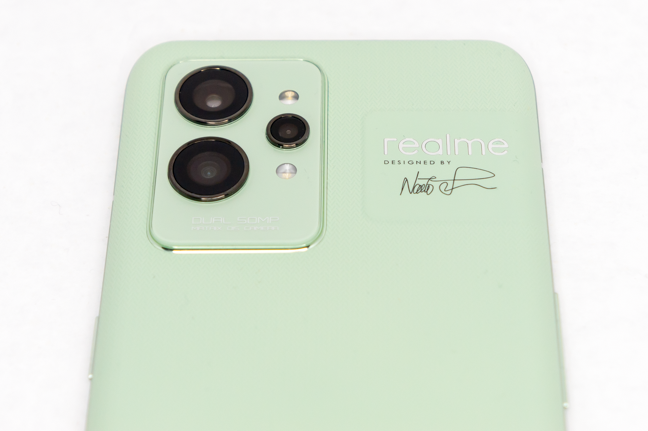 The camera cluster on the Realme GT2 Pro
Connectivity-wise, the Realme GT2 Pro offers the usual options: a Wi-Fi adapter with Wi-Fi 6 compatibility, Bluetooth 5.2 with aptX, a GPS module compatible with all the satellite systems available (GLONASS, BDS, GALILEO, QZSS, NavIC), and, of course, an NFC module that supposedly works in any position, not just on the back of the smartphone. To name but a few sensors, the Realme GT2 Pro also has an accelerometer, a gyroscope, a compass, and a color temperature sensor. Another interesting feature is that the optical fingerprint reader doubles as a heart rate detector. It should be interesting to see how accurate it is.
Finally, the battery has a capacity of 5000 mAh, and Realme claims it can be charged to 100% in 33 minutes with the included 65W adapter. Of course, I will put that to the test. Sadly, there is no wireless charging, an issue I would have more easily overlooked if the device wasn’t a flagship. For more technical specs, visit the product page here: realme GT 2 Pro.
The Realme GT2 Pro hardware specifications leave little room for any complaints: it has a powerful chipset, a very good screen and a large battery. The camera setup is a bit underwhelming, but there is no doubt that the Realme GT2 Pro is truly a flagship smartphone.
Now, let’s see how the Realme GT2 Pro actually performs. On the next page, you can read all about the camera performance, the battery life and what it’s like to live with it. Onwards!
The camera cluster on the Realme GT2 Pro
Connectivity-wise, the Realme GT2 Pro offers the usual options: a Wi-Fi adapter with Wi-Fi 6 compatibility, Bluetooth 5.2 with aptX, a GPS module compatible with all the satellite systems available (GLONASS, BDS, GALILEO, QZSS, NavIC), and, of course, an NFC module that supposedly works in any position, not just on the back of the smartphone. To name but a few sensors, the Realme GT2 Pro also has an accelerometer, a gyroscope, a compass, and a color temperature sensor. Another interesting feature is that the optical fingerprint reader doubles as a heart rate detector. It should be interesting to see how accurate it is.
Finally, the battery has a capacity of 5000 mAh, and Realme claims it can be charged to 100% in 33 minutes with the included 65W adapter. Of course, I will put that to the test. Sadly, there is no wireless charging, an issue I would have more easily overlooked if the device wasn’t a flagship. For more technical specs, visit the product page here: realme GT 2 Pro.
The Realme GT2 Pro hardware specifications leave little room for any complaints: it has a powerful chipset, a very good screen and a large battery. The camera setup is a bit underwhelming, but there is no doubt that the Realme GT2 Pro is truly a flagship smartphone.
Now, let’s see how the Realme GT2 Pro actually performs. On the next page, you can read all about the camera performance, the battery life and what it’s like to live with it. Onwards!
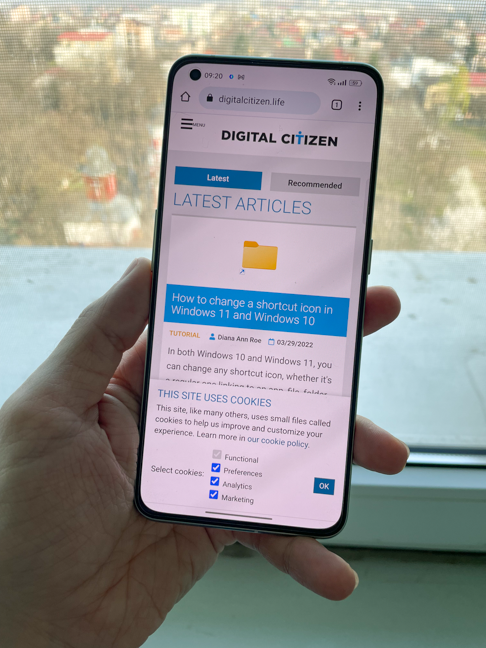
 The panel resolution and pixel density are outstanding
Of course, the screen can only do so much for the experience, but the powerful chipset keeps up with it and delivers amazing performance. I had no issues in games or during media playback, and the daily tasks were handled with ease. The stereo speakers are good, but they lack bass. I’d say they are on par with the ones on the Samsung Galaxy S21 FE that I reviewed recently.
The Realme user interface is easy to use and has a lot of features over the vanilla Android 12. To name just a few, it has an interesting Quick Launch that works while you are unlocking the smartphone with your fingerprint, a Kid Space feature that controls apps, networks and for how long your children have access to the smartphone, and a high-performance GT mode, which further increases the smartphone’s performance.
The panel resolution and pixel density are outstanding
Of course, the screen can only do so much for the experience, but the powerful chipset keeps up with it and delivers amazing performance. I had no issues in games or during media playback, and the daily tasks were handled with ease. The stereo speakers are good, but they lack bass. I’d say they are on par with the ones on the Samsung Galaxy S21 FE that I reviewed recently.
The Realme user interface is easy to use and has a lot of features over the vanilla Android 12. To name just a few, it has an interesting Quick Launch that works while you are unlocking the smartphone with your fingerprint, a Kid Space feature that controls apps, networks and for how long your children have access to the smartphone, and a high-performance GT mode, which further increases the smartphone’s performance.
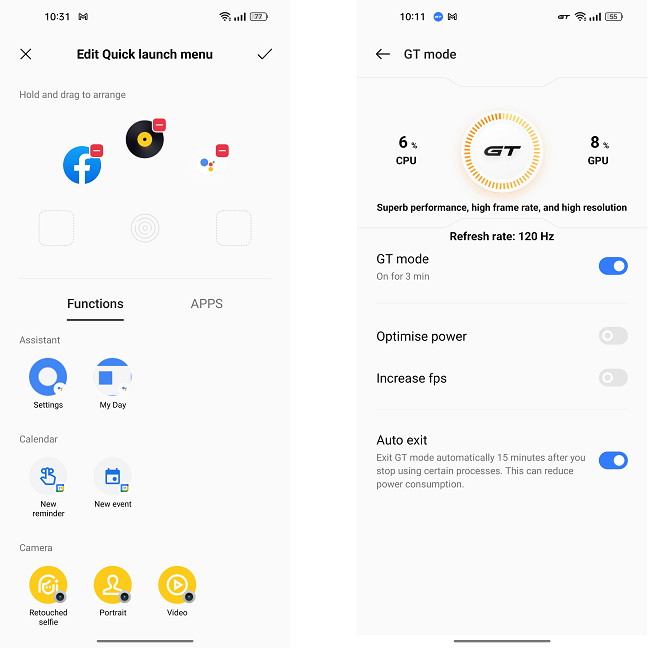 Relame UI has some interesting usability features
Speaking about unlocking, the fingerprint reader is not the most accurate, nor the fastest I’ve experienced. It gets the job done nine times out of ten, but I could notice a small delay. Interestingly, face unlock works very well and is faster than fingerprint authentication. The fingerprint sensor is also used to measure your heart rate: you simply open an app and then hold your finger on the sensor to record your heartbeat. The feature really works, and it’s so simple to implement and use that I wonder why other manufacturers didn’t include it on their devices (the ones that have optical fingerprint sensors, naturally).
Nothing to report regarding Wi-Fi and Bluetooth connectivity. They worked flawlessly, and 5G reception was very good too. Moving on to telephony, I had no issues with the Realme GT2 Pro here. The reception is good, the audio is clear, and the same is true on the other end. One minor issue I had, one that is present in almost all Android 12 smartphones these days, is that calling a contact directly from the Recents list is unnecessarily fiddly. One-tap calling is only available on the Favorites screen; for Recents, you must tap on the small icon that looks like a handset next to the contact you wish to call. The icons are placed on the right side of the screen, making it uncomfortable for left-handed users to access them.
Another small but annoying issue was that sometimes, when exiting the app drawer, the swipe down gesture simply wouldn’t work, so I had to repeat the gesture multiple times. A workaround was using the “back” gesture (swiping horizontally from the edge of the screen) to exit the app drawer.
Relame UI has some interesting usability features
Speaking about unlocking, the fingerprint reader is not the most accurate, nor the fastest I’ve experienced. It gets the job done nine times out of ten, but I could notice a small delay. Interestingly, face unlock works very well and is faster than fingerprint authentication. The fingerprint sensor is also used to measure your heart rate: you simply open an app and then hold your finger on the sensor to record your heartbeat. The feature really works, and it’s so simple to implement and use that I wonder why other manufacturers didn’t include it on their devices (the ones that have optical fingerprint sensors, naturally).
Nothing to report regarding Wi-Fi and Bluetooth connectivity. They worked flawlessly, and 5G reception was very good too. Moving on to telephony, I had no issues with the Realme GT2 Pro here. The reception is good, the audio is clear, and the same is true on the other end. One minor issue I had, one that is present in almost all Android 12 smartphones these days, is that calling a contact directly from the Recents list is unnecessarily fiddly. One-tap calling is only available on the Favorites screen; for Recents, you must tap on the small icon that looks like a handset next to the contact you wish to call. The icons are placed on the right side of the screen, making it uncomfortable for left-handed users to access them.
Another small but annoying issue was that sometimes, when exiting the app drawer, the swipe down gesture simply wouldn’t work, so I had to repeat the gesture multiple times. A workaround was using the “back” gesture (swiping horizontally from the edge of the screen) to exit the app drawer.
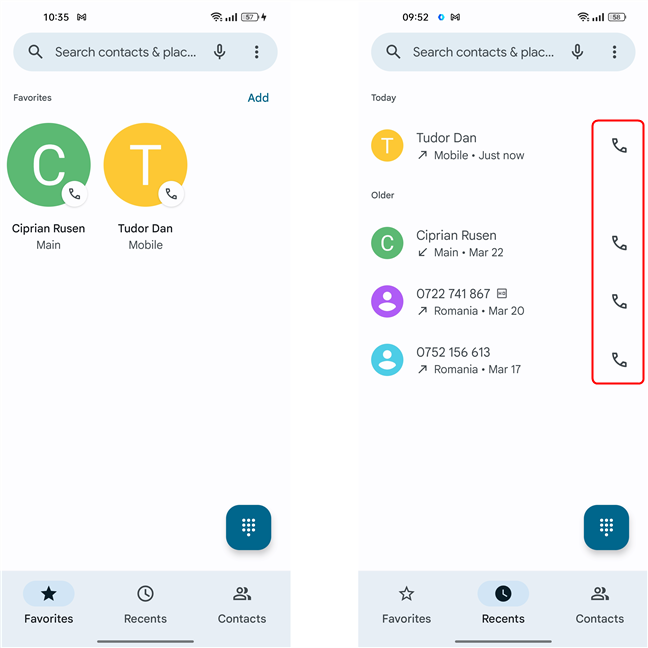 Calling a contact from the Favorites screen is easier than calling one from the Recents list
Gaming sessions were a really good experience. The Snapdragon 8 Gen 1 is a notoriously “hot” chipset, and I’ve seen smartphones where performance took a hit in order to keep the temperature in check. Not on the GT2 Pro, though. Realme engineers have come up with a 9-layer cooling system that covers all of the key hotspots and makes sure the Snapdragon 8 Gen 1 stays cool. There’s a stainless steel vapor chamber with a copper alloy back that dissipates heat faster than steel or aluminum, and instead of a normal thermal paste, the contact between the heatsink and the chip is made with a special Diamond Thermal Gel which increases thermal conductivity. What this translates to in real-life is good, constant performance. It’s worth noting that in synthetic stress tests, the device still throttles down, as you’ll see in the last section of the review.
Calling a contact from the Favorites screen is easier than calling one from the Recents list
Gaming sessions were a really good experience. The Snapdragon 8 Gen 1 is a notoriously “hot” chipset, and I’ve seen smartphones where performance took a hit in order to keep the temperature in check. Not on the GT2 Pro, though. Realme engineers have come up with a 9-layer cooling system that covers all of the key hotspots and makes sure the Snapdragon 8 Gen 1 stays cool. There’s a stainless steel vapor chamber with a copper alloy back that dissipates heat faster than steel or aluminum, and instead of a normal thermal paste, the contact between the heatsink and the chip is made with a special Diamond Thermal Gel which increases thermal conductivity. What this translates to in real-life is good, constant performance. It’s worth noting that in synthetic stress tests, the device still throttles down, as you’ll see in the last section of the review.
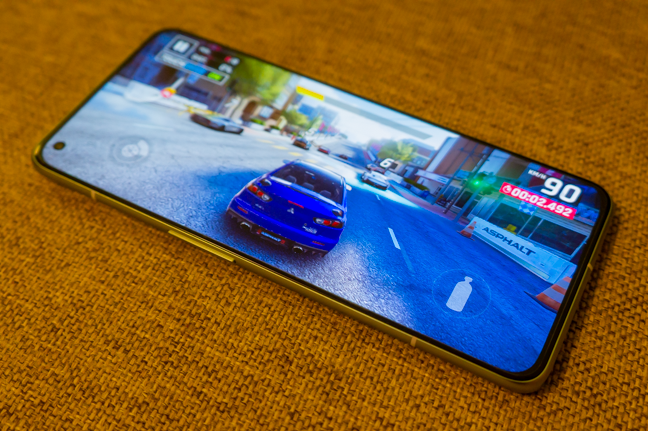 If gaming performance is what you're looking for, Realme GT2 Pro is the answer
Before moving on to the camera experience, I should mention that the battery easily got me through the day. With moderate use, two days of battery life are perfectly achievable, and the maximum I got was 84 hours (albeit only in standby, without touching the smartphone). I can also report that charging is blazing-fast. Charging from 1% to full took only 33 minutes, and ten minutes of charging got the Realme GT2 Pro to an amazing 43%. The device got warm during charging, but nothing out of the ordinary. Here is the full charging graph:
If gaming performance is what you're looking for, Realme GT2 Pro is the answer
Before moving on to the camera experience, I should mention that the battery easily got me through the day. With moderate use, two days of battery life are perfectly achievable, and the maximum I got was 84 hours (albeit only in standby, without touching the smartphone). I can also report that charging is blazing-fast. Charging from 1% to full took only 33 minutes, and ten minutes of charging got the Realme GT2 Pro to an amazing 43%. The device got warm during charging, but nothing out of the ordinary. Here is the full charging graph:
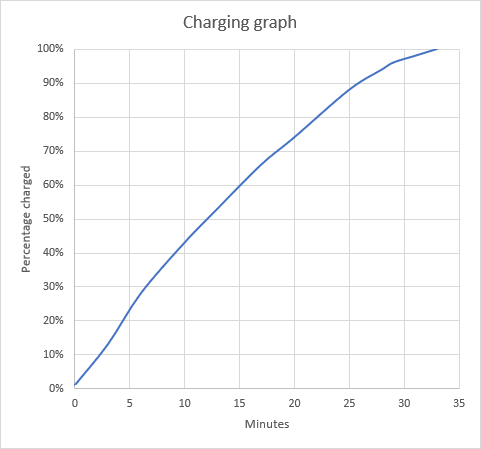
 Charging time for the Realme GT2 Pro
You also get Optimized night charging: to reduce battery wear, the smartphone learns from your charging routine and makes it so that the battery reaches 100% just as you wake up in the morning.
Overall, using the Realme GT2 Pro was a nice experience. You get tons of performance, an excellent screen, a really good battery life and super fast charging. The materials don’t feel premium, but using the smartphone makes it clear that it’s a flagship device.
Charging time for the Realme GT2 Pro
You also get Optimized night charging: to reduce battery wear, the smartphone learns from your charging routine and makes it so that the battery reaches 100% just as you wake up in the morning.
Overall, using the Realme GT2 Pro was a nice experience. You get tons of performance, an excellent screen, a really good battery life and super fast charging. The materials don’t feel premium, but using the smartphone makes it clear that it’s a flagship device.
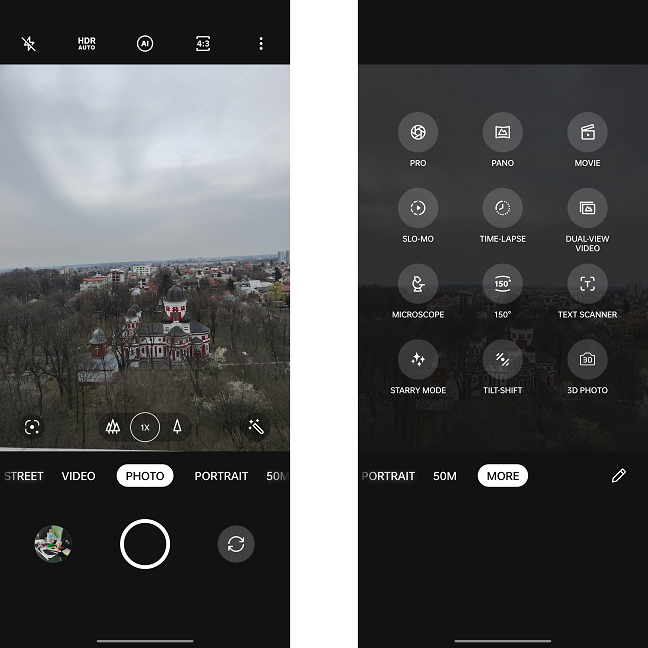 The Camera app is simple
The main camera takes fairly good pictures in good light, but the processing isn’t always the best. Here’s an example: a picture taken in fairly good light, but with a rather difficult subject - foliage. The selected section is at 100% crop. As you can see, the level of detail is not great.
The Camera app is simple
The main camera takes fairly good pictures in good light, but the processing isn’t always the best. Here’s an example: a picture taken in fairly good light, but with a rather difficult subject - foliage. The selected section is at 100% crop. As you can see, the level of detail is not great.
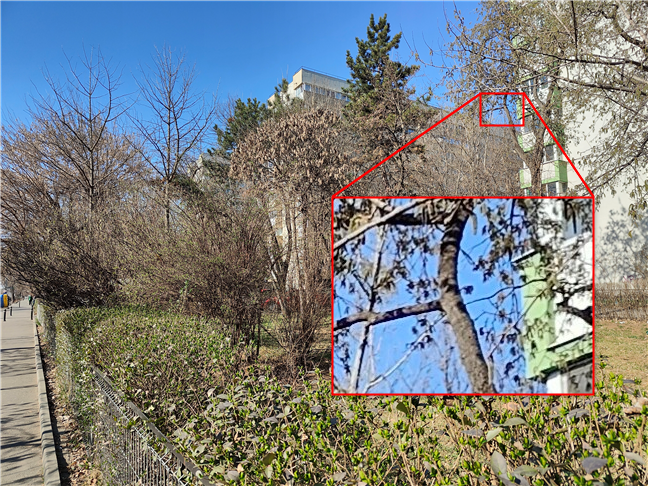
 Main camera sample with a 100% crop
The ultrawide camera is good, as far as ultrawide cameras go, but don’t expect any miracles: the level of resolved detail is naturally lower than that of the main camera, and the images are softer. The white balance is consistent between the two cameras.
The ultrawide camera on the Realme GT2 Pro goes the extra mile: it can actually provide a 150-degree field of view and can simulate a fisheye lens effect.
Main camera sample with a 100% crop
The ultrawide camera is good, as far as ultrawide cameras go, but don’t expect any miracles: the level of resolved detail is naturally lower than that of the main camera, and the images are softer. The white balance is consistent between the two cameras.
The ultrawide camera on the Realme GT2 Pro goes the extra mile: it can actually provide a 150-degree field of view and can simulate a fisheye lens effect.
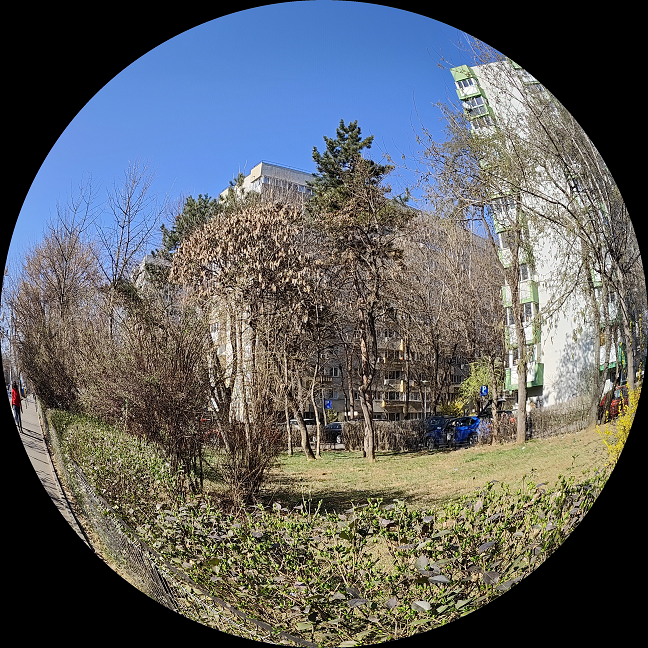 The fisheye effect for the ultrawide camera
In low light conditions, the camera system does a pretty good job even without Night mode activated. Here is a comparison of the same scene with and without night mode. The quality level is similar, but the one with Night mode on is brighter.
The fisheye effect for the ultrawide camera
In low light conditions, the camera system does a pretty good job even without Night mode activated. Here is a comparison of the same scene with and without night mode. The quality level is similar, but the one with Night mode on is brighter.
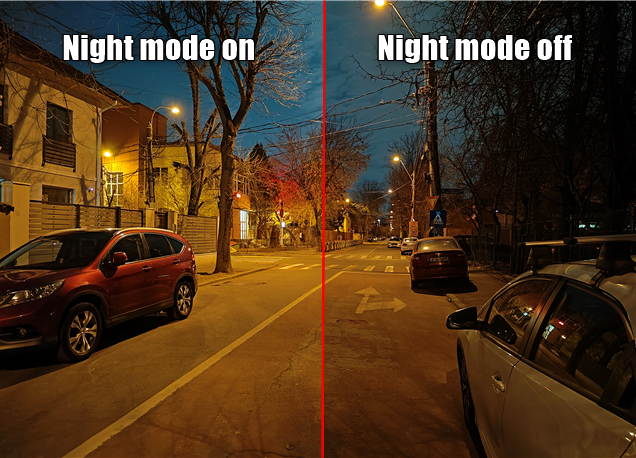
 The effect of Night mode on low-light photos
The lack of a telephoto camera is disappointing, but the microscope camera is a really cool gimmick. It’s definitely not for everyone, but if you’re passionate about photomicrography or photographing really small things, this 3MP camera with autofocus might be exactly what you’re looking for. You get 20x or 40x magnification, and you can obtain some fantastic pictures by getting really close to various textures.
The effect of Night mode on low-light photos
The lack of a telephoto camera is disappointing, but the microscope camera is a really cool gimmick. It’s definitely not for everyone, but if you’re passionate about photomicrography or photographing really small things, this 3MP camera with autofocus might be exactly what you’re looking for. You get 20x or 40x magnification, and you can obtain some fantastic pictures by getting really close to various textures.

 Fabric (left) and a smartphone screen (right), as photographed with the Realme GT2 Pro microscope camera
The selfie camera is decent, again not amazing, but it gets the job done. Portrait mode separates the subject from the background relatively well, if the edges are well-defined. Make sure you take the photos in a well-lit environment:
Fabric (left) and a smartphone screen (right), as photographed with the Realme GT2 Pro microscope camera
The selfie camera is decent, again not amazing, but it gets the job done. Portrait mode separates the subject from the background relatively well, if the edges are well-defined. Make sure you take the photos in a well-lit environment:
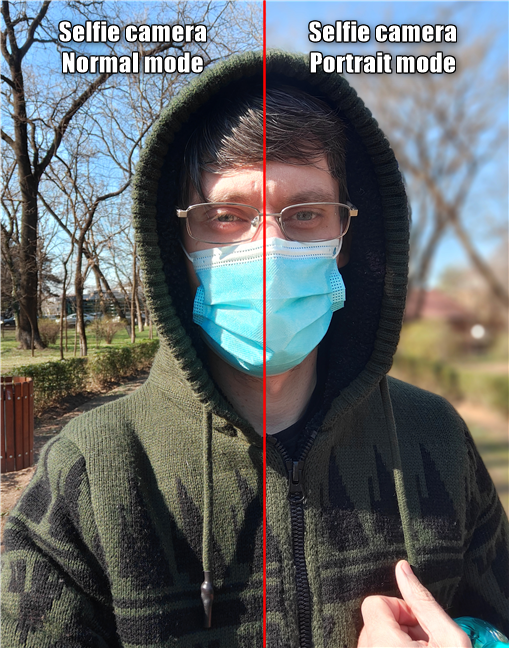
 The selfie camera gets good results in bright light
As for video recording, the results are on-par with the photos. Shooting in 4K yields the best results, and the stabilization works well when recording handheld videos. There is no super stabilization option like on the Samsung Galaxy S21 FE or on other Realme smartphones, but the standard one is sufficient in most cases.
Shooting videos in 8K is, as I suspected, just for marketing purposes. The resulting images are softer, and the level of detail isn’t better than that of 4K recordings, plus the framerate is limited to 24 fps.
If you don’t know which resolution to use for your smartphone recordings, here’s a more in-depth analysis: Smartphone video recording in 1080p, 4K, 8K: How much is too much?
Slow-motion videos are recorded at 1080p or 720p, and the results are decent, similar to the video below:
While not bad, the camera system on the Realme GT2 Pro isn’t at the same level as the rest of the experience (mostly because the rest of the device is so good). The main and ultrawide cameras perform well, but the lack of a telephoto camera isn’t compensated by the microscope camera, which has a very niche audience. Video quality is good too, and the stabilization works well.
The selfie camera gets good results in bright light
As for video recording, the results are on-par with the photos. Shooting in 4K yields the best results, and the stabilization works well when recording handheld videos. There is no super stabilization option like on the Samsung Galaxy S21 FE or on other Realme smartphones, but the standard one is sufficient in most cases.
Shooting videos in 8K is, as I suspected, just for marketing purposes. The resulting images are softer, and the level of detail isn’t better than that of 4K recordings, plus the framerate is limited to 24 fps.
If you don’t know which resolution to use for your smartphone recordings, here’s a more in-depth analysis: Smartphone video recording in 1080p, 4K, 8K: How much is too much?
Slow-motion videos are recorded at 1080p or 720p, and the results are decent, similar to the video below:
While not bad, the camera system on the Realme GT2 Pro isn’t at the same level as the rest of the experience (mostly because the rest of the device is so good). The main and ultrawide cameras perform well, but the lack of a telephoto camera isn’t compensated by the microscope camera, which has a very niche audience. Video quality is good too, and the stabilization works well.
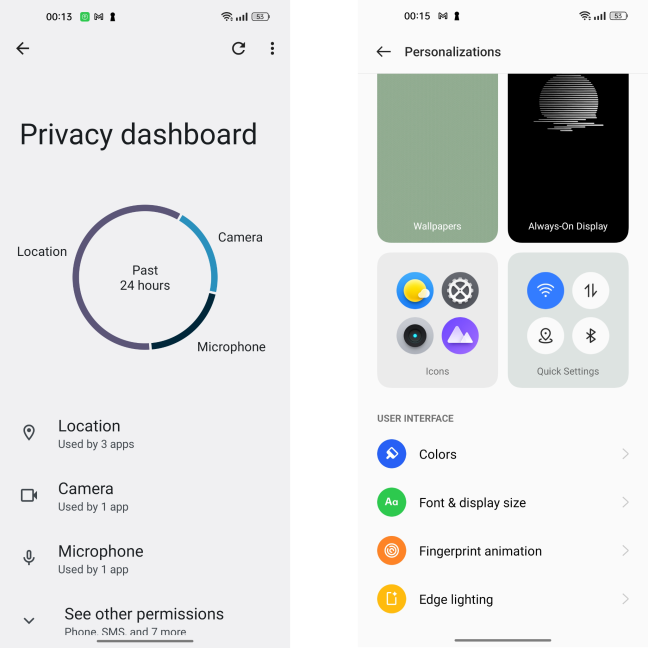 Realme UI 3.0 adds several useful features to Android 12
The operating system and the apps take about 11 GB of space. Apart from the usual Android and Google apps, the Realme GT2 Pro comes with quite a few preinstalled applications (subject to change depending on region). The third-party ones can be uninstalled. Here are the most relevant apps that you can find on the Realme GT2 Pro:
Realme UI 3.0 adds several useful features to Android 12
The operating system and the apps take about 11 GB of space. Apart from the usual Android and Google apps, the Realme GT2 Pro comes with quite a few preinstalled applications (subject to change depending on region). The third-party ones can be uninstalled. Here are the most relevant apps that you can find on the Realme GT2 Pro:
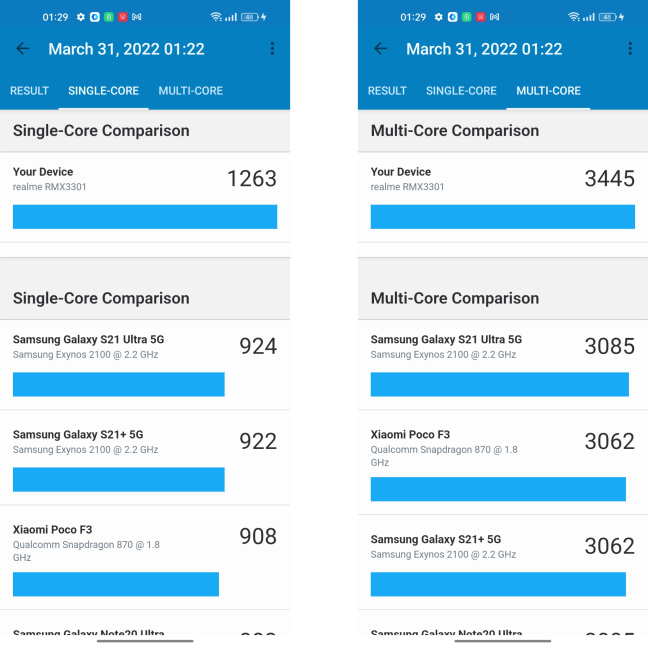 Geekbench scores for the Realme GT2 Pro
Next, I used PCMark for Android to test the performance of the Realme GT2 Pro in multiple productivity scenarios, including video and photo editing. The phone scored 12468 in the Work 3.0 test, a score that is comparable to other flagship smartphones released in 2022.
Geekbench scores for the Realme GT2 Pro
Next, I used PCMark for Android to test the performance of the Realme GT2 Pro in multiple productivity scenarios, including video and photo editing. The phone scored 12468 in the Work 3.0 test, a score that is comparable to other flagship smartphones released in 2022.
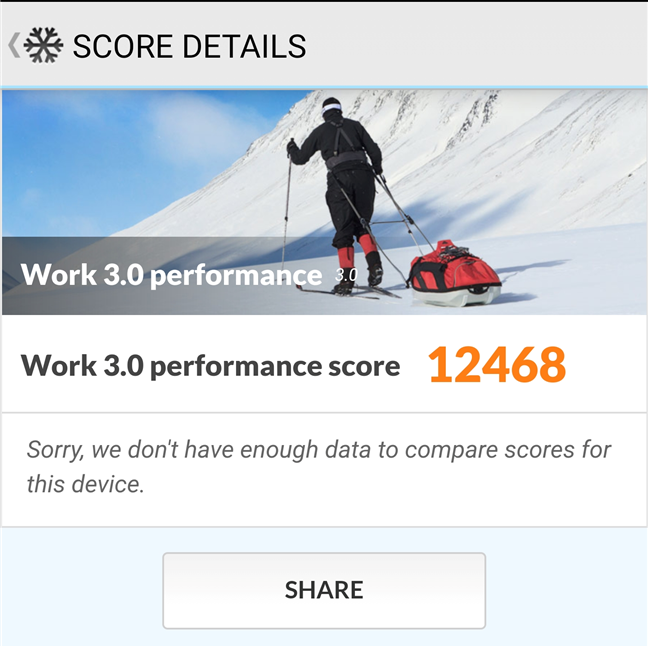
 PCMark score for the Realme GT2 Pro
I then ran 3DMark, more specifically the Wild Life and Wild Life Extreme tests, to evaluate the Adreno 730 GPU. The Realme GT2 Pro obtained an amazing score of 9215 points in Wild Life and 2572 in Wild Life Extreme.
PCMark score for the Realme GT2 Pro
I then ran 3DMark, more specifically the Wild Life and Wild Life Extreme tests, to evaluate the Adreno 730 GPU. The Realme GT2 Pro obtained an amazing score of 9215 points in Wild Life and 2572 in Wild Life Extreme.
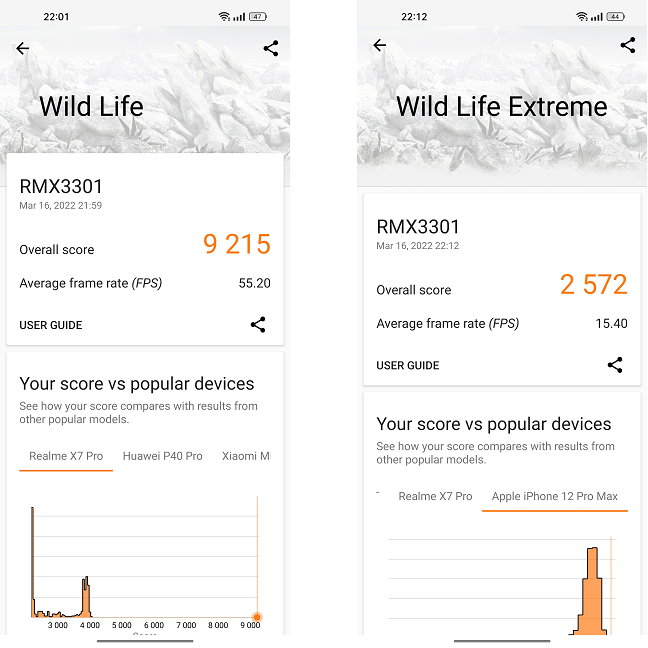 3DMark scores for the Realme GT2 Pro
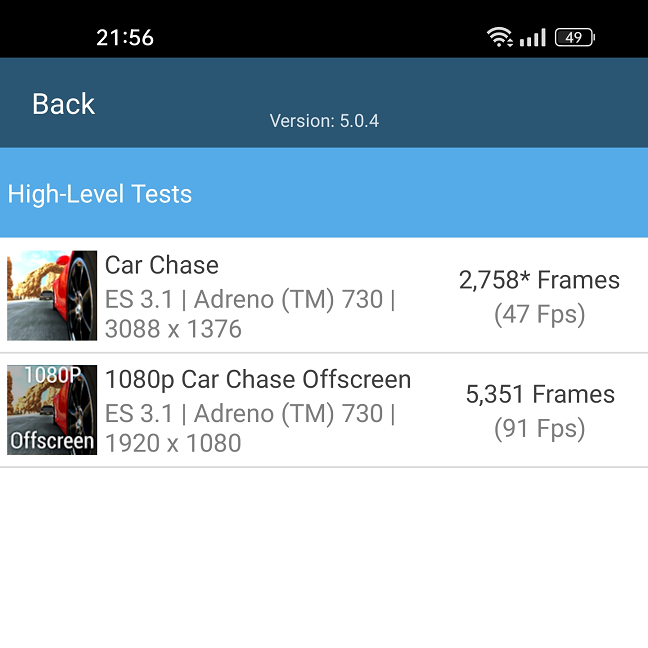
To confirm these awesome GPU results, I ran the Car Chase and 1080p Car Chase Offscreen tests from GFXBench, and yet again, the results were impressive to say the least: 91 fps in the Offscreen test is the most I’ve seen in this suite.
3DMark scores for the Realme GT2 Pro
To confirm these awesome GPU results, I ran the Car Chase and 1080p Car Chase Offscreen tests from GFXBench, and yet again, the results were impressive to say the least: 91 fps in the Offscreen test is the most I’ve seen in this suite.
 GFXBench Car Chase scores for the Realme GT2 Pro
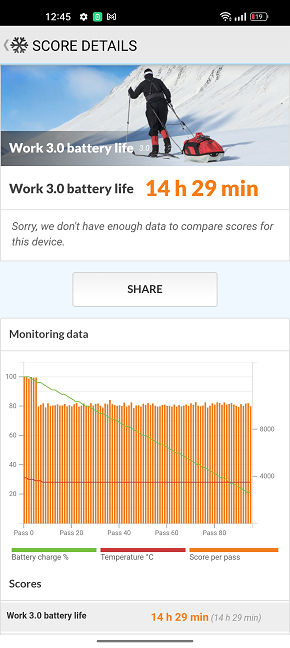
The battery test came next: I charged the Realme GT2 Pro to 100%, then I ran the Battery Life 3.0 test from the PCMark suite. The device took 14 hours and 29 minutes to get to 20%, another stellar result. Interestingly, though, the scores dropped to about 80% of initial performance after the first few runs. This behavior is consistent with high-end chipsets, as they put out a lot of heat and use a lot of battery when running at maximum performance. To manage this, most manufacturers insert several safety features on their smartphones, including throttling down performance in certain scenarios. The heat was definitely not an issue, as the Realme GT2 Pro reported a cool 28 degrees Celsius for most parts of the test.
GFXBench Car Chase scores for the Realme GT2 Pro
The battery test came next: I charged the Realme GT2 Pro to 100%, then I ran the Battery Life 3.0 test from the PCMark suite. The device took 14 hours and 29 minutes to get to 20%, another stellar result. Interestingly, though, the scores dropped to about 80% of initial performance after the first few runs. This behavior is consistent with high-end chipsets, as they put out a lot of heat and use a lot of battery when running at maximum performance. To manage this, most manufacturers insert several safety features on their smartphones, including throttling down performance in certain scenarios. The heat was definitely not an issue, as the Realme GT2 Pro reported a cool 28 degrees Celsius for most parts of the test.
 The Work 3.0 battery life test result for the Realme GT2 Pro
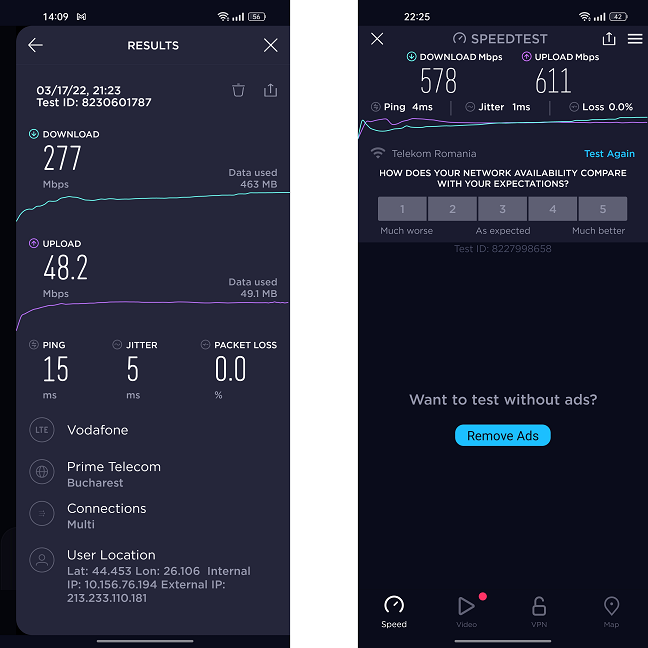
Finally, I tested 5G and Wi-Fi speeds using Ookla’s Speedtest. The Wi-Fi test was performed using a Wi-Fi 6 network with a 1 Gigabit internet connection. The results were decent: 277 Mbps download and 48.2 Mbps upload for 5G mobile networks, and 578 Mbps download / 611 upload for Wi-Fi.
The Work 3.0 battery life test result for the Realme GT2 Pro
Finally, I tested 5G and Wi-Fi speeds using Ookla’s Speedtest. The Wi-Fi test was performed using a Wi-Fi 6 network with a 1 Gigabit internet connection. The results were decent: 277 Mbps download and 48.2 Mbps upload for 5G mobile networks, and 578 Mbps download / 611 upload for Wi-Fi.
 5G and Wi-Fi transfer rate results for the Realme GT2 Pro as tested with Ookla
The performance of the Realme GT2 Pro in benchmarks is stellar. The CPU and GPU are some of the best that are currently available, without question. If you’re looking for a powerhouse, this is it.
5G and Wi-Fi transfer rate results for the Realme GT2 Pro as tested with Ookla
The performance of the Realme GT2 Pro in benchmarks is stellar. The CPU and GPU are some of the best that are currently available, without question. If you’re looking for a powerhouse, this is it.
Realme GT2 Pro: Who is it good for?
The Realme GT2 Pro is an excellent choice if you:- Want a powerful flagship smartphone with a large, high-quality screen
- Are constantly on the move and need a smartphone with good battery and fast charging
- Play a lot of competitive games on your smartphone
- Are a fan of microscope photography or fisheye pictures
Pros and cons
During my testing I liked that:- The Realme GT2 Pro comes with many useful accessories
- There is a clear focus on design and sustainability, with unusual and eco-friendly materials
- The device has a powerful chipset, capable of handling even the most demanding games and applications with ease
- The bright screen has LTPO 2.0, thus being able to change its refresh rate depending on the content displayed
- The microscope camera gives it that extra “wow” factor
- The battery life is above average
- Charging the smartphone takes roughly a half an hour and you can get to 50% in just 12 minutes
- The camera system is not as complete (missing a telephoto camera) and as good as the ones offered by some of Realme GT2 Pro’s competition
- The device lacks wireless charging
- There is no certified protection against dust and water
- The software is not yet fully mature, with occasional software glitches and user interface issues
Verdict
If you want the latest tech and insist on having the most powerful smartphone on the market, you won’t be disappointed with the Realme GT2 Pro. It has the horsepower and the endurance, and while the camera system is not on-par with the rest of the experience, the photos and videos turn out just fine. I strongly recommend it to power users and people who are always on the move, as the battery life is great and charging times are extremely short. Performance doesn’t come cheap, but the Realme GT2 Pro is a tad less expensive than other flagship smartphones.Unboxing the Realme GT2 Pro
The Realme GT2 Pro comes in a solid and relatively large box (when compared to Samsung Galaxy and iPhone packages). Its dimensions are 9.05 x 3.93 x 2.36 inches (230 x 100 x 60 mm). Interestingly, the paper texture of the box matches the feel when touching the back of the phone. It’s not a bug, it’s a feature, as Realme worked hard to make the GT2 Pro feel different than other smartphones. More on that in the next section.Design and build quality
The GT2 Pro is Realme’s best smartphone up to date. And as soon as you feel it in your hand, you begin to see that. The phone weighs 6.67 ounces (189 grams), and its dimensions are 6.43 x 2.94 x 0.32 inches (163.2 x 74.7 x 8.2 mm). The front has a tiny cutout for the selfie camera and a similarly discrete speaker slit situated just above the screen. The optical fingerprint reader is also present under the Corning Gorilla Victus-protected display.Hardware specifications
Realme went all-in when choosing the chipset for the GT2 Pro: it’s powered by the latest Snapdragon 8 Gen 1 SOC, built on a 4 nm technology. The Octa-core processor works together with an Adreno 730 GPU and 8 or 12 GB of RAM to deliver top performance in all usage scenarios. The 8 GB variant comes with 128 or 256 GB of UFS 3.1 storage, while the 12 GB model has either 256 or 512 GB at its disposal. You can increase the available RAM by using a portion of your storage.- A 50 MP wide angle main camera, with an f/1.8, 24mm lens, multi-directional PDAF and optical image stabilization (OIS)
- A 50 MP ultrawide with an f/2.2, 15mm lens, able to capture pictures with an amazing 150˚ field of view, but without autofocus
- An unusual 3 MP camera with an f/3.3 aperture, autofocus, and, wait for it… 40x magnification, used as a microscope!
The smartphone experience on the Realme GT2 Pro
Living with a Realme GT2 Pro is a nice experience, if you’re ok with the size of the smartphone. It’s not the biggest we’ve seen (for example, the Xiaomi 11T that we reviewed a while ago is just a bit larger in all directions), but it’s certainly not a compact smartphone. It feels good to hold, partly thanks to the texture on the back and partly due to its rounded edges that make it appear thinner than it actually is. The screen is bright, it has good viewing angles, and the 120 Hz refresh rate makes the whole experience butter-smooth. By default, the screen resolution is set at 2412 x 1080, but you can set it manually to 3216 x 1440 or enable Auto-select from the Display & brightness menu of the Settings app. While you’re there, you should select Natural in the Screen color mode submenu. The colors are less punchy, but more accurate this way.The camera experience on the Realme GT2 Pro
NOTE: The pictures in the article are resized for optimization purposes. You can find pictures and videos captured by the Realme GT2 Pro in the gallery below: The cameras on the Realme GT2 Pro are just ok. They are certainly not as good as the ones on a Samsung Galaxy S22 for example. The photo quality is simply not up there with the best. Don’t get me wrong, the pictures are not bad by any stretch of the imagination, but other manufacturers achieve better results - lower ISO, more detail, more dynamic range. Both the main camera and the ultrawide one use pixel binning to obtain 12.5 MP pictures from the 50 MP sensors. By default, the photos are saved as JPEG, but you can switch to HEIF format and even RAW when in Pro mode. The camera app is easy to use, almost too simple if you ask me. Apart from the traditional photo/video and portrait modes, it has several additional modes that are accessible from the More menu. Overall, my feeling was that, while covering all the functionality, the Camera app lacks a certain element of finesse.Android 12 and bundled apps
The Realme GT2 Pro comes with Android 12 out of the box and Realme UI 3.0 on top of it. If you’re used to Android 11 and 12, you won’t have any issues with the Realme GT2 Pro. The operating system should get three years of updates and four years of security updates. The Realme UI adds a number of features and customizations, like the Privacy Dashboard and the Personalizations submenu.- Amazon Shopping - the popular market app
- Booking.com - helps you book accommodation and provides travel tips
- Calculator - a simple calculator
- Clone Phone - an app used for transferring data to and from other devices including iPhones
- Games - a useful and well-designed app for managing games and game-related settings
- Facebook, LinkedIn - the ubiquitous social media platforms
- Music - a simple app for playing music stored locally
- Phone Manager - a control center for managing your smartphone’s health - everything from privacy and app management to battery settings
- PUBG Mobile - the only preinstalled game - a popular first-person shooter
- Videos - a simple app for playing videos stored locally
Performance in benchmarks
The results obtained here should only confirm the real-life experience: that the Realme GT2 Pro is one of the fastest smartphones on the market today. Let’s see if that holds true. We start off as usual with Geekbench, where the Realme GT2 Pro doesn’t disappoint: it achieves a maximum score of 1263 for the single-core test and 3445 for multi-core. The multi-core score is similar to the one obtained by the Snapdragon version of the Samsung Galaxy S21+, while the single-core performance outshines even the newly-released Samsung Galaxy S22.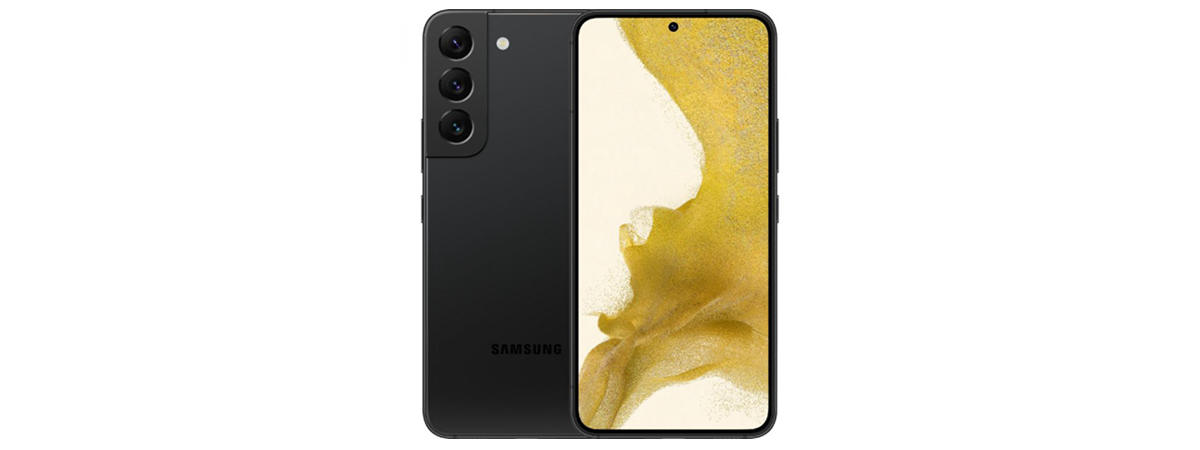

Discussion (0)
Comments are closed.