



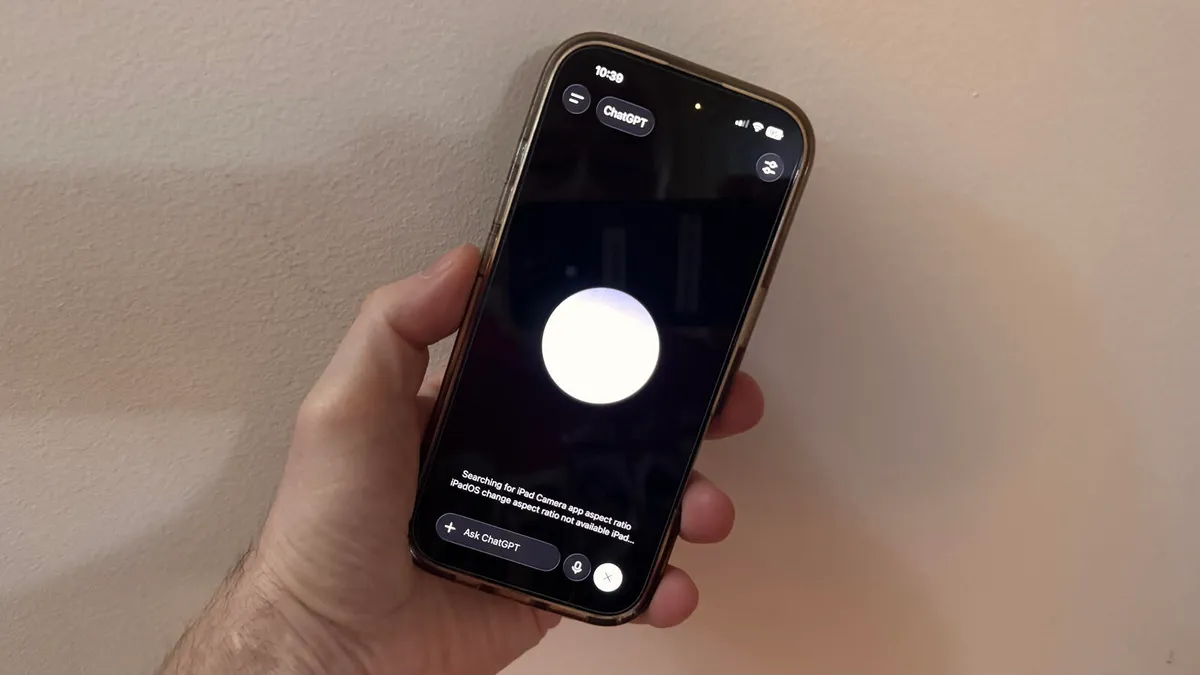
OpenAI is upgrading ChatGPT Voice with GPT Live, a new generation of voice models designed to make spoken conversations feel less rigid and more natural. The biggest change is full duplex audio, which allows ChatGPT to listen and speak at the same time instead of waiting for one side to finish before responding.
That matters because earlier voice assistants often worked like a walkie talkie. You spoke, stopped, waited for the system to process the request, then listened to the reply. This structure made conversations slower and more awkward, especially when you paused to think or accidentally got interrupted by background noise.
GPT Live is built to reduce that friction. Instead of relying on silence to decide when a turn has ended, the model continuously processes incoming audio while generating its own response. It can decide many times per second whether to keep listening, speak, pause, acknowledge what you said, or call another tool.
GPT Live can handle interruptions, pauses, and background conversation more smoothly
The earlier version of ChatGPT Voice used a cascaded system. One model converted speech to text, another generated the response, and a third turned that response back into audio. That setup worked, but it added delay and lost some information between steps. Advanced Voice Mode later moved to a more unified model, but it still depended on turn taking.
GPT Live changes the interaction model more directly. It can offer short acknowledgments such as “yeah” or “mhmm” while you are speaking, stay quiet when you need a moment, and respond more naturally if you interrupt it. This should make long conversations, tutoring, brainstorming, troubleshooting, and language practice feel more fluid.
| GPT Live feature | What it changes |
|---|---|
| Full duplex voice | ChatGPT can listen and talk at the same time |
| Continuous audio processing | The model no longer depends only on silence to detect turns |
| Interruption handling | You can cut in without completely breaking the conversation |
| Short acknowledgments | ChatGPT can signal that it is following along |
| Tool handoff | More complex requests can be routed to a stronger model |
| Visual answer cards | Weather, stocks, and sports can show on screen while Voice responds |
| Safety handling | Real time safeguards can guide or end risky conversations |
| Parental controls | Parents can manage whether children can access ChatGPT Voice |
For more complex questions, GPT Live can hand work to GPT 5.5 in the background while keeping the voice conversation active. That means simple exchanges can stay fast, while harder requests involving deeper reasoning or web search can get more processing time. OpenAI is also giving people reasoning level choices, including Instant for quick replies and Medium or High when a question needs more thought.

The upgrade also adds richer visual answers to ChatGPT Voice. For topics such as weather, stocks, and sports, the app can show on screen cards alongside the spoken response. That is useful because some information is easier to understand visually than through voice alone.
OpenAI is also emphasizing safety because live spoken conversation brings different risks than text chat. Voice exchanges happen quickly, and emotional tone can change during the session. The company says GPT Live includes audio native testing, internal red teaming, and real time safeguards for sensitive areas such as self harm, psychosis and mania, emotional reliance, violence, and sexual content.
When the system detects that a conversation may be moving into unsafe territory, it can guide the model toward a safer response, show extra safety messaging and resources, or end the voice session in higher risk cases. For self harm related conversations, OpenAI has adapted its existing support flows for voice, including crisis helpline support where appropriate.
Parents also get more control. OpenAI says age appropriate behavior has been trained into the model, and parents can decide whether their child can use ChatGPT Voice through Parental Controls. In higher risk situations involving signs of possible self harm or suicidal intent, linked parents may receive a notification.
The rollout is starting across iOS, Android, and the web. GPT Live 1 will become the default voice model for Go, Plus, and Pro subscribers, while free accounts will receive GPT Live 1 mini. Video and screen sharing are not included at launch, but OpenAI says they are planned.
The main promise of GPT Live is not that ChatGPT simply sounds better. It is that the assistant can follow the rhythm of real conversation more closely. If it works as intended, Voice should feel less like issuing commands to a system and more like speaking with something that can listen, pause, respond, and adapt in real time.



Discussion (0)
Be the first to comment.