



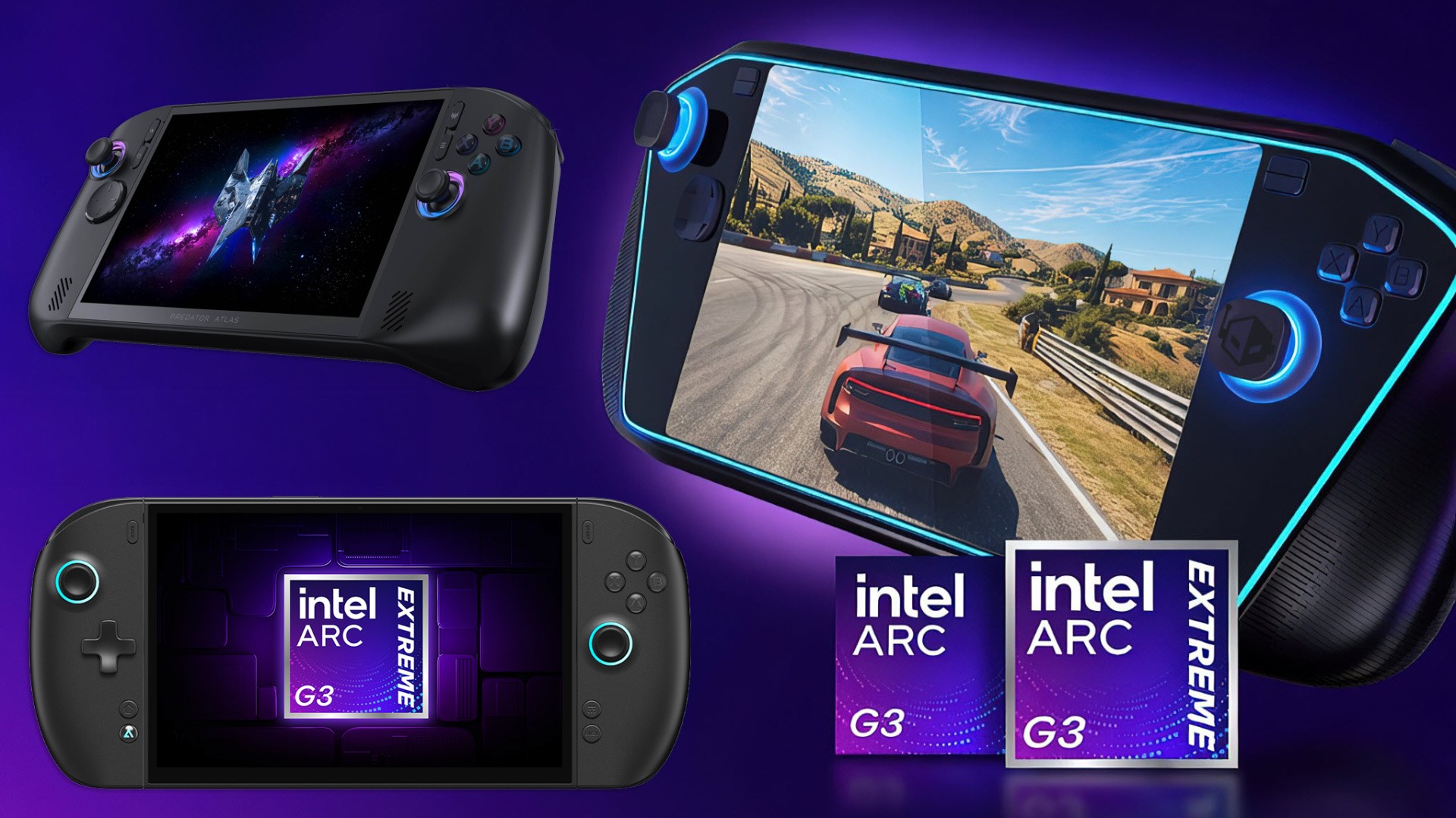
ONEXPLAYER has announced two new high end Windows gaming handhelds, and the most interesting one for Intel fans is the ONEXPLAYER 3. The device will use Intel Arc G3 Extreme graphics, making it one of the first handhelds built around Intel’s new gaming focused Arc G series platform.
The ONEXPLAYER 3 is built around an 8.8 inch OLED display with a native landscape layout, 144Hz refresh rate, VRR, and HDR support. That gives it a strong screen spec for handheld gaming, especially as more portable PC makers move away from basic LCD panels toward OLED displays with smoother refresh rates.
The device also uses a 3 in 1 design. It can work as a handheld, tablet, or small laptop style machine when paired with its optional magnetic backlit keyboard. Detachable controllers are part of the design too, giving it more flexibility than a traditional fixed controller handheld.
ONEXPLAYER is offering both Intel and AMD options this time
The ONEXPLAYER 3 is the Intel model, while the ONEXPLAYER X2 Mini Pro uses AMD’s Ryzen AI Max Plus 395 platform. That gives the company two very different high end handhelds, one focused on Intel’s new Arc G3 Extreme graphics and the other built around AMD’s powerful Strix Halo class chip.
| Model | Platform | Display | Main extra feature |
|---|---|---|---|
| ONEXPLAYER 3 | Intel Arc G3 Extreme graphics | 8.8 inch OLED, 144Hz, VRR, HDR | 85Wh internal battery |
| ONEXPLAYER X2 Mini Pro | AMD Ryzen AI Max Plus 395 | 8.8 inch OLED, 144Hz, VRR | External liquid cooling and swappable battery |
The ONEXPLAYER 3 includes an 85Wh internal battery, Hall Effect joysticks, rear buttons, USB4, USB A, mini SSD expansion, microSD, and a 3.5 mm audio jack. Those specs suggest it is being positioned as a premium handheld for both gaming and productivity, especially with the optional keyboard.
The X2 Mini Pro takes a more extreme approach. It uses AMD’s Ryzen AI Max Plus 395, which combines a 16 core Zen 5 CPU, 40 RDNA 3.5 compute units, and a 50 TOPS XDNA 2 NPU. ONEXPLAYER claims up to 126 TOPS of combined INT8 AI performance.
The AMD model also supports the Frost Bay external liquid cooling system, which can allow up to 120W peak performance. That makes it less like a simple handheld and more like a hybrid device that can become a higher power mini gaming system when docked or cooled externally.
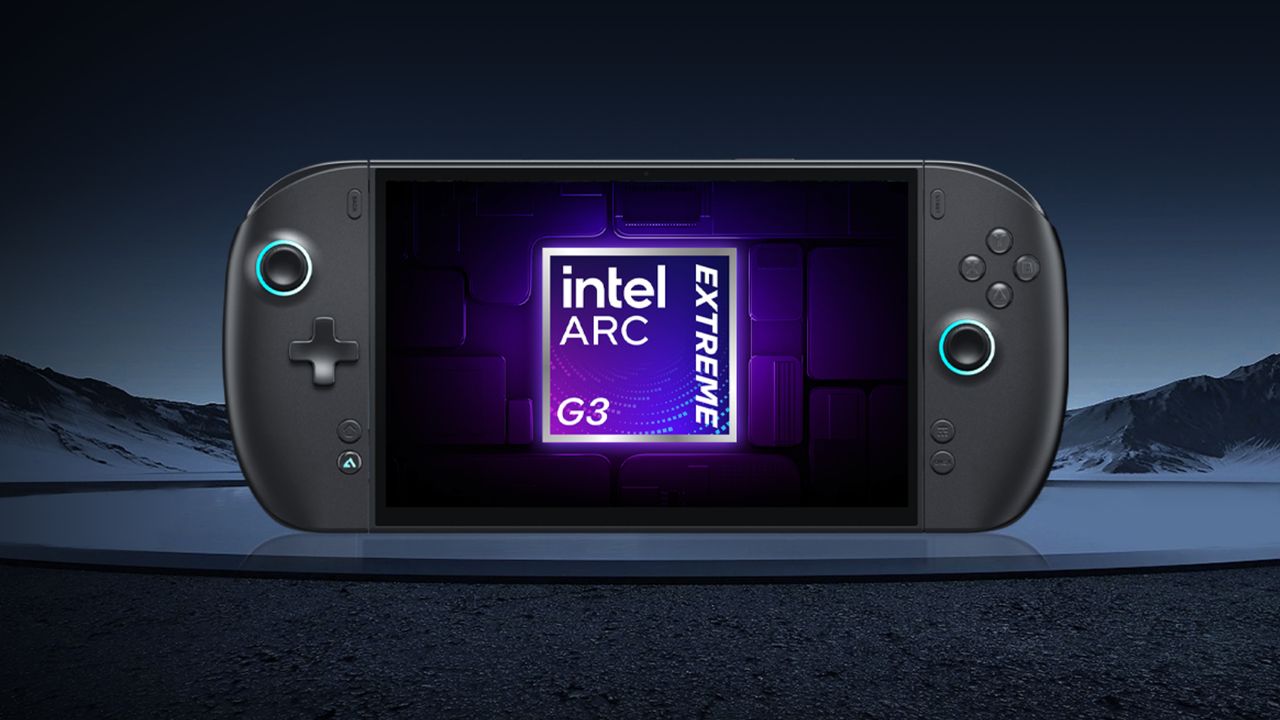
Both devices use detachable controllers and support optional magnetic backlit keyboards. The X2 Mini Pro gets redesigned controllers with adjustable triggers and interchangeable D pad options, while the ONEXPLAYER 3 focuses more on the integrated battery and Intel handheld platform.
These devices also show where the premium handheld PC market is heading. Companies are no longer only competing with Steam Deck style designs. They are adding OLED screens, detachable controls, keyboard support, external cooling, larger batteries, and high end chips that blur the line between handheld, tablet, and mini laptop.
Pricing has not been announced yet, and that will be the biggest question. These are clearly not budget handhelds. The ONEXPLAYER X2 Mini Pro campaign is planned for mid June 2026, while the ONEXPLAYER 3 campaign is expected in mid to late June through Indiegogo.
For now, ONEXPLAYER 3 stands out because it gives Intel’s Arc G3 Extreme handheld push a major showcase. If Intel’s new chip can deliver strong performance and battery efficiency, this could become one of the more important Windows handhelds to watch in 2026.



Discussion (0)
Be the first to comment.