



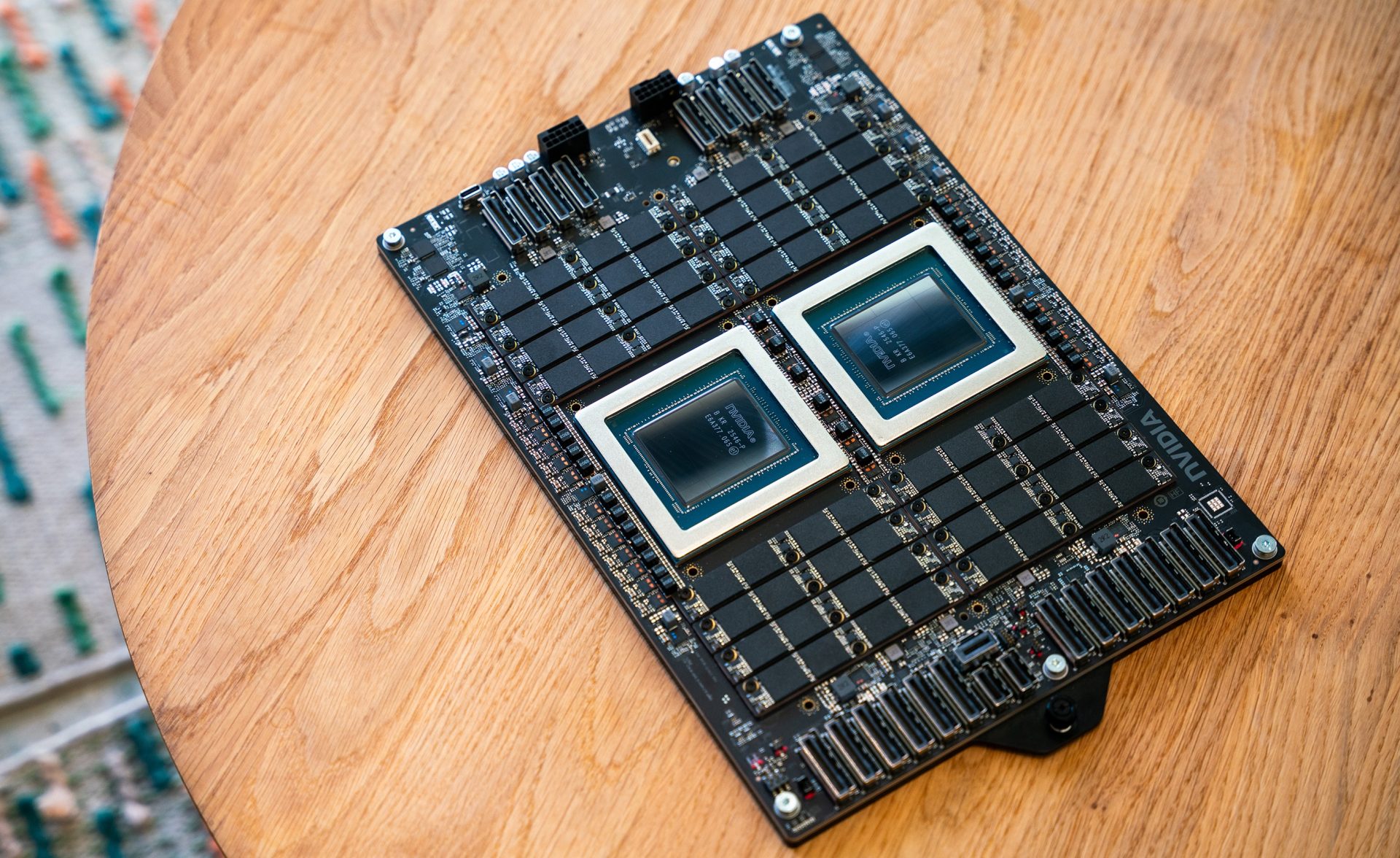
NVIDIA's upcoming Vera CPU has posted a strong result against Intel's Xeon 6 in a database workload, delivering up to 48 percent higher query performance despite using fewer CPU cores.
The comparison used DuckDB and the full TPC H decision support workload, which measures how well a system handles complex database queries across large datasets. Unlike AI focused tests, this benchmark is designed around traditional analytics and enterprise database performance.
The test compared an 88 core NVIDIA Vera processor with a 96 core Intel Xeon 6 system.
Vera leads with fewer cores
Both platforms were configured with 768 GB of memory, more than 3 TB of NVMe storage and Ubuntu 26.04.
The Intel Xeon 6 system used Hyper Threading, while Vera used NVIDIA's Spatial Multi Threading technology.
Two DuckDB versions were tested: version 1.5.5 and the newer 2.0.0 alpha release.
| Configuration | DuckDB version | Median TPC H score |
|---|---|---|
| Intel Xeon 6, 96 cores | 1.5.5 | 1,673,422 |
| Intel Xeon 6, 96 cores | 2.0.0 alpha | 2,109,782 |
| NVIDIA Vera, 88 cores | 1.5.5 | 2,482,590 |
| NVIDIA Vera, 88 cores | 2.0.0 alpha | 3,073,293 |
The first warmup run was excluded, after which three benchmark runs were used to calculate the median score.
With DuckDB 1.5.5, Vera reached about 2.48 million points compared with roughly 1.67 million for Xeon 6.
Using DuckDB 2.0.0 alpha, Vera increased to about 3.07 million, while Xeon 6 reached around 2.11 million.
That gives Vera an advantage of roughly 46 to 48 percent across the two software versions.
DuckDB 2.0 also improves both platforms
The newer DuckDB release provided a sizable performance improvement regardless of processor.
Moving from version 1.5.5 to 2.0.0 alpha increased performance by roughly 24 to 26 percent on both Vera and Xeon 6.
That means some of the overall gains shown in the newer results come from software improvements rather than processor architecture alone.
The more important comparison is between the two CPUs when running the same DuckDB version, where Vera still maintains a substantial advantage.
TPC H measures traditional enterprise workloads
TPC H is designed to represent decision support systems rather than AI inference or model training.
Its workload includes complex business queries and concurrent database operations across large datasets. The resulting score reflects several factors, including single stream query performance and throughput when multiple queries are processed.
That makes the result notable because NVIDIA has mainly promoted Vera as part of its broader AI computing platform.
The benchmark suggests the processor may also compete strongly in conventional server workloads such as analytics and database processing.
Vera broadens NVIDIA's CPU ambitions
The result also shows why NVIDIA's move into server CPUs could matter beyond tightly coupled AI systems.
Vera uses fewer cores than the Xeon 6 system tested here, yet still produced higher query throughput under the same memory capacity, storage class and operating system.
A single benchmark cannot establish overall processor leadership, since enterprise workloads vary significantly and performance can depend on software optimization, memory behavior, power limits and compiler support.
Still, the DuckDB results provide an early indication that Vera may be competitive in more than AI focused applications.
For database analytics and decision support workloads specifically, the 88 core Vera processor showed a clear lead over the tested 96 core Xeon 6 configuration, reaching up to 48 percent higher performance in this benchmark.
Discussion (0)
Be the first to comment.