



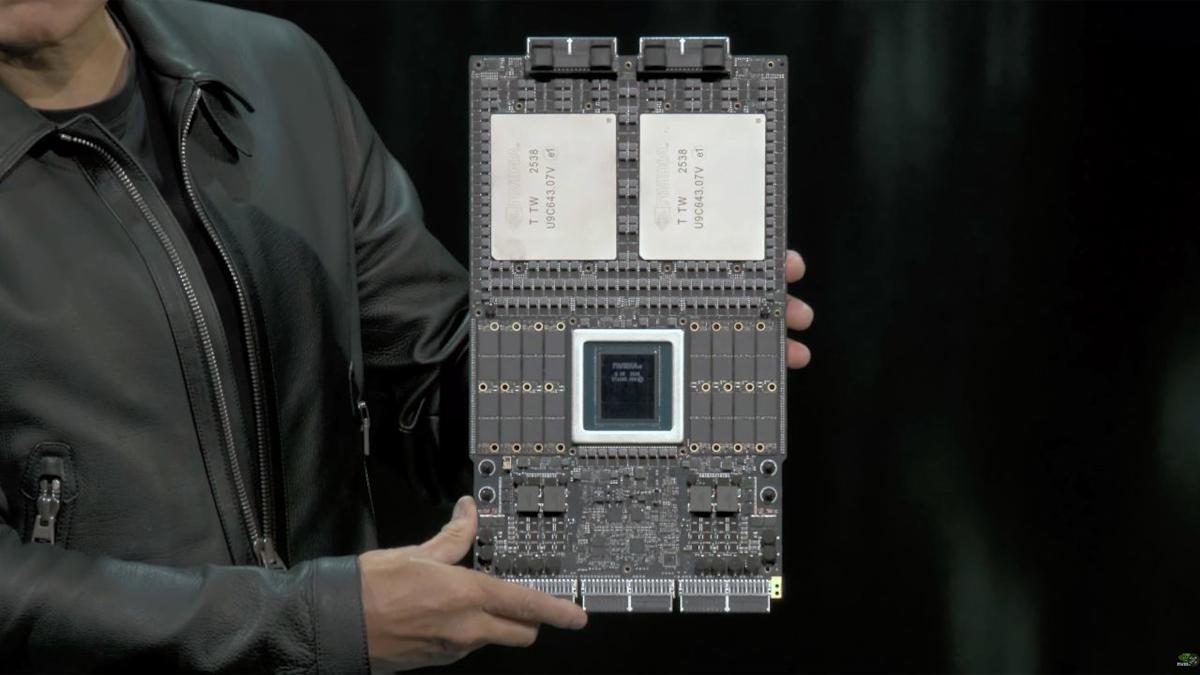
NVIDIA expects its Vera CPU business to become a major new revenue source as AI companies build larger systems for agentic AI and inference workloads. The company says Vera is already in full production, and early CPU racks have been delivered to firms including OpenAI, SpaceX, Anthropic, and Oracle.
Vera is NVIDIA’s first custom CPU platform for this market. It is based on Arm and uses 88 custom Olympus cores. NVIDIA says it can deliver 50 percent better performance, twice the performance per watt, and four times the rack density compared with traditional x86 CPUs.
NVIDIA is entering the CPU market with a chip built for agentic AI systems
The company is positioning Vera as a CPU made for workloads such as orchestration, tool calling, reinforcement learning, data analytics, agent sandboxing, and long context state management. These are the kinds of tasks expected to grow as AI systems move beyond simple chatbot use and into more complex agent based work.
NVIDIA CFO Colette Kress said Vera opens a new $200 billion total addressable market for the company. NVIDIA also sees nearly $20 billion in total CPU revenue this year, with the report saying that figure is tied to standalone Vera CPUs rather than all Vera related products.
| Area | Vera CPU details |
|---|---|
| CPU type | Custom Arm based CPU |
| Core design | 88 custom Olympus cores |
| Target workloads | Agentic AI and inference |
| Claimed performance | Up to 1.5 times faster per core |
| Efficiency claim | Up to 2 times performance per watt |
| Rack density claim | Up to 4 times higher than x86 alternatives |
| Revenue estimate | Nearly $20 billion in standalone CPU revenue this year |
| Market opportunity | $200 billion total addressable market |
Vera will also be used in several ways across NVIDIA’s AI platform. It will serve as the host CPU for Vera Rubin racks, where two Vera CPUs connect with four Rubin GPUs. NVIDIA also plans standalone Vera CPUs, Vera with CX9 for storage, and Vera with CX9 for security and confidential computing.
Supply is expected to be one of the main limits. Jensen Huang said NVIDIA expects to be supply constrained through the life of Vera Rubin. Memory is another pressure point because Vera depends heavily on LPDDR5X, which is already in high demand because of the AI hardware cycle.
This is related to the earlier Vera Rubin rack cost report, but it is a different story. The previous report focused on the rising cost of memory inside NVIDIA’s next AI rack. This one focuses on Vera as a standalone CPU business and NVIDIA’s attempt to become a major CPU supplier as AI infrastructure demand grows.

Discussion (0)
Be the first to comment.