



Nvidia’s most advanced Blackwell AI systems are reportedly selling for more than double their previous prices on China’s black market as export restrictions, customs scrutiny, and strong demand make high-end hardware increasingly difficult to obtain.
The sharpest increase appears to involve Nvidia’s DGX B300 server platform. Chinese traders reportedly listed the system for more than 8 million yuan, or around $1.1 million, compared with about 4 million yuan six months earlier. The same class of system is generally priced far lower in the United States, showing how much scarcity is changing the market inside China.
Demand is also rising for Nvidia’s RTX Pro 6000 Blackwell graphics card, especially among smaller AI companies that need large amounts of GPU memory for local model training, inference, and enterprise AI workloads.
Blackwell Hardware Is Becoming More Expensive in China
The black market price increases reflect a mix of supply pressure and continued demand from Chinese technology companies.
The United States has placed export controls on several advanced Nvidia products, including Blackwell-based systems and some high-end professional GPUs. At the same time, China has pushed local companies to use domestic AI hardware where possible, including accelerators from Huawei and other local chipmakers.
That combination has not removed demand for Nvidia hardware. Instead, it has made officially unavailable products more valuable to companies that want to keep using Nvidia’s software ecosystem, CUDA tools, and established AI infrastructure.
| Nvidia hardware | Reported China market price | Previous reported price |
|---|---|---|
| DGX B300 server system | More than 8 million yuan | Around 4 million yuan |
| RTX Pro 6000 Blackwell | Around 130,000 yuan | Around 50,000 yuan |
| RTX 5090 and related variants | Limited availability | Varies by seller |
The DGX B300 is particularly valuable because it combines multiple high-end Blackwell GPUs inside one server platform. Systems like this are designed for large AI workloads and can include enormous amounts of GPU memory.
RTX Pro 6000 Blackwell Is Also Seeing Heavy Demand
The RTX Pro 6000 Blackwell has become another expensive target because of its 96GB of memory.
That amount of VRAM makes it more useful for AI developers and smaller research groups than consumer graphics cards such as the RTX 5090. While the RTX 5090 offers strong gaming performance, its lower memory capacity can limit large model workloads.
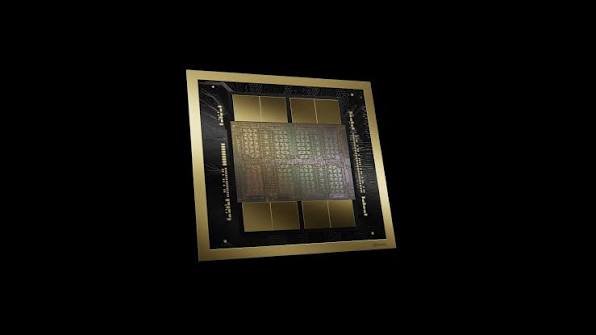
For AI startups, developers, and companies building internal tools, 96GB of VRAM can be enough to run larger models locally without needing a much bigger data centre system.
This has helped push the RTX Pro 6000 Blackwell to around 130,000 yuan in some reports, roughly equal to $20,000. That is far above normal workstation GPU pricing, but buyers appear willing to pay because legal alternatives remain limited.
Older Nvidia GPUs Are Also Becoming More Valuable
The pressure is not limited to Blackwell hardware.
Older Nvidia accelerators such as the A100 are also reportedly becoming more expensive as buyers look for any available option that can run AI workloads. Gaming GPUs are also being adapted for AI tasks in some cases, especially when professional or data centre hardware is unavailable.
This shows how export restrictions can shift demand rather than remove it. Companies that cannot access the newest products may move to older GPUs, modified gaming cards, rented compute capacity, or domestic alternatives.
The problem for buyers is that all of these options can cost more, offer less performance, or require more software work.
China’s Domestic AI Chip Push Faces a Difficult Transition
China has invested heavily in domestic AI hardware, and companies such as Huawei are becoming more important in the local accelerator market.
However, switching away from Nvidia is not always simple. Many AI tools, frameworks, and enterprise deployments are built around Nvidia’s CUDA ecosystem. Moving to a different hardware platform can require software changes, retraining, testing, and new infrastructure planning.
For companies already running Nvidia-based AI systems, the transition may take time. That helps explain why demand for restricted hardware remains strong even as China encourages local alternatives.
The growing prices also show that black market supply is becoming riskier. Stronger customs checks, investigations, and tighter international enforcement can make it harder for traders to move expensive AI hardware into the country.
Nvidia’s Blackwell Demand Is Showing No Sign of Slowing
The Blackwell price surge highlights how valuable high-end AI hardware has become in 2026.
Demand for model training, inference, AI agents, enterprise tools, and data centre expansion continues to put pressure on the global supply of advanced GPUs. In China, that pressure is amplified by export restrictions and uncertainty around future availability.
For companies that need Nvidia hardware, the choice is becoming increasingly difficult. They can pay extreme prices through unofficial channels, switch to older systems, rent external compute, or begin moving to domestic AI chips.
None of those options is simple, and the rising cost of Nvidia Blackwell hardware suggests the situation may become even more difficult before it improves.



Discussion (0)
Be the first to comment.