



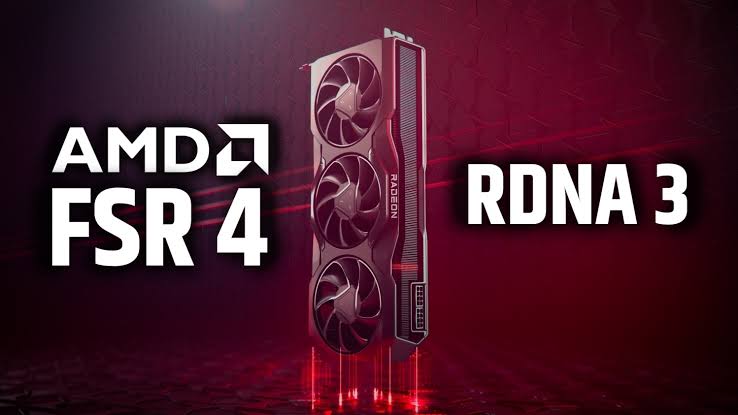
AMD’s FSR 4.1 upscaling technology is showing promising results on older Radeon RX 7000 graphics cards, with one Radeon RX 7900 XTX owner reporting nearly double the frame rate in Cyberpunk 2077 at 4K resolution with ray tracing enabled.
The test showed the RX 7900 XTX averaging around 24 FPS at native 4K resolution using the Ray Tracing Ultra preset. After enabling FSR 4.1 on the Balanced setting, performance reportedly rose to almost 50 FPS. Switching to the Performance preset pushed the frame rate above 60 FPS.
The results suggest that FSR 4.1 could give RDNA 3 owners a meaningful upgrade in demanding games without requiring new hardware. Cyberpunk 2077 remains one of the toughest graphics tests available, especially at 3840 x 2160 resolution with ray tracing enabled.
FSR 4.1 Gives the RX 7900 XTX a Major Boost at 4K
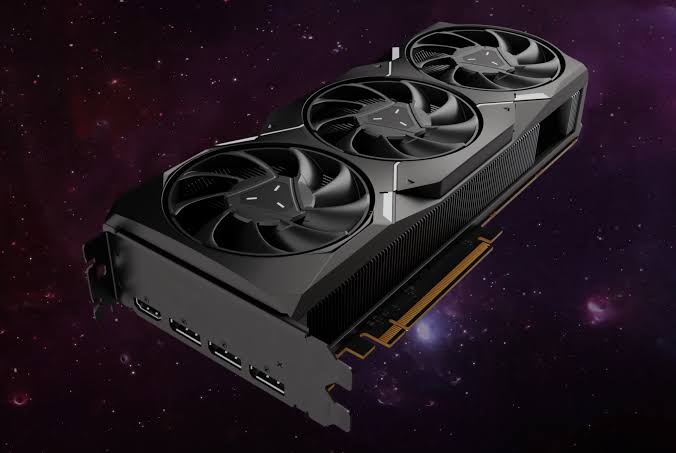
The Radeon RX 7900 XTX is AMD’s flagship RDNA 3 graphics card, but ray tracing at 4K can still reduce performance heavily in modern games. Native rendering places a major load on the GPU, particularly when advanced lighting, reflections, and shadows are enabled.
The reported benchmark shows how much difference AI-assisted upscaling can make.
| Cyberpunk 2077 setting | Average frame rate |
|---|---|
| Native 4K, RT Ultra | Around 24 FPS |
| 4K, RT Ultra, FSR 4.1 Quality | More than 40 FPS |
| 4K, RT Ultra, FSR 4.1 Balanced | Around 50 FPS |
| 4K, RT Ultra, FSR 4.1 Performance | More than 60 FPS |
FSR works by rendering the game internally at a lower resolution before reconstructing the image for the target display resolution. This reduces the workload on the graphics card while aiming to retain image quality close to native rendering.
In this case, the Balanced preset appears to offer a useful middle ground. It delivers a large performance increase while reportedly keeping visual quality at a level that remains suitable for 4K gaming.
RDNA 3 Cards Use a Different FSR 4.1 Model
AMD’s RX 7000 graphics cards do not use the same FSR 4.1 model as the newer RX 9000 series.
RDNA 3 hardware uses an INT8 version of the upscaling model, while RDNA 4 cards use the more advanced FP8 version. Despite that difference, AMD has said it expects image quality to remain broadly similar across both GPU generations.
That is important for RX 7000 owners because it means FSR 4.1 is not limited to the latest Radeon hardware. The technology could help extend the usable life of cards such as the RX 7800 XT, RX 7900 XT, and RX 7900 XTX in games that support it.
FSR 4.1 is more demanding than the older FSR 3.1 technology, but the new approach is designed to provide cleaner image reconstruction and improved detail. In many cases, FSR 4.1 Balanced may offer better image quality than FSR 3.1 Quality while still delivering higher frame rates.
Cyberpunk 2077 Remains a Tough Test for Modern GPUs
Cyberpunk 2077 is often used to test graphics hardware because it can heavily stress GPUs through high resolution textures, dense environments, ray tracing effects, and demanding lighting.
Running the game at 4K with the Ray Tracing Ultra preset is difficult even for high-end graphics cards. Achieving more than 60 FPS with upscaling enabled can make the game feel much smoother, especially on 120Hz or higher refresh rate displays.
The improved result does not mean every game will see the same performance gain. Results will depend on the game engine, the selected preset, CPU performance, driver version, resolution, and whether FSR 4.1 is properly supported.
Still, the RX 7900 XTX test shows that FSR 4.1 may be one of the most important updates for Radeon RX 7000 owners. It gives older AMD graphics cards a better chance of handling demanding ray-traced games at 4K without forcing players to choose between image quality and playable frame rates.

Discussion (0)
Be the first to comment.