



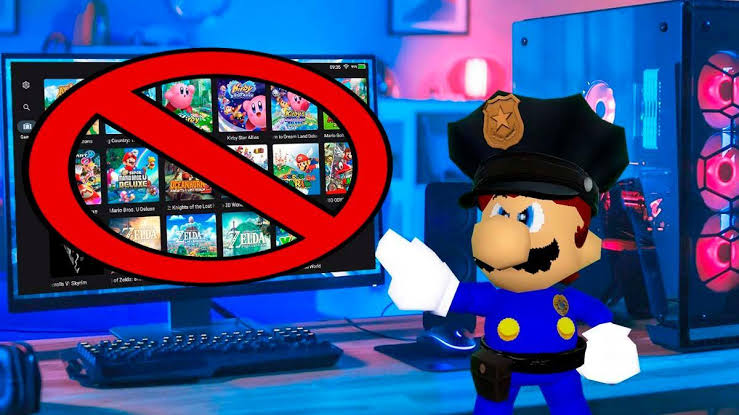
Nintendo has launched another broad legal push against Nintendo Switch emulation projects, with more than 400 GitHub repositories reportedly removed through recent DMCA takedown requests.
The latest action affects several emulator projects and forks, including Suyu, Skyline, Yuzu based repositories, and MonoNX.
Nintendo’s argument centers on circumvention of the encryption used to protect Switch games from unauthorized copying and playback.
Suyu was the biggest target in the latest sweep
The largest project affected was Suyu, a Nintendo Switch emulator that grew after the shutdown of Yuzu.
Suyu reportedly had a network of 311 repositories before the latest takedown.
Several other emulator networks were also hit.
| Emulator or fork | Reported repositories affected |
|---|---|
| Suyu | 311 |
| Skyline | 29 |
| Yuzu Android | 8 |
| NicolasArvani Yuzu fork | 14 |
| IpwnedU Yuzu fork | 1 main repository |
| Yuzu EA4176 | 21 forks |
| MonoNX | 17 forks |
Together, the removals push the total beyond 400 repositories.
Nintendo continues the strategy used against Yuzu and Ryujinx
This is not Nintendo’s first major effort against Switch emulators.
Yuzu was targeted in March 2024, while Ryujinx followed later that year.
Both projects had reached a stage where a large portion of the Nintendo Switch library could run on PC, including many games at playable or near playable quality.
After those projects disappeared, new forks and replacement emulators began appearing.
Suyu became one of the most prominent examples.
The latest takedowns show that Nintendo is continuing to target those successor projects rather than limiting its enforcement to the original developers.
Most of the affected projects were connected to Yuzu
A large part of the new wave appears to focus on software derived from or closely related to Yuzu.
That includes Android versions, forks, and archived builds.
This matters because once an open source project has been copied and redistributed, removing the original repository does not necessarily remove every copy of the code.
New forks can continue appearing elsewhere.
That makes enforcement more difficult over time.
Nintendo says emulator software can enable piracy
Nintendo’s legal position is that Switch emulation tools can bypass technological protection measures used to secure games.
That is the central point behind the DMCA notices.

The company has consistently argued that this kind of software can facilitate unlicensed copying and play.
Emulation itself remains a complex legal topic because the legality can depend on how software is developed, how copyrighted material is handled, and whether protection measures are being bypassed.
In this case, Nintendo is specifically relying on circumvention related claims.
The takedowns may not end Switch emulation development
Even with hundreds of repositories removed, the wider emulator ecosystem is unlikely to disappear immediately.
Once source code has been widely distributed, copies can reappear under different names or in new repositories.
That is especially true for mature projects that already had large developer and user communities before enforcement began.
The current pattern suggests Nintendo may need to keep issuing takedown requests as new forks appear.
Switch emulation has entered a long enforcement cycle
The latest GitHub sweep shows how the situation has changed since the shutdown of the original major emulators.
Instead of focusing on one or two large projects, Nintendo is now dealing with a much wider network of forks, archives, and derivative builds.
That makes the legal strategy broader and more repetitive.
For developers, it increases the risk of maintaining public emulator repositories tied to Switch software.
For Nintendo, it shows that removing the biggest projects did not fully stop the code from spreading.
More than 400 repositories disappearing in a single wave is a major enforcement action, but it may be only one stage in a much longer fight over Nintendo Switch emulation.


Discussion (0)
Be the first to comment.