



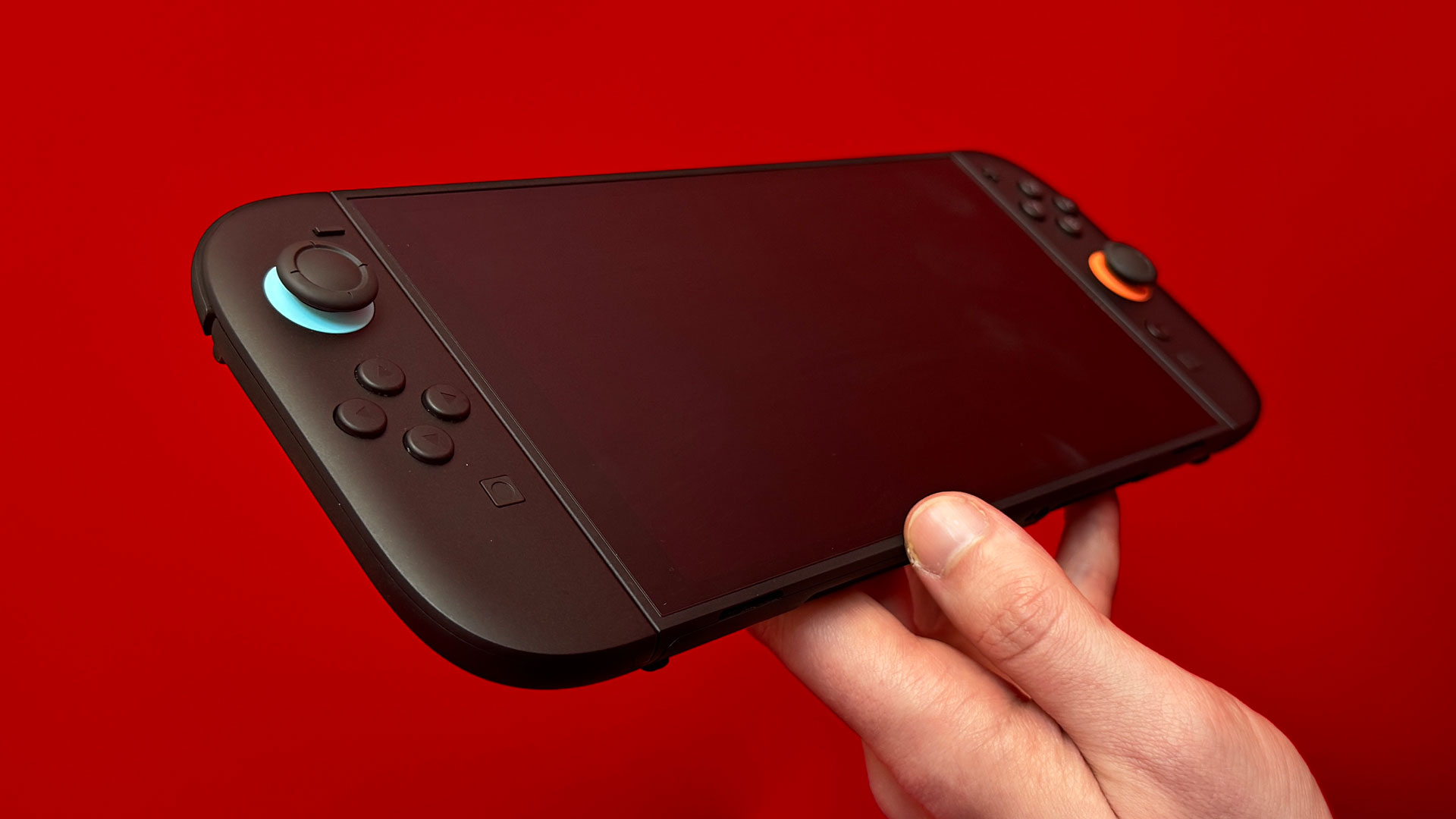
Nintendo Switch 2 has completed its first year on the market, and the console has already reached nearly 20 million hardware sales. Nintendo launched the second generation hybrid system on June 5, 2025, and its latest sales data lists 19.86 million units sold as of March 31, 2026.
That is a strong start for the follow up to one of Nintendo’s most successful consoles. The original Switch is still far ahead with 155.92 million lifetime hardware sales, but Switch 2 has already passed the Wii U’s lifetime sales in less than a year. Software sales for Switch 2 have reached 48.71 million units, showing that buyers are also building libraries quickly.
Nintendo kept the same hybrid concept, but upgraded almost every major hardware component. Switch 2 uses a larger 7.9 inch 1080p LCD display with HDR10 and VRR support up to 120Hz. In TV mode, the console supports up to 4K output at 60 FPS, or up to 120 FPS at lower resolutions such as 1080p and 1440p.
The biggest technical change is the processor. Switch 2 uses a custom NVIDIA chip reportedly known as T239, with an Ampere based GPU, 1536 CUDA cores, and 12GB of LPDDR5X memory. That is a major jump from the original Switch, which used the Tegra X1 processor with Maxwell graphics and 256 CUDA cores.
NVIDIA’s Ampere architecture gives Switch 2 a large jump over the original model
The Switch 2 is not using NVIDIA’s latest PC GPU architecture, but Ampere still gives Nintendo a much stronger hardware base than Maxwell. NVIDIA introduced Ampere with the GeForce RTX 30 series in 2020, while Switch 2 arrived five years later with the same architecture family.
That may sound old compared to current desktop GPUs, but for a handheld hybrid console, the upgrade is still significant. Switch 2 adds Tensor Cores, RT Cores, DLSS support, AI assisted upscaling, and ray tracing capability. NVIDIA previously claimed up to 10 times the graphics performance of the original Switch, although real game performance depends on clocks, power limits, resolution, and developer choices.
| Feature | Nintendo Switch 2 | Original Nintendo Switch |
|---|---|---|
| Launch date | June 5, 2025 | March 3, 2017 |
| Display | 7.9 inch 1080p LCD, 120Hz, HDR10, VRR | 6.2 inch 720p LCD, 60Hz |
| Docked output | Up to 4K 60 FPS | Up to 1080p 60 FPS |
| Memory | 12GB LPDDR5X | 4GB LPDDR4 |
| Storage | 256GB UFS | 32GB |
| GPU architecture | NVIDIA Ampere | NVIDIA Maxwell |
| CUDA cores | 1536 | 256 |
| NVIDIA features | DLSS, ray tracing, Tensor Cores | No DLSS or ray tracing |
The memory upgrade is also important. Switch 2 has 12GB of LPDDR5X memory on a 128 bit interface, compared with 4GB of LPDDR4 on a 64 bit interface in the original model. Memory bandwidth rises to 102 GB/s in docked mode and 68 GB/s in handheld mode, compared with 25.6 GB/s and 21.3 GB/s on the original Switch.
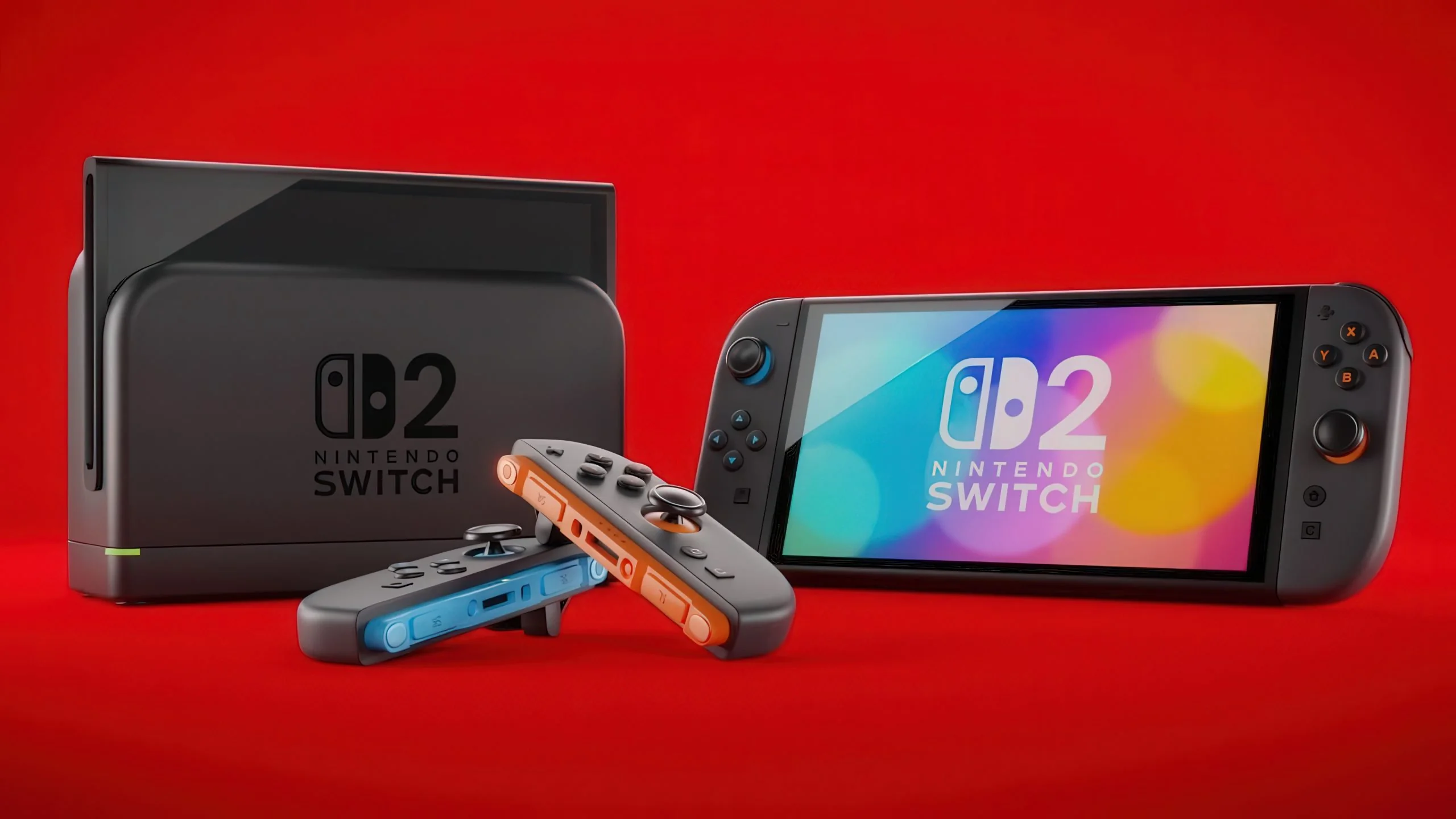
That wider memory pool gives developers much more room for modern assets, higher resolution textures, larger worlds, and more advanced effects. It also helps games that rely on DLSS reconstruction to improve output quality without rendering everything at native resolution.
Modern games are now more realistic targets for Nintendo hardware
The hardware jump has made games possible on Switch 2 that were not realistic targets for the first Switch. Cyberpunk 2077: Ultimate Edition launched on Switch 2 alongside the console, bringing the game to Nintendo hardware for the first time.
That kind of port shows what the new system can do, although expectations still need to be realistic. Switch 2 is still a portable hybrid console, not a desktop gaming PC or a full size home console. Many demanding games will use lower internal resolutions, reduced settings, or DLSS reconstruction to hit performance targets.
Still, the difference from the original Switch is clear. The first Switch often needed heavy compromises for modern third party games, especially late in its lifecycle. Switch 2 has a stronger CPU, far more GPU resources, more memory, faster storage, and newer graphics features.
Nintendo also added microSD Express support, which is a useful upgrade from standard microSD. Internal storage rises from 32GB to 256GB, giving players more space before needing expansion. The system also adds WiFi 6, Bluetooth improvements, wired LAN through the dock, and two USB C ports instead of one.
Switch 2 shows Nintendo still values timing over cutting edge specs
Nintendo’s strategy has never been about using the newest graphics architecture at launch. The original Switch launched in 2017 with Maxwell, an architecture that had already been on the market for years. Switch 2 repeats that pattern with Ampere.
The difference is that Ampere brings features that matter more for a modern hybrid console. DLSS is especially important because it lets Nintendo target higher output resolutions without requiring the GPU to render every frame at full native quality. That gives developers more flexibility in balancing image quality, performance, and battery life.
If Nintendo keeps another long console cycle, Switch 3 may not arrive until the early 2030s. By then, Ampere will look even older than Maxwell did near the end of the original Switch era. But that is part of Nintendo’s usual hardware rhythm. The company focuses on a stable platform, strong first party games, and broad accessibility rather than chasing the fastest silicon every few years.
One year in, the Switch 2 appears to be off to a strong start. Nearly 20 million units sold before its first anniversary is a meaningful result, and the hardware upgrade has already opened the door to games the original Switch could not handle well.
The console’s long term success will depend on software, pricing, supply, and whether third party publishers keep supporting it. But the first year has already shown that Nintendo’s hybrid formula still works, and that NVIDIA’s older Ampere architecture can still power a modern console when paired with smart design and DLSS.



Discussion (0)
Be the first to comment.