



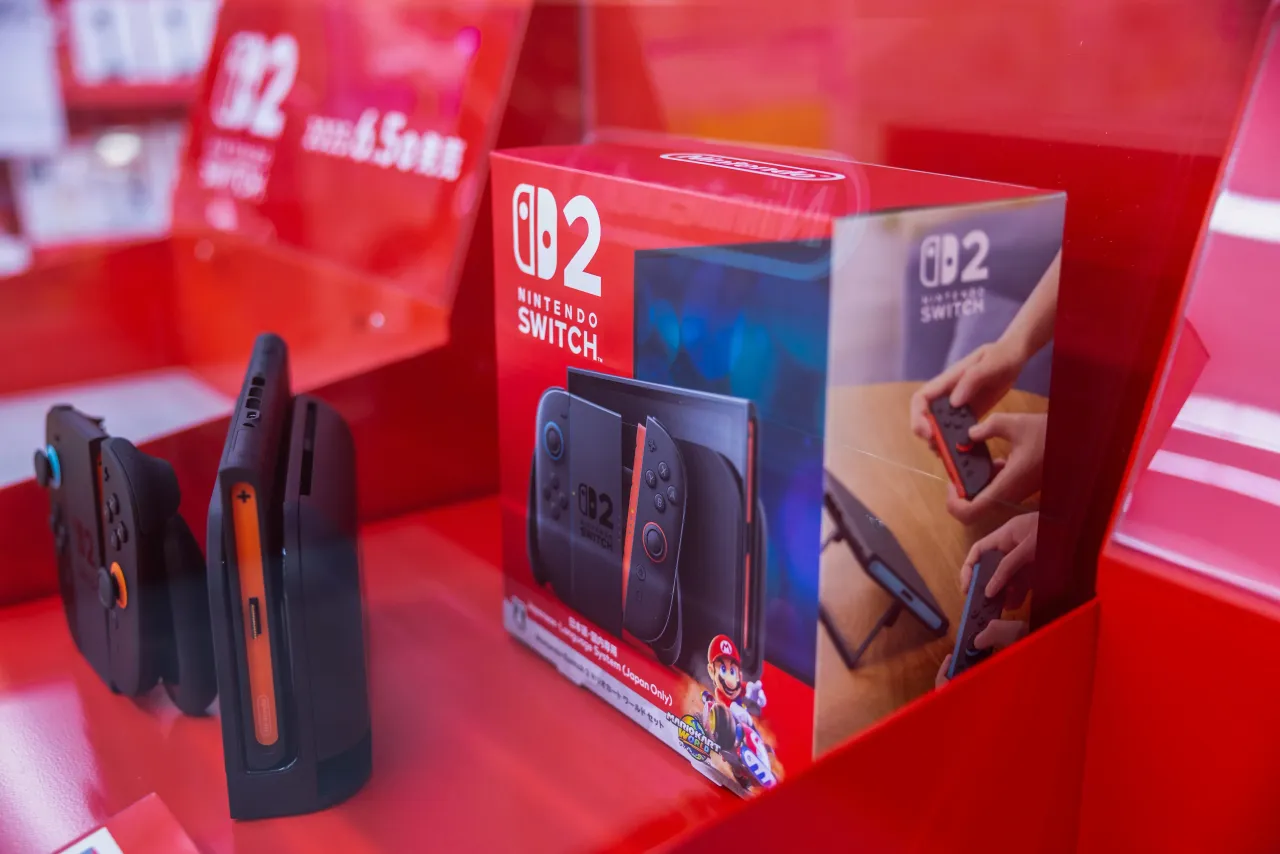
Nintendo’s stock fell 12 percent after the company confirmed a Switch 2 price increase and warned that its next fiscal year will be weaker than its strong launch year.
The drop was not caused by one issue alone. Investors reacted to several concerns at once, including the upcoming Switch 2 price hike, rising memory and component costs, tariffs, longer game development cycles, and Nintendo’s forecast that Switch 2 sales will decline year over year in FY27.
Nintendo president Shuntaro Furukawa said rising prices for memory and other components did not seriously hurt hardware profitability last fiscal year. However, he expects those costs to keep increasing and gradually put more pressure on hardware margins from this fiscal year onward.
That helps explain why Nintendo decided to raise the Switch 2 price from September. Furukawa said component prices, especially memory, along with exchange rate movement and oil prices, are likely to remain a medium to long term problem.
Nintendo is not saying more Switch 2 price increases are already planned. The company is saying the cost of making hardware is still going up.
The other challenge is software development. Furukawa admitted that Nintendo’s major games are taking longer to make, even though the company is still trying to release titles in a timely way. That is not only a Nintendo problem. Most major publishers are facing longer development cycles as modern games become larger and more expensive to produce.
Here is the main picture:
| Issue | Why it matters |
|---|---|
| Stock drop | Nintendo shares fell 12 percent |
| Switch 2 price hike | Takes effect in September |
| Component costs | Memory prices continue to rise |
| Hardware margins | Expected to face more pressure |
| FY27 forecast | Switch 2 sales expected to decline year over year |
| Game development | Major titles are taking longer to make |
| Nintendo’s confidence | Switch 2 adoption is still faster than the original Switch |
Despite the market reaction, Furukawa said Nintendo is not especially worried about losing momentum. His reasoning is simple: Switch 2 is being adopted faster than the original Switch was, and launch year sales were unusually strong.
Nintendo expects sales to cool because Switch 2 demand was heavily concentrated in its first year. That makes a year over year decline more likely, even if the console is still performing well overall.
The company is also leaning on software to keep people moving to Switch 2. Furukawa pointed to Pokémon Pokopia as proof that the right game can encourage players to upgrade. He said Nintendo plans to keep explaining the appeal of each new Switch 2 title so customers can move over when the timing feels right.
Tomodachi Life: Living the Dream also appears to be helping both platforms. Furukawa said 40 percent of its players are on Switch 2, suggesting new software is increasing activity across both the original Switch and Switch 2.
Nintendo’s confidence makes sense, but the risks are real. A higher Switch 2 price will make the console harder to buy for some players, especially as everyday costs remain high. Longer development cycles also mean Nintendo needs to space its biggest releases carefully.
Still, Nintendo has one advantage that few companies can match: exclusive games that can move hardware. Pokémon Pokopia has already helped, and future titles like Pokémon Winds & Waves, a new 3D Mario, or the next Zelda could do the same.
The stock drop shows that investors are worried about costs and slower growth after a strong launch year. But Nintendo’s core argument remains clear. If the games are strong enough, people will still buy the hardware, even in a tougher market.
Discussion (0)
Be the first to comment.