



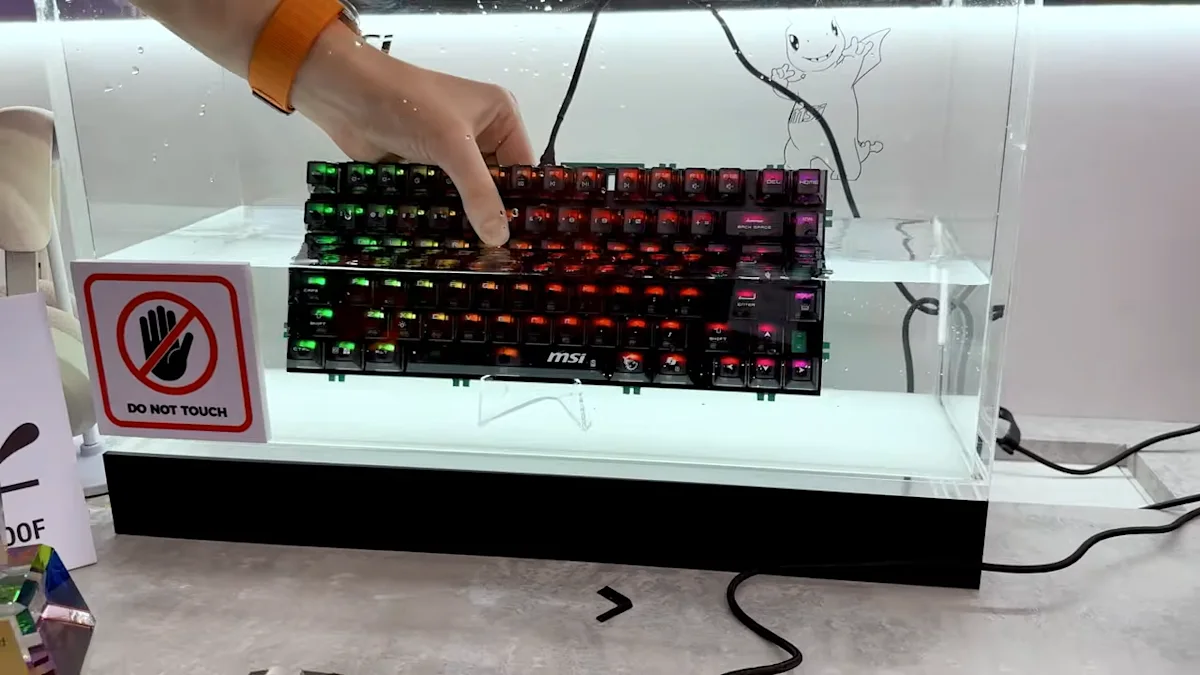
MSI has shown off a new gaming keyboard called the Strike Alloy TMR, and the company is clearly trying to pack it with nearly every major feature now associated with high end competitive keyboards. The keyboard includes TMR switches, an 8,000 Hz polling rate, rapid trigger support, hot swappable switch beds, and a water resistant design that MSI demonstrated by using the keyboard while it was partly submerged.
The underwater demo is the feature that will get the most attention, even if most people will never use a keyboard that way. It is still a useful durability claim because accidental spills are one of the most common ways keyboards get damaged. If the Strike Alloy TMR can keep working after being exposed to water, that could make it more reassuring for players who keep drinks near their desk.
The demo showed the wired keyboard continuing to function while submerged. That does not mean people should treat it like a swimming pool accessory, but it does show that MSI wants to position the keyboard as tougher than a typical gaming model.
Beyond the water resistance, the Strike Alloy TMR looks like a serious performance focused keyboard. It is built around TMR switch technology, which is one of the newer options in the magnetic switch space.
TMR switches and rapid trigger make the keyboard aimed at competitive players
TMR stands for tunnelling magnetoresistance. In gaming keyboards, it is used for precise input detection, similar in broad purpose to Hall effect switches. The benefit is that key actuation can be tracked with high accuracy, which allows features like adjustable actuation and rapid trigger.
Rapid trigger is especially important for competitive players. On a normal mechanical keyboard, a key usually stops registering after it crosses a fixed reset point. With rapid trigger, the key can stop registering as soon as you begin lifting your finger. That can help in games where quick stopping, strafing, repeated inputs, or fast movement correction matters.
| Feature | MSI Strike Alloy TMR |
|---|---|
| Switch type | TMR switches |
| Polling rate | 8,000 Hz |
| Rapid trigger | Supported |
| Water resistance | Demonstrated with partial submersion |
| Switch beds | Hot swappable between TMR and mechanical switches |
| Build material | Magnesium aluminum alloy |
| Mounting style | Five layer gasket mount |
| Price | Not announced |
| Release date | Not announced |
The 8,000 Hz polling rate means the keyboard can report inputs to a PC every 0.125 milliseconds. For comparison, a 1,000 Hz keyboard reports every 1 millisecond. In real use, the difference will matter most to highly competitive players with fast reflexes, high refresh rate monitors, and games where every fraction of a second counts.
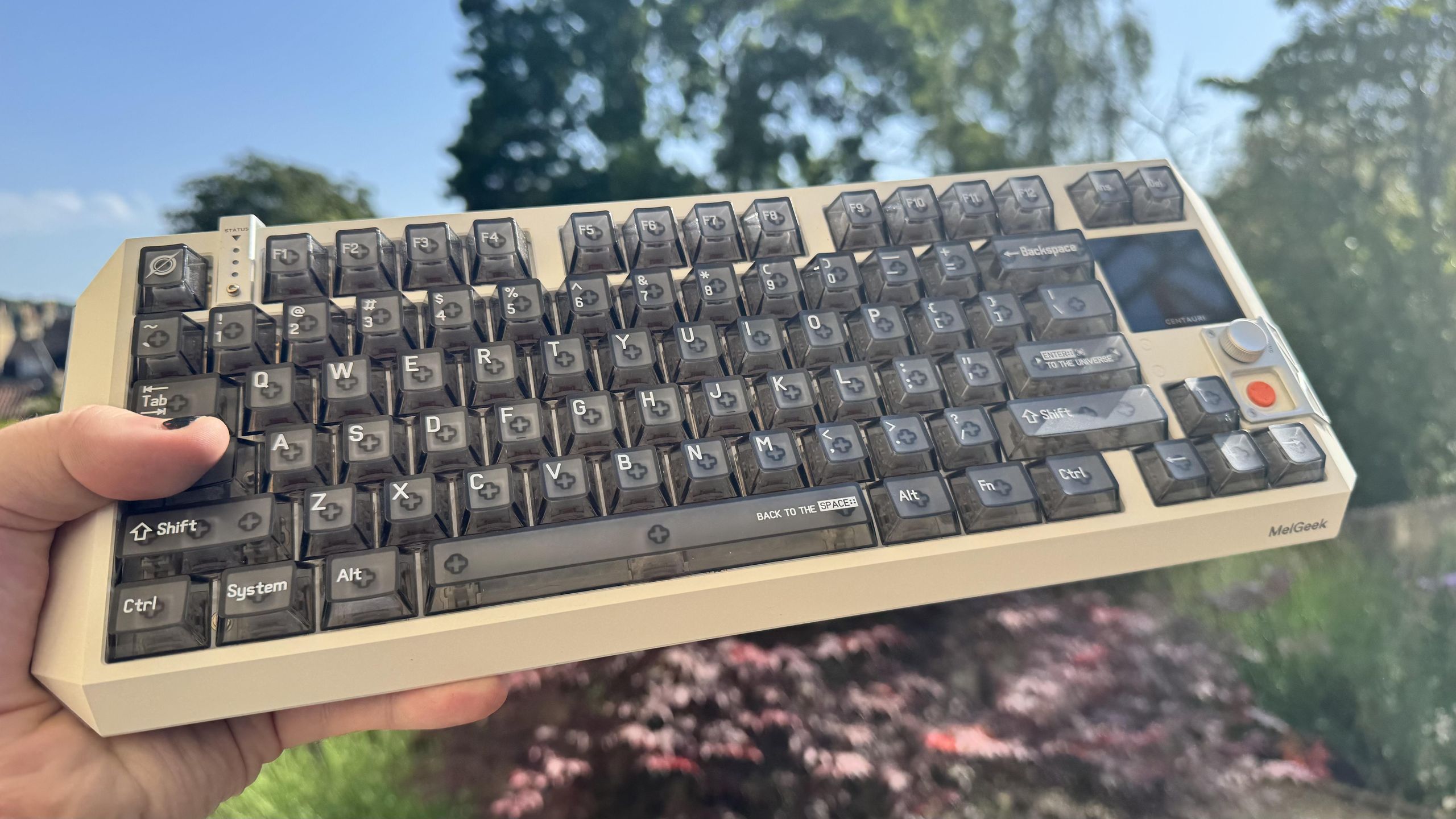
For most people, 8K polling is more of a premium feature than a practical requirement. Still, it helps MSI place the Strike Alloy TMR in the same conversation as other high end gaming keyboards focused on speed and precision.
Hot swappable TMR and mechanical switch support adds flexibility
One of the more interesting features is that the keyboard’s switch beds can be swapped between TMR and mechanical switches. That gives the Strike Alloy TMR more flexibility than many keyboards that lock you into one switch technology.
This matters because not every player wants magnetic switches for every use. TMR switches may be better for competitive games, but some people still prefer the feel, sound, and typing feedback of traditional mechanical switches. Being able to move between both could make the keyboard more useful as a daily driver.
MSI is also using a magnesium aluminum alloy body and a five layer gasket mount. The alloy frame should help with durability and rigidity, while the gasket mount is meant to improve typing feel and reduce harsh sound. That suggests MSI is not only chasing gaming specs, but also trying to make the keyboard feel and sound more premium.
The final value will depend heavily on execution. A keyboard can have strong specs on paper, but the feel of the switches, stabilizers, case sound, keycaps, and software support will decide whether people actually enjoy using it every day.
Price and release timing are still missing
The biggest unknowns are price and launch date. MSI has not confirmed when the Strike Alloy TMR will be available or how much it will cost. That matters because the gaming keyboard market is already crowded with strong options from Wooting, Keychron, Razer, Asus, and others.
If MSI prices it too high, the water resistant design may not be enough to separate it from established magnetic switch keyboards. If the company keeps the price competitive, the combination of TMR switches, 8K polling, rapid trigger, hot swappable switch beds, and spill resistance could make it an appealing option.
The underwater demo is a smart way to get attention, but the real test will come in normal use. Competitive players will care about latency, consistency, software quality, and rapid trigger tuning. Everyday players will care about comfort, sound, durability, and whether the keyboard feels good for both gaming and typing.
For now, the Strike Alloy TMR looks like one of MSI’s most feature packed gaming keyboards yet. It combines the performance trends driving the keyboard market with a durability claim that is easy to understand. You probably will not game underwater, but a keyboard that can survive a serious spill while offering modern competitive features is still a strong pitch.



Discussion (0)
Be the first to comment.