



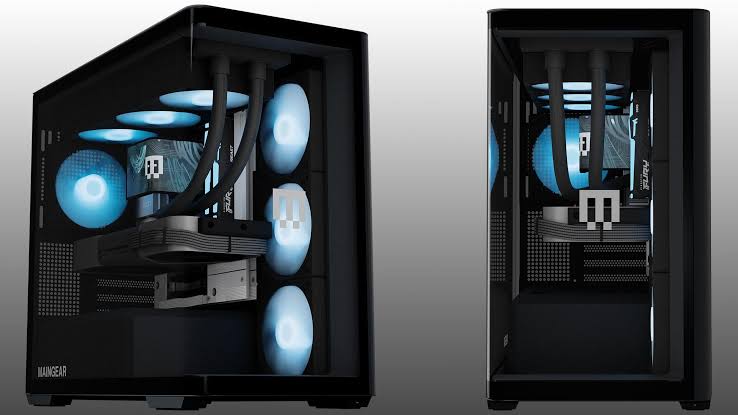
Maingear has introduced a new generation of its Zero gaming desktop, combining high end hardware with a cleaner internal design and a large panoramic glass panel.
The updated system continues to use rear connector motherboard technology, which moves many power and data connections behind the main board. This reduces visible cable clutter and gives the internal components a cleaner appearance.
The new chassis builds on that design with a single piece of 4mm curved tempered glass covering the front and side. The continuous panel removes the corner seams found on many dual glass cases and gives a wider view of the hardware.
Maingear is offering several configurations using processors from AMD and Intel, with graphics options ranging from the GeForce RTX 5070 to the GeForce RTX 5090. Prices start at $2,699, although the listed named configurations begin at $2,799.
The Zero focuses heavily on presentation
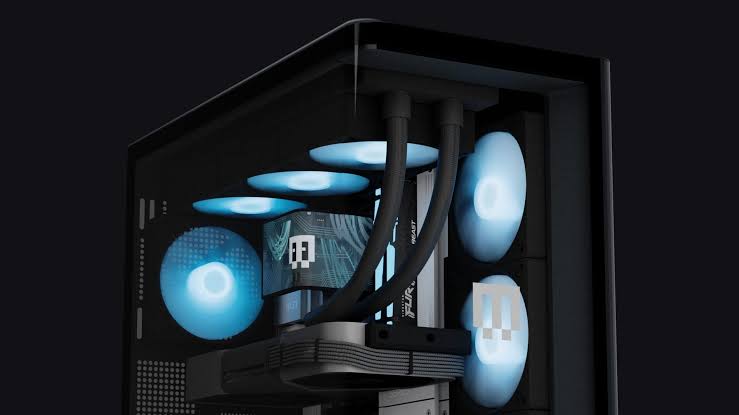
The main chamber is designed to resemble a display case. Power cables and motherboard headers are moved out of sight, while the curved glass creates an unobstructed view of the graphics card, cooler, memory, and other components.
Maingear has also changed how the lighting works. The RGB sources are diffused, which hides individual LED points and creates a softer glow across the system.
This approach should appeal to buyers who want visible lighting without the harsh effect created by exposed LEDs.
The Launch Edition adds two removable display stands. One is designed for a figurine, while the other supports small brick based models. Both attach to the bottom of the case without tools.
These additions allow owners to place collectibles inside the system without resting them directly on the case floor or blocking airflow.
A curved OLED screen is built into the cooler
Launch Edition systems include a TRYX Panorama SE liquid cooler with a curved OLED display.
The screen can show custom video loops, including game clips, animations, system information, and other uploaded content. It adds another visual element to a desktop already designed around hardware presentation.
The cooler choice may vary across later configurations, but Maingear has not provided a complete breakdown of every cooling option.
| Configuration | Processor | Graphics card | Starting price |
|---|---|---|---|
| Zero Emerald | Intel Core Ultra 5 250K Plus | GeForce RTX 5070 | $2,799 |
| Zero Platinum | AMD Ryzen 7 7800X3D | GeForce RTX 5070 | $2,999 |
| Zero Sapphire | Intel Core Ultra 7 270K Plus | GeForce RTX 5080 | $3,799 |
| Zero Elite | AMD Ryzen 7 9850X3D | GeForce RTX 5080 | $4,099 |
| Zero Amethyst | Intel Core Ultra 7 270K Plus | GeForce RTX 5090 | $6,199 |
| Zero Champion | AMD Ryzen 7 9850X3D | GeForce RTX 5090 | $6,499 |
AMD and Intel options cover different priorities
The lower priced models pair the GeForce RTX 5070 with either an Intel Core Ultra 5 250K Plus or an AMD Ryzen 7 7800X3D.
The AMD configuration may appeal more to buyers focused mainly on gaming because its additional cache can improve performance in processor limited titles. The Intel model may offer a different balance for mixed workloads, depending on final application performance.
The GeForce RTX 5080 models move to the Intel Core Ultra 7 270K Plus or AMD Ryzen 7 9850X3D. These systems target high refresh rate gaming at higher resolutions while remaining below the cost of the RTX 5090 versions.
At the top of the range, the Zero Amethyst and Zero Champion use NVIDIA’s flagship GeForce RTX 5090. The AMD powered Champion is the most expensive listed configuration at $6,499.
Maingear says all systems will use Kingston Fury DDR5 memory when available. AMD EXPO or Intel XMP profiles will be enabled and tested before shipping, depending on the selected processor platform.
The hidden connector design remains a central feature
Rear connector motherboards place common headers on the back rather than the front. This includes connections for motherboard power, fans, storage, front panel controls, and other internal components.
The design simplifies the visible side of the build, but it requires a compatible case with enough space and access behind the motherboard tray.
Maingear previously used this system in the original Zero, and the new version continues the same approach while improving the surrounding chassis.
The result is a premium desktop aimed at buyers who care about appearance as much as performance. It is less suitable for anyone looking for the lowest possible price for a given graphics card.
The Zero is available in custom and preconfigured versions. Its $2,699 entry price suggests that Maingear offers at least one model below the named Emerald configuration, although the company has not detailed its complete specifications.
With panoramic glass, hidden cabling, diffused lighting, optional display stands, and hardware reaching the RTX 5090, the new Zero is designed as both a gaming system and a carefully presented piece of desktop hardware.



Discussion (0)
Be the first to comment.