



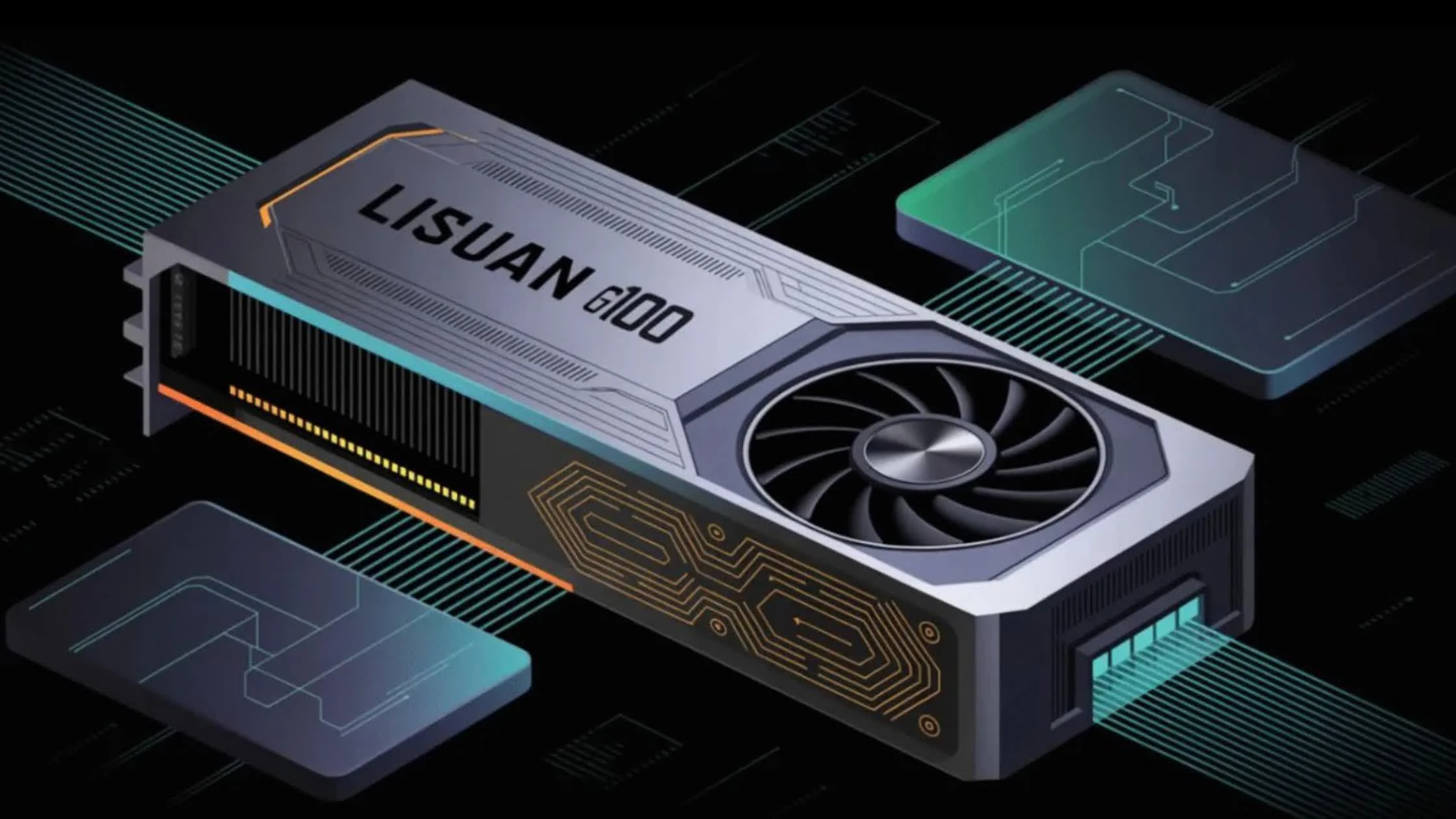
Lisuan Tech has launched its 7G100 Extreme Founders Edition graphics card in China, marking one of the country’s first serious attempts at a domestic gaming GPU. The card is priced at 3,299 RMB, or about $500, which puts it close to RTX 5060 Ti territory.
The 7G100 is based on Lisuan’s 6nm 7G106 GPU and comes with 12GB of GDDR6 memory on a 192 bit bus. It supports PCIe 4.0 x16, has a 225W maximum TDP, and uses a single 12 pin power connector. The card also includes four DisplayPort 1.4a outputs and supports modern APIs such as DirectX 12, Vulkan 1.3, OpenGL 4.6, and OpenCL 3.0.
The hardware looks promising on paper, but gaming performance is the weak point
Before launch, early demos suggested the 7G100 could perform close to an RTX 4060 in synthetic tests. Launch benchmarks shared on Bilibili tell a different story. In 3DMark, the card performs closer to an RTX 3060, and real game testing shows a much larger gap against older AMD, Nvidia, and Intel GPUs.
In Cyberpunk 2077 at 1080p, the Lisuan LX 7G100 averaged 88 FPS, while the RX 6600 XT reached 220 FPS in the same comparison. The card also fell behind in games such as Forza Horizon 5, CS2, Red Dead Redemption 2, Assassin’s Creed Shadows, and Black Myth Wukong.
| Area | Lisuan LX 7G100 |
|---|---|
| GPU | 6nm 7G106 |
| Memory | 12GB GDDR6 |
| Bus | 192 bit |
| Power | Up to 225W |
| Outputs | Four DisplayPort 1.4a |
| API support | DirectX 12, Vulkan 1.3, OpenGL 4.6, OpenCL 3.0 |
| Launch price | 3,299 RMB, about $500 |
| Main issue | Weak gaming performance for the price |
There is one positive point. The card reportedly avoided major crashes and serious game compatibility failures during testing. Games ran, but performance, stuttering, and frame pacing still need work. The hardware also does not support ray tracing, which makes the price harder to justify when competing cards offer stronger features and better driver support.
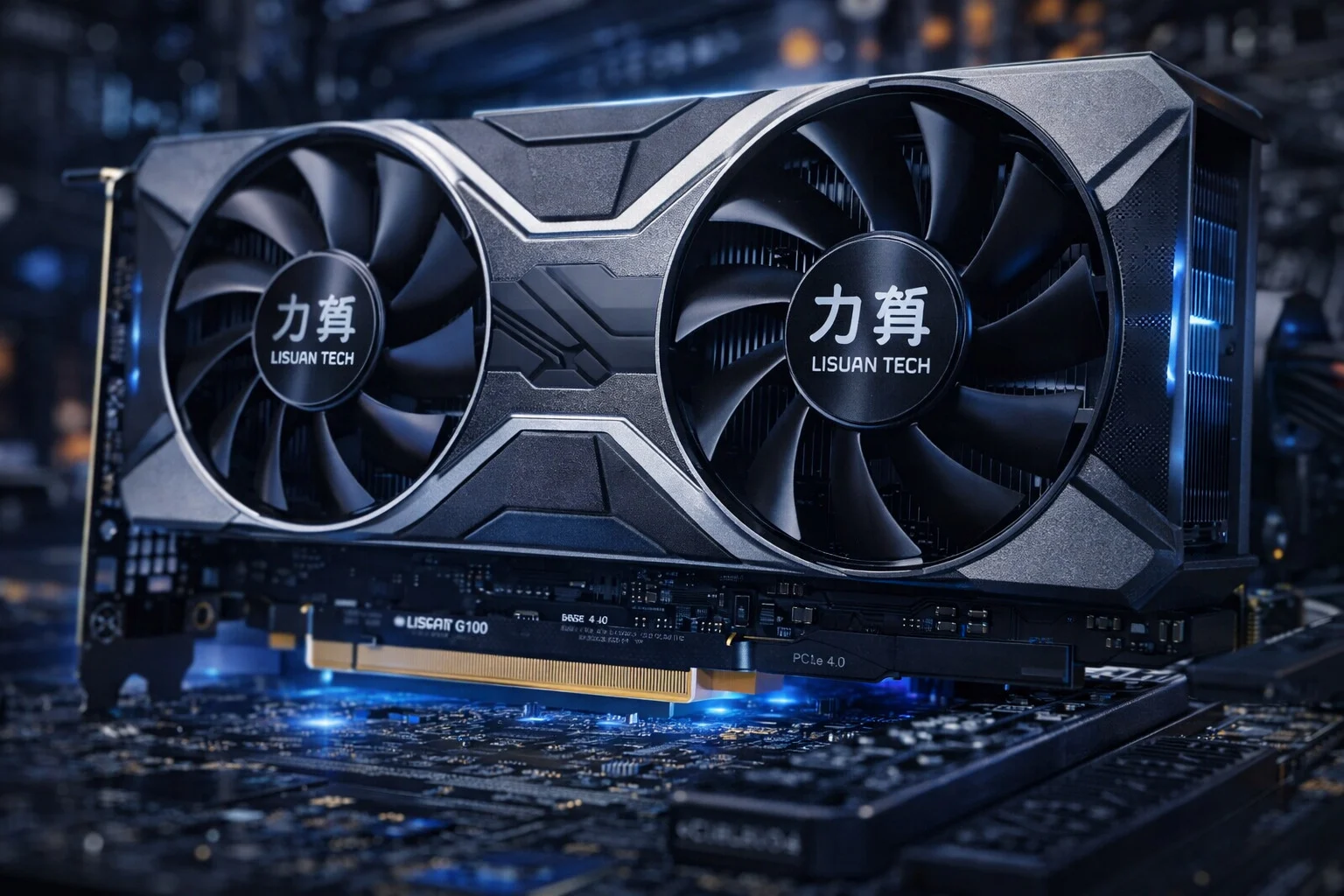
Pricing makes the launch more difficult. The 7G100 costs around the same as some RTX 5060 Ti models in China, while Intel’s Arc B580 offers 12GB of VRAM at a lower price and stronger value. Even a possible return of the RTX 3060 12GB could put more pressure on Lisuan if Nvidia brings it back at a competitive price.
The 7G100 still matters because it shows progress for China’s domestic GPU industry. It offers better game support than earlier local options and gives Chinese buyers a homegrown gaming card at a time when the country is pushing harder for domestic hardware. But as a gaming product, its first version still has a long way to go before it can truly compete with Nvidia, AMD, or Intel.
Discussion (0)
Be the first to comment.