



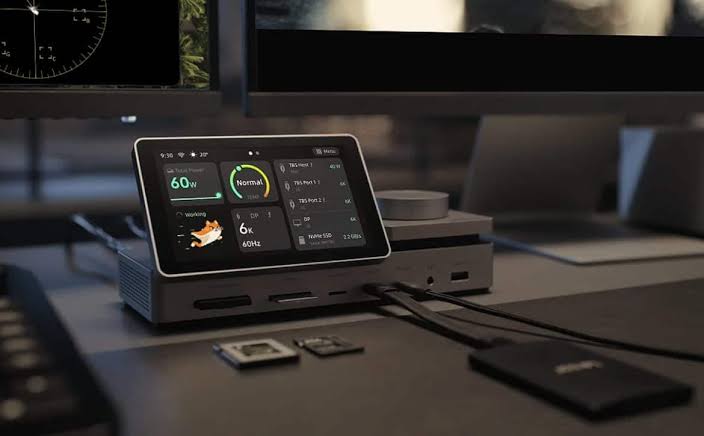
Lexar is entering the docking station market with the PexarBolt Ultra, a high end Thunderbolt 5 dock that combines 22 ports, a built in 5 inch display, NVMe SSD support and a physical control dial.
The dock is expected to carry a $649 MSRP, although an early Kickstarter price of around $479 is planned. It is also scheduled to appear publicly at IFA in Berlin on September 4.
Rather than focusing only on connectivity, Lexar has designed the PexarBolt Ultra as an information hub for your desk. Its display can show power use, connected ports, temperature data and even AI token usage for supported software.
Thunderbolt 5 provides up to 120Gbps bandwidth
At its core, the PexarBolt Ultra uses Thunderbolt 5.
The interface provides 80Gbps of bidirectional bandwidth and can increase bandwidth in one direction to 120Gbps through Thunderbolt 5 Bandwidth Boost.
That allows the dock to support demanding display and storage configurations, including up to three 4K monitors running at 144Hz.
| Feature | PexarBolt Ultra |
|---|---|
| Thunderbolt standard | Thunderbolt 5 |
| Standard bandwidth | 80Gbps bidirectional |
| Bandwidth Boost | Up to 120Gbps |
| Total ports | 22 |
| Built in display | 5 inch |
| Laptop charging | Up to 140W |
| USB A ports | 4 |
| USB C ports | 5 |
| Display outputs | HDMI and DisplayPort |
| Networking | 10Gbps Ethernet |
| Card readers | SD, microSD, CompactFlash Type B |
| Internal storage | M.2 NVMe SSD slot |
| MSRP | $649 |
| Early crowdfunding price | Around $479 |
The dock can supply up to 140W to a connected laptop.
That is enough for many productivity systems, but high performance gaming laptops may still need their dedicated power adapters when running demanding workloads because their peak consumption can exceed what the dock provides.
Five inch dashboard adds system monitoring
The most distinctive feature is the integrated display.
Lexar has not provided full technical specifications for the panel, but it is designed to show live information about the dock and connected devices.
The dashboard can display overall power consumption, active ports and dock temperature. The unit is actively cooled, so temperature monitoring could be useful during sustained storage or networking workloads.
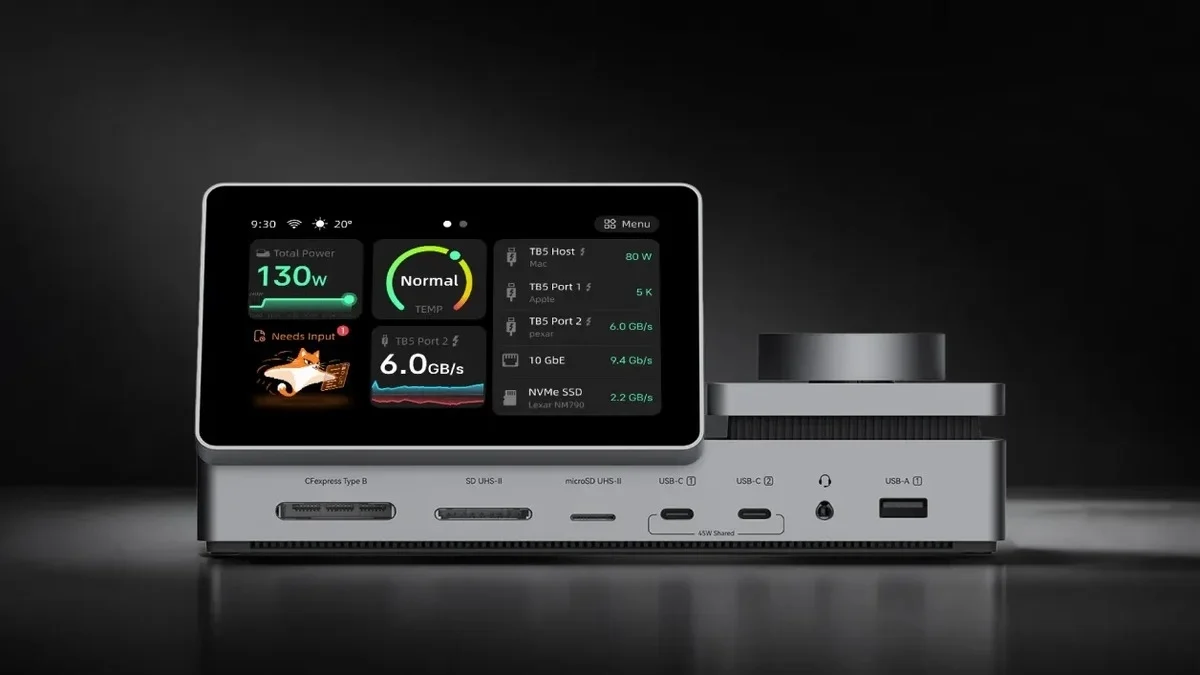
Lexar also says the dock supports Claude Code integration, allowing the screen to display AI token consumption.
That makes the PexarBolt Ultra unusual among docking stations, especially for developers or AI focused workflows where token usage can be important to monitor.
A large metal control dial beside the display allows you to navigate the interface and select options by pressing the dial.
NVMe SSD slot expands local storage
The dock also includes an internal M.2 NVMe SSD slot.
Thunderbolt 5 provides enough bandwidth for fast external storage to reach performance levels much closer to internal SSDs than older docking standards could typically achieve.
That could make the PexarBolt Ultra useful as both a connectivity hub and additional high speed storage location.
The dock also includes 10Gbps Ethernet, although heavy network traffic will naturally consume some of the available Thunderbolt bandwidth.
Five USB C ports and four USB A ports provide additional connectivity. Two of the USB C connections share up to 45W of charging power, while a total of 12 ports can provide some level of device charging.
Lexar is targeting the premium end of the dock market
At $649, the PexarBolt Ultra is considerably more expensive than many conventional Thunderbolt docks.
The early crowdfunding price of roughly $479 lowers that barrier, but it still positions the device firmly in the premium category.
Its appeal will likely depend on whether you value the built in screen, control dial, NVMe storage and extensive port selection rather than simply needing basic laptop connectivity.
For people running multi monitor setups, fast external storage and AI development tools from a single desk, the PexarBolt Ultra offers an unusually complete package. Its price, however, means those extra features will need to justify a substantial premium over simpler Thunderbolt 5 alternatives.

Discussion (0)
Be the first to comment.