




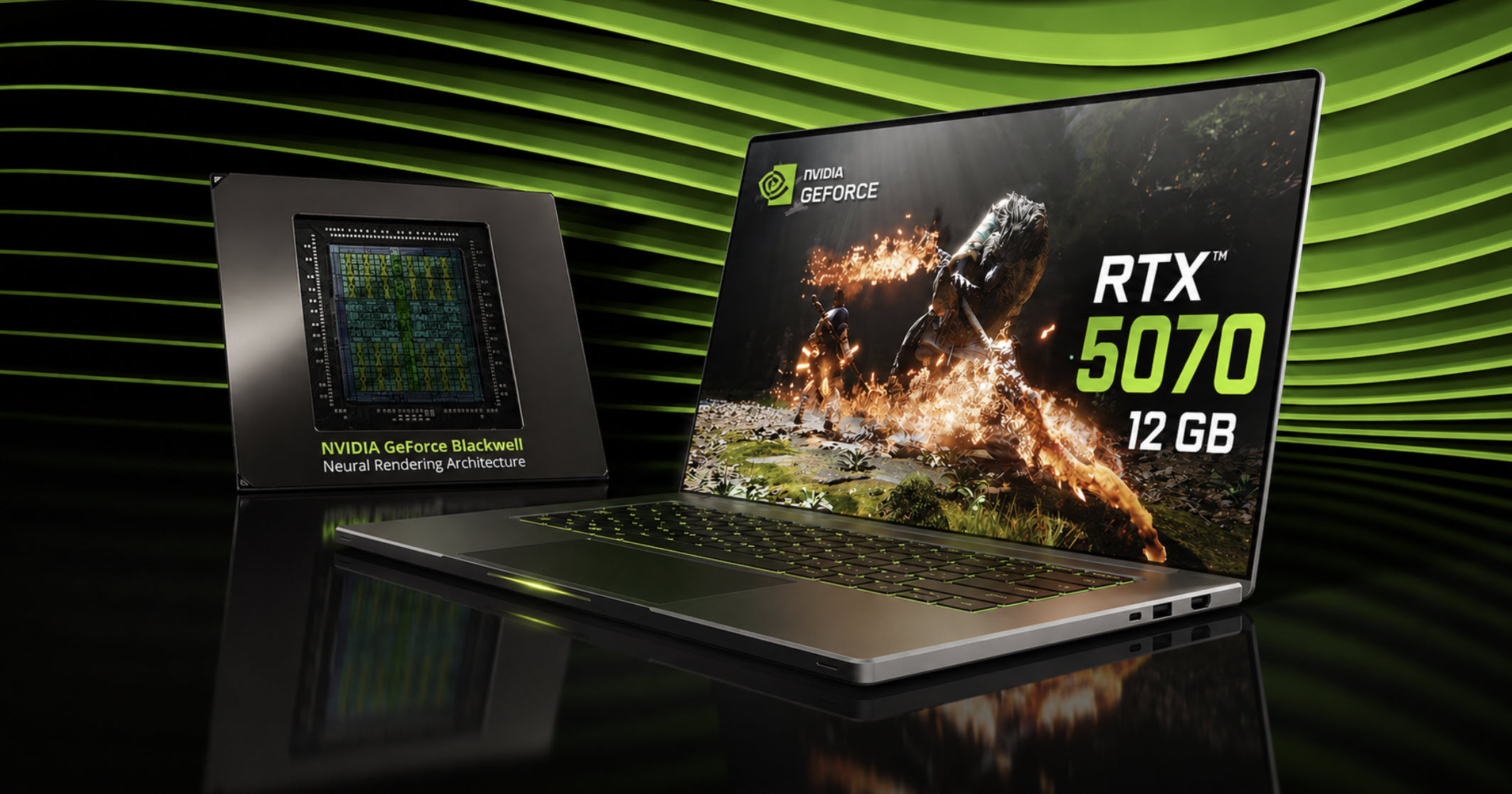
A laptop RTX 5070 Ti has been pushed beyond NVIDIA’s usual 140W power ceiling, reaching 160W through a combination of VBIOS changes and voltage curve adjustments.
The modified GPU was tested inside a Lenovo Legion Pro 5 Gen 10. In its standard configuration, the laptop allows the RTX 5070 Ti to operate at 115W, with another 25W available through Dynamic Boost for a total ceiling of 140W.
After the modification, the GPU reportedly operated at 160W and achieved a 3DMark Steel Nomad score of 4,839.
That result was about 16% higher than the fastest RTX 5070 Ti laptop result used for comparison in the report.
| Detail | Result |
|---|---|
| GPU | Laptop GeForce RTX 5070 Ti |
| Laptop | Lenovo Legion Pro 5 Gen 10 |
| Default maximum power | 140W |
| Modified power limit | 160W |
| Power increase | About 14.3% |
| 3DMark Steel Nomad score | 4,839 |
| Reported performance gain | About 16% |
| Driver used | 616.92 |
The modification changes power policy behavior
The person behind the tweak said the method changes the GPU’s relevant power policy so that the normal 140W limit can be replaced with a 160W target.
The approach does not rely on a traditional shunt modification.
Instead, it reportedly combines a modified VBIOS setup with voltage curve locking and software that interacts with driver dependent NVIDIA structures.
That makes compatibility important.
The implementation was tested with driver version 616.92, and future driver updates could change the internal behavior required for the modification to work.
A public tool has also been made available, but that does not mean the method is safe for every laptop.
Performance improves, but cooling becomes more important
Increasing the RTX 5070 Ti from 140W to 160W raises the available GPU power by around 14.3%.
The reported benchmark improvement was slightly larger, with Steel Nomad performance increasing by about 16% compared with the fastest standard RTX 5070 Ti laptop result used as a reference.
That shows the mobile GPU can still gain performance when given additional power.
However, the result does not mean every RTX 5070 Ti laptop will see the same improvement.
Laptop cooling systems, VRM designs and motherboard layouts vary significantly between manufacturers and models.
A cooling system designed around a 140W ceiling may struggle with an additional 20W of sustained GPU load.
Power delivery is another major risk
More power also places additional strain on the laptop’s voltage regulation system.
Premium gaming laptops may use more capable VRMs, while thinner or less expensive models could have less headroom.
Even if GPU temperatures remain acceptable, other components could operate outside the conditions intended by the manufacturer.
Embedded controller behavior is another concern.
Laptop power management depends heavily on communication between the GPU, firmware and EC. A modification that changes expected power behavior could cause instability or, in the worst case, leave the machine unable to boot.
Warranty coverage could also be affected
Running a laptop GPU outside the manufacturer’s specified limits can create warranty problems.
If hardware fails after an unofficial VBIOS or power modification, the manufacturer may refuse repair coverage.
There is also a risk of corrupted firmware during flashing, increased temperatures, higher fan noise and additional stress on the laptop’s power adapter and cooling system.
For those reasons, the benchmark result is more useful as evidence of the RTX 5070 Ti laptop GPU’s remaining power headroom than as a recommended upgrade method.
The 160W configuration shows that higher performance is possible, but the extra speed comes with meaningful thermal, electrical and warranty risks that vary from one laptop design to another.
Discussion (0)
Be the first to comment.