



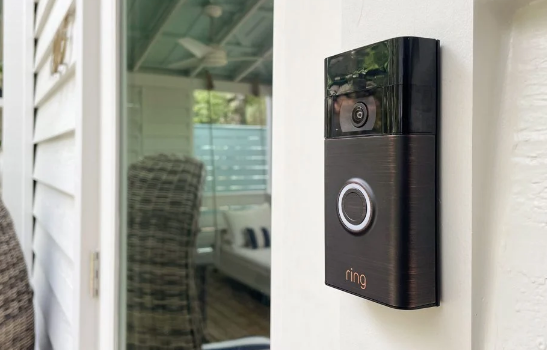
Ring essentially invented the mass-market video doorbell. Since Amazon acquired the company in 2018, it has grown into a comprehensive home security ecosystem covering doorbells, cameras, alarms, and smart lighting. About half of all video doorbells sold in the United States are made by Ring.
That popularity is not accidental. Ring's hardware is polished, the app is well-designed, and the setup process is genuinely straightforward. But three things complicate the buying decision in 2026: a subscription that locks away key features, legitimate privacy concerns, and a competitive market that has caught up.
Here is everything you need to know before buying one.
What Ring Doorbells Actually Do
At their core, all Ring doorbells do the same things. Youre notifed when someone presses the doorbell or when motion is detected near your door. They stream live video to your phone. They let you speak to whoever is at the door through two-way audio, whether you are inside the house or across the city. Night vision covers the entry area after dark.
The differences between models are meaningful but not always significant for most buyers.
Battery-powered models like the Ring Battery Doorbell Plus and the newer 2026 lineup announced in March are the easiest to install. You mount the bracket, clip in the doorbell, charge the battery every one to three months depending on usage, and you are done. No electrician, no drilling into live wires. The downside is the maintenance. Cold weather shortens battery life noticeably, and some users find monthly recharging inconvenient.
Wired models like the Ring Doorbell Pro Gen 3 connect to your existing doorbell wiring for continuous power. No battery to manage. The video quality is generally superior, with better aspect ratios showing visitors from head to toe rather than a compressed mid-body shot. The catch is that you need existing doorbell wiring, and installation is more involved.
Across all models, you get motion zones that let you define exactly which areas trigger alerts, two-way talk with noise-cancelling microphones, pre-recorded Quick Replies that play automatically when you cannot answer, and integration with Amazon Echo devices which can serve as indoor chimes.
The Ring Battery Doorbell Plus, which Consumer Reports rates among the stronger models, delivers fast alert response times, a 150 by 150-degree field of view that captures packages on the ground as well as faces, and package detection that sends a specific notification when a delivery is left at the door.
The Subscription Question
This is the part that frustrates many buyers. Without a Ring Protect subscription, a Ring doorbell is significantly limited.
You can answer the door live, see who is there, and speak to them. What you cannot do without a subscription is review recorded footage after the fact. There is no video history on the free tier. Motion is detected and you are notified, but if you miss the notification or want to check what triggered an alert from an hour ago, you cannot. The footage was never saved.
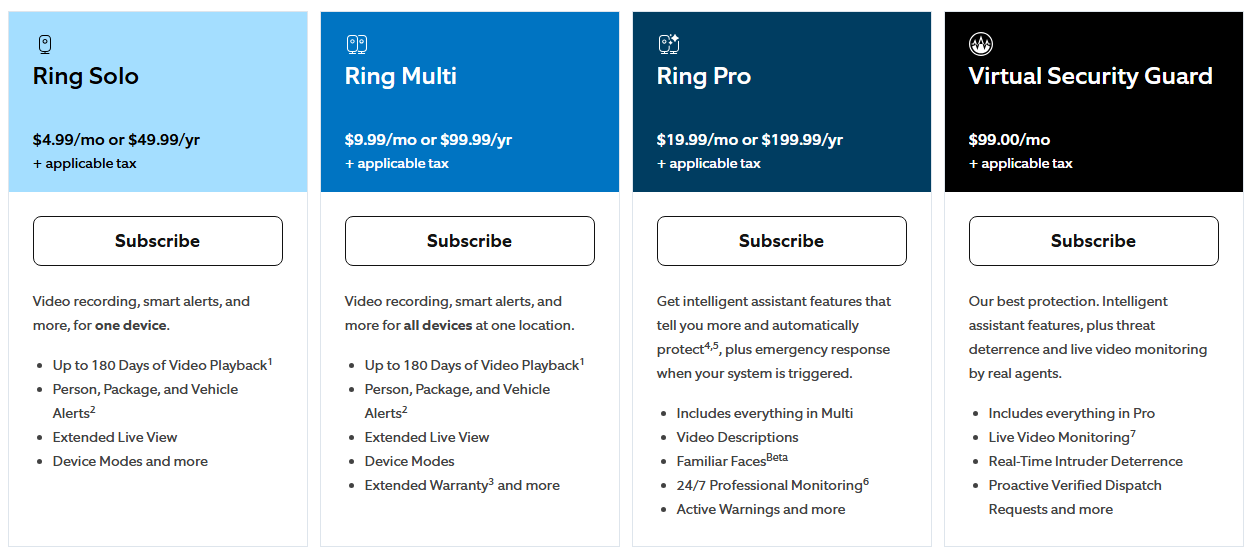
The Ring Protect Basic plan costs five dollars per month or fifty dollars per year and covers one device. It unlocks 60 days of video history, snapshot capture between motion events, person detection, and package alerts. Ring Protect Plus at ten dollars per month covers all Ring devices at one address and adds extended warranties.
Whether this is reasonable depends on your perspective. For what is fundamentally a video storage and smart alerting service, ten dollars per month is a meaningful ongoing cost on top of a device that costs between sixty and two hundred and fifty dollars. Competitors including Eufy and Tapo offer similar hardware with local storage and no subscription required. If recurring fees are a deal-breaker, those brands are worth considering.
The Privacy Reality
This is the most significant concern with Ring in 2026 and the one most marketing materials do not address directly.
Mozilla Foundation's privacy review of the Ring Doorbell Pro Gen 3, published in 2026, describes it as one of the most privacy-hostile products they have reviewed. The headline findings are hard to dismiss.
Ring has no offline mode. From the moment you set it up, all footage is processed through Ring's cloud infrastructure. There is no local storage option. If Ring's servers are unavailable, recording stops. If Ring's servers are compromised, your footage is accessible.
Ring has a documented history of allowing employees to access customer footage without consent and sharing video with law enforcement without a warrant. The company changed its warrant policy in 2023 following public pressure, but the underlying architecture still means footage sits on Ring's servers where third-party access is architecturally possible.
End-to-end encryption is available and prevents Ring from accessing your footage when enabled, but it is not the default and disabling it also disables some features including person detection.
Ring's Familiar Faces feature uses AI to identify recurring individuals in your footage by comparing biometric data. The implications of a private company building a database of the faces of everyone who approaches your home are worth considering.
These are genuine concerns and not hypothetical ones. If privacy is important to you, Ring requires more careful configuration than most manufacturers communicate, and alternative products that default to local storage are worth the additional research.
What Ring Does Better Than Competitors
Criticism aside, Ring earns its market position in several areas.
The Neighbours network is unique to Ring and genuinely useful. It is a community feature inside the Ring app where local Ring users can share footage of suspicious activity, package theft, and local safety incidents. Whether you value this depends on how much you trust community-sourced crime reporting, but it is a real differentiator that competitors do not offer.
Alexa integration is seamless. If you already have Amazon Echo devices in your home, they serve as wireless chimes, announce when someone is at the door, and let you view the doorbell camera on an Echo Show screen without opening the app. For Amazon household users this is a genuine convenience advantage.
Installation support is well documented. Ring's setup guides, video tutorials, and customer support are consistently rated highly. The Ring app walks you through installation clearly, and the hardware is designed to be manageable for a capable DIY installer without prior experience.
Hardware quality at the mid-to-high end of Ring's range is genuinely good. Video clarity in daylight is excellent. Night vision is black and white but clear and reliable. Two-way audio with noise cancellation handles street noise well enough for practical use.
The Alternatives Worth Knowing About
Ring is not the only option and in some respects it is not the best one.
Eufy offers video doorbells with local storage, no mandatory subscription, and solid video quality. The tradeoff is a less polished app and no equivalent to Ring's Neighbours network. For privacy-conscious buyers, Eufy is the most commonly recommended alternative.
Google Nest Doorbell integrates deeply with Google Home, offers Familiar Faces recognition with a different privacy approach, and has good video quality. The subscription model is similar to Ring. For Google ecosystem users, Nest is the natural comparison.
Arlo offers higher video resolution and more flexible storage options including local and cloud, with a stronger privacy reputation than Ring. The hardware is more expensive.
Who Should Buy a Ring Doorbell in 2026
Ring makes the most sense for specific types of buyer.
If you are already invested in the Amazon ecosystem with Echo devices throughout your home, Ring's Alexa integration delivers real daily convenience that competitors cannot match as seamlessly. If you live in a neighbourhood where package theft is common and you want the community Neighbours feature, Ring provides a network effect that standalone alternatives cannot replicate. you want a well-supported, polished device that works reliably out of the box and you are comfortable with the subscription cost and privacy trade-offs, Ring delivers on its core promise consistently.
Ring makes less sense if you are privacy-conscious and not willing to navigate the configuration required to enable end-to-end encryption and limit data collection. It makes less sense if ongoing subscriptions frustrate you, since the free tier is genuinely limited. And it makes less sense if you are already in the Google ecosystem, where Nest Doorbell integrates more naturally.
Frequently Asked Questions
Can I use a Ring doorbell without a subscription?
Yes, but with significant limitations. Without Ring Protect, you can answer the door live and see who is there. You cannot review recorded footage afterward because nothing is saved without a subscription. For most people, the value of a video doorbell comes precisely from being able to review past footage, which makes the subscription effectively necessary for meaningful use.
How long does Ring battery last?
Typically six to twelve weeks under normal conditions, depending on the model, motion activity, and temperature. Cold weather reduces battery performance noticeably. High traffic areas with frequent motion detection events drain the battery faster. Wired models eliminate this concern entirely.
Does Ring work without Wi-Fi?
No. Ring requires an active Wi-Fi connection to function. Without Wi-Fi, live view, motion alerts, and recording all stop. The Ring Protect subscription also requires connectivity to store footage. This is one of the ways Ring differs fundamentally from local storage solutions that continue recording even without internet access.

Discussion (0)
Be the first to comment.