



An independent developer has released an experimental solution that enables Intel's XeSS Super Resolution and XeSS Frame Generation technologies on Linux through Valve's Proton compatibility layer.
The project allows supported Intel Arc graphics processors to use their dedicated XMX hardware for AI upscaling instead of relying on the slower DP4a processing method commonly used under Wine and Proton.
Early testing shows promising performance improvements, including a reported 29% increase in Cyberpunk 2077 using XMX accelerated upscaling.
When XeSS Frame Generation is enabled, the reported performance increase reaches 145%, although the results come from limited testing rather than a comprehensive benchmark.
The development arrives while Intel is still working on official support for its hardware accelerated XeSS technologies on Linux.
Intel XeSS XMX Acceleration Improves Performance in Proton Games
Intel's XeSS technology uses machine learning to reconstruct images at higher resolutions while reducing the rendering workload.
On supported Intel Arc GPUs, dedicated XMX matrix engines accelerate this process.
However, existing compatibility limitations have prevented many Linux games running through Proton from accessing the full capabilities of these engines.
The experimental patch addresses that limitation by enabling hardware accelerated XeSS processing.
Development and initial testing took place on a OneXPlayer 3 handheld equipped with Intel's G3 Extreme processor.
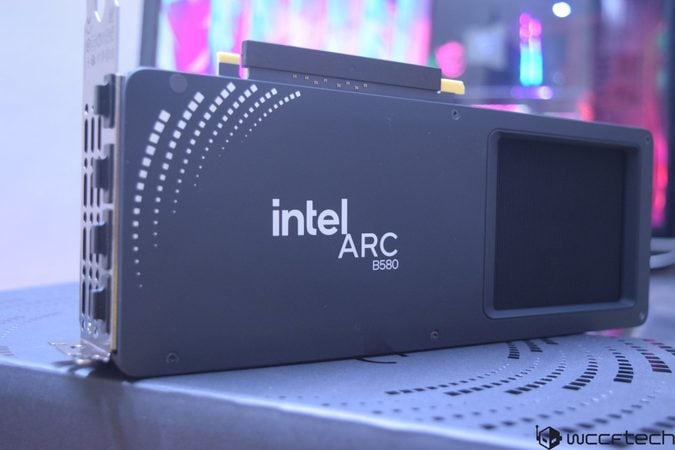
The solution has also been tested with a desktop Intel Arc B580 graphics card.
In Cyberpunk 2077, switching to XMX processing reportedly delivered a 29% performance improvement.
With frame generation enabled, the reported increase reached 145%.
Forza Horizon 6 also benefited, showing a 16% performance improvement from XMX acceleration alone.
However, these results are specific to the tested configurations and should not be interpreted as guaranteed improvements across all games.
Experimental Patch Supports SteamOS but Has Some Limitations
The project is available through GitHub and offers a relatively straightforward installation process.
According to its developer, you can extract the release archive and run the included installation command.
Once installed, the modified drivers are applied automatically to supported games without requiring individual Steam launch options.
However, the patch currently requires the native Steam client.
The Flatpak version of Steam is not supported, which limits compatibility for players using that installation method.
Because the software remains experimental, stability and compatibility may vary between Linux distributions, graphics drivers and individual games.
Intel has already committed to introducing official XeSS upscaling and frame generation support through Proton, but its implementation has not yet arrived.
The community developed patch provides an alternative for players who want to experiment with these capabilities before Intel releases its official solution.
For Intel Arc owners using SteamOS or other Linux distributions, the project could make supported games more practical to run, particularly on handheld devices where graphics performance and power efficiency are important.



Discussion (0)
Be the first to comment.