


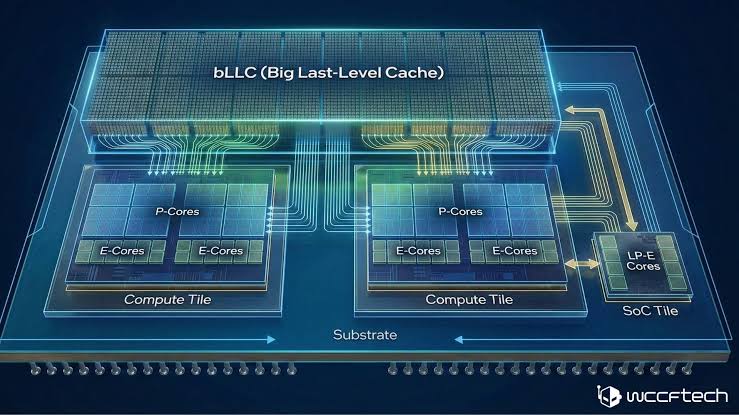
Intel's upcoming Nova Lake H mobile processor has appeared in a leaked specification sheet, revealing a 16 core configuration, a maximum clock speed of 4.8GHz, and support for DDR5 8000 memory.
The processor belongs to Intel's forthcoming Core Ultra Series 4 family and is expected to power a new generation of laptops and compact computing systems.
The specifications were discovered in documentation for an Advantech industrial computer, providing an early look at the capabilities of Intel's next generation mobile architecture.
According to the listing, the processor combines eight performance cores, four efficiency cores, and four low power efficiency cores. It also features 18MB of last level cache and a reported thermal design power of 25W.
Meanwhile, a separate benchmark database entry has revealed an early Nova Lake S desktop processor with 28 cores and clock speeds reaching 5.2GHz.
Neither processor has received a complete official specification announcement from Intel.
Intel Nova Lake H Features Eight Performance Cores and Eight Efficiency Cores
The leaked processor was identified in documentation for Advantech's ASR A505 single board computer, which is intended for industrial and robotics applications.
Although the listing does not identify the processor's exact commercial model number, it explicitly references Intel Core Ultra Series 4 and the Nova Lake H codename.
The processor features a hybrid configuration consisting of three different core types.
Eight performance cores are designed to handle demanding workloads, while four efficiency cores support additional processing tasks with lower power requirements.
Another four low power efficiency cores are included to handle lighter activities while reducing energy consumption.
Together, these provide a total of 16 CPU cores.
Previous reports suggest that Nova Lake will use Intel's Coyote Cove architecture for performance cores and Arctic Wolf architecture for efficiency cores.
However, these architectural details remain unconfirmed.
The leaked configuration is similar to one previously associated with an entry level Nova Lake S desktop processor, although the mobile version operates within a substantially lower power envelope.
Nova Lake H Could Reach 4.8GHz With Just 25W TDP
One of the notable specifications is the processor's reported 25W thermal design power.
The listing also identifies a base clock of 2.0GHz and a maximum turbo frequency of 4.8GHz.
These figures suggest that Intel is targeting a balance between performance and power efficiency for mobile and compact computing devices.
However, the 25W rating does not necessarily represent the processor's maximum electrical consumption during demanding workloads.
Modern Intel processors can operate above their stated base power limits when sufficient thermal and electrical capacity is available.
Actual sustained performance will therefore depend on the cooling configuration and power limits implemented by individual manufacturers.
The processor also includes 18MB of last level cache, which can help reduce the need to access system memory during certain workloads.
The following specifications have appeared in the leaked documentation.
| Specification | Intel Nova Lake H |
|---|---|
| Product family | Core Ultra Series 4 |
| CPU cores | 16 |
| Performance cores | 8 |
| Efficiency cores | 4 |
| Low power efficiency cores | 4 |
| Base frequency | 2.0GHz |
| Maximum turbo frequency | 4.8GHz |
| Last level cache | 18MB |
| Memory support | DDR5 8000 |
| Maximum memory capacity | 128GB |
| Integrated graphics | Intel Arc Graphics |
| Maximum GPU frequency | 2.3GHz |
| Reported TDP | 25W |
These details originate from preliminary product documentation and could change before commercial systems become available.
Intel Nova Lake H Could Support DDR5 8000 Memory
Memory support is another important feature revealed by the listing.
The processor reportedly supports DDR5 memory speeds of up to 8000 MT/s, alongside a maximum capacity of 128GB.
This represents an increase of 800 MT/s compared with the DDR5 7200 support associated with Intel's Panther Lake platform.
Higher memory transfer rates can improve bandwidth available to the processor and integrated graphics.
The additional bandwidth may be particularly useful for workloads that frequently move large amounts of data between system memory and processing units.
Integrated graphics can also benefit because they typically share system memory with the CPU rather than relying on dedicated graphics memory.
However, actual memory performance will depend on the motherboard design, installed memory modules, and supported configurations.
The listing does not establish whether every Nova Lake H laptop will support DDR5 8000 at its maximum advertised speed.
Nova Lake H Integrated Arc Graphics Could Feature Xe3P Architecture
The Advantech specification sheet also references Intel Arc integrated graphics.
According to the documentation, the graphics processor can operate at frequencies reaching 2.3GHz.
However, the listing does not identify the GPU architecture or execution unit configuration.
Previous leaks have suggested that Intel's upcoming Nova Lake H processors could feature integrated graphics based on the Xe3P architecture.
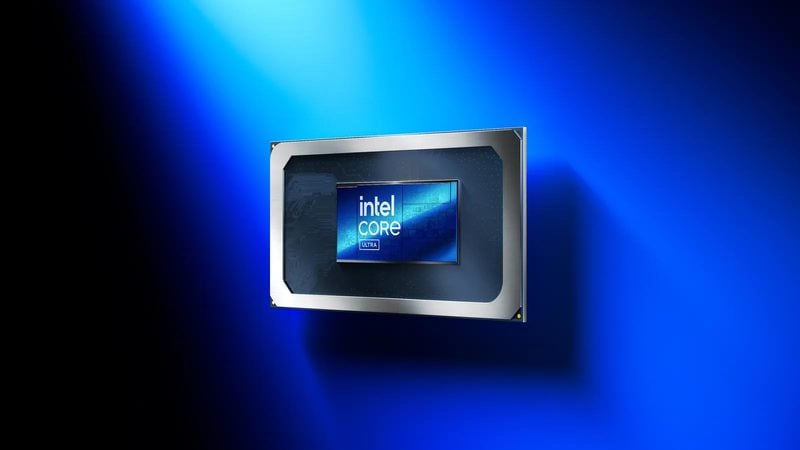
Higher end variants are also rumored to include as many as 12 GPU cores.
If accurate, this configuration could provide additional graphics processing capabilities for compatible laptops without requiring a dedicated graphics card.
However, it remains unclear whether the specific 16 core processor identified in the Advantech documentation includes the rumored 12 core GPU configuration.
Intel has not confirmed the graphics specifications, making it too early to determine gaming performance or compare the integrated GPU directly with existing products.
Intel Nova Lake S Desktop CPU With 28 Cores Also Appears Online
Alongside the mobile processor leak, a separate Nova Lake S engineering sample has appeared in the OpenBenchmarking database.
The entry identifies a processor with 28 CPU cores and a reported maximum frequency of 5.2GHz.
The system was listed with a Nova Lake S motherboard, 32GB of memory, and Ubuntu 26.04.
Based on previous reports, the processor could use a configuration consisting of eight performance cores, 16 efficiency cores, and four low power efficiency cores.
The desktop chip is also rumored to support a PL2 power limit reaching approximately 296W.
However, the benchmark listing does not independently establish the processor's final power specifications.
Engineering samples can also differ significantly from commercial processors in their frequencies, firmware, and performance characteristics.
As a result, the reported 5.2GHz clock should be treated as an early indication rather than a confirmed retail specification.
Intel Core Ultra Series 4 Specifications Remain Unconfirmed
The appearance of both mobile and desktop Nova Lake processors suggests that Intel's next generation platform is progressing through hardware development and compatibility testing.
The leaked Nova Lake H documentation provides particularly useful information because it identifies the processor's core configuration, memory support, cache capacity, and operating frequencies.
However, several important details remain unknown.
Intel has not confirmed the exact model name of the 16 core processor, its final integrated graphics configuration, commercial availability, or expected pricing.
Independent performance benchmarks are also needed to determine how the architecture compares with existing Core Ultra processors and competing mobile CPUs.
The reported 25W TDP and DDR5 8000 support indicate that Intel is preparing a mobile platform designed around modern memory technology and a combination of performance and efficiency focused cores.
Meanwhile, the appearance of a 28 core desktop sample provides another indication of the broader Nova Lake family's expected specifications.
Until Intel formally announces Core Ultra Series 4, the leaked information should be considered preliminary, although it offers an early picture of what the company's next generation mobile and desktop processors may deliver.


Discussion (0)
Be the first to comment.