


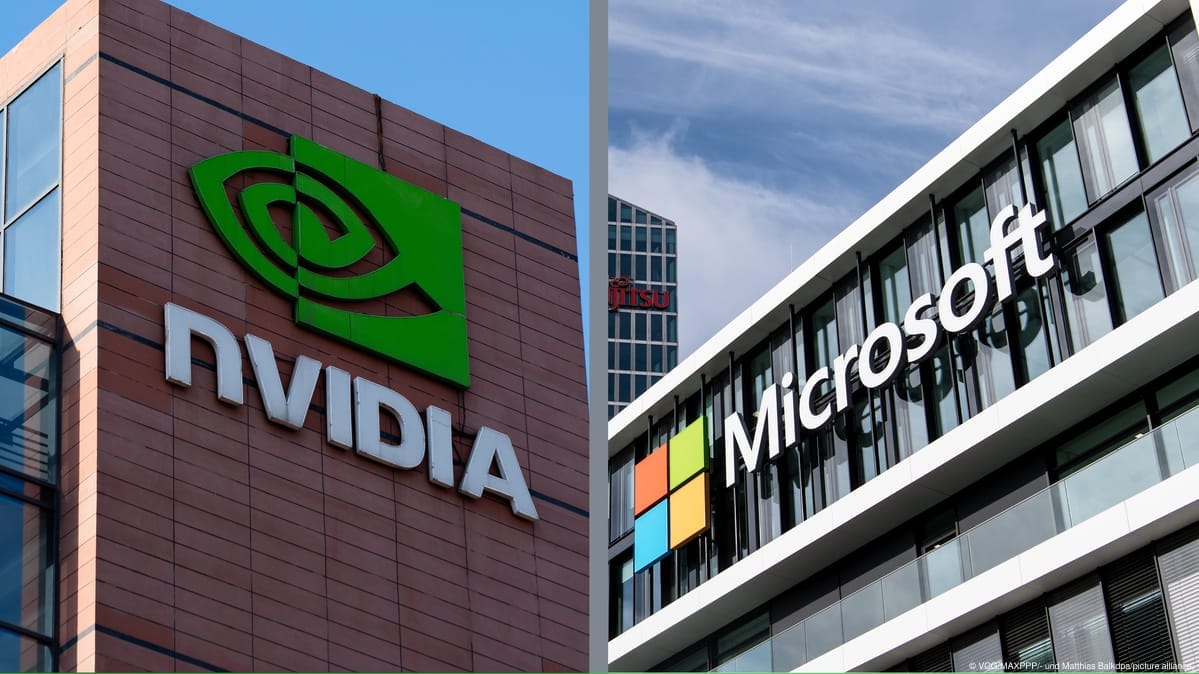
The technology industry faced a difficult week in November 2026 as major service disruptions, cybersecurity concerns, and questions about artificial intelligence drew attention to the reliability of widely used digital systems.
Microsoft remained under scrutiny following a major Microsoft 365 outage that disrupted businesses and individuals worldwide. The incident raised questions about how dependent organizations have become on a relatively small number of technology providers.
Meanwhile, Nvidia faced renewed questions about its internal security practices following allegations involving former CEO Jensen Huang and a suspected foreign intelligence connection.
Other developments included phishing campaigns exploiting Microsoft's service disruption, concerns about AI generated software, and reports examining new computing hardware and consumer technology.
The week also brought renewed attention to Apple's HomeView smart hub following complaints about its launch experience.
Microsoft 365 Outage Raises Questions About Enterprise Dependence
Microsoft's recent global Microsoft 365 disruption has prompted discussions about why businesses continue depending heavily on the company's software and cloud services despite repeated reliability concerns.
The outage affected services that many organizations use for communication, document management, and daily business operations.
Although the immediate disruption has ended, its consequences have renewed concerns about the risks of relying on a single technology provider.
Many enterprises use Microsoft products across several interconnected areas, including email, productivity software, identity management, and cloud infrastructure.
Moving away from these services can require substantial investments in alternative platforms, employee training, data migration, and system integration.
For large organizations, replacing one Microsoft service may also affect several other applications connected to it.
This creates a situation in which businesses may recognize the risks associated with vendor dependence while finding it difficult to make significant changes.
The latest outage has renewed discussions about whether organizations should diversify their technology infrastructure and prepare more effective continuity plans.
Cybercriminals Exploit Microsoft Service Disruption for Phishing Attacks
The Microsoft 365 incident also created opportunities for cybercriminals.
Reports indicate that attackers used the disruption as a pretext for phishing campaigns intended to deceive individuals affected by the outage.
Such attacks can involve messages impersonating technology providers, support teams, or workplace administrators.
The messages may claim that an account requires verification, a password must be reset, or a service problem needs immediate attention.
During a genuine outage, these requests can appear more convincing because people are already expecting communications about technical difficulties.
This makes service disruptions particularly attractive opportunities for social engineering attacks.
The incident highlights the importance of verifying unexpected requests through official channels rather than trusting links or instructions delivered through unsolicited messages.
It also demonstrates how cybersecurity threats can continue after the original technical problem has been resolved.
AI Generated Software Is Creating New Challenges for Development Teams
Artificial intelligence remained another major topic, particularly its effect on software development.
Recent analysis suggests that AI coding tools can accelerate certain programming tasks while creating additional work later in the development process.
For example, AI generated code may require extensive testing, debugging, security reviews, and architectural adjustments before it can be used reliably.
Although generating an initial implementation may take relatively little time, correcting its weaknesses can consume significant engineering resources.
These concerns are particularly relevant for organizations introducing AI tools across large development teams.
If generated code is accepted without sufficient examination, problems may only become visible during integration, testing, or production.
The resulting maintenance work can reduce the productivity benefits that initially encouraged adoption.
Similar concerns have emerged in other business activities where AI generated material requires substantial human correction.
The broader issue concerns how organizations measure productivity when using AI, particularly whether they account for the additional work required to verify and improve its output.
Nvidia Faces Security Questions as RTX Spark Attracts Interest
Nvidia featured prominently in several technology discussions this week.
The company faced questions about whether its internal security teams had adequately addressed potential risks associated with former CEO Jensen Huang.
Those concerns emerged following reports involving Huang's alleged personal relationship with an individual suspected of connections to foreign intelligence.
The allegations have raised questions about corporate security procedures and how organizations assess potential risks involving senior executives.
However, the available reporting does not establish that confidential Nvidia information was compromised through the alleged relationship.
Separate coverage focused on Nvidia's hardware business and the growing interest in compact systems designed for artificial intelligence workloads.
The RTX Spark Mini PC was highlighted as a platform capable of supporting substantial personal research projects involving local AI processing.
Local AI systems can allow researchers and enthusiasts to operate certain models on their own hardware rather than sending every task to remote cloud services.
Another discussion examined the challenges Nvidia faces when attempting to increase GeForce graphics card production.
Semiconductor manufacturing capacity, component availability, and supply chain constraints can limit how quickly a company expands production, even when demand remains strong.
Apple Watch Accuracy and HomeView Problems Receive Attention
Apple also appeared in several reports examining the reliability of its consumer products.
One investigation assessed the accuracy of Apple Watch heart rate measurements using a Polar H10 chest strap as a comparison device.
The findings suggested that Apple's wearable can deliver accurate heart rate readings under the tested conditions.
However, the results depend on the reliability of the reference device and the testing methodology.
Another report focused on Apple's HomeView smart home hub, which has attracted criticism following its launch.
Some early customers have expressed frustration with the product's software experience despite acknowledging the quality of its hardware.
The complaints suggest that aspects of the device's functionality and launch readiness may not have met customer expectations.
These experiences highlight the importance of software reliability in connected home products, where functionality depends on integration between hardware, applications, and other devices.
AI Gadgets and Local Computing Remain Areas of Growing Interest
Beyond the week's service disruptions and corporate controversies, consumer technology coverage also examined new AI powered accessories for home offices.
These products aim to introduce automation and intelligent assistance into everyday activities.
However, their practical value depends on whether the features provide meaningful improvements over conventional devices.
Local AI computing is also receiving increased attention as more capable hardware becomes available outside traditional data centers.
For some individuals and smaller organizations, running AI workloads locally may offer greater control over data and software configurations.
At the same time, performance, energy consumption, hardware costs, and maintenance requirements remain important considerations.
The week's developments illustrate several challenges facing the technology industry as companies introduce new AI capabilities while maintaining the digital services that businesses and consumers already depend on.
Microsoft's outage and the subsequent phishing activity emphasized the importance of operational resilience and security.
Meanwhile, Nvidia's corporate questions, AI development concerns, and Apple's product issues demonstrated that technological progress continues to create practical challenges involving reliability, accountability, and product quality.
Discussion (0)
Be the first to comment.