



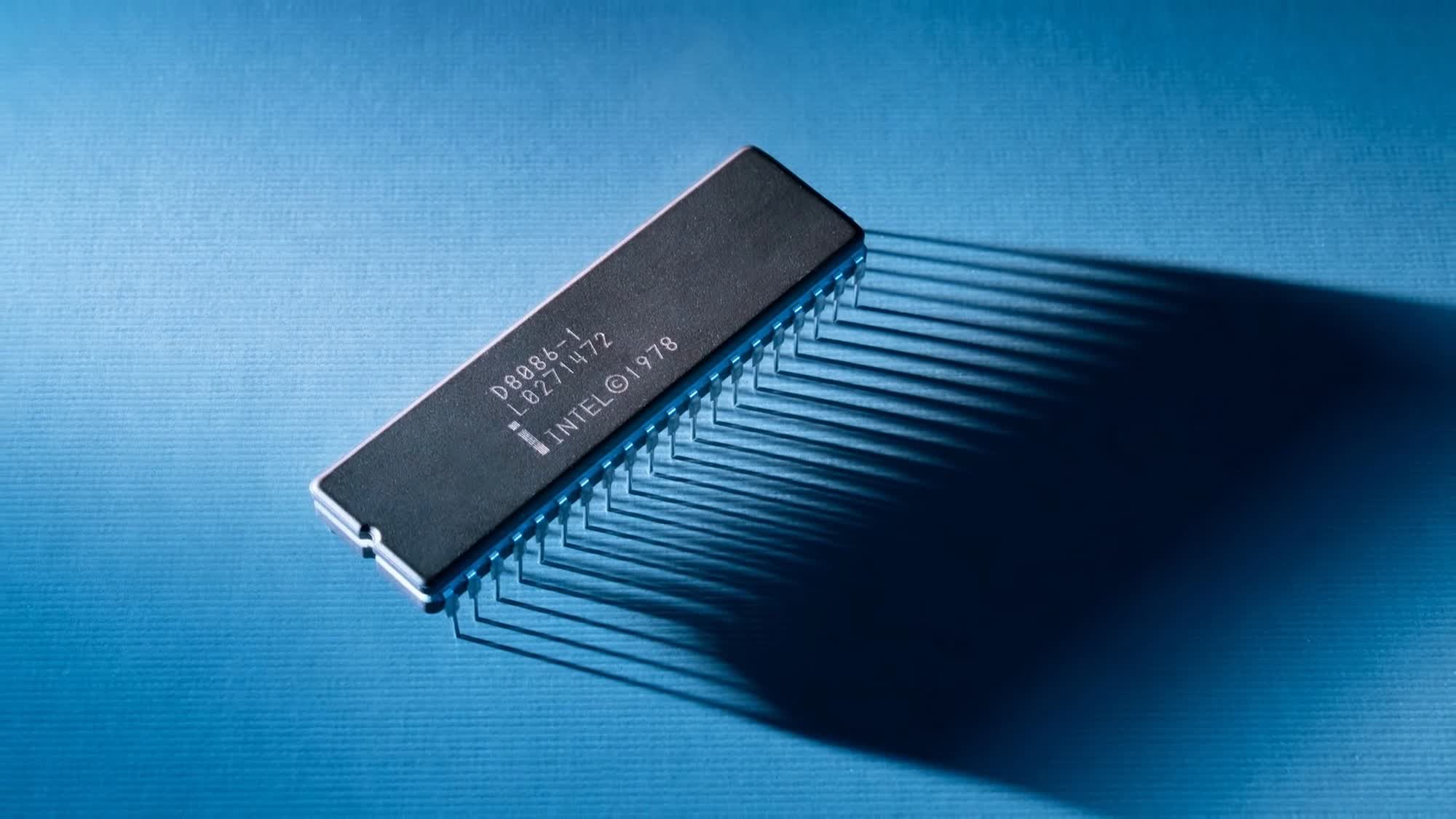
Intel introduced the 8086 processor on June 8, 1978, creating the foundation for the x86 architecture that still powers most desktop and laptop PCs today. The chip is now 48 years old, and its long legacy is unusual because it began as a practical short term solution rather than Intel’s original long term plan.
The 8086 was Intel’s first 16 bit processor and became the starting point for one of the most important instruction set families in computing history. Modern Intel and AMD desktop processors are far more advanced, but they still belong to the same broad x86 lineage that began with the 8086.
The irony is that the 8086 was not meant to become the dominant PC architecture for the next half century. Intel developed it as a stopgap while its more ambitious iAPX 432 project was delayed. The iAPX 432 was a clean sheet 32 bit design, but it eventually proved too expensive, too complex, and too slow when it arrived in 1981.
The 8086, by contrast, was practical. It was developed in around 18 months by a small team led by Stephen P. Morse. It gave Intel a timely answer to upcoming 16 bit processors from rivals and built on lessons from earlier Intel 8 bit chips such as the 8008, 8080, and 8085.
The 8086 was modest by modern standards but hugely important
The original 8086 looks tiny compared with today’s processors, but it was a major step forward in 1978. It used Intel’s HMOS manufacturing process, had a 40 pin package, and ran at clock speeds between 5 MHz and 10 MHz during its lifetime.
| Feature | Intel 8086 |
|---|---|
| Launch date | June 8, 1978 |
| Architecture | x86 |
| Processor type | 16 bit CPU |
| Transistor count | Around 20,000, or 29,277 including ROM and PLA |
| Process technology | Intel HMOS |
| Package | 40 pin chip |
| Die size | 33mm² |
| Feature size | 3.2 micrometers |
| Clock speeds | 5 MHz to 10 MHz |
The 8086 also added useful instruction support compared with earlier Intel chips, including microcode for multiply and divide assembly language instructions. These features helped make it more capable while preserving a degree of compatibility with earlier Intel designs.
However, the 8086 itself was not the chip that went into the first IBM PC. That role went to the Intel 8088, introduced in 1979. The 8088 was closely related to the 8086 but used an 8 bit external bus, which helped reduce system cost. IBM chose the 8088 for the original IBM PC in 1981, and that decision helped lock x86 into the center of the PC market.
x86 became the backbone of the PC industry
After the 8086 and 8088, Intel’s later processors carried the x86 architecture forward. The 80286, 80386, and 80486 became key parts of the growing PC compatible market. Together with Microsoft Windows, this helped establish the Wintel era, where Intel CPUs and Windows systems became the default platform for business, home computing, and gaming.
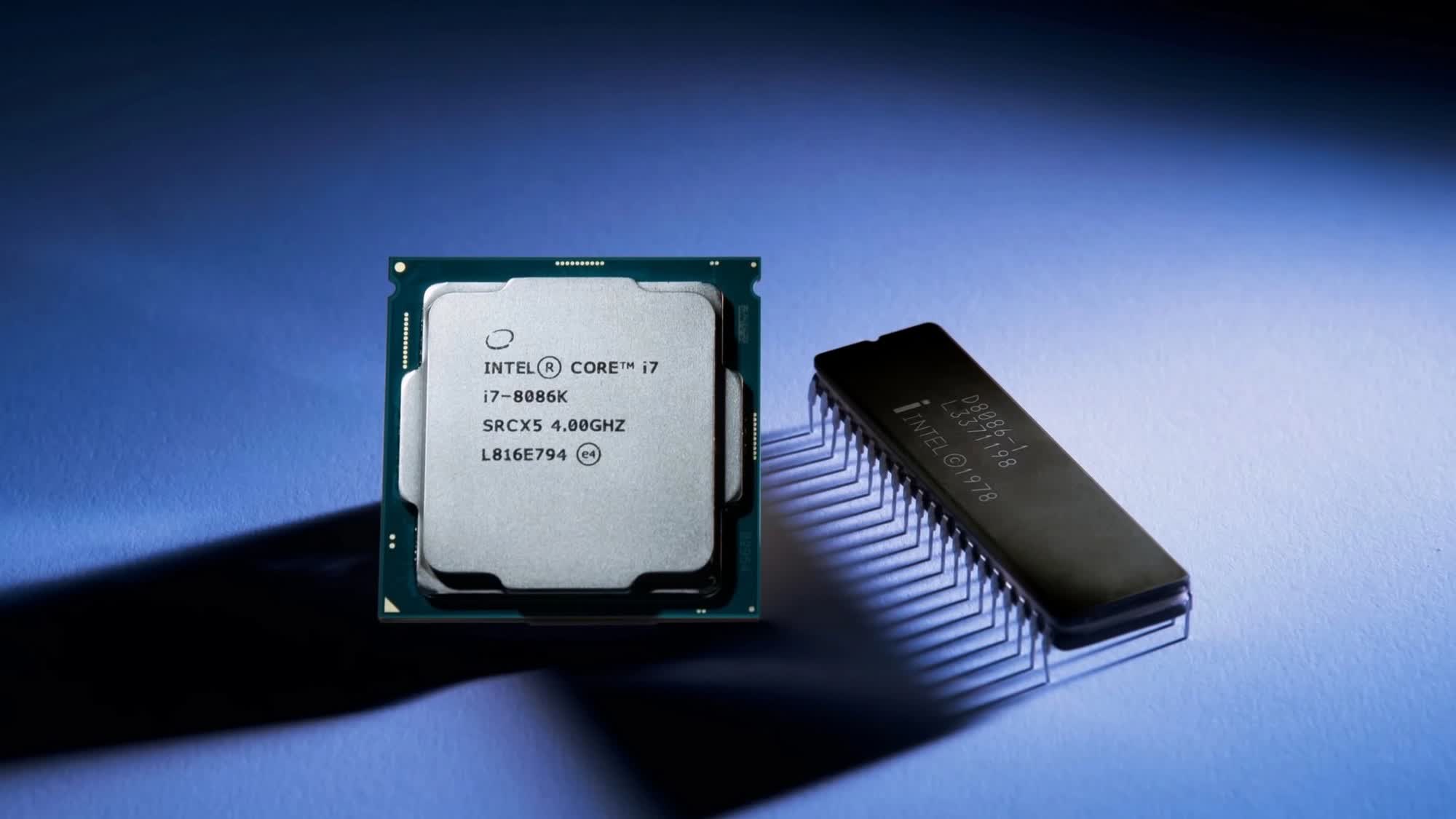
The Pentium line later replaced the numbered 486 branding, but it was still part of the x86 family. That continuity became one of x86’s biggest strengths. Software compatibility mattered, and the ability to run older programs helped make the platform attractive for both businesses and consumers.
The 8086’s importance is not only technical. It shaped the direction of the personal computer industry. A temporary processor built under time pressure ended up influencing decades of hardware, software, operating systems, gaming, and enterprise computing.
Intel marked the 40th anniversary of the 8086 in 2018 with the Core i7 8086K, a special edition desktop processor aimed at enthusiasts. That raises an obvious question: will Intel do something similar in 2028 for the 50th anniversary?
The 50th anniversary could arrive during a more competitive era
A 50th anniversary 8086 tribute chip would make sense from a branding point of view. The original 8086 is one of Intel’s most historically important products, and 2028 would be a natural moment for the company to celebrate x86’s half century.
The bigger question is what the PC market will look like by then. x86 is still dominant in Windows PCs, but Arm based systems are becoming more visible. Qualcomm and MediaTek have been trying to make Windows on Arm more competitive, while NVIDIA’s newer Arm based Windows ambitions have also drawn attention.
That does not mean x86 is disappearing. Intel and AMD still have a strong grip on the PC CPU market, especially for gaming desktops, workstations, and performance laptops. But the next few years may bring more serious competition from Arm systems, especially as AI PCs and power efficient laptops become more important.
That makes the 8086 anniversary more than a history note. It is a reminder that the PC industry was shaped by practical decisions, timing, compatibility, and developer support. The 8086 succeeded not because it was Intel’s most ambitious idea, but because it was useful, available, and adaptable.
Forty eight years later, the architecture it started is still alive inside modern PCs. Few temporary solutions in technology have had that kind of lifespan.



Discussion (0)
Be the first to comment.