



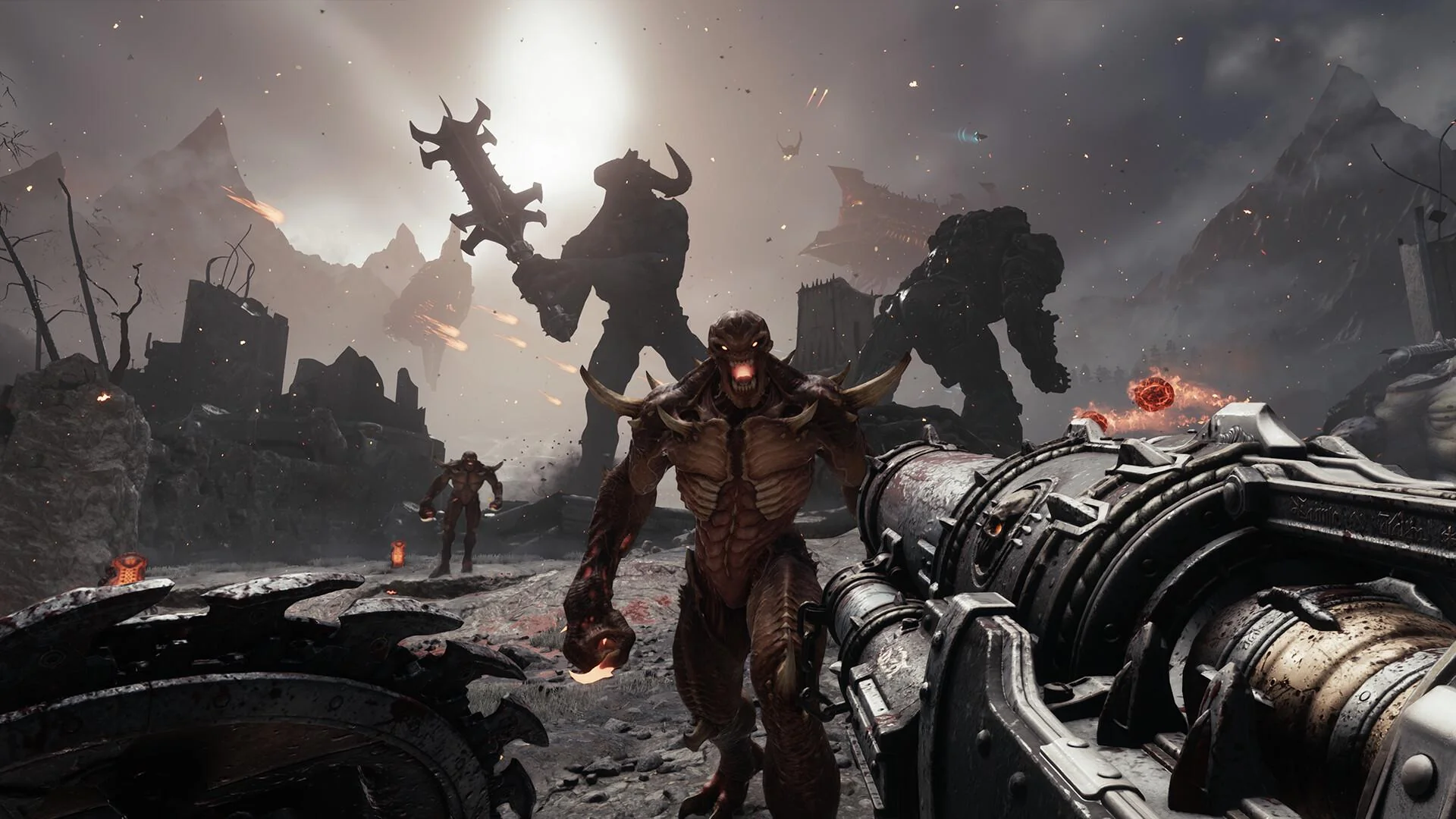
id Software is facing one of the biggest staffing changes in its recent history, but the studio behind DOOM says it still plans to develop its own games and continue investing in the id Tech engine.
The reassurance follows significant layoffs that reportedly removed more than half of the studio’s workforce and raised questions about whether id Software could maintain the development scale and technical independence it has been known for. Some former employees have warned that the loss of experienced staff could have a serious effect on future projects.
Executive producer Marty Stratton, however, says the studio is not being converted into a support team and has no plans to move its future games to Unreal Engine.
id Software plans to remain committed to id Tech
One of the biggest concerns following the layoffs was the future of id Tech, the proprietary engine that has powered the studio’s recent games.
Stratton says id Software remains fully committed to the technology and will continue developing it internally. MachineGames, another studio that uses id Tech, is also expected to remain on the engine, with the two teams planning closer technical collaboration in the future.
That is important because id Software has historically been known not only for its games but also for its technology. Moving to Unreal Engine could have made it easier to use external development teams, but it would also have represented a major change in how the studio operates.
| Area | Current position |
|---|---|
| Future games | id Software plans to continue leading its own projects |
| Engine | id Tech development will continue |
| Unreal Engine | No planned switch |
| MachineGames | Expected to continue using id Tech |
| Staffing | More than half of the studio reportedly affected |
| Main concern | Loss of experienced developers and institutional knowledge |
The studio also expects its remaining technology teams to work more closely together. Stratton described recent discussions among technical directors as encouraging and maintained that id Software can continue operating as a major technology focused developer.
Former staff warn that experience cannot be replaced easily
The outlook from former employees is considerably more cautious.
Andrew Willis, who previously worked as a technical art and design producer at the studio, said the layoffs removed a large number of people who had direct experience developing previous DOOM games.
He disputed suggestions that the studio returning to a workforce similar in size to the DOOM 2016 era should automatically be seen as reassuring. His concern is that headcount alone does not account for the experience and institutional knowledge lost when long serving developers leave.
That distinction may be important for future development. A smaller team can still make an ambitious game, but modern AAA projects have become more complicated in areas such as art production, animation, testing, platform support, accessibility, online systems, and technical optimization.
The layoffs therefore create questions not simply about how many people remain at id Software, but about which skills and responsibilities now need to be rebuilt.
Employees say the layoff process offered little explanation
The way the cuts were communicated has also drawn criticism.
Willis described being placed in a Microsoft Teams meeting with roughly 95 employees, where staff were informed that their positions had been eliminated. According to his account, employees were told the decision was not based on individual performance.
He also said the studio had not been given clear performance targets that could explain the decision. That created frustration among employees who did not know whether success was being judged through sales, Game Pass engagement, playtime, downloads, or another metric.
The timing was particularly difficult because some layoffs happened before the studio had a chance to fully evaluate the performance of recent work.
The next id Software project will be the real test
Stratton acknowledged that statements about the studio’s future will only go so far. The real measure will be the quality of what id Software releases next.
He argued that the company has gone through major transitions before, including periods when it operated with very small teams, and said he still believes the current developers can produce high quality games and technology.
For players, that leaves a mixed picture. id Software still intends to remain an independent creative and technical force inside Xbox, with its own games and its own engine. At the same time, the scale of the layoffs means future development will happen with fewer people and less accumulated experience than before.
The studio’s next project will therefore carry more weight than usual. It will be the first clear indication of whether id Software can maintain the standards associated with DOOM while rebuilding after one of the most disruptive periods in its history.



Discussion (0)
Be the first to comment.