



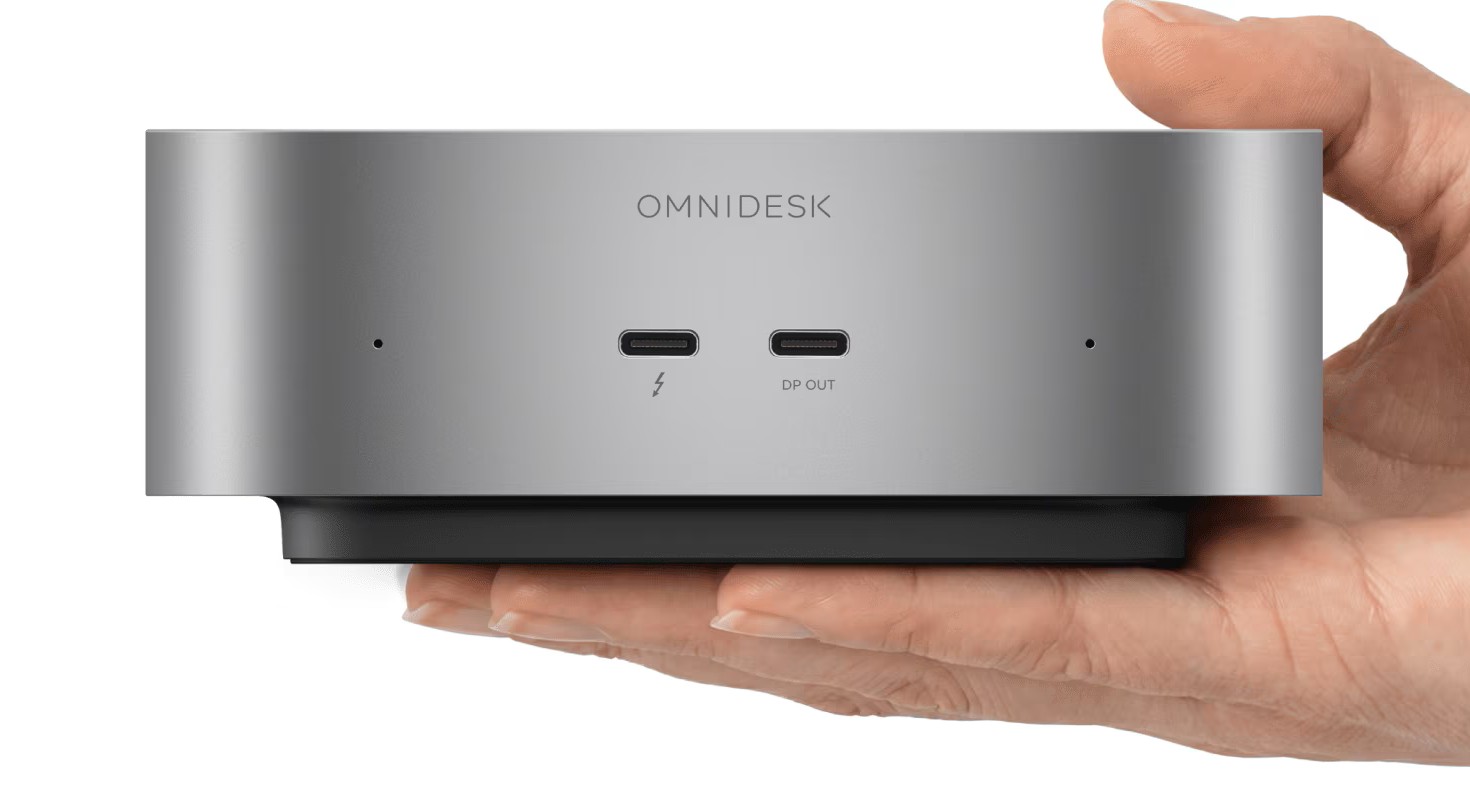
HP has introduced a new compact OmniDesk desktop powered by Intel's latest Wildcat Lake processors, with configurations ranging from the Core 3 304 to the Core 5 320.
The system is designed as a small form factor desktop for everyday productivity and office workloads. It measures about 5.12 x 5.12 x 1.89 inches, putting it in the same general compact PC category as devices such as the Mac mini.
Pricing starts at $799 for a configuration with the Core 3 304, 8GB of LPDDR5X memory and a 256GB NVMe SSD. Higher processor, memory and storage options can raise the price significantly.
| Specification | HP OmniDesk Mini |
|---|---|
| Base processor | Intel Core 3 304 |
| Top processor | Intel Core 5 320 |
| Memory | 8GB to 16GB LPDDR5X |
| Memory speed | LPDDR5X 8533 |
| Base storage | 256GB NVMe SSD |
| Configurable storage | Up to 2TB from HP |
| Internal SSD support | Two M.2 slots, up to 16TB total |
| Wireless | WiFi 6 or WiFi 6E |
| Bluetooth | 5.4 or 5.3 depending on configuration |
| Starting price | $799 |
Wildcat Lake focuses on efficiency
The OmniDesk uses Intel Core Series 3 processors based on the Wildcat Lake platform rather than the higher end Core Ultra Series 3 hardware HP has used in some other systems.
The entry level Core 3 304 includes one performance core and four low power efficiency cores.
Buyers can upgrade to the Core 5 320, which uses a two performance core plus four low power efficiency core configuration.
The emphasis is therefore on power efficiency and basic productivity rather than demanding gaming, workstation tasks or heavy content creation.
Upgrading from the Core 3 304 to the Core 5 320 adds around $80 to the system price.
Memory and storage upgrades become expensive
The base model includes 8GB of LPDDR5X 8533 memory.
HP also offers higher memory configurations, including 12GB and 16GB options. Moving to the larger capacities can reportedly add between $140 and $200 to the price.
Storage starts with a 256GB PCIe Gen 3 NVMe SSD.
HP's configurator allows buyers to increase storage to as much as 2TB, but the upgrades are costly. A 2TB SSD can add around $760 to the purchase price.
Internally, the system includes two M.2 slots and can technically support as much as 16TB of total NVMe storage when using larger drives.
That makes aftermarket storage upgrades potentially more attractive than paying for HP's higher capacity factory configurations.
Compact chassis includes modern wireless connectivity
The OmniDesk ships with WiFi 6 and Bluetooth 5.4 in its standard configuration.
An alternative option combines WiFi 6E with Bluetooth 5.3.
The compact enclosure is intended to keep desk space requirements low while still providing the flexibility of a traditional Windows desktop.
HP has not positioned the OmniDesk as a high performance mini PC. Its Wildcat Lake processors, integrated graphics and relatively limited base memory instead make it better suited to office work, web browsing, media playback and general home computing.
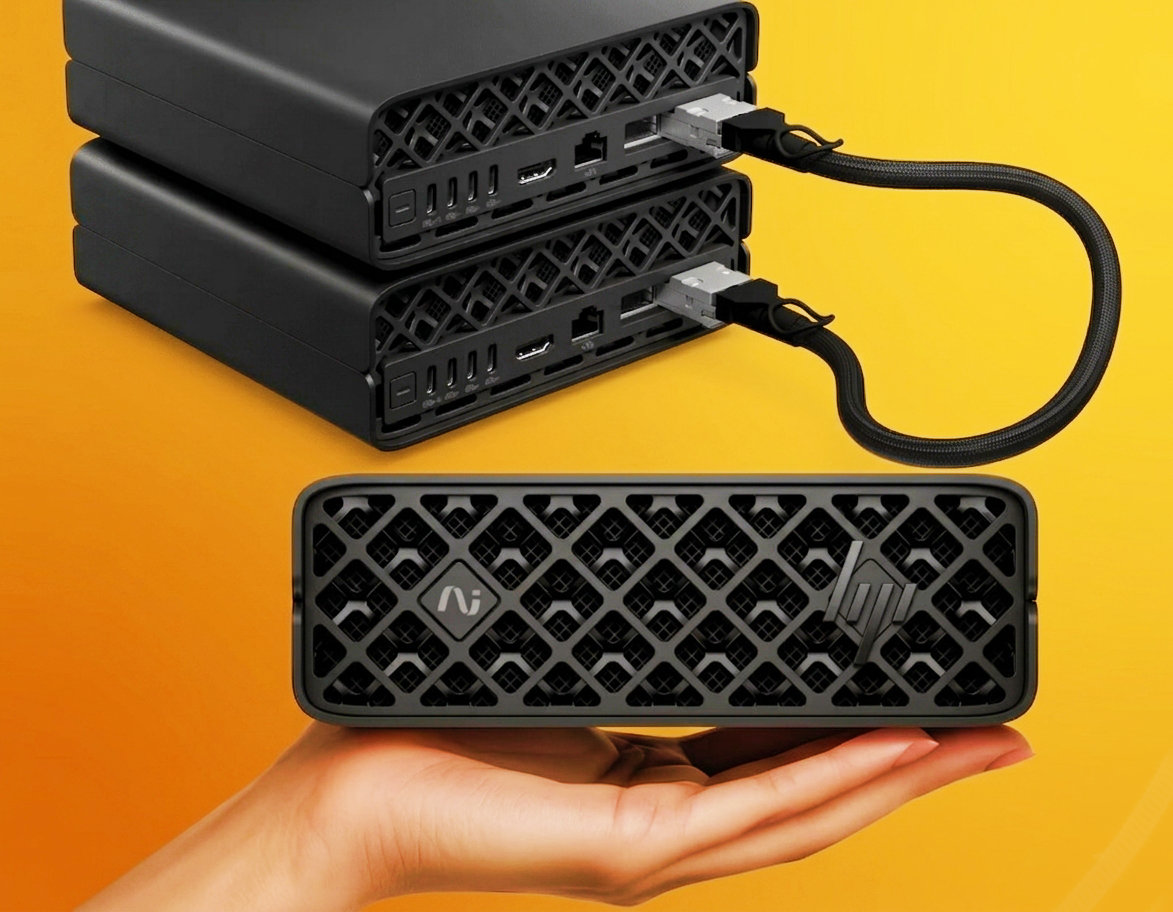
The $799 starting price may be one of its more difficult selling points, especially considering the 8GB memory and 256GB storage included with the base configuration.
Component prices have increased across parts of the PC market, but the OmniDesk becomes considerably more expensive once buyers begin adding memory and storage.
For buyers interested in the system, the Core 5 320 upgrade may offer a more useful performance increase than paying HP's substantial premiums for larger SSDs.
Discussion (0)
Be the first to comment.