



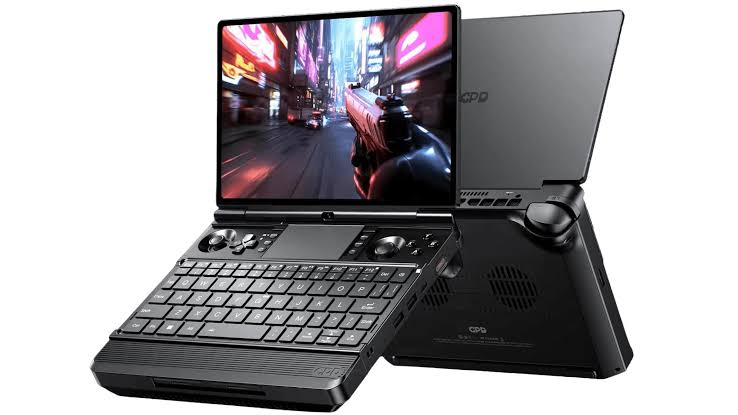
GPD may be preparing a powerful new handheld PC called the Win Max 3, with leaked details pointing to a 9.06-inch OLED display, AMD Ryzen AI Max+ processors, up to 128GB of memory, and an unusual external battery and cooling design.
The device has not been officially announced by GPD, so the specifications should be treated as unconfirmed. However, the information has appeared in a detailed third-party product listing, along with several images that suggest the hardware is close to a real launch.
Rather than acting like a typical gaming handheld, the Win Max 3 appears to be designed as an ultra-compact gaming laptop with built-in controls, a physical keyboard, a high-resolution display, and desktop-class memory options.
A 9-Inch OLED Display Could Be One of the Main Highlights
The leaked Win Max 3 is expected to use a 9.06-inch OLED display with a 2400x1504 resolution and a 165Hz refresh rate. That gives it a near-16:10 aspect ratio and a very high pixel density for a handheld-sized screen.
The panel is also said to offer up to 1,050 nits of peak brightness, with around 650 nits expected during normal use. If accurate, that would make it one of the brighter OLED displays planned for a handheld PC.
| Display specification | Reported detail |
|---|---|
| Panel size | 9.06 inches |
| Panel type | OLED |
| Resolution | 2400x1504 |
| Refresh rate | Up to 165Hz |
| Peak brightness | Up to 1,050 nits |
| Typical brightness | Around 650 nits |
| Pixel density | Around 313 PPI |
The high resolution may be useful for desktop work, web browsing, media playback, and text-heavy applications. For modern games, players would likely need to use lower rendering resolutions, upscaling, or reduced graphics settings to maintain high frame rates.
Ryzen AI Max+ Hardware Could Deliver Serious Performance
The Win Max 3 is reportedly planned with AMD Ryzen AI Max+ processors, also known as Strix Halo chips. Two options are expected.
The Ryzen AI Max+ 388 is said to include eight CPU cores with the full 40-compute-unit Radeon integrated GPU. The Ryzen AI Max+ 395 is expected to offer 16 CPU cores while keeping the same high-end graphics configuration.
| Processor | CPU cores | GPU configuration | Best fit |
|---|---|---|---|
| Ryzen AI Max+ 388 | 8 cores | 40 compute units | Gaming-focused use |
| Ryzen AI Max+ 395 | 16 cores | 40 compute units | Heavy multitasking and workstation tasks |
The system could also offer 32GB, 64GB, and 128GB memory configurations. That is far beyond typical handheld PCs and could make the device useful for local AI workloads, video editing, software development, emulation, and demanding desktop applications.
Storage and Expansion Options Look Unusually Flexible
The leaked design includes an M.2 2280 PCIe 4.0 x4 slot for a main SSD, along with a smaller M.2 2230 PCIe 4.0 x2 slot for additional storage.
It may also support removable Mini SSD storage using a compact 15x17mm module. That could give players another way to expand the device without opening the chassis.
| Storage option | Reported support |
|---|---|
| Main SSD slot | M.2 2280 PCIe 4.0 x4 |
| Secondary SSD slot | M.2 2230 PCIe 4.0 x2 |
| Removable expansion | Mini SSD, PCIe 4.0 x1 |
| Memory options | 32GB, 64GB and 128GB |
External Battery and Cooler Could Set It Apart
The most unusual part of the leaked design is its removable external battery. The reported battery module has a 97Wh capacity and can be hot-swapped, but the device may not have internal battery power when the pack is removed.
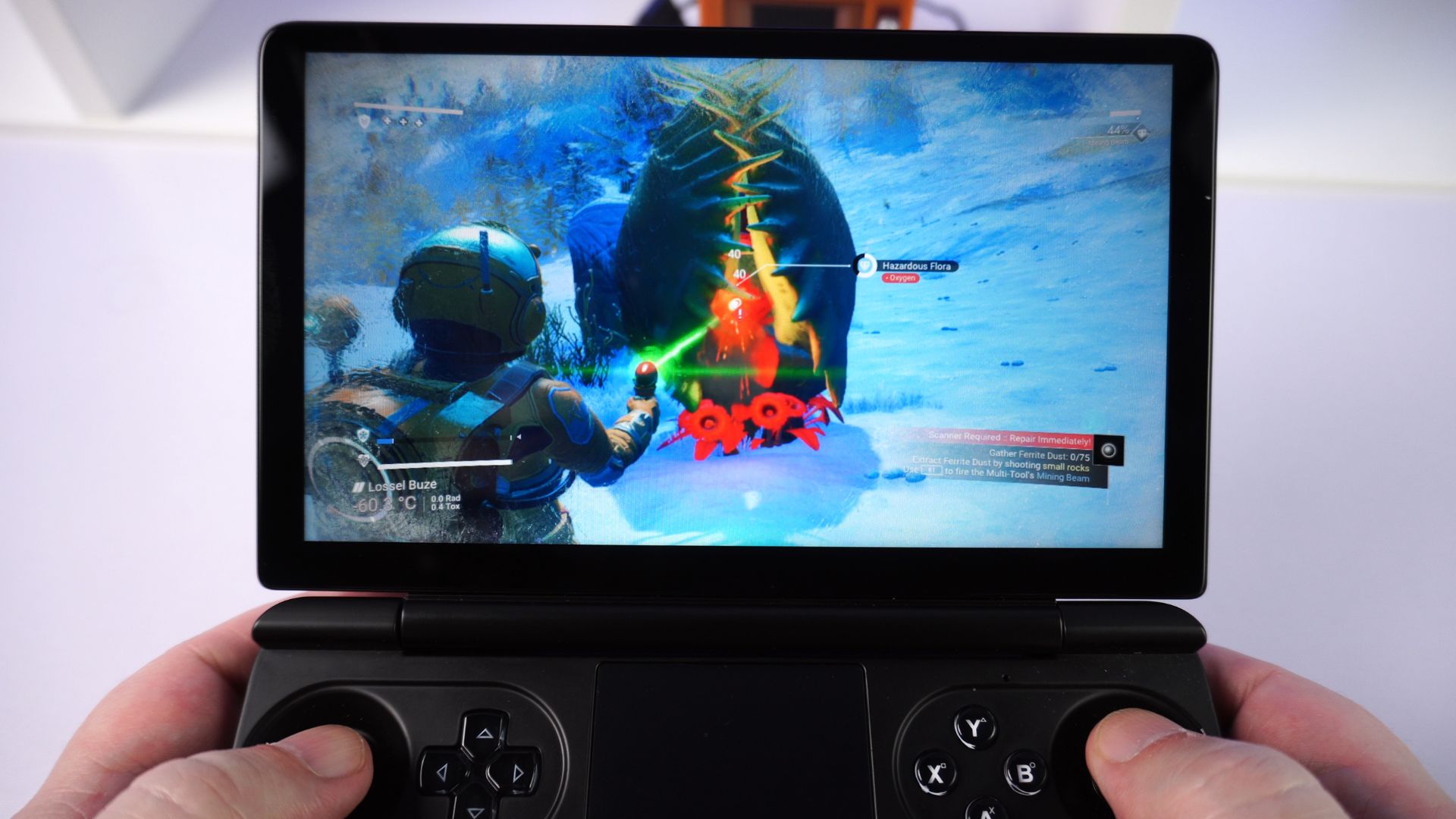
The Win Max 3 is also said to support an external 110W fan module. That accessory could allow the handheld to sustain higher power limits for longer, potentially increasing gaming performance well beyond what a typical portable system can manage.
At its lower 45W power setting, the battery is expected to last around two hours. Higher power modes would likely reduce runtime further.
GPD has not announced pricing or availability, but the combination of OLED hardware, Ryzen AI Max+ chips, high memory options, and modular accessories suggests the Win Max 3 could start near $2,000 and climb sharply for higher-end configurations.



Discussion (0)
Be the first to comment.