



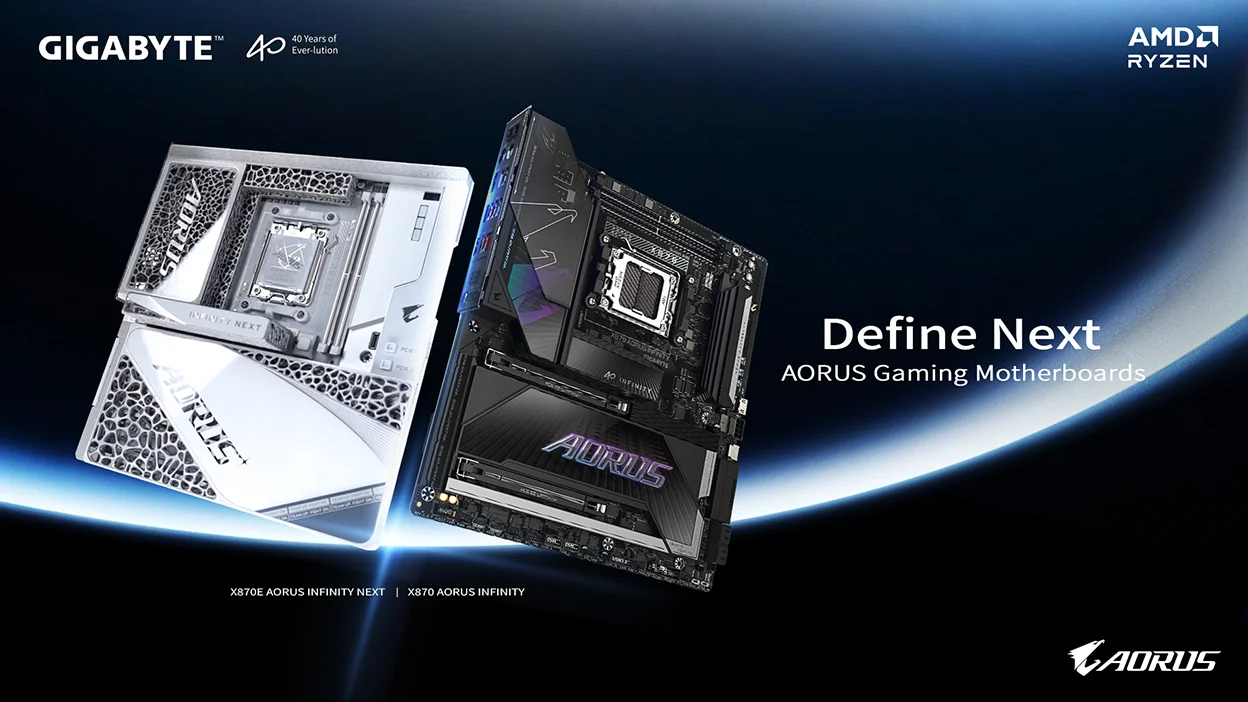
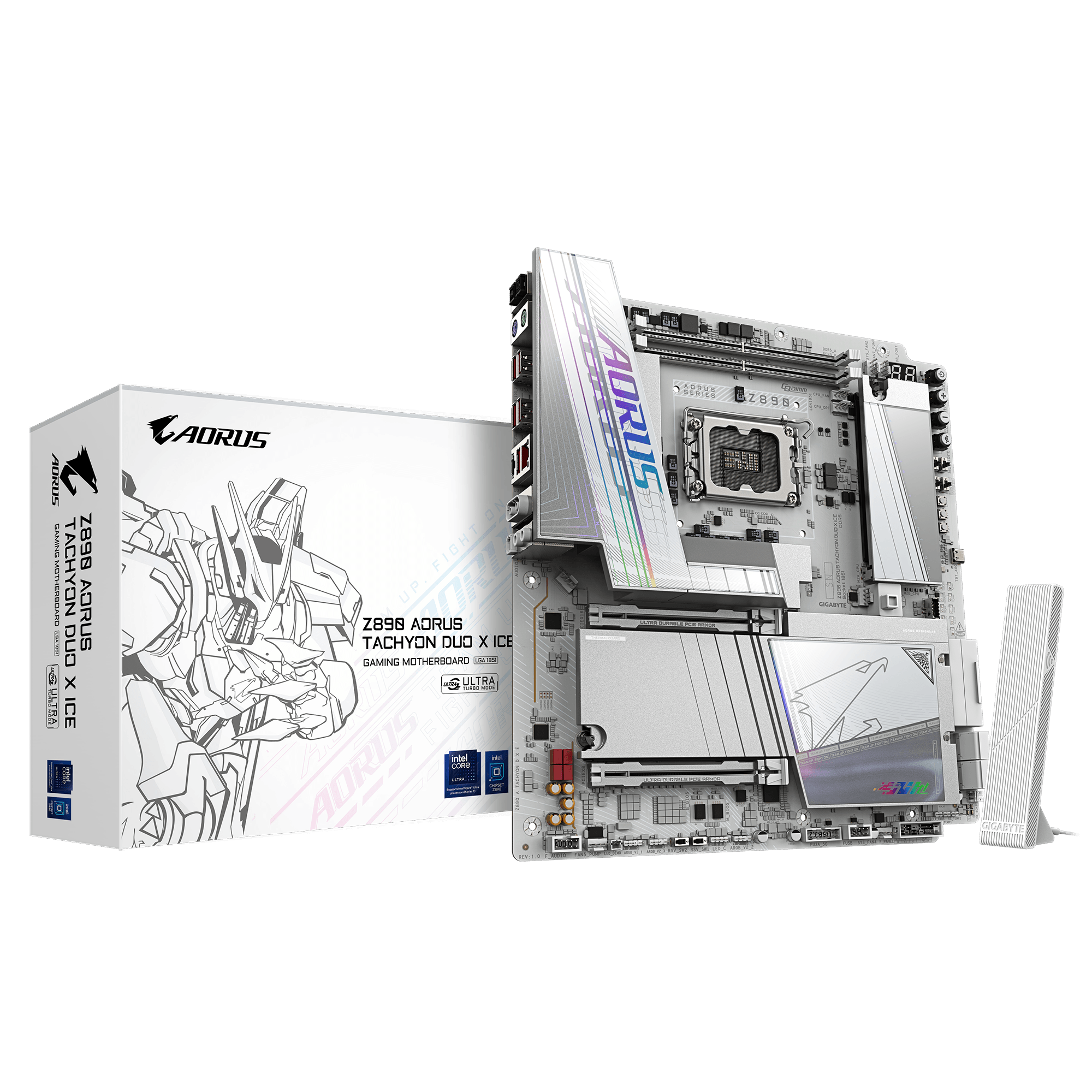
GIGABYTE says its in house overclocking team has reached DDR5 13556 MT/s at Computex 2026, claiming a new memory overclocking world record. The result was achieved with CORSAIR VENGEANCE DDR5 memory and GIGABYTE’s Z890 AORUS TACHYON DUO X ICE motherboard, a board built specifically for extreme memory tuning.
The run was led by GIGABYTE’s overclocking team under Hicookie, one of the company’s best known overclockers. The achievement gives GIGABYTE another headline result in the race to push DDR5 beyond normal consumer speeds.
This is not a setting everyday PC users should expect to run. DDR5 13556 MT/s is an extreme overclocking result, usually achieved under controlled conditions with carefully selected hardware and tuning. These records are meant to test platform limits rather than provide a practical memory profile for gaming PCs or workstations.
Still, the result matters because it shows how far DDR5 overclocking has moved. Consumer DDR5 kits have become much faster since the standard first arrived, and motherboard vendors are now competing heavily on signal quality, memory layout, firmware tuning, and support for new memory module designs.
Z890 AORUS TACHYON DUO X ICE was built for memory records
The DDR5 record is tied to the Z890 AORUS TACHYON DUO X ICE, a 2 DIMM motherboard designed for serious overclocking. Two slot memory boards are often preferred for record attempts because they can reduce electrical complexity and improve signal behavior compared with four slot layouts.
GIGABYTE previously listed the board with support for memory overclocking up to DDR5 10400 and CQDIMM modules up to 8000 MT/s. The new DDR5 13556 result goes far beyond normal listed support, but that is typical for competitive overclocking.
| Record detail | Information |
|---|---|
| Claimed result | DDR5 13556 MT/s |
| Event | Computex 2026 |
| Motherboard | Z890 AORUS TACHYON DUO X ICE |
| Memory | CORSAIR VENGEANCE DDR5 |
| Overclocking team | GIGABYTE team led by Hicookie |
| Board type | 2 DIMM overclocking motherboard |
| Use case | Extreme validation, not daily settings |
The board uses CQDIMM technology, which GIGABYTE says helps reduce memory channel load and improve signal integrity. That matters at extremely high speeds because small signal issues can become the difference between a bootable result and a failed run.
Memory overclocking is often less visible than CPU or GPU records, but it is technically demanding. At speeds above DDR5 13000, the motherboard, CPU memory controller, memory modules, BIOS tuning, cooling, and voltage behavior all need to line up.
GIGABYTE also claimed 10 global first places on AMD hardware
GIGABYTE also highlighted results from G.SKILL’s 12th Annual OC World Record Stage at Computex. The company says its team secured 10 global first places across CPU frequency and other benchmark categories.
For those runs, GIGABYTE used the X870 AORUS INFINITY motherboard with G.SKILL Trident Z5 RGB memory and AMD Ryzen 9 9950X3D2 processors. The X870 AORUS INFINITY is positioned around low memory latency on AMD’s X870 platform, showing that GIGABYTE is pushing overclocking results on both Intel and AMD systems.
That matters for the company’s image. Extreme overclocking records do not directly represent normal product performance, but they help motherboard makers prove their engineering strength. If a board can survive and validate results under extreme conditions, it can also support marketing claims around power delivery, signal quality, firmware tuning, and memory stability.
For Intel platforms, memory frequency records remain a major focus. For AMD platforms, latency, efficiency, and benchmark performance often become just as important as raw memory speed. GIGABYTE appears to be using both sides to show that its high end boards are not only built for daily systems, but also for competitive tuning.
This is impressive, but not a normal DDR5 upgrade target
The practical takeaway is simple: DDR5 13556 MT/s is not something buyers should treat as a normal upgrade target. Most gaming and workstation systems will run far lower speeds because stability, capacity, latency, CPU memory controller quality, and motherboard support matter more than chasing headline numbers.
For everyday users, a stable DDR5 kit with good timings is usually more useful than an extreme frequency that only works in benchmark conditions. Higher memory speed can help in some workloads, but only when the system can run it reliably and with sensible latency.
Still, records like this can influence future products. Overclocking achievements help vendors refine motherboard layouts, BIOS behavior, memory training, and support for faster modules. Features developed for extreme boards sometimes later improve mainstream platforms.
GIGABYTE’s DDR5 13556 claim is therefore more than a show floor trophy. It shows the current upper edge of DDR5 tuning and gives memory makers and motherboard vendors another target to chase.
For now, the Z890 AORUS TACHYON DUO X ICE and CORSAIR VENGEANCE DDR5 combination sits at the center of GIGABYTE’s latest record claim. It is not a speed most people will use, but it is another sign that DDR5 still has room to scale under the right conditions.



Discussion (0)
Be the first to comment.