



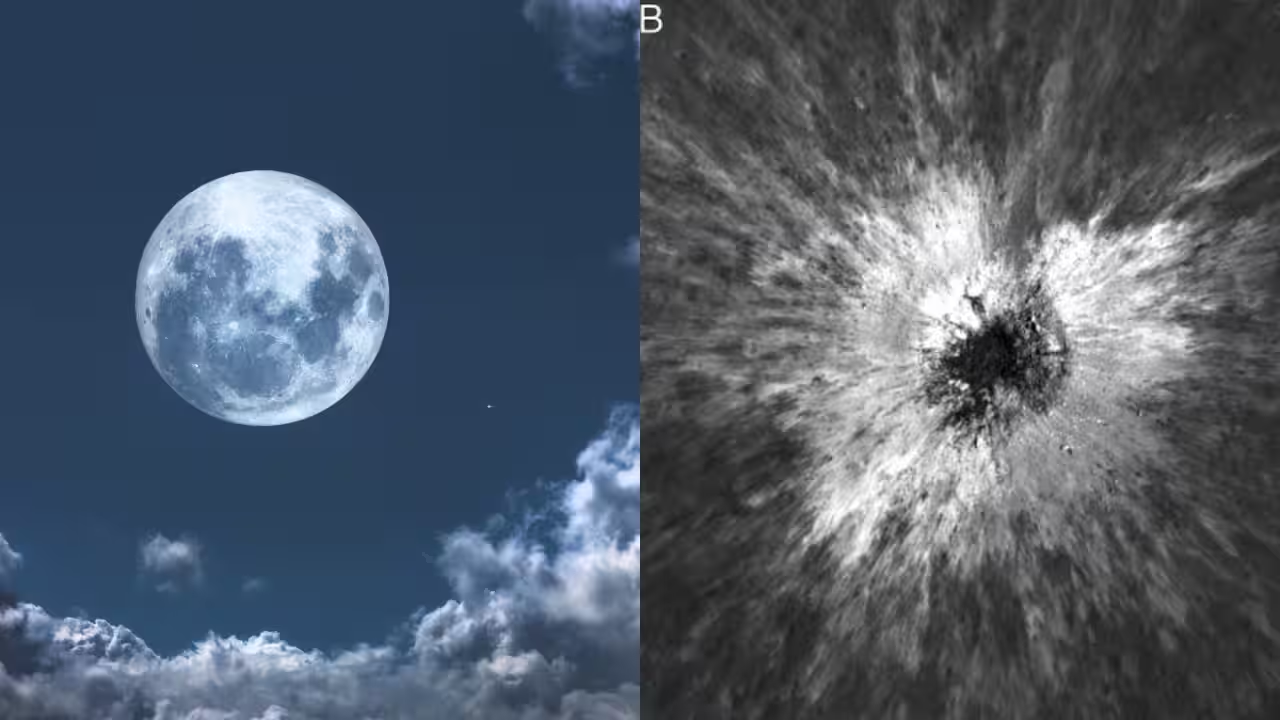
Scientists have identified a large new impact crater on the Moon, giving researchers an unusual opportunity to study how a major collision changes the lunar surface shortly after it happens.
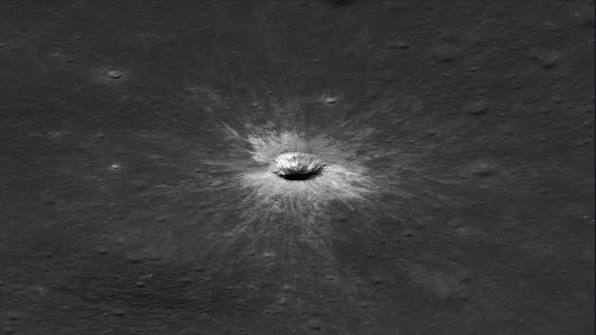
The crater, named McGetchin, measures about 728 feet or 222 meters across and reaches roughly 141 feet or 43 meters deep. According to the reported findings, it is the largest recent impact site recorded in the solar system.
Researchers estimate that an impact capable of producing a crater of this scale may occur on the Moon only about once every 132 years.
The collision itself appears to have happened between April and May 2024 on the Moon's near side. The object responsible was likely an asteroid or comet fragment roughly comparable in size to a building several stories tall.
Because the Moon has no substantial atmosphere, incoming objects do not experience the same atmospheric slowing that affects many objects approaching Earth. They can therefore reach the surface at extremely high speeds.
Lunar Reconnaissance Orbiter images revealed the crater
The impact was not immediately detected when it happened.
Researchers later discovered evidence of the event while comparing imagery collected by the Lunar Reconnaissance Orbiter. A bright feature surrounded by a darker region drew attention during routine image analysis.
Follow up observations confirmed the presence of the newly formed crater.
Interestingly, the bright area first noticed in the images was not simply the crater floor. It was material blasted outward by the impact, creating a reflective ejecta field around the site.
| McGetchin crater detail | Reported measurement |
|---|---|
| Diameter | About 222 meters |
| Depth | About 43 meters |
| Estimated impact date | April to May 2024 |
| Debris spread | More than 120 kilometers |
| Cooler surrounding region | About 7 kilometers across |
| Nighttime temperature difference | Roughly 16°F cooler |
| Estimated frequency of similar impacts | About once every 132 years |
The collision sent rock fragments and fine lunar dust across an area extending more than 75 miles, or around 120 kilometers, from the impact point.
Researchers also found that some of the material was thrown at steeper angles than earlier computer simulations had predicted. That information could help scientists improve models of how debris moves during large impacts.
Impact changed the temperature of nearby soil
Thermal measurements revealed another effect around McGetchin.
A region extending roughly four miles, or seven kilometers, around the crater appears colder than nearby terrain during the lunar night. Measurements indicated that the area could be about 16 degrees Fahrenheit cooler than its surroundings.
Scientists believe the impact disturbed the upper layer of lunar soil and made it less compact.
Looser material retains heat differently from denser terrain. As a result, the disturbed area cools more quickly after sunset.
This gives researchers another way to study how recent impacts alter the physical structure of the lunar surface.
Lunar impacts constantly reshape the Moon
The discovery also provides a reminder that the Moon is still changing.
Small impacts continually strike the lunar surface and gradually mix the loose material known as regolith. This process is sometimes compared with gardening because impacts repeatedly dig up buried material and spread it across surrounding terrain.
Data from lunar observations suggests that impact debris can churn the upper inch of lunar soil over periods of roughly 80,000 years.
Over very long periods, this process can erase surface features that currently appear permanent, including tracks and footprints left during human missions.
McGetchin gives scientists a particularly useful case because the crater is recent and large enough for its surrounding changes to be measured in detail.
By comparing fresh observations with older images, researchers can examine how much material was displaced, how far it travelled, how surface temperatures changed, and how accurately current impact models describe real lunar collisions.


Discussion (0)
Be the first to comment.