



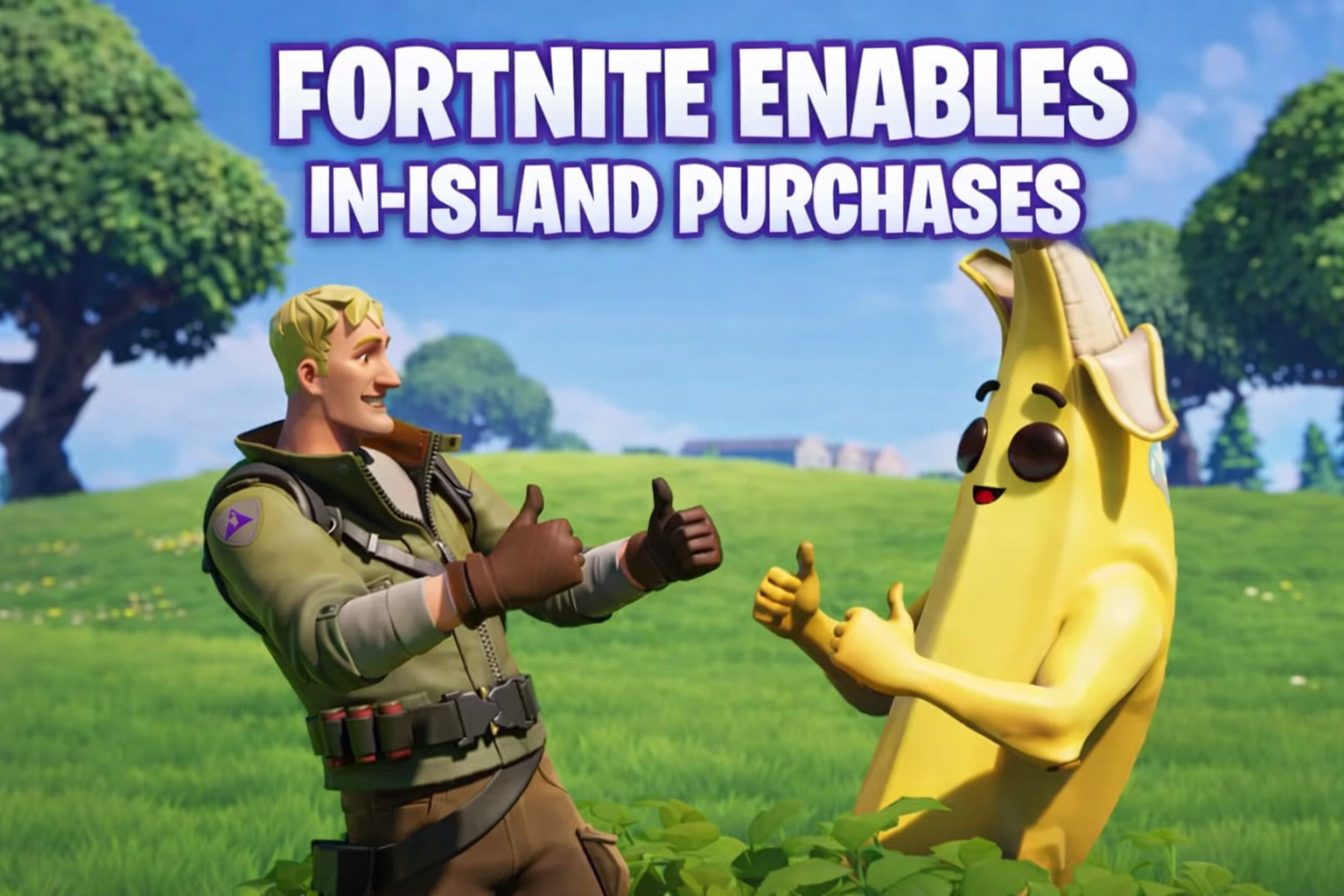
Fortnite has officially rolled out in-island purchases, allowing creators to sell items directly within their custom islands using V-Bucks. The feature went live with Fortnite’s latest update, marking a major shift in how player-created experiences can be monetized.
The new system gives Fortnite Creative developers more control over monetization, but it also introduces limitations and risks for players, especially since most purchases are locked to a single island, and refunds are limited.
How Fortnite In-Island Transactions Work
In-island transactions let players spend V-Bucks on items sold directly by creators while playing user-made Fortnite Islands. These purchases apply only to the island where they are bought and typically do not transfer to other Fortnite modes or experiences.
Epic Games says creators can now sell gameplay-affecting items and progression systems, provided they clearly disclose what the purchase does and whether it impacts gameplay.
What Creators Are Allowed To Sell
Fortnite creators can offer a variety of purchasable items, including persistent gear, consumables, paid progression paths, and access to specific areas within an island. Some experiences may also include paid random rewards, which must clearly display odds and comply with parental control settings.
However, Epic has placed firm restrictions on cosmetics that overlap with standard Fortnite items, such as outfits, vehicles, and emotes, unless they include a gameplay function.
Pay-To-Win Concerns And Restrictions
Epic Games allows gameplay-affecting purchases, including items that boost power or progression, as long as they are clearly labeled. This has raised concerns among players that some Fortnite Islands could lean toward pay-to-win mechanics.
To address this, Epic requires creators to disclose when paid items significantly affect gameplay and prohibits selling XP directly or implying XP gains through purchases.
Refund Rules And Player Warnings
Epic Games warns players to review offers carefully before buying. In-island purchases generally cannot be refunded, and Return Tickets do not apply to these transactions.
If an island is unpublished or removed and remains unavailable for an extended period, players may qualify for limited refunds under specific conditions.
Creator Revenue And What Comes Next
Creators will receive 100 percent of V-Bucks earned from in-island transactions for a limited period, after which revenue sharing will shift. Engagement-based payouts for Fortnite Islands remain in place alongside direct purchases.
Epic Games has signaled continued monitoring of the system, with adjustments expected as creators and players adapt to this new monetization model.


Discussion (0)
Be the first to comment.