



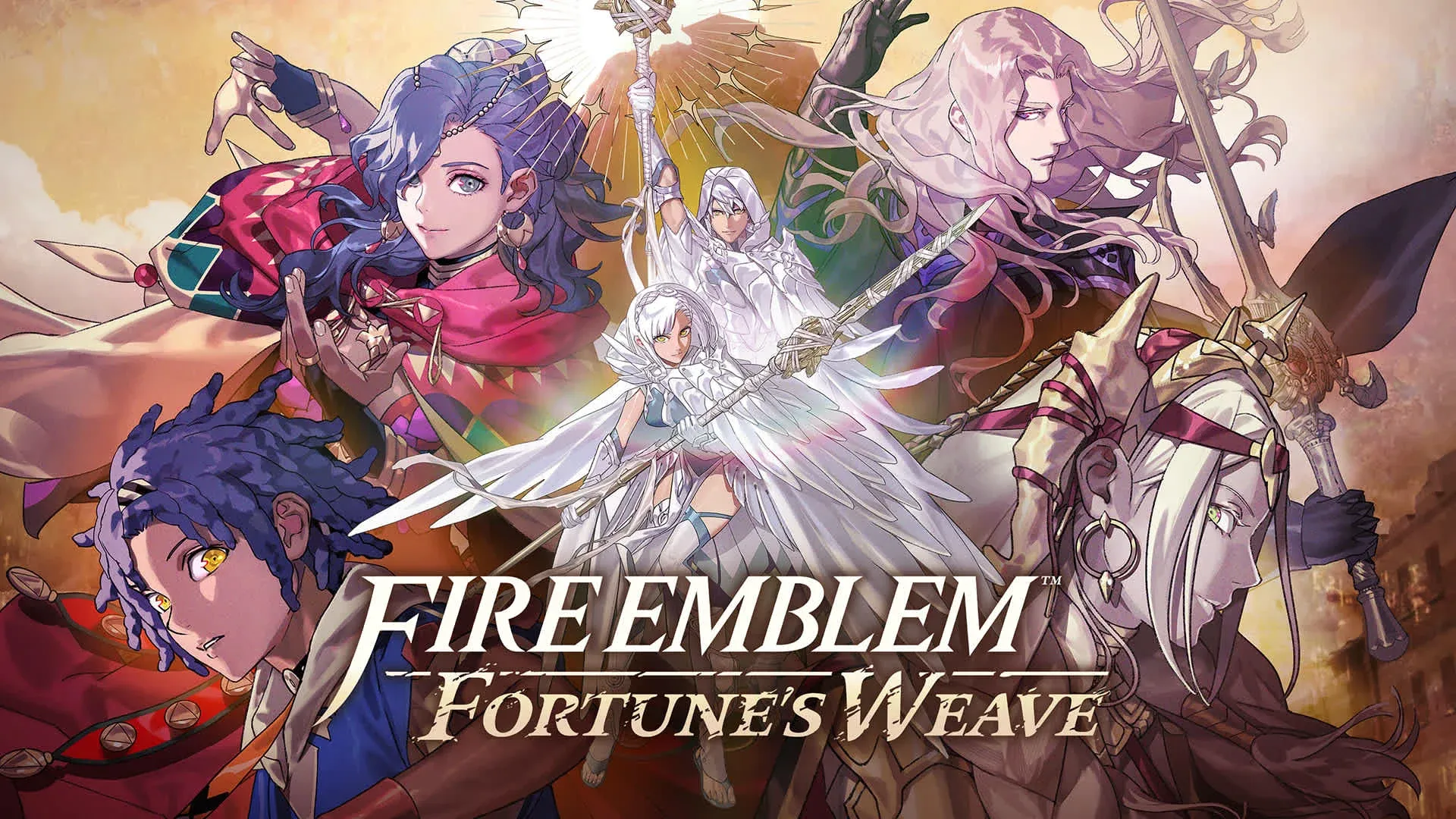
Fire Emblem: Fortune’s Weave is shaping up to be one of the most ambitious entries in the series, combining traditional tactical battles with four separate character campaigns, dungeon exploration and a large amount of optional activity between major fights.
The Nintendo Switch 2 exclusive takes some inspiration from Fire Emblem: Three Houses, particularly in how much time you can spend outside combat, but it also introduces major structural changes of its own.
Its opening hours establish a story built around time travel, multiple protagonists and an unusually strong science fantasy tone before eventually returning to more familiar Fire Emblem territory.
Four protagonists lead separate campaigns
| Area | Early impression |
|---|---|
| Main structure | Four distinct character campaigns |
| Tactical combat | Grid based turn system |
| Weapon triangle | Removed |
| Returning mechanics | Combat Arts and limited Battalions |
| New battle mechanic | Blaze Arts |
| Extra combat type | Turn based dungeon battles |
| Exploration | Dagsion and wider world map |
| Character progression | Classes, proficiencies, Renown and relationships |
| Platform | Nintendo Switch 2 |
| Release date | September 17 |
The story begins after a mysterious force called Balor has devastated the world. The player awakens inside the body of a Mediator after previously dying, then joins the time travelling goddess Fortuna on a mission to go five years into the past.
The objective is to keep four important heroes known as the Flame Lords of Dagda alive so they can help confront Balor in the future.
After the prologue, you can choose between four protagonists, each with a separate campaign. Progress is saved independently, and the game eventually allows you to move freely between their stories.
The preview focused primarily on Leda and Cai.
Leda’s campaign follows her investigation into the Cydonia Massacre after the death of her father. Cai’s story has a noticeably lighter tone and revolves around trying to save his father from execution. Their campaigns include different quests, battles and story scenes rather than simply presenting the same events from another perspective.
Completing all four stories allows those characters to join you later in the game. You can apparently skip some campaigns, although doing so makes the endgame more difficult.
Tactical battles drop the traditional weapon triangle
Fortune’s Weave keeps the familiar overhead grid battles, but the long running weapon triangle has been removed.
Instead, effectiveness is based on more direct strengths and weaknesses. Armored units resist conventional weapons but are vulnerable to magic, while ranged fighters such as bow users are stronger at distance and more exposed in close combat.
Combat Arts return from Three Houses and consume weapon durability when used.
The new Blaze Arts provide particularly strong abilities for selected units but consume health instead. Battalions are also returning in a more limited form.
Individual maps introduce their own mechanics as well. One early Heroic Games encounter, for example, features enemies using stat boosting pure water that can be removed by activating switches around the battlefield.
Dungeon combat adds a second battle system
Fortune’s Weave also brings back dungeon exploration inspired by Fire Emblem Echoes: Shadows of Valentia.

These areas use a separate turn based combat system closer to a traditional Japanese RPG than the series’ normal grid battles.
The preview describes this combat as straightforward, while the dungeons themselves are simple to navigate. They provide variety, although they appear less mechanically developed than the main tactical encounters.
There is a huge amount to do between battles
Much of the game takes place away from the tactical maps.
You can freely explore Dagsion, visit shops, accept sidequests and trigger additional story scenes. The inn can automatically level characters, while the colosseum allows training in specific weapon proficiencies.
The class system is relatively open, letting units move toward different classes with enough training. Party members can also be assigned to temples to gain blessings that later provide benefits in battle.
The world map adds even more activities, including gathering food and crafting materials, visiting villages, completing sidequests and exploring additional dungeons.
Each protagonist also has personal activities. Leda, for example, can perform dances at taverns to increase her fame.
Renown plays an important part in progression because many potential recruits require both sufficient Renown and a personal connection before they will join your party.
Relationship building and support conversations are also returning, with early hints that romance may again be part of the system.
The amount of side content could become a concern
The main question raised by the preview is whether Fortune’s Weave has taken its non combat content too far.
Unlike Three Houses, which organized much of its extracurricular activity around a tighter weekly structure, Fortune’s Weave gives you many in game days between major battles.
The preview notes that stretches of 90 minutes or more can pass without a traditional tactical encounter because of side activities and lengthy story scenes.
That creates a potentially difficult balance. Players who enjoyed Three Houses for its character relationships and activities may appreciate the expanded scope, while those who prefer Fire Emblem primarily for tactical combat could find the pacing slower.
The early impressions still describe the game as promising, with stronger writing than Fire Emblem Engage and a large number of systems drawn from across the history of the franchise. The main uncertainty is whether its time travel story, four campaigns and extensive optional content will come together cleanly across the full game.
Fire Emblem: Fortune’s Weave launches exclusively for Nintendo Switch 2 on September 17.



Discussion (0)
Be the first to comment.