



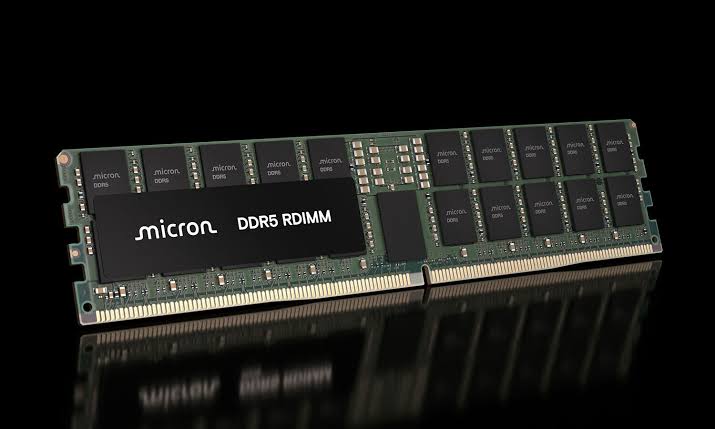
Memory manufacturers are accelerating development of DDR5 MRDIMM technology as artificial intelligence, cloud computing and high performance workloads demand more bandwidth from server platforms.
Second generation MRDIMMs are already moving beyond 12,000 MT/s, while third generation designs have now reached 16,000 MT/s. This brings the technology closer to its expected final DDR5 target of 17,600 MT/s without requiring an immediate move to DDR6.
MRDIMM stands for Multiplexed Rank Dual Inline Memory Module. It improves bandwidth by combining data from multiple memory ranks and presenting it more efficiently to the processor. The format is designed mainly for servers rather than consumer desktop systems.
| MRDIMM generation | Reported speed | Expected availability |
|---|---|---|
| First generation | Above 8,000 MT/s | Already available |
| Second generation | 12,800 to 14,400 MT/s | Entering wider production |
| Third generation | Up to 16,000 MT/s | Production expected in late 2027 |
| Final DDR5 target | 17,600 MT/s | Future development goal |
Second generation MRDIMMs deliver large bandwidth gains
Intel is expected to support DDR5 8800 MRDIMMs on selected Xeon 6 platforms, while AMD is targeting speeds of up to 12,800 MT/s with its upcoming server processors.
Manufacturers have already started producing second generation modules at these higher speeds. Innodisk has listed DDR5 12,800 MT/s MRDIMMs in capacities ranging from 32GB to 128GB.
These modules use Multiplexed Registering Clock Driver and Multiplexed Data Buffer technology to increase memory bandwidth while retaining the standard DDR5 physical format.
A 12,800 MT/s MRDIMM can provide around 60 percent more bandwidth than a DDR5 8000 RDIMM. The modules still use 1.1V and include registered memory with error correction, making them suitable for demanding server environments.
Micron is preparing an even faster second generation solution rated at 14,400 MT/s. That represents an 80 percent bandwidth increase over DDR5 8000 RDIMMs.
The listed Micron module includes 96GB of capacity, CL58 timings, 24Gb memory chips and a 1.1V operating voltage. Additional capacities and denser configurations are also expected.
Third generation technology pushes DDR5 to 16,000 MT/s
Renesas has introduced its third generation MRDIMM chipset, which supports speeds of up to 16,000 MT/s.
The new design increases bandwidth by as much as 25 percent compared with 12,800 MT/s second generation modules. Renesas also says the chipset improves system level power efficiency, an important factor as server memory capacity and transfer rates continue to rise.
The chipset includes the RRG5013x Multiplexed Registering Clock Driver and RRG5103x Multiplexed Data Buffer. These components manage communication between the processor and multiple memory ranks at high transfer rates.
Samples are already being provided to selected customers. Wider production availability is expected during the second half of 2027.
| Example module | Speed | Capacity | Voltage | Key benefit |
|---|---|---|---|---|
| Innodisk Gen 2 MRDIMM | 12,800 MT/s | 32GB to 128GB | 1.1V | 60 percent more bandwidth than DDR5 8000 |
| Micron Gen 2 MRDIMM | 14,400 MT/s | 96GB listed | 1.1V | 80 percent more bandwidth than DDR5 8000 |
| Renesas Gen 3 platform | 16,000 MT/s | Depends on module maker | Not detailed | Higher bandwidth and improved efficiency |
AMD is expected to become an important MRDIMM customer
AMD has already outlined support for DDR5 12,800 MRDIMMs with its Zen 6 server platforms, including Venice and Verano.
These processors are expected to serve cloud, enterprise, AI and high performance computing systems where memory bandwidth can limit overall performance. Faster MRDIMMs could help feed more data to large numbers of processor cores without requiring a completely new memory standard.
AMD has also expressed support for open and standards based memory technologies. The company views MRDIMM as one way to improve bandwidth, efficiency and platform scalability as AI workloads continue to expand.
Third generation MRDIMMs may become especially important for AMD’s future Zen 7 server family, known as Florence. Those processors are expected after the initial Zen 6 products and may be among the first platforms to use 16,000 MT/s modules on a larger scale.
Final platform support will depend on processor memory controllers, motherboard designs and qualification work completed by server manufacturers.
MRDIMM keeps DDR5 relevant before DDR6 arrives
The server market could eventually move to DDR6, but replacing an established memory standard requires new processors, motherboards, electrical designs and validation.
MRDIMM gives manufacturers another way to increase performance while preserving much of the existing DDR5 infrastructure. The modules use the familiar DDR5 slot format, although platform support is still required and conventional DDR5 servers cannot automatically use them.
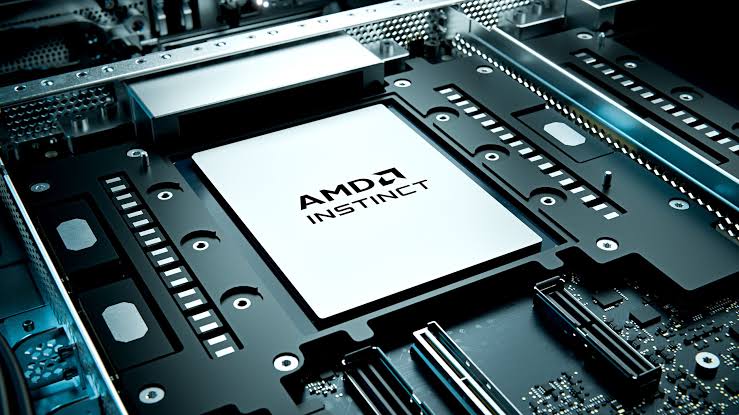
This approach may help data centre operators gain more bandwidth without immediately replacing every part of their platform.
Higher memory speed is especially useful in AI training, scientific computing and cloud workloads that regularly move large data sets between processors and system memory. Increased bandwidth can reduce the time processors spend waiting for data.
Power efficiency will remain equally important. Faster memory can consume more energy, so third generation designs must provide additional bandwidth without creating excessive heat or operating costs.
DDR5 MRDIMMs are now advancing from early deployment towards broader adoption. Second generation modules already reach 12,800 and 14,400 MT/s, while third generation chipsets have pushed the standard to 16,000 MT/s. With production expected to expand in late 2027, the technology is likely to become an important part of future AI and high performance server platforms.


Discussion (0)
Be the first to comment.