




Cadence has introduced AuraStack, an agentic AI platform created to reduce the time engineers spend managing complex printed circuit board and advanced packaging workflows.
The platform runs through Allegro AI Studio and coordinates several specialised AI agents across planning, physical implementation, analysis, verification, and manufacturing preparation. Cadence says the system can help engineering teams move from an early product concept to a finished design within one connected environment.
AuraStack is aimed at one of the most difficult areas of modern electronics development. Advanced processors increasingly rely on multi die packaging, dense interconnects, complex circuit boards, and careful management of heat, power, signal integrity, and mechanical stress.
These tasks are often handled by different teams using separate tools. Information must be transferred between departments, results must be checked repeatedly, and problems discovered late in development can force expensive redesigns.
Cadence estimates that engineers spend around 65 percent of their time navigating tasks rather than directly designing products. AuraStack attempts to reduce that overhead by connecting tools, data, and engineering decisions through an AI driven workflow.
AuraStack connects design work with multiphysics analysis
The platform can coordinate work across PCB layout, advanced packaging, auto routing, thermal analysis, electromagnetic analysis, signal integrity, power integrity, and mechanical simulation.
This allows engineers to test the effect of a design decision across several technical areas earlier in the process. A change to component placement, for example, could be checked for its effect on routing, cooling, signal quality, and mechanical reliability before the design moves closer to production.
| AuraStack capability | Intended benefit |
|---|---|
| Agent based workflow | Coordinates specialised engineering tasks |
| Natural language interface | Allows engineers to describe goals more directly |
| PCB and package design | Supports boards and advanced multi die systems |
| Continuous multiphysics analysis | Checks thermal, electrical, and mechanical effects |
| Automated routing | Reduces manual layout work |
| Shared design environment | Keeps teams working from the same data |
| Early issue detection | Reduces late redesigns and manufacturing respins |
| Product level optimization | Connects packaging decisions with the full system |
Cadence says AuraStack can improve productivity by as much as 15 times and reduce time to market by up to half. These figures are company estimates and will likely vary according to the size of the project, the existing workflow, and the amount of automation that can be applied.
The platform also brings several Cadence analysis products into the same process. These include tools for thermal simulation, three dimensional electromagnetic analysis, mechanical analysis, and signal and power integrity.
Earlier analysis could reduce expensive redesign work
A major goal of AuraStack is to identify problems before a product reaches the final stages of engineering.
Late changes are costly because they may require a new board layout, another package design, updated simulations, fresh prototypes, and additional manufacturing tests. In some cases, a physical board or package must be produced again, creating what the industry calls a respin.
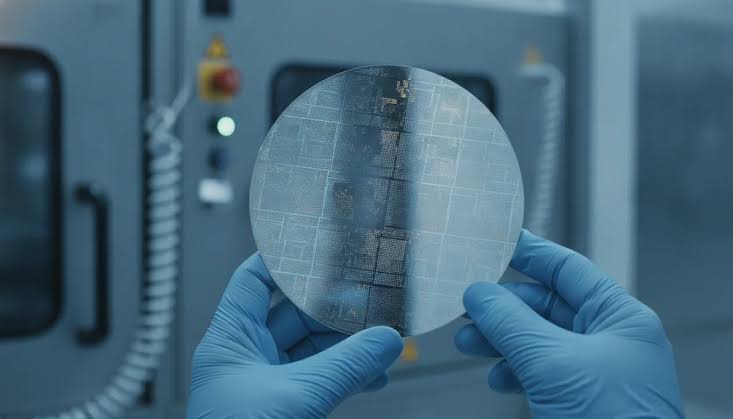
Continuous analysis can reduce that risk by checking designs throughout development rather than waiting until the layout is nearly complete.
AuraStack also gives separate engineering groups access to a shared source of information. This can reduce situations where electrical, thermal, and mechanical teams work from different versions of the same design.
The AI agents are intended to automate routine tasks while leaving major engineering decisions under human control. Engineers can explore more alternatives, compare results, and focus on problems that require experience and judgement.
NVIDIA and TSMC are already using the platform
NVIDIA is using AuraStack to automate and optimize increasingly complicated system design workflows. Modern AI infrastructure includes GPUs, CPUs, memory, networking equipment, power systems, cooling hardware, packages, and large circuit boards, creating a level of complexity that is difficult to manage through isolated tools.
Cadence says the AuraStack platform and its Millennium M2000 system can provide up to 20 times faster multiphysics performance for certain workloads.
TSMC is also using the technology to support advanced packaging development. The semiconductor manufacturer is working with Cadence on AI assisted automation for multi die products built around its 3DFabric technologies.
Their work includes substrate auto routing, where Cadence claims some customers have achieved productivity improvements of up to 100 times while maintaining results comparable with manual routing.
Other companies associated with the platform include automotive and industrial technology specialists. Their involvement shows that AuraStack is intended for more than data center processors. It could also support vehicles, industrial equipment, communications hardware, and other complex electronic systems.
Agentic AI is becoming part of the complete chip design process
AuraStack expands Cadence’s agent based tools across the broader electronic system design workflow.
The company already offers AI systems for digital chips, analog designs, verification, and other engineering areas. AuraStack extends that approach into circuit boards and advanced packaging, connecting work that previously happened after the silicon design was largely complete.
The platform does not remove the need for experienced engineers. PCB and package development still requires careful review, manufacturing knowledge, safety checks, and physical validation.
Its value comes from reducing repetitive work, coordinating analysis tools, and helping teams discover problems earlier.
As chips become larger and more dependent on advanced packaging, the boundary between processor design, package design, and circuit board design is becoming less clear. Performance now depends on the complete system rather than one component alone.
AuraStack is designed for that shift. By placing AI agents across planning, implementation, analysis, and verification, Cadence hopes to shorten development cycles and reduce the engineering bottlenecks slowing down modern electronic products.



Discussion (0)
Be the first to comment.