



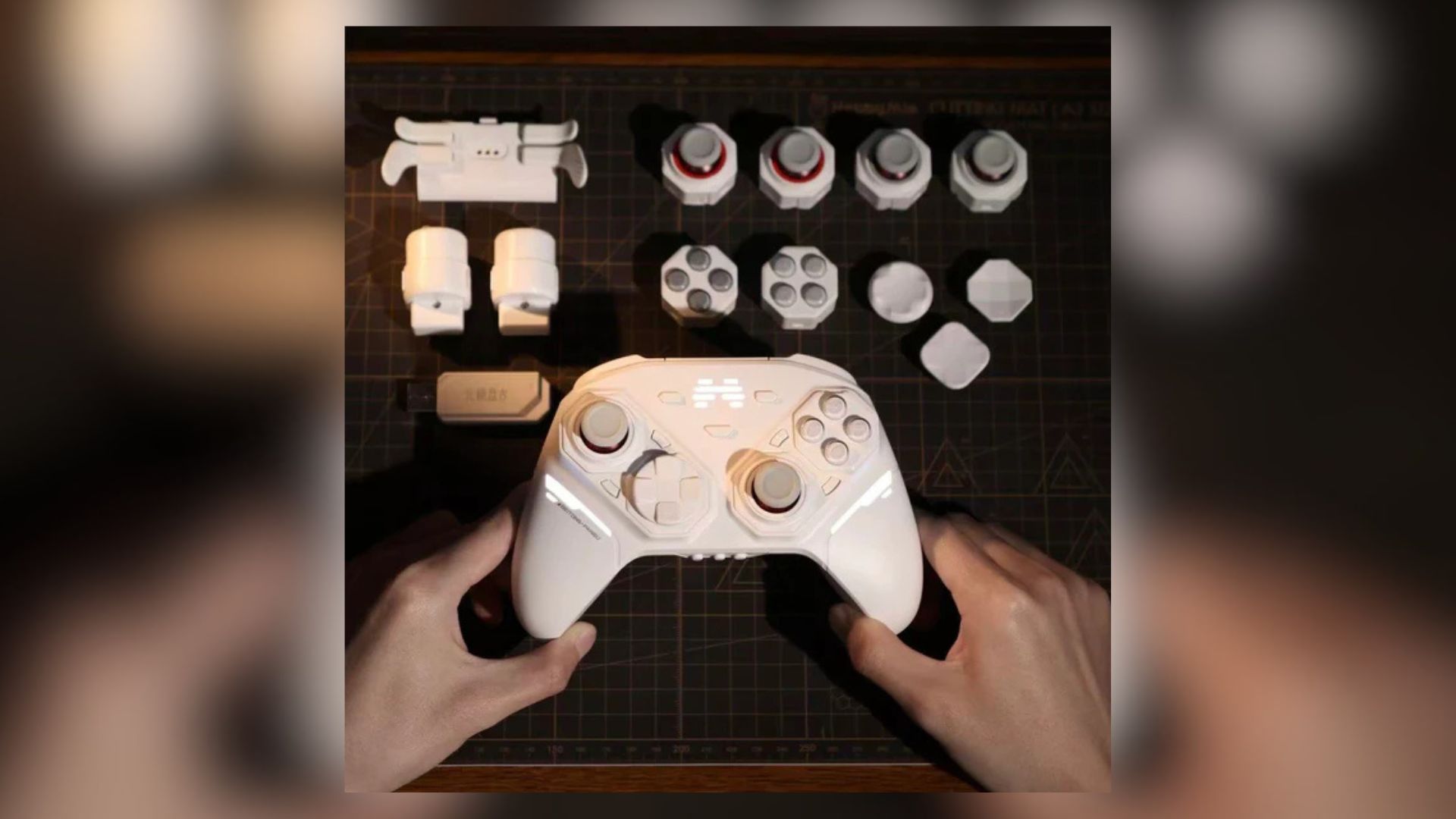
Beitong has shown off its PanGu controller, a highly modular gamepad that lets players swap several key parts without reaching for a screwdriver. The controller is being pitched as a kind of building block system for players who want to change how their gamepad feels, looks, and behaves across different games.
The main appeal is flexibility. The PanGu includes swappable joysticks, ABXY buttons, back paddles, grip shells, and even vibration motors. Many high end controllers already offer replaceable sticks or remappable buttons, but Beitong is going further by making more of the controller physically modular.
That makes the PanGu stand out in a crowded controller market. Over the last few years, third party gamepads have improved quickly, with brands competing on hall effect sticks, higher polling rates, better triggers, back buttons, wireless performance, and charging docks. Beitong’s idea is to push customization into the hardware itself.
The controller also comes with a charging dock, which has become a welcome feature for premium wireless gamepads. But the dock is not the main story here. The more interesting part is how easily different modules can be removed and replaced.
PanGu’s modular design is built for quick hardware changes
The PanGu has small release buttons near parts like the sticks and pads, allowing players to pop modules out and replace them with different ones. The grip shells can also be removed, giving access to the vibration motors. That means players who prefer a lighter controller may be able to remove or swap rumble components if they do not care much about vibration feedback.
Beitong also says its software can detect which modules are installed and recommend layouts. That could be useful if the system works smoothly. Instead of manually rebuilding every profile, players may be able to switch parts and then let the software suggest a setup based on the current configuration.
| Feature | Beitong PanGu controller |
|---|---|
| Main design idea | Modular controller parts |
| Swappable parts | Sticks, ABXY buttons, back paddles, grips, vibration motors |
| Tool free changes | Yes, based on the current design |
| Software support | Module detection and layout recommendations |
| Game profiles | Presets for specific games |
| Joysticks | TMR joystick modules |
| Polling rate | Up to 1,000 Hz wired and wireless |
| Compatibility | Windows, Switch, Android, iOS |
| Included accessory | Charging dock |
The use of TMR joystick modules is also notable. TMR sticks are designed to offer accurate input while avoiding some of the wear problems associated with traditional potentiometer sticks. That gives the PanGu a more modern foundation, especially for players worried about stick drift.
The 1,000 Hz polling rate, available both wired and wireless, also puts it in the performance focused category. For most casual players, that number will not be the deciding factor. But for competitive games, faster input reporting can matter.
Price and feel will decide whether the idea works
The PanGu is expected to cost more than $100 depending on the bundle and seller, with dock and bag bundles pushing the price higher. That makes it a serious purchase, especially from a brand that many players may not know well.
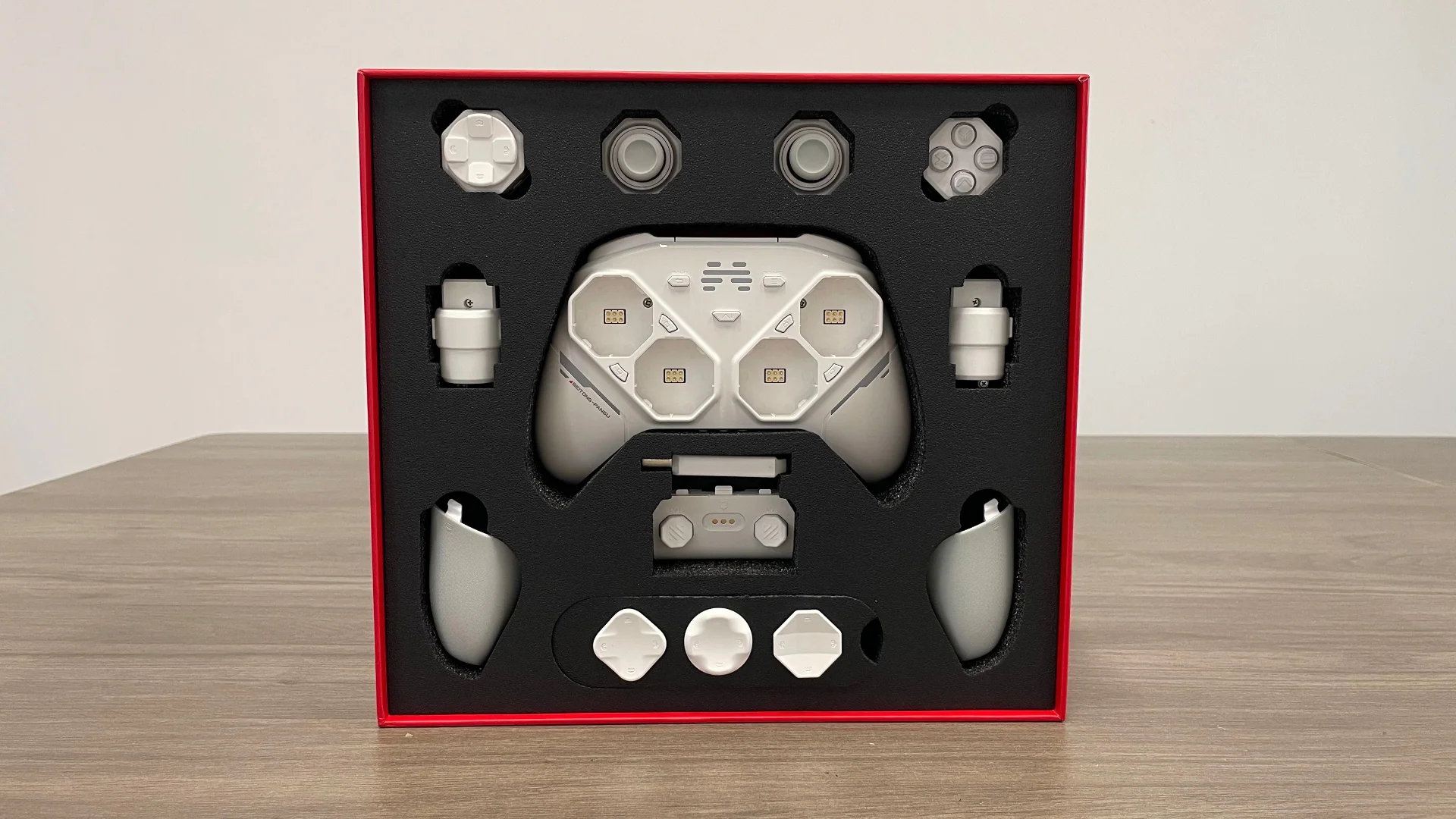
Its closest competition includes premium modular controllers like the Turtle Beach Victrix Pro BFG Reloaded, although that controller is more expensive and requires a screwdriver for some changes. Beitong’s tool free approach may be more convenient, but the final value will depend on build quality, software reliability, and how the modules feel during real play.
That last point is important. A controller can have strong specs and clever engineering, but comfort decides whether people actually keep using it. Stick tension, button travel, grip texture, trigger feel, weight balance, and paddle placement all matter more than they may seem on paper.
The PanGu’s visual design may also divide players. Its blocky white look gives it a functional, prototype like appearance, which fits the modular idea but may not feel premium to everyone. Some players may love the mechanical style, while others may want something cleaner or more refined.
Modular controllers could become more common
The PanGu shows where high end controllers may be heading. Instead of offering one fixed layout, companies are trying to let players build a controller around their own habits. That makes sense because different games need different control priorities. A fighting game, racing game, shooter, platformer, and action RPG can all benefit from different stick, button, and paddle setups.
If Beitong can make the PanGu durable, comfortable, and easy to configure, it could appeal to players who like experimenting with hardware. The ability to change vibration motors, grips, paddles, and buttons without tools is a strong idea, especially for people who use one controller across multiple platforms.
Still, the controller has to prove itself in practice. The market already has many excellent options from better known brands, and buyers may hesitate to spend premium money unless they trust the hardware. Software support will also be critical because modular parts are only useful if the controller recognizes them properly and makes switching layouts simple.
For now, the PanGu looks like one of the more unusual controller designs of the year. It may not have the most elegant aesthetic, but its engineering is hard to ignore. In a market where many controllers are starting to feel similar, Beitong has at least found a way to make its new gamepad stand apart.



Discussion (0)
Be the first to comment.