


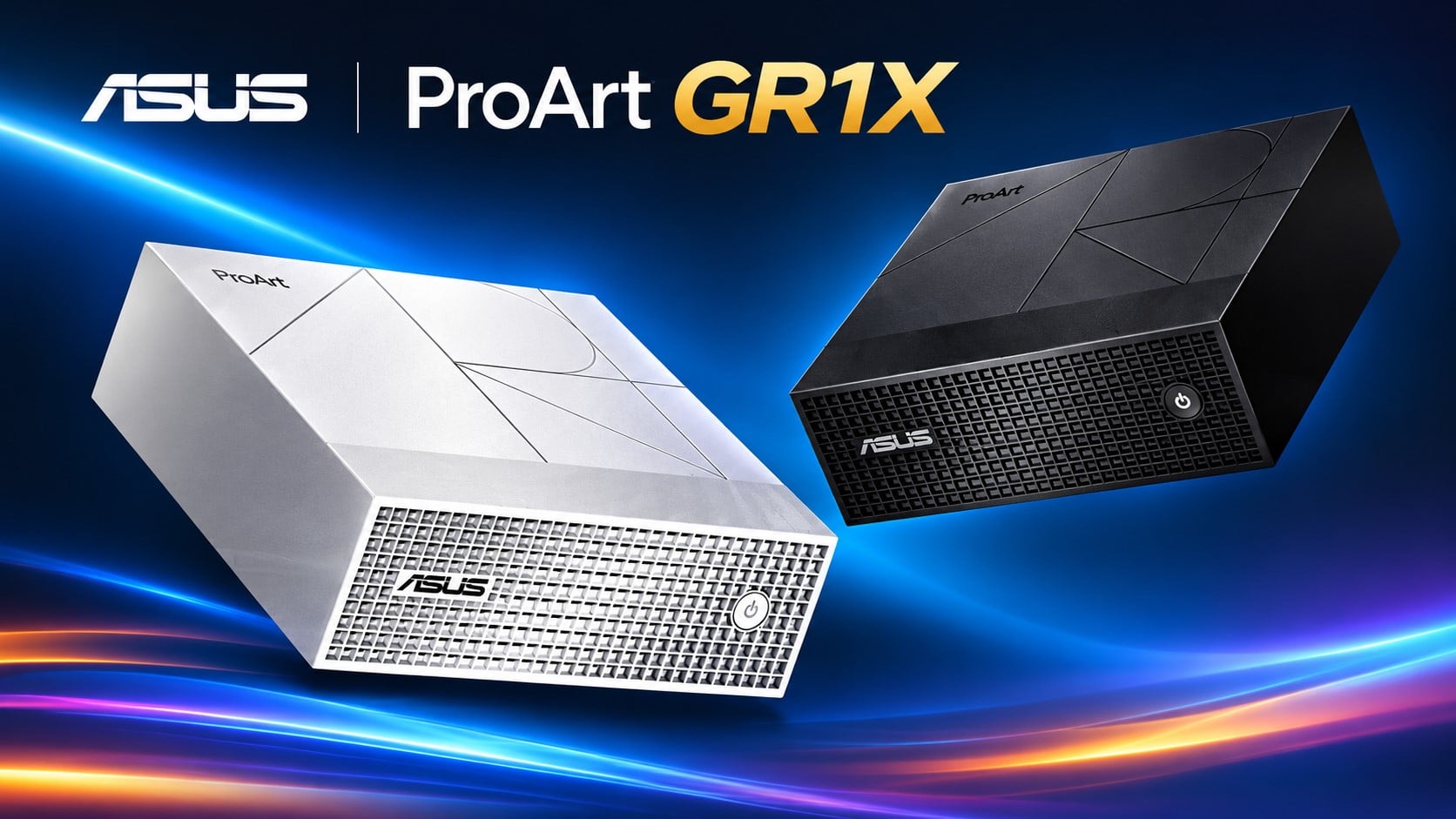
ASUS has launched the ProArt GR1X mini PC with NVIDIA's RTX Spark N1X processor, offering improved AI and graphics performance compared with laptops using the same chip. The compact desktop became available on November 18, 2026, with a starting price of $4,499.
Early benchmark results show that the desktop version of RTX Spark delivers performance improvements of up to 21.9% in certain AI workloads. Graphics performance also benefits from the higher power limit, although CPU improvements are relatively modest.
The ProArt GR1X is primarily designed for professionals working with artificial intelligence, content creation, and demanding computing tasks. Its price is approximately $700 higher than RTX Spark laptops, making the performance difference an important consideration.
NVIDIA RTX Spark Gains Performance From Higher Power Limits
The ASUS ProArt GR1X uses NVIDIA's N1X processor, featuring 20 CPU cores and a Blackwell GPU with 6,144 cores.
Unlike RTX Spark laptops, which operate at up to 80W, the desktop version supports a power limit of 140W.
This additional power allows the GPU to sustain higher performance during demanding workloads.
Testing shows that CPU performance improves by approximately 5% in multicore benchmarks, while single core results remain almost unchanged.
The more noticeable improvements come from graphics processing and AI acceleration.
In 3DMark gaming benchmarks, the ProArt GR1X achieved gains of up to 13.3% compared with the Surface Laptop Ultra running RTX Spark.
However, the performance advantage becomes smaller in certain demanding tests at higher resolutions.
ASUS ProArt GR1X Specifications and Features
The mini PC combines NVIDIA's latest processor with unified memory, fast networking, and a compact chassis.
| Specification | ASUS ProArt GR1X |
|---|---|
| Processor | NVIDIA RTX Spark N1X |
| CPU | 20 cores |
| GPU | Blackwell RTX, 6,144 cores |
| Maximum power | 140W |
| Memory | Up to 128GB unified LPDDR5x |
| Storage | 1TB PCIe 4.0 NVMe SSD |
| Expansion | Two M.2 slots with PCIe 4.0 and 5.0 support |
| Wireless | WiFi 7, Bluetooth 5.4 |
| Networking | 10Gb Ethernet |
| Display output | HDMI 2.1 and USB C |
| Dimensions | 150 × 150 × 51 mm |
| Weight | 1.48 kg |
| Starting price | $4,499 |
ASUS offers configurations with 64GB and 128GB of unified memory.
The device also supports up to four external displays, making it suitable for professional setups requiring multiple screens.
AI Image Generation Shows the Biggest Improvement
AI performance is one of the main reasons to consider the ProArt GR1X.
Tests using several language models showed improvements in local text generation compared with the Surface Laptop Ultra.
For example, the 128GB ProArt GR1X generated approximately 77.95 tokens per second using Phi 3.5 Mini, compared with 72.21 tokens per second on the laptop.
Similar improvements were recorded with Mistral 7B and Llama models.
Image generation showed stronger gains.
Using Stable Diffusion XL, the desktop completed an image in approximately 20.6 seconds, compared with 25.05 seconds on the laptop.
Other image generation tests also recorded noticeable improvements.
| AI Benchmark | Reported Performance Improvement |
|---|---|
| Phi 3.5 Mini | 13.1% |
| Mistral 7B | 11.99% |
| Llama 3.1 8B | 10.6% |
| Stable Diffusion 1.5 | 13.5% |
| Stable Diffusion 1.5 Light | 16.23% |
| Stable Diffusion XL | 21.9% |
These figures are based on benchmark scores comparing the 128GB desktop configuration with the RTX Spark laptop.
The additional performance could be useful for professionals running AI models locally, particularly when processing repeated image generation or inference tasks.
Compact Design and Cooling Are Strong Points
Despite its powerful hardware, the ProArt GR1X has a compact design measuring just 150 mm in width and depth.
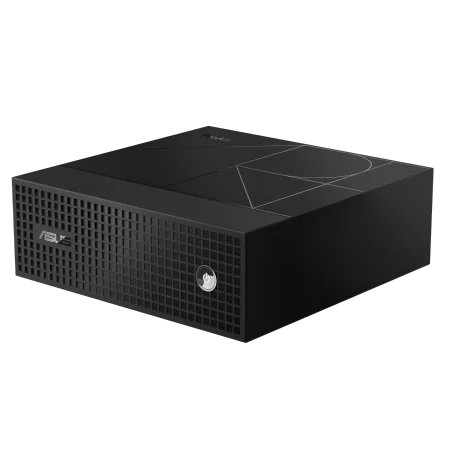
The silver chassis features a professional appearance, with the ProArt branding engraved into the top panel.
Its cooling system includes a large intake vent underneath the device, with warm air exhausted through the rear.
During stress testing, noise levels remained below 55 decibels, while the processor maintained performance without thermal throttling.
These results suggest that the cooling system is capable of handling the increased power requirements of the desktop RTX Spark processor.
The mini PC also includes WiFi 7, Bluetooth 5.4, and a 10Gb Ethernet connection.
Limited Ports Could Be a Problem for Professionals
One disadvantage of the ProArt GR1X is its connectivity.
All physical ports are located on the rear panel, including the USB C connections. This arrangement makes it less convenient to connect external storage, accessories, or other devices frequently.
The system also lacks traditional USB A ports and an SD card reader.
Its three USB C data ports support speeds of up to 20Gbps rather than the 40Gbps available through USB4.
For a desktop intended for professional creative workloads, these limitations could require additional adapters or accessories.
Is the ASUS ProArt GR1X Worth $4,499?
The ProArt GR1X offers measurable performance improvements over RTX Spark laptops, particularly in graphics and AI workloads.
It can also handle demanding games, including Cyberpunk 2077 at 1440p with ray tracing and NVIDIA's DLSS technology enabled.
However, gaming performance is better treated as an additional capability rather than the primary reason to purchase the device.
The higher price makes the ProArt GR1X more suitable for professionals who regularly run AI workloads and need the additional performance of a desktop system.
NVIDIA's PAIR technology could also make the mini PC useful as a dedicated AI processing machine connected to other RTX or macOS computers.
For those who need portability or primarily perform everyday computing tasks, an RTX Spark laptop or a less expensive desktop may offer better value.
The ProArt GR1X demonstrates the performance benefits of giving NVIDIA's RTX Spark processor more power and cooling capacity, although its $4,499 starting price and limited connectivity remain important drawbacks.

Discussion (0)
Be the first to comment.