


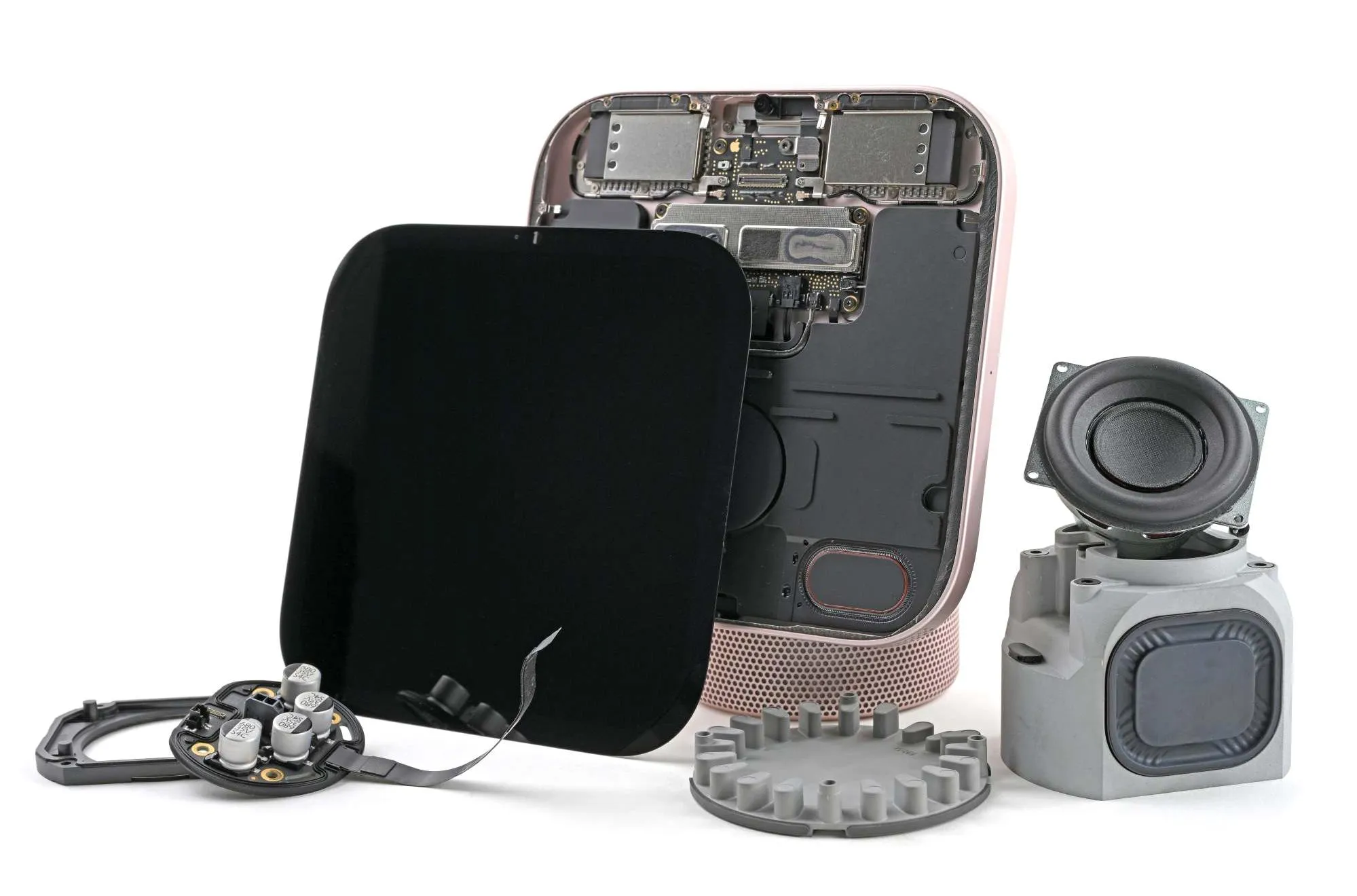
Apple's new $299 HomeView smart home hub has received criticism for its repairability after a teardown revealed extensive use of adhesive, difficult component removal, and a high risk of damaging internal hardware during repairs.
Repair specialists at iFixit examined the device and found that accessing its internal components was considerably more difficult than expected. During the process, speaker connectors were damaged, a speaker broke, and removing the logic board presented additional challenges.
The findings are particularly notable because Apple has made improvements to repairability across several recent products, including changes to battery replacements, component access, and repair documentation.
However, the HomeView appears to follow a different approach, making even basic internal repairs difficult without specialized tools and experience.
Apple's HomeView Uses Strong Adhesive to Secure Its Display
The first major challenge appeared when the repair team attempted to remove HomeView's display.
For devices with similar construction, technicians typically apply heat to soften the adhesive before carefully separating the screen from the enclosure.
The same method was attempted with HomeView, but the device's aluminum housing created additional difficulties.
According to the teardown, the aluminum enclosure absorbed and distributed heat efficiently, preventing the adhesive around the display from warming as quickly as expected.
As a result, technicians had to apply heat for considerably longer than usual.
Even after extended heating, the adhesive remained unusually strong.
The repair team described it as one of the most difficult adhesive bonds they had encountered on a recent Apple product.
This creates a potential problem for repairs involving the display or internal components because reaching the hardware requires removing the screen first.
Speaker Removal Damaged Multiple Components
The difficulties continued after the display was removed.
To access the logic board, technicians needed to disconnect the device's large left speaker.
However, the speaker connector was secured with adhesive that proved difficult to remove.
Even after scraping away the visible adhesive, the connector remained firmly attached to the board.
When the repair team attempted to disconnect it, the electrical leads separated from the connector's plastic housing, leaving the housing attached to the board.
Removing the speaker itself created another problem.
Apple had bonded the speaker firmly into the enclosure, and applying heat and carefully prying around the component was not enough to release it.
The speaker eventually broke during removal.
The teardown therefore resulted in damaged speaker connections and a broken speaker while attempting to reach other internal components.
Logic Board Design Creates Additional Repair Challenges
The teardown also revealed that the HomeView's heat spreader was bonded directly to its aluminum chassis.
This arrangement likely helps transfer heat away from the device's internal electronics.
However, the adhesive connection also makes separating the logic board from the enclosure more difficult.
Applying excessive force during removal could potentially damage the board or other nearby components.
The following table summarizes the repair difficulties identified during the teardown.
| Component | Repair Difficulty |
|---|---|
| Display | Strong adhesive requires extended heating |
| Speaker connector | Adhesive makes disconnection difficult and risks damaged wiring |
| Internal speaker | Firm bonding prevents straightforward removal |
| Logic board | Heat spreader is bonded to the aluminum chassis |
| Aluminum enclosure | Dissipates heat during attempts to soften adhesive |
These findings suggest that repairs requiring access to several internal components could involve significant work and a risk of accidental damage.
HomeView Repairability Falls Behind Apple's Recent Improvements
The HomeView teardown contrasts with some of Apple's recent changes to product construction.
For example, the original HomePod was particularly difficult to disassemble, with technicians previously needing a hacksaw to reach its internal hardware.
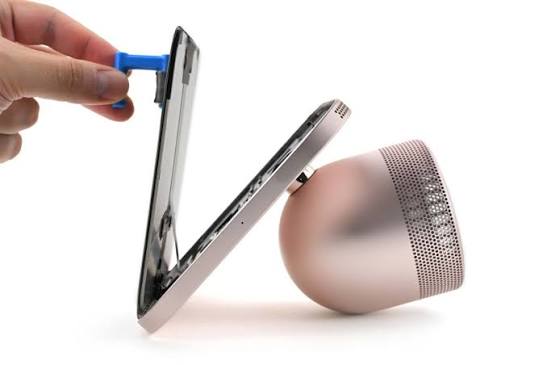
Apple improved the design of the second generation HomePod, allowing technicians to open the device without destroying its enclosure.
Similar repairability improvements have appeared across other Apple products as the company has gradually expanded access to replacement parts and repair information.
However, the HomeView's extensive adhesive use raises questions about how easily owners and independent repair technicians will be able to service the device.
The problem is especially relevant for a smart home product designed to remain in one location, such as a kitchen counter or living room.
Unlike portable devices, a stationary home hub generally has fewer requirements related to surviving frequent movement or handling.
The teardown does not establish why Apple selected these particular construction methods.
iFixit Gives HomeView an Unofficial Negative Repairability Verdict
The repair specialists did not assign HomeView a conventional numerical repairability score because their existing scoring system does not cover this product category.
Instead, the teardown video included a deliberately censored verbal assessment reflecting the team's frustration with the repair process.
The evaluation highlights the practical problems caused by strong adhesive and tightly bonded internal components.
Although the HomeView may function normally throughout its intended lifespan, the teardown suggests that repairing certain hardware failures could be difficult.
For anyone considering Apple's $299 smart home hub, repairability is therefore an important factor to consider alongside its software features and everyday functionality.
Apple has demonstrated that it can improve component accessibility in newer product generations, but the HomeView's internal construction indicates that those improvements have not been applied consistently across its hardware lineup.

Discussion (0)
Be the first to comment.