



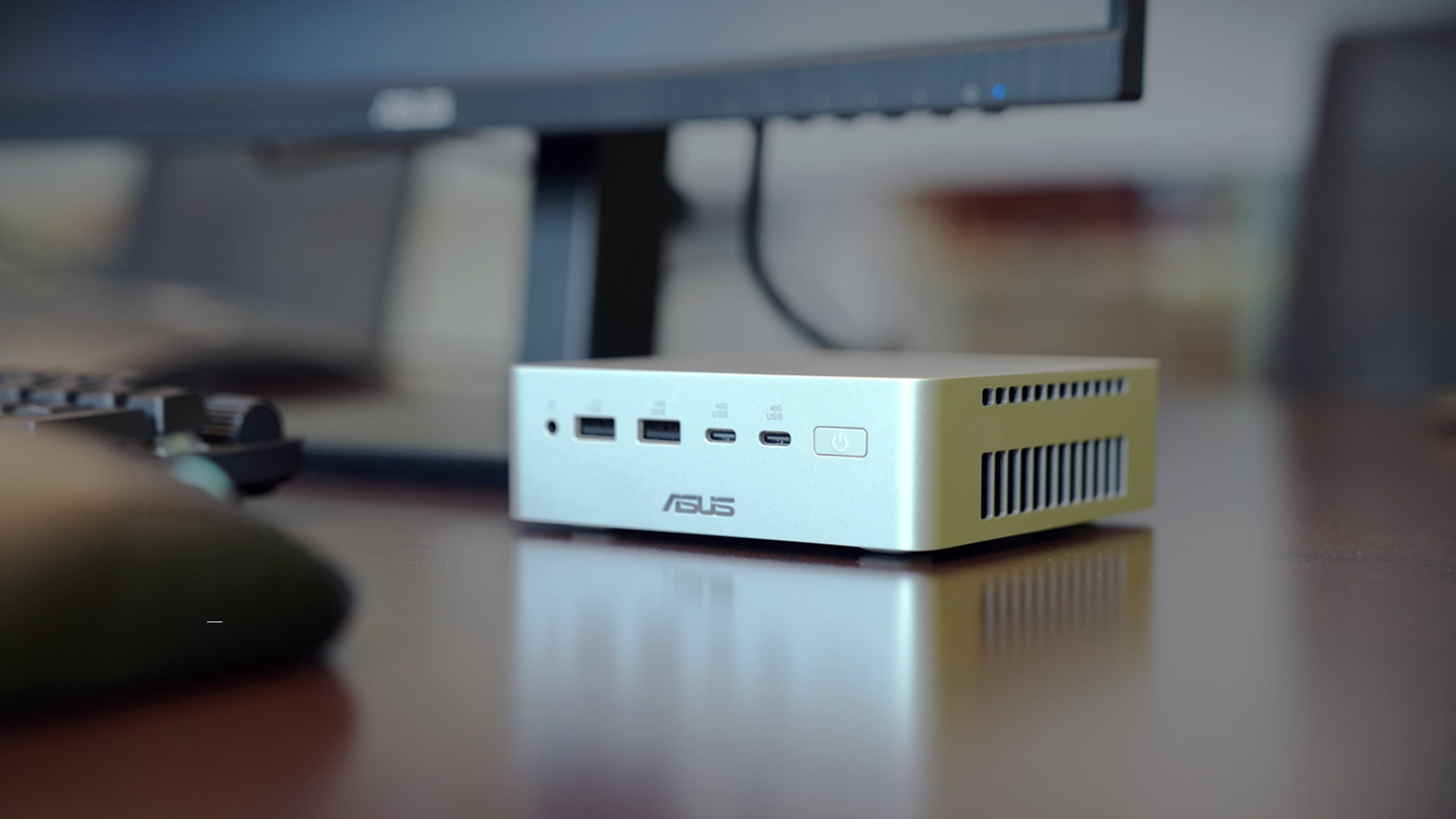
ASUS has officially launched the Ascent QN10, a compact Windows on Arm mini PC built around Qualcomm’s Snapdragon X2 Elite platform.
The system is notable for being one of the first commercial mini PCs to use the new chip, combining an 18 core third generation Oryon CPU with Adreno X2 90 integrated graphics and a Hexagon NPU rated at up to 80 TOPS of INT8 AI performance.
That NPU performance comfortably clears Microsoft’s Copilot+ PC requirement, positioning the QN10 primarily as a compact productivity and AI development machine rather than a gaming focused desktop.
The US configuration currently listed with 16 GB of memory and a 512 GB SSD costs $1,349.99.
ASUS Ascent QN10 specifications
| Feature | Specification |
|---|---|
| Processor | Qualcomm Snapdragon X2 Elite |
| CPU | 18 core third generation Oryon |
| Graphics | Qualcomm Adreno X2 90 |
| NPU | Up to 80 TOPS INT8 |
| Memory | Up to 32 GB LPDDR5X 9600 |
| Storage | Up to 4 TB total |
| Size | 130 × 130 × 40 mm |
| Volume | Under 0.7 liters |
| Weight | 720 grams |
| Starting US model | 16 GB RAM, 512 GB SSD |
| Price | $1,349.99 |
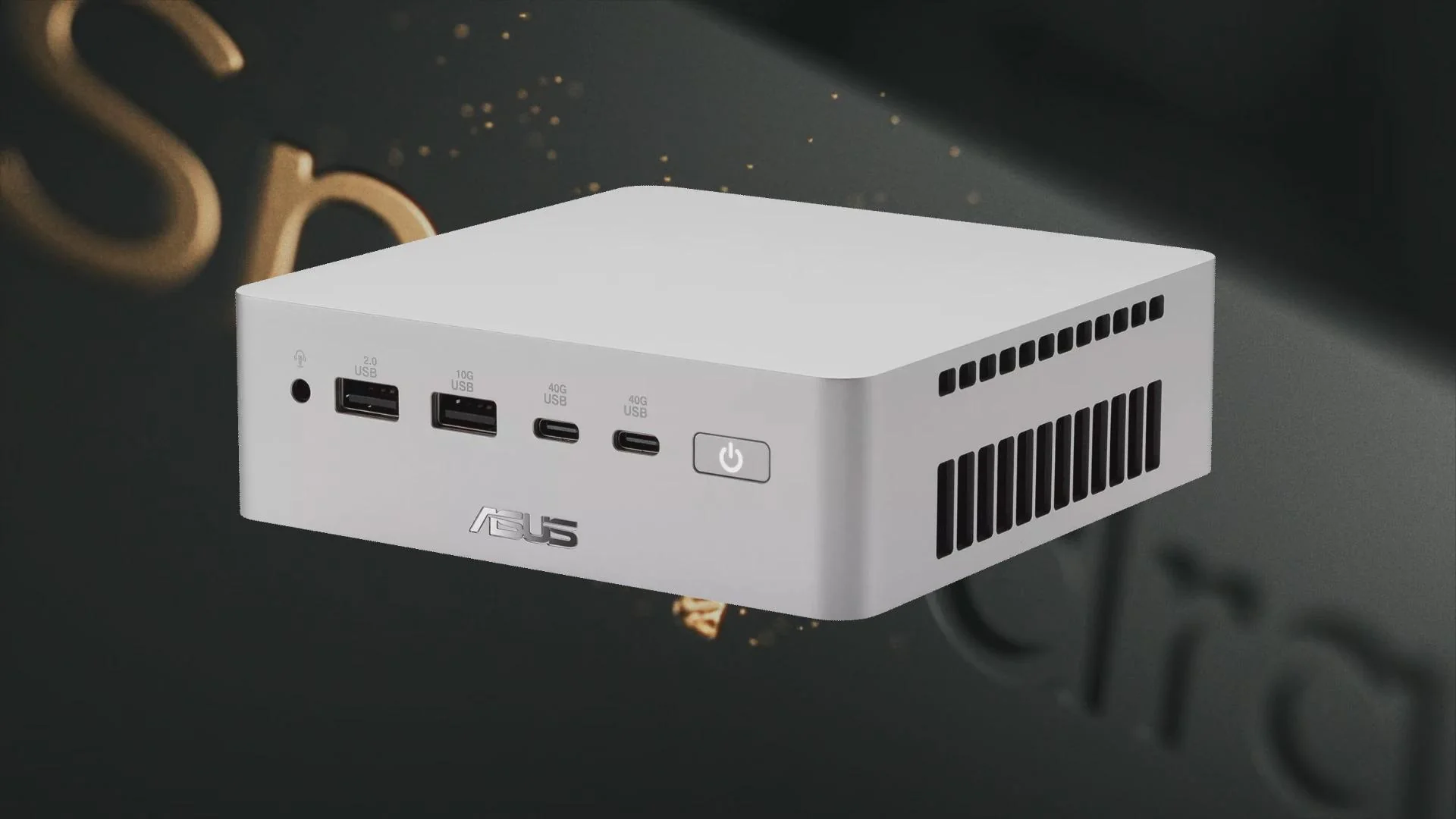
Despite its small size, the Ascent QN10 offers a relatively broad selection of ports.
The machine includes three USB4 Type C ports rated at up to 40 Gbps, three 10 Gbps USB Type A ports, one additional USB 2.0 Type A connection, HDMI 2.1, and 2.5 GbE networking.
Wireless connectivity includes Wi Fi 7 and Bluetooth 6.0.
ASUS also says the system can drive as many as four 4K displays simultaneously, making it suitable for multi monitor workstations despite its compact chassis.
Storage and memory options target professional use
The QN10 supports up to 32 GB of LPDDR5X 9600 memory.
Storage is split across two M.2 slots. One supports PCIe Gen5 M.2 2280 drives, while the second supports PCIe Gen4 storage. ASUS lists support for up to 4 TB of total storage.
Higher end configurations with up to 32 GB of memory and 2 TB of factory installed storage are included in the product specifications, although US pricing for those versions has not yet been confirmed.
The compact chassis measures 130 mm by 130 mm and is only 40 mm tall. Its total volume remains below 0.7 liters, while the system weighs around 720 grams.
That makes it small enough for offices, development environments, and other space limited setups where a traditional desktop tower would be unnecessary.
AI workloads are the main focus
ASUS is positioning the Ascent QN10 mainly for local AI development and inference.
The company provides access to a large collection of optimized models through Qualcomm AI Hub, including more than 175 models designed for the Snapdragon platform.
Support is also advertised for local and hybrid AI applications such as OpenClaw and Hermes Agent.
The 80 TOPS NPU is central to that positioning. It gives developers dedicated hardware for AI workloads while keeping more processing local rather than relying entirely on cloud services.
Gaming is not the main selling point, although the Adreno X2 90 integrated GPU should be capable of handling lighter graphics workloads and some games.
At $1,349.99, the Ascent QN10 is clearly aimed at a premium audience. Its combination of compact dimensions, strong connectivity, fast storage support, and dedicated AI hardware makes it more of a specialized workstation than a conventional budget mini PC.
For developers and professionals interested in Windows on Arm and local AI, it represents one of the first desktop class systems built around Qualcomm’s Snapdragon X2 Elite platform.
Discussion (0)
Be the first to comment.