



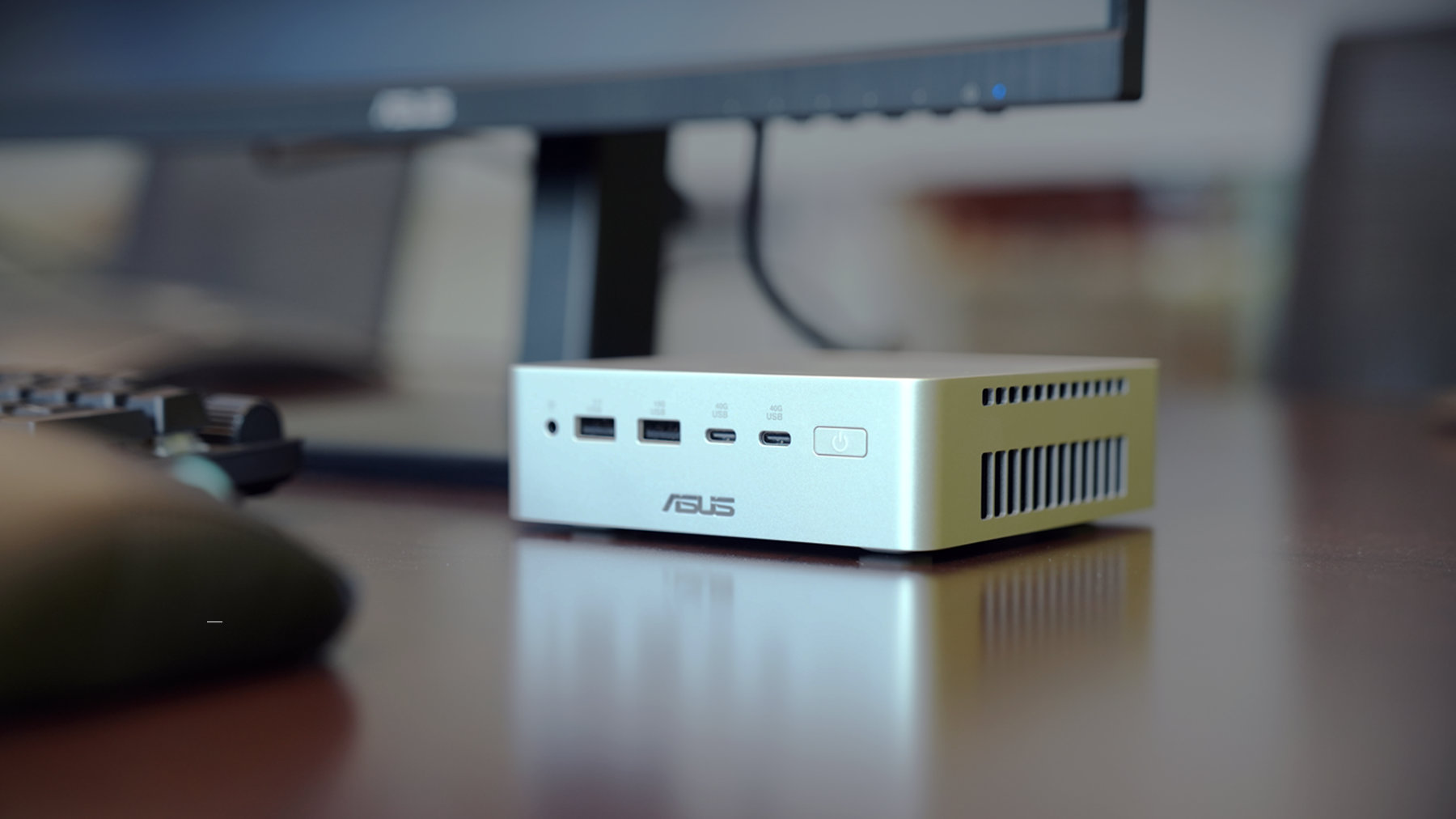
ASUS has started shipping the Ascent QN10, a compact Windows PC built around Qualcomm's Snapdragon X2 Elite platform. The system stands out as one of the first consumer focused mini PCs to use the new Arm based chip rather than an Intel or AMD processor.
The Ascent QN10 is built for everyday computing as well as local AI workloads. Its Qualcomm Hexagon NPU delivers up to 80 TOPS of AI performance, giving the machine enough dedicated acceleration for tasks such as image processing, language models, automation, and other AI applications that can run directly on the device.
This also marks an important shift for Windows on Arm hardware. Earlier compact Arm systems were often positioned as development kits. ASUS is instead selling the Ascent QN10 as a finished consumer product, complete with an aluminum chassis, broad connectivity, and multiple storage configurations.
Snapdragon X2 Elite powers the compact system
The Ascent QN10 uses an 18 core Qualcomm Oryon CPU alongside Adreno X2 90 graphics. Memory configurations go up to 32GB of LPDDR5X, while storage options include 512GB, 1TB, and 2TB capacities.
The mini PC has a volume of just 0.7 liters and measures approximately 5.1 x 5.1 x 1.5 inches. It weighs around 1.6 pounds, which makes it suitable for desks where space is limited.
Despite its small size, ASUS has included a relatively wide selection of ports.
| Specification | ASUS Ascent QN10 |
|---|---|
| Processor | Qualcomm Snapdragon X2 Elite, 18 core Oryon CPU |
| Graphics | Qualcomm Adreno X2 90 |
| NPU | Qualcomm Hexagon, up to 80 TOPS |
| Memory | Up to 32GB LPDDR5X |
| Storage | 512GB, 1TB, or 2TB |
| Front ports | 2 USB4, 2 USB A, 3.5mm audio |
| Rear ports | USB4, HDMI 2.1, 2 USB A, 2.5Gb Ethernet |
| Wireless | WiFi 7, Bluetooth 6.0 |
| Size | 5.1 x 5.1 x 1.5 inches |
| Weight | 1.6 pounds |
Connectivity is another strong point. The system supports WiFi 7 and Bluetooth 6.0, while wired networking is handled through a 2.5 Gigabit Ethernet port.
ASUS has also separated the cooling paths for the processor and SSD. Fresh air enters from one side of the chassis before being divided internally, allowing heat from the CPU and storage to be managed independently before being exhausted.
Local AI is a major part of the design
The 80 TOPS NPU is central to ASUS's positioning for the Ascent QN10. Owners can also access Qualcomm's AI Hub, which includes more than 175 preoptimized AI models and related tools for testing and deployment.
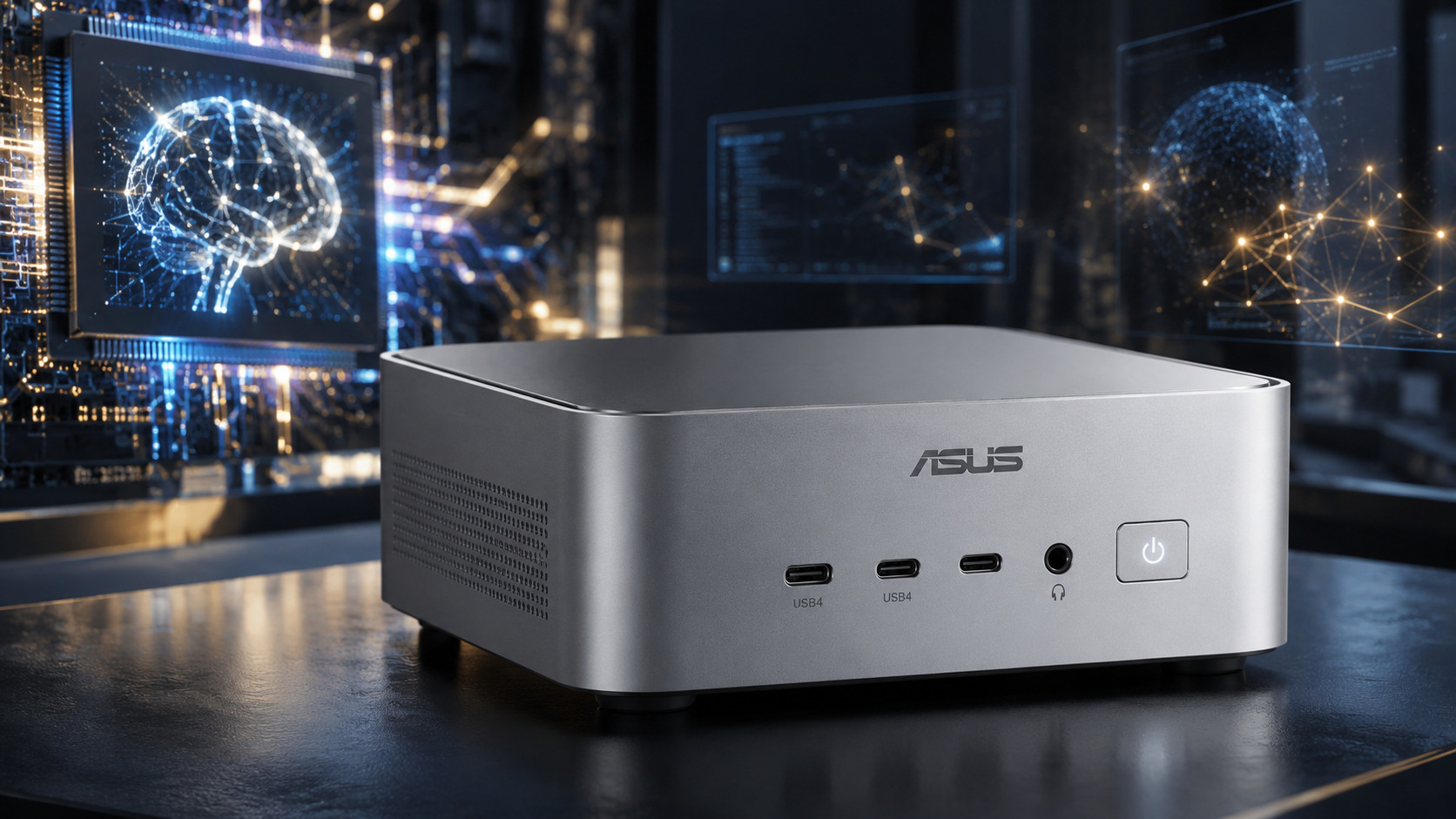
This gives the system a clearer role than simply serving as a small office PC. Developers, creators, and people experimenting with local AI workloads may be able to use the dedicated NPU instead of relying entirely on the CPU, GPU, or cloud processing.
The larger question is how well Windows on Arm software support matches the hardware. Snapdragon based PCs have improved considerably, but application compatibility and performance can still depend on whether software has native Arm support or needs translation.
The Ascent QN10 is currently listed in a configuration with 16GB of memory and 512GB of storage for $1,349. That places it well above many conventional mini PCs, so buyers are paying a premium for the new Snapdragon platform, compact construction, connectivity, and strong dedicated AI acceleration.
ASUS's first Snapdragon X2 Elite mini PC shows that Windows on Arm is moving beyond laptops and developer hardware. Whether the Ascent QN10 gains broader appeal will depend on software compatibility and how much value buyers place on its 80 TOPS NPU and compact design.

Discussion (0)
Be the first to comment.