



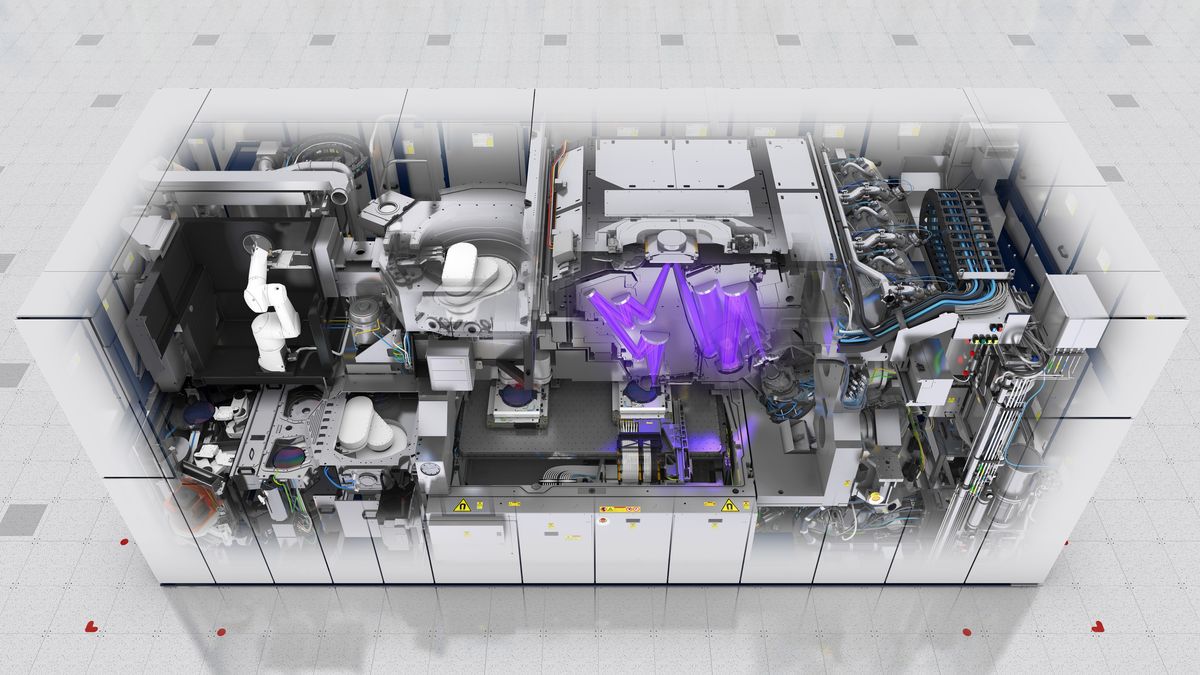
ASML has denied claims that one of its banned EUV chipmaking machines may have reached China, after US officials reportedly raised concerns with the company. The Dutch semiconductor equipment giant says it has never shipped an EUV machine to China, nor any component, module, or equipment specially designed for use in an EUV system.
The issue matters because ASML’s extreme ultraviolet lithography machines are among the most important tools in advanced chip manufacturing. These machines are used to print extremely small circuit patterns onto wafers, making them essential for producing leading edge processors.
The US has pushed for years to stop China from gaining access to ASML’s most advanced lithography equipment. If China obtained an EUV machine, it would raise major questions about export controls, semiconductor competition, and the global chip supply chain.
Why ASML’s EUV machines are so important
EUV lithography is one of the key technologies behind the world’s most advanced chips. Without it, making leading edge semiconductors becomes much harder because older lithography methods face physical limits when printing extremely small features.
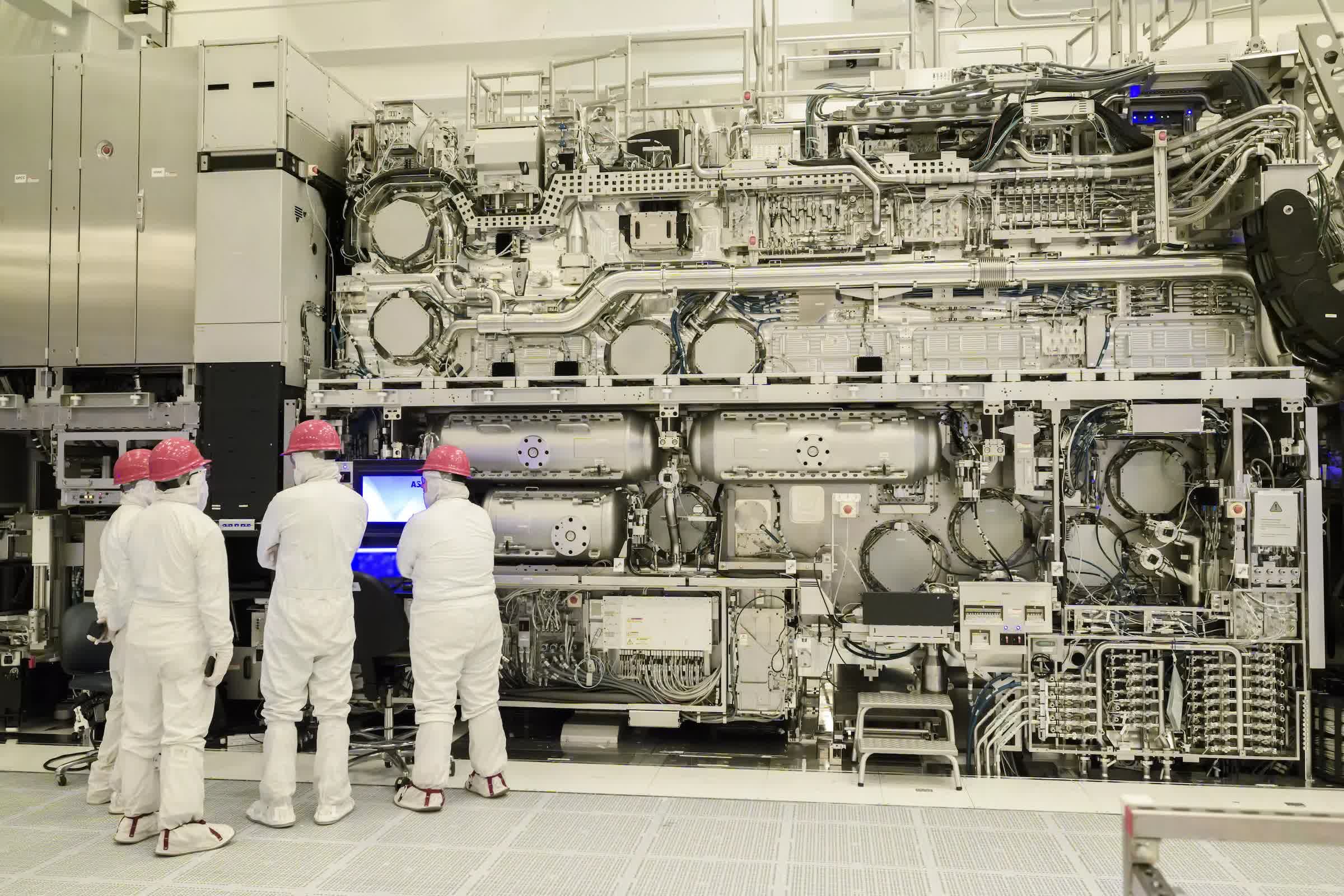
That is why ASML’s EUV machines have become a central focus of US export restrictions. The machines are large, complex, expensive, and produced in small numbers. They are also difficult to operate without direct service and support.
| Issue | Why it matters |
|---|---|
| EUV lithography | Enables production of leading edge chips |
| China restrictions | US wants to limit access to advanced chipmaking tools |
| ASML denial | Company says no EUV machine or special EUV component went to China |
| US concern | Officials reportedly questioned whether equipment reached China |
| Tracking difficulty | ASML says machines are large, rare, and service dependent |
| Bigger impact | Could affect global semiconductor policy and export controls |
ASML argues that these factors make it highly unlikely for an EUV system to disappear into China unnoticed.
US officials have reportedly pressed ASML on the issue
US Commerce Secretary Howard Lutnick has reportedly raised the matter with ASML management in several meetings. The concern is that China may have found a way to access equipment that should be blocked under export restrictions.
The US has been watching ASML’s technology closely since at least the first Trump administration. In 2020, Washington pressed the Dutch government to prevent ASML from selling EUV systems to China. At the time, ASML’s export license for those machines expired, and a new license was not granted.
That policy became part of a wider effort to slow China’s ability to manufacture the most advanced chips domestically.
ASML says it follows all export rules
ASML has strongly denied wrongdoing. The company says it remains fully compliant with export control rules and has never shipped an EUV machine to China.
The company also says it has not shipped any component or module specially designed for an EUV system to China. That wording is important because modern chipmaking tools are made of many advanced parts, and export controls can apply not only to complete machines but also to sensitive components.
ASML has also pointed out that EUV machines need regular service. That makes them very different from smaller equipment that could be moved or used quietly. A working EUV system needs installation, support, maintenance, and specialized expertise.
ASML says rumors can hurt the company
ASML CEO Christophe Fouquet has previously said the company has faced negative rumors about its China business many times. He said ASML follows the rules and changes its behavior when export rules change.
That reflects the difficult position ASML is in. The company is based in the Netherlands, sells equipment globally, and operates in one of the most politically sensitive industries in the world. It must follow Dutch, European, and US aligned restrictions while still serving customers where sales are permitted.
The rules around semiconductor exports also change often. That creates pressure for companies that must keep up with shifting policy while protecting their business reputation.
The dispute shows how tense chip controls have become
The claim and denial show how sensitive advanced chip equipment has become in the US China technology race. EUV machines are not ordinary factory tools. They sit at the center of national security, AI development, military technology, consumer electronics, and economic competition.
If China did somehow obtain an EUV machine, it would be seen as a serious failure of export control enforcement. If the claim is wrong, it still shows how much suspicion now surrounds the semiconductor supply chain.
Either way, ASML remains one of the most important companies in global technology because its tools are difficult to replace.
ASML’s denial leaves the question unresolved for now
For now, ASML’s position is clear: it says no EUV machine has been shipped to China and that it complies with all export controls. The US concern, however, shows that officials are still watching the company and its supply chain closely.
The broader issue is unlikely to disappear. As AI demand rises and countries race to secure chipmaking capacity, advanced lithography tools will remain a major pressure point.
ASML’s EUV machines are rare, traceable, and service heavy, but they are also valuable enough to sit at the center of global semiconductor politics. That makes any claim about their movement to China a serious matter, even when the company strongly denies it.



Discussion (0)
Be the first to comment.