



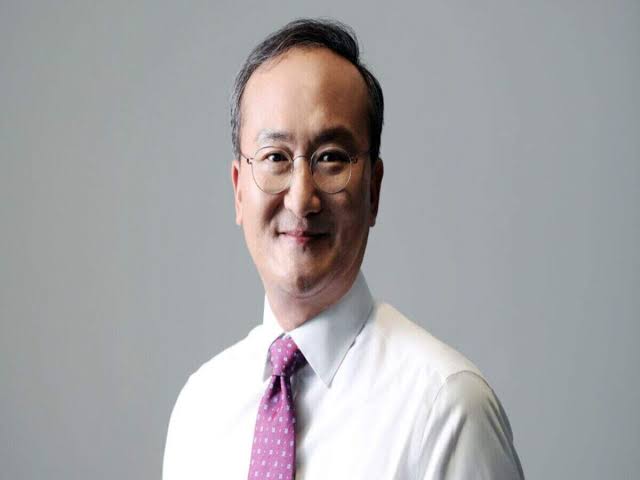
Intel has hired former SK Hynix CEO Seok Hee Lee as executive vice president of Intel Foundry, where he will lead advanced packaging, system integration, back end technology development, and back end manufacturing. The move strengthens Intel’s foundry leadership at a time when advanced packaging has become critical for AI, high performance computing, and future chip designs.
Lee will report directly to Intel CEO Lip Bu Tan. His appointment also marks a return to Intel, where he previously held engineering leadership roles before later leading SK Hynix and SK On.
The hiring is important because Intel is trying to rebuild confidence in its foundry business. Advanced packaging is no longer a background process. It is now one of the main ways chip companies combine logic, memory, networking, and other components into faster and more efficient systems.
Why Seok Hee Lee’s return matters
Lee brings experience from both memory and large scale semiconductor manufacturing. His time as president and CEO of SK Hynix gives him direct knowledge of memory technology, production scale, and the supply chain behind advanced computing systems.
That experience fits Intel’s current needs. AI chips increasingly rely on advanced packaging to connect compute dies, memory, and other chiplets more efficiently. Intel wants to serve outside foundry customers, and packaging is a major part of that pitch.
| Executive change | Details |
|---|---|
| New Intel hire | Seok Hee Lee |
| New role | EVP of Intel Foundry |
| Main focus | Advanced packaging and back end manufacturing |
| Reports to | Intel CEO Lip Bu Tan |
| Previous role | President and CEO of SK Hynix and SK On |
| Intel focus area | EMIB-T, HBI, system integration, customer foundry services |
| Other change | Navid Shahriari is retiring after 37 years |
Intel is also making advanced packaging a more focused business with dedicated leadership, showing how central the area has become to its foundry strategy.
Advanced packaging is now a key part of AI chip design
AI systems need more than strong logic chips. They also need high bandwidth memory, fast interconnects, efficient power delivery, and compact system integration. Advanced packaging helps bring these pieces closer together.
Traditional chip scaling is harder and more expensive than before, so companies are using chiplets and packaging technologies to keep improving performance. Instead of building everything on one large die, manufacturers can combine multiple specialized dies into one package.
Intel already has packaging technologies such as EMIB and Foveros, and it is preparing newer technologies including EMIB-T and HBI for higher volume customer use. Lee’s job will be to help Intel scale those capabilities reliably.
Intel Foundry is being reorganized for sharper execution
With Lee taking over packaging and back end work, Naga Chandrasekaran will continue leading front end technology development and front end manufacturing. He will also keep responsibility for design enablement and customer facing foundry functions.
That split gives Intel a clearer structure. Front end manufacturing covers the wafer level process technologies such as Intel 18A, Intel 14A, and future nodes. Back end and advanced packaging cover how chips are assembled, connected, integrated, and prepared for final systems.
This structure could help Intel move faster if each side has dedicated leadership and accountability.
The timing is important for Intel’s foundry plans
Intel is trying to convince customers that it can deliver advanced manufacturing with speed and consistency. That is not easy. Foundry customers need confidence in process technology, packaging, yield, supply, and long term roadmaps.
The company is preparing to ramp Intel 18A and Intel 14A, which are central to its comeback plan. Strong packaging capabilities could help Intel stand out, especially for AI and high performance computing customers that need more than a basic manufacturing node.
Intel CEO Lip Bu Tan said advanced packaging and system integration are becoming defining capabilities for next generation computing systems. That statement shows how Intel wants to position itself against major foundry rivals.
Lee’s memory background could help Intel
Lee’s SK Hynix background may be especially valuable because memory is now closely tied to AI performance. Modern AI accelerators depend heavily on memory bandwidth and packaging efficiency.
Foundry customers want tighter integration between logic and memory. A leader who understands both manufacturing scale and memory industry requirements could help Intel design packaging services that better match customer needs.
This does not automatically fix Intel’s foundry challenges, but it gives the company a respected executive with relevant technical and operational experience.
Intel is also losing a long time executive
As part of the announcement, Intel said Navid Shahriari will retire after 37 years at the company. That marks another leadership change as Intel continues reshaping its business under Lip Bu Tan.
The company is clearly trying to build a more focused foundry model, with advanced packaging treated as a major pillar rather than a supporting function.
A major hire for Intel’s next phase
Seok Hee Lee’s return to Intel comes at a crucial moment. The company needs strong execution in process technology, packaging, manufacturing, and customer trust if it wants Intel Foundry to become a serious alternative for advanced chip customers.
Advanced packaging is becoming one of the most important parts of that plan. AI chips, chiplet based processors, and high performance computing systems all depend on better integration between logic, memory, and other components.
Lee’s appointment gives Intel a leader with deep semiconductor experience and a strong manufacturing background. For Intel, this is not just another executive hire. It is part of a broader effort to make its foundry business more credible, more focused, and better prepared for the AI chip era.



Discussion (0)
Be the first to comment.