



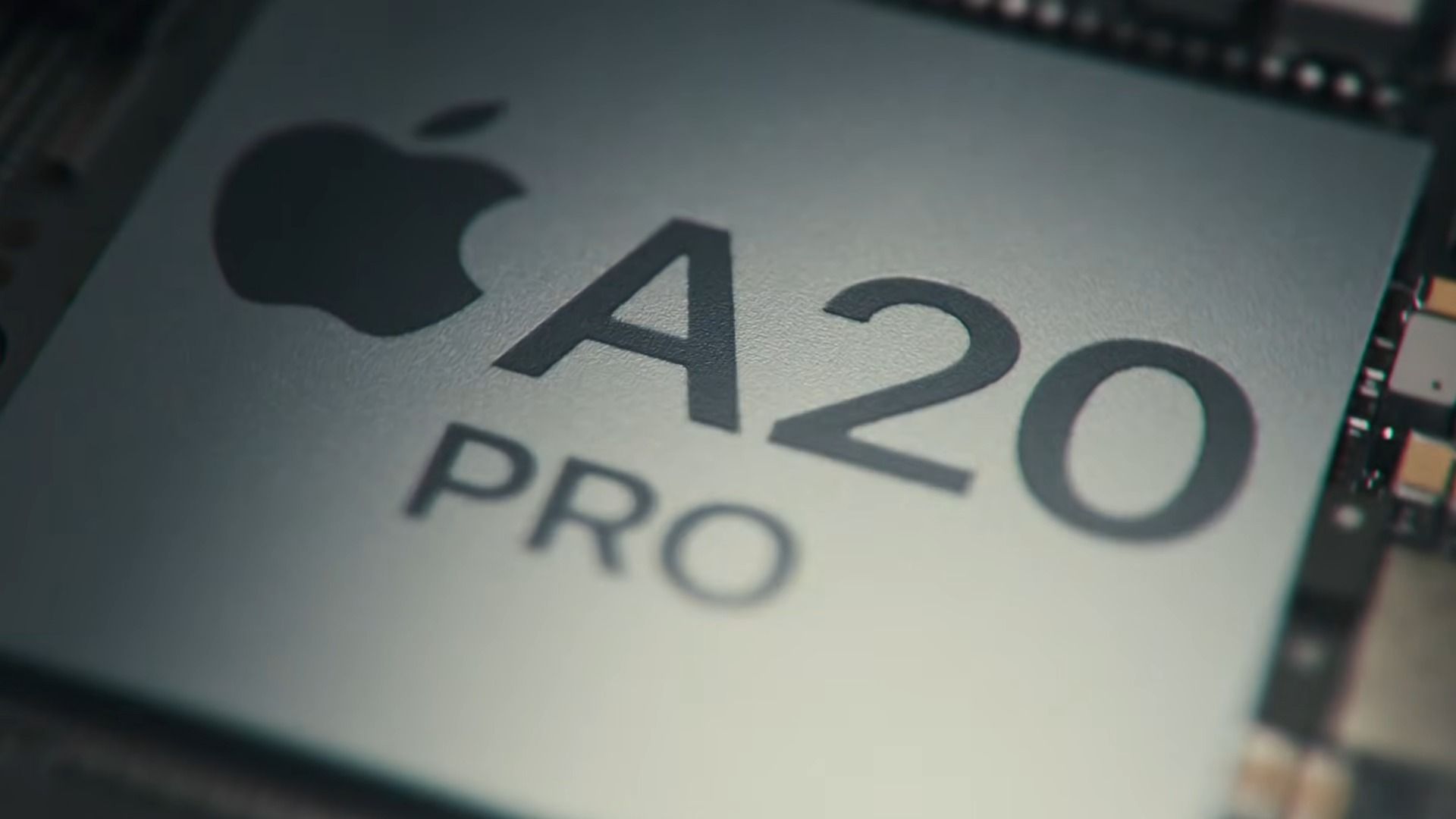
Apple's A20 Pro has appeared in an early Geekbench 7 submission with a single core score of 4,006, putting the new smartphone chip ahead of several high end desktop and laptop processors in this particular benchmark.
The result should still be treated cautiously. It comes from an early benchmark submission, so it is not yet clear whether it fully represents retail A20 Pro devices. Even so, the numbers suggest a major CPU performance increase over the previous A19 Pro generation.
The A20 Pro is Apple's first smartphone processor produced using TSMC's 2nm class N2 process. It combines two performance cores with four efficiency cores and reportedly reaches frequencies of up to 4.93 GHz.
| Processor | Geekbench 7 single core | Geekbench 7 multi core |
|---|---|---|
| Apple A20 Pro | 4,006 | 11,460 |
| Apple A19 Pro | 3,249 | 9,016 |
| Apple M5 | 3,739 | 18,671 |
| AMD Ryzen 9 9950X3D | 3,182 | 30,428 |
| Intel Core i9 14900KS | 3,024 | 21,145 |
| Intel Core Ultra X9 388H | 2,694 | 18,121 |
A20 Pro shows a large generational improvement
Compared with the A19 Pro, the new chip is about 23.3 percent faster in Geekbench 7 single core performance and 27.1 percent faster in multi core performance.
That represents one of Apple's largest recent year over year CPU gains in its smartphone processors.
The A19 Pro scored 3,249 points in single core and 9,016 points in multi core testing. The A20 Pro raises those figures to 4,006 and 11,460 respectively.
Part of that increase appears to come from higher clock speeds. The A20 Pro reportedly reaches 4.93 GHz, compared with up to 4.26 GHz for the A19 Pro.
The memory subsystem is also said to offer around 50 percent more bandwidth than the previous generation, possibly through a wider 96 bit memory interface.
Single core performance passes desktop processors
The most unusual result is the A20 Pro's single core score.
Its 4,006 point result is around 26 percent higher than the Ryzen 9 9950X3D's 3,182 points and roughly 32 percent above the Core i9 14900KS at 3,024 points.
That does not mean an iPhone processor is faster overall than those desktop CPUs.
The Ryzen 9 9950X3D scores around 30,428 points in multi core testing, while the Core i9 14900KS reaches about 21,145. Both remain far ahead of the A20 Pro's 11,460 points when workloads can use many cores.
The comparison instead highlights how strong Apple's individual CPU cores appear to have become.
The A20 Pro also scores around 7 percent higher than Apple's M5 in single core testing, although the M5 remains much faster in multi core work because it has more CPU cores.
Smartphone rivals also trail in single core testing
The early result also places the A20 Pro ahead of several competing mobile processors.
Qualcomm's Snapdragon 8 Elite Gen 5 records about 3,047 points in Geekbench 7 single core testing, while Xiaomi's XRing O3 reaches around 2,996.
That would give the A20 Pro a lead of roughly 32 to 34 percent over those two chips in this benchmark.
The difference is smaller in multi core performance. The Snapdragon reaches around 10,212 points, while the XRing O3 records approximately 11,777, slightly ahead of the A20 Pro.
This shows why the benchmark results need context. Apple's strongest advantage appears to be individual core performance rather than total threaded performance.
TSMC's 2nm process gives Apple more room for larger cores
The A20 Pro reportedly uses larger, desktop class performance cores alongside four efficiency cores.
Moving to TSMC's N2 manufacturing process may have helped Apple fit these more complex CPU cores into a smartphone processor while maintaining acceptable power and thermal limits.
Apple has increasingly shared CPU technology across phones, tablets and Macs, so stronger general purpose cores can also benefit future products beyond the iPhone.
For now, the 4,006 single core result is an impressive early indicator. More benchmark runs from retail hardware will be needed before the A20 Pro's final performance and efficiency can be judged with confidence.


Discussion (0)
Be the first to comment.