



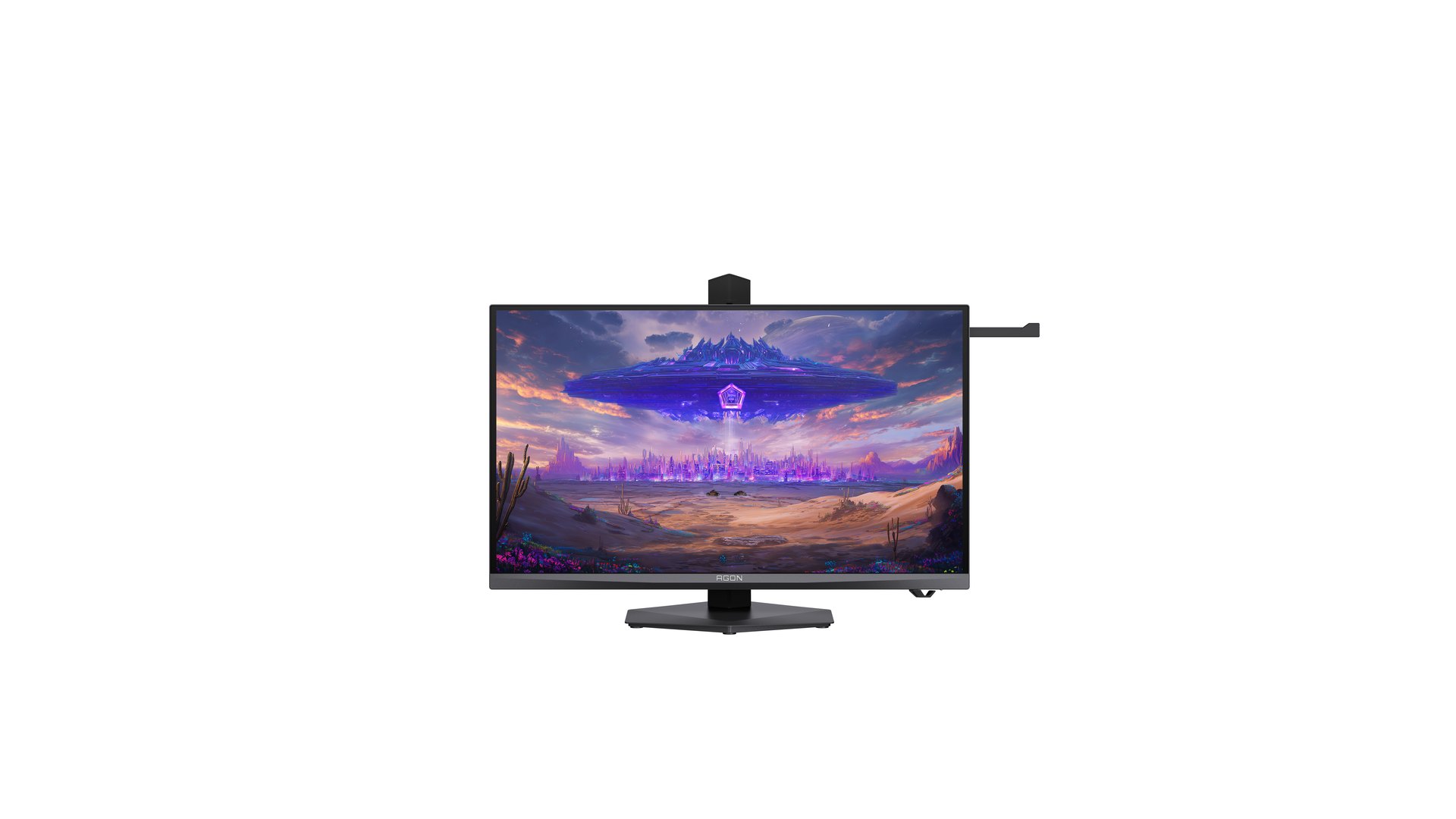
AGON by AOC has announced the AGON PRO AGP257FT, a 24.5-inch esports monitor that runs at 1,000Hz natively at 1920 x 1080. The detail that decides how much the announcement is worth sits at the bottom of the press release, where AOC says it expects availability from Q1 2027 and gives no price.
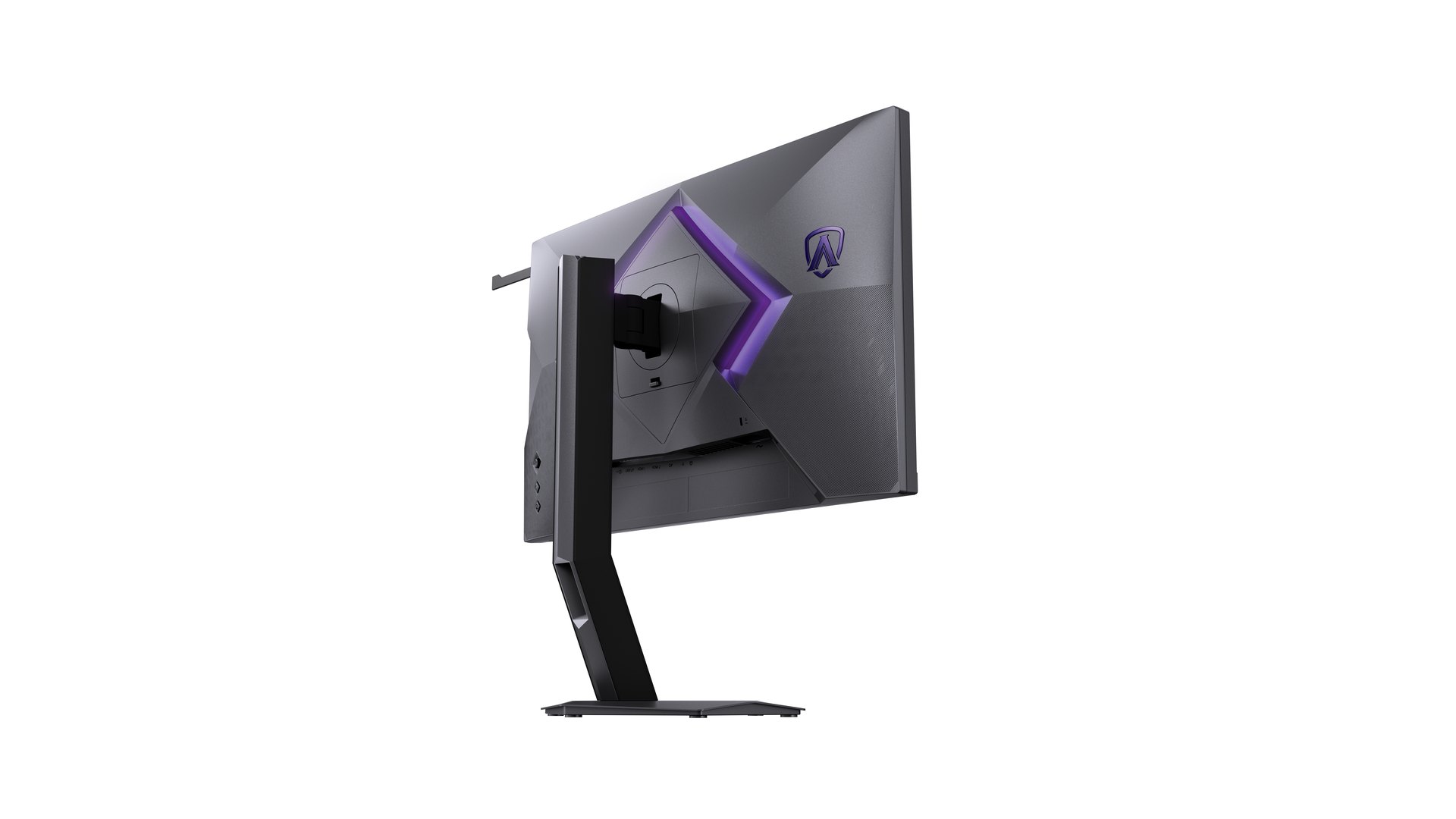
AOC calls it the fastest monitor in its line-up to date. The panel can be overclocked to 1,050Hz, which the company says works over either DisplayPort 2.1 or HDMI 2.1.
This is a full product announcement rather than a technology demonstration. AOC has live spec pages for the model, but there is no store listing, no preorder and no number attached to it.
AGON PRO AGP257FT specifications
Response time is quoted as 0.3ms GtG, and AOC is explicit that this is a minimum rather than a typical figure. The separate 0.1ms MPRT number is measured with motion blur reduction running, so the two are not comparable.
| Specification | AGON PRO AGP257FT |
|---|---|
| Panel | 24.5-inch oxide-based Fast IPS, 1920 x 1080 |
| Refresh rate | 1,000Hz native, 1,050Hz overclocked |
| Response time | 0.3ms GtG (minimum), 0.1ms MPRT |
| HDR | DisplayHDR 400, 20-zone local dimming, 450 nits typical |
| Colour | 99% sRGB, 90% DCI-P3 |
| Adaptive sync | NVIDIA G-SYNC Compatible |
| Ports | 2x HDMI 2.1, 1x DisplayPort 2.1, headphone out, 3x 5Gbps USB-A |
| Availability | Expected Q1 2027, pricing not announced |
Every unit ships with a colour and brightness uniformity report, according to the press release. AOC also lists hardware Low Blue Light, a flicker-free DC-dimmed backlight and TUV Rheinland-certified circular polarisation.
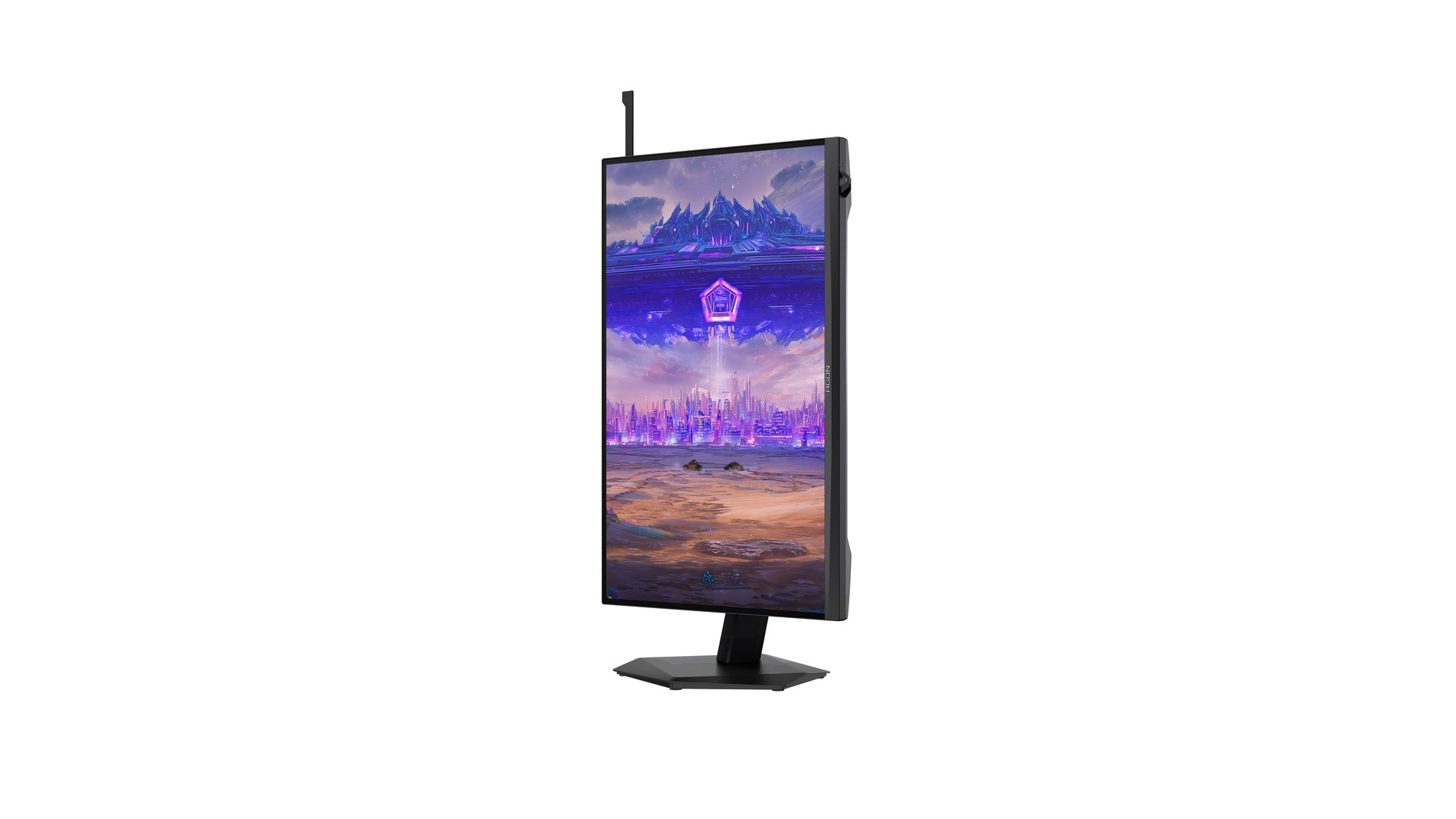
The stand offers 150mm of height adjustment, tilt, swivel and a 90-degree pivot. It also carries measurement markings and a quick-release mechanism that AOC pitches at players travelling to LAN events.
What an oxide-based Fast IPS panel actually means
The word doing the work is oxide, and it describes the transistor backplane rather than the liquid crystal. Conventional LCDs switch each pixel using an amorphous-silicon transistor.
Oxide backplanes use a metal-oxide semiconductor instead. Sharp, which began mass-producing oxide transistors for displays in 2012, says IGZO electron mobility is 20 to 50 times greater than amorphous silicon.
That matters because a 1,000Hz panel gives each pixel one millisecond to be addressed and settle. Higher mobility charges the cell faster, and the smaller transistors it allows leave more open area for the backlight.
AOC describes the result as fast-response liquid crystal materials and an advanced panel architecture that overcome the voltage-response limits holding LCDs back at extreme refresh rates. The company has not named the panel supplier.
Earlier material on the same model listed a 0.2ms GtG response time and a different blur-reduction method, as covered when AOC first showed its 1,000Hz display. Those figures no longer appear on AOC's pages.
The connectors have to carry around 50Gbit/s
Driving 1920 x 1080 at 1,000Hz means 2.07 billion pixels every second. At 8 bits per colour that is roughly 49.8Gbit/s of pixel data, or about 53Gbit/s once normal blanking overhead is counted.
DisplayPort 2.1 carries up to 80Gbps at the UHBR20 link rate, according to VESA. HDMI 2.1 tops out at 48Gbps, which is below what 1080p at 1,000Hz needs uncompressed.
The HDMI path therefore has to lean on Display Stream Compression. AOC does not mention compression anywhere, and it does not say which DisplayPort 2.1 link rate the monitor supports.
On the GPU side, NVIDIA lists DisplayPort 2.1b with UHBR20 on its GeForce RTX 50 Series cards. Older cards without it would be working from a narrower pipe.
Nobody has published a 1,000 fps figure
AOC's own line is that the monitor draws a new frame every millisecond. Feeding that properly means a PC producing 1,000 frames per second.
NVIDIA says a GeForce RTX 4070 Ti delivers over 360 fps at 1080p in Counter-Strike 2. That is one of the lightest competitive shooters in circulation, and it lands around a third of the way there.
No GPU vendor has published a 1,000 fps figure for any game at 1080p. NVIDIA has not published a Counter-Strike 2 number for RTX 50 Series cards either, and AOC offers no frame rate guidance of its own.
Below 1,000 fps the panel simply runs at its refresh rate and repeats frames. G-SYNC Compatible support covers the variable refresh side.
Price and availability
AOC says the AGP257FT is expected from Q1 2027, and that local pricing in European regions will be announced closer to launch. No US date and no US price have been published.
That leaves LG's 25G590B at $999.99 as the only 1,000Hz 1080p display with a price on it. Acer has shown monitors reaching 1000Hz, and Samsung has 24.5-inch FHD QD-OLED esports panels planned.
What AOC has not published is the panel supplier, whether compression is used on either input, and the overdrive settings behind that 0.3ms figure. None of those gaps are unusual a year ahead of a launch.
They are also the details that will decide whether the step from 500Hz to 1,000Hz is worth paying for. Until AOC names a price, the AGP257FT is a spec sheet rather than a purchase.



Discussion (0)
Be the first to comment.