




AMD believes unified memory architectures could shape the next stage of PC design, especially as AI workloads demand larger shared memory pools between CPUs and GPUs. The company sees the approach as more than a short term experiment, with future product choices and roadmaps likely to be influenced by how these systems evolve.
Unified memory architecture, often called UMA, connects the CPU, GPU, and memory more tightly than traditional PC designs. Instead of splitting system memory and graphics memory into separate pools, UMA lets the hardware share a larger memory space. This is becoming more important as local AI workloads grow, especially for large language models that need huge amounts of memory to run effectively.
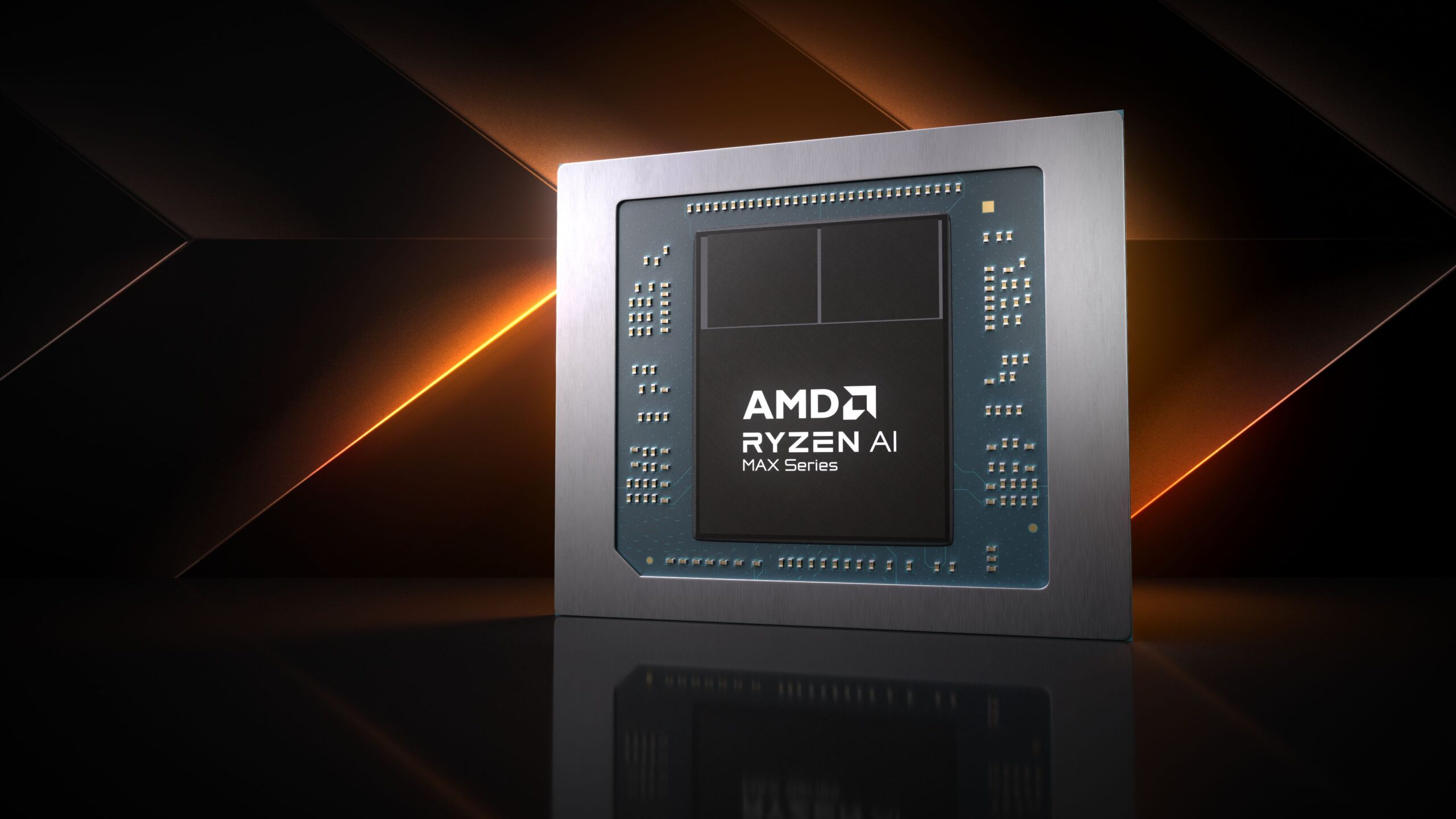
AMD has already entered this space with its Ryzen AI MAX family. Current first generation Ryzen AI MAX systems can offer up to 128GB of memory, with up to 112GB available to the GPU. NVIDIA is also moving in the same direction with RTX Spark, which dynamically allocates memory between the CPU and GPU depending on the workload.
That industry movement is important because it shows UMA is no longer limited to niche systems. It is becoming a serious design path for compact AI workstations, creator machines, and possibly future high performance desktops.
Ryzen AI MAX 400 will push unified memory up to 192GB
AMD is already preparing its Ryzen AI MAX 400 series, which will raise the memory ceiling even further. The upcoming platform is expected to offer up to 192GB of memory, with up to 160GB available to the GPU. That could allow systems to run AI models with more than 300 billion parameters, according to AMD’s positioning.
This matters because many AI workloads are memory bound. A GPU may have enough compute power, but if it does not have enough accessible memory, it cannot run larger models effectively. UMA helps address that issue by giving the GPU access to a much larger memory pool than what is normally found on consumer graphics cards.
| Platform or idea | Key detail |
|---|---|
| Ryzen AI MAX first generation | Up to 128GB memory |
| GPU memory allocation | Up to 112GB on current Ryzen AI MAX systems |
| Ryzen AI MAX 400 | Up to 192GB memory |
| Future GPU memory allocation | Up to 160GB |
| Target workload | Large local AI models and complex AI workflows |
| Competing direction | NVIDIA RTX Spark also uses a unified memory approach |
AMD says UMA opens new product possibilities
AMD’s David McAfee said the industry is still at the beginning of what unified memory systems can become. He did not confirm a UMA Ryzen gaming CPU or a desktop chip with 3D V Cache and on package memory, but he said the approach opens a wide range of possibilities.
That answer matters because the question was not only about AI developer systems. It also touched on whether UMA could move into gaming CPUs or high performance desktop designs. AMD is not promising that yet, but it is clearly watching how these systems develop.
McAfee also described NVIDIA’s RTX Spark as a kind of validation for the architecture. In other words, AMD sees NVIDIA’s move into unified memory systems as proof that the industry is moving toward the same general idea.
Unified memory could reshape more than AI systems
The clearest use case today is local AI. Systems with large unified memory pools can run bigger models, handle more complex workflows, and reduce the need to rely entirely on cloud infrastructure. That makes UMA useful for developers, researchers, creators, and professionals working with AI tools.
Still, the long term possibilities may go beyond AI. If unified memory becomes faster, lower latency, and more widely supported, it could influence future gaming PCs, compact workstations, and high performance desktops. The challenge will be balancing memory bandwidth, latency, cost, upgradeability, and platform flexibility.
Traditional desktops still have advantages. Discrete GPUs can be upgraded, memory can be expanded separately, and enthusiasts often prefer modular systems. UMA systems are usually more tightly integrated, which can improve efficiency and memory sharing but reduce upgrade options.
That is why AMD’s comments are important but not final. The company is not saying every future desktop will move to unified memory. It is saying this architecture gives AMD more room to explore new product types.
For now, Ryzen AI MAX and RTX Spark are early examples of where the market is heading. As AI models grow and more applications benefit from shared memory, unified memory architectures may become one of the most important design trends in future PCs.



Discussion (0)
Be the first to comment.