



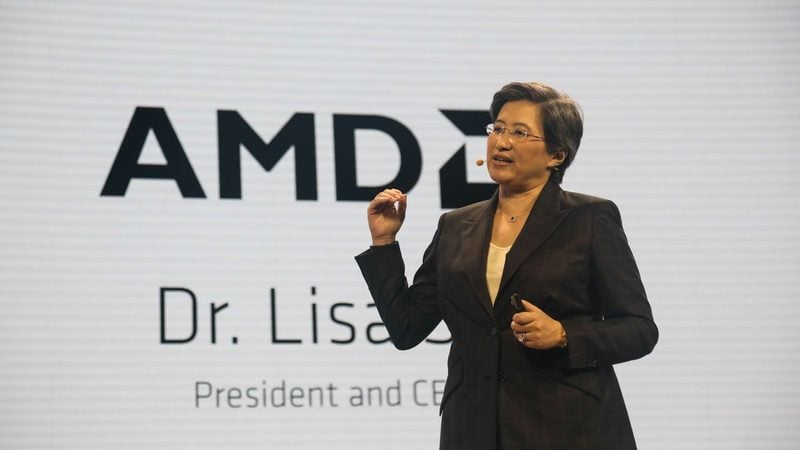
AMD CEO Lisa Su has described the chipmaker as a "data center first company," highlighting the growing importance of artificial intelligence and enterprise computing to its business.
The statement, made during a recent interview with Yahoo Finance, has raised questions about AMD's long term commitment to consumer processors and graphics cards.
However, the company has not announced plans to discontinue its Ryzen CPUs or Radeon GPUs. Its recent product decisions suggest that consumer hardware remains an active part of its business, even as data center operations become a greater priority.
The comments come as AI infrastructure spending continues to increase demand for processors, memory and other semiconductor components.
AMD's Data Center Business Has Become Its Largest Revenue Source
AMD has supplied processors and accelerators to enterprise customers for years through its EPYC server CPUs and Instinct AI products.
Lisa Su previously described AMD as a data center company during a financial conference in 2024, indicating that the latest statement is consistent with the company's established strategy.
What has changed is the financial importance of that business.
According to the report, AMD's data center revenue surpassed its consumer and client revenue in the second quarter of 2026.
This shift explains why management increasingly emphasizes enterprise computing when discussing future growth with investors.
AI companies and cloud providers are spending heavily on computing infrastructure, creating substantial opportunities for chip manufacturers.
At the same time, strong demand from data centers has contributed to concerns about component availability and rising prices in consumer markets.
Ryzen and Radeon Development Continues Despite AI Focus
AMD has continued investing in consumer products while expanding its enterprise business.
Recent developments include new Ryzen processors with 3D V-Cache technology, continued support for its AM4 desktop platform and improvements to FidelityFX Super Resolution.
The company has also expanded FSR support to additional gaming hardware, including Xbox consoles and handheld devices.
Its ongoing partnership with Microsoft includes plans to supply technology for the upcoming Xbox Helix console.
These activities indicate that gaming remains commercially relevant to AMD.
Ryzen processors and Radeon graphics cards continue generating substantial revenue, giving the company financial reasons to maintain its position in consumer markets.
However, future investment decisions could increasingly favor enterprise products if AI demand continues growing.
That raises questions about how AMD will distribute engineering resources, manufacturing capacity and research spending between its different businesses.
For now, Su's statement signals a stronger financial emphasis on data centers rather than a confirmed withdrawal from gaming hardware.
AMD's future processor and graphics card releases will provide a clearer indication of how effectively it can balance enterprise growth with its established consumer business.

Discussion (0)
Be the first to comment.