



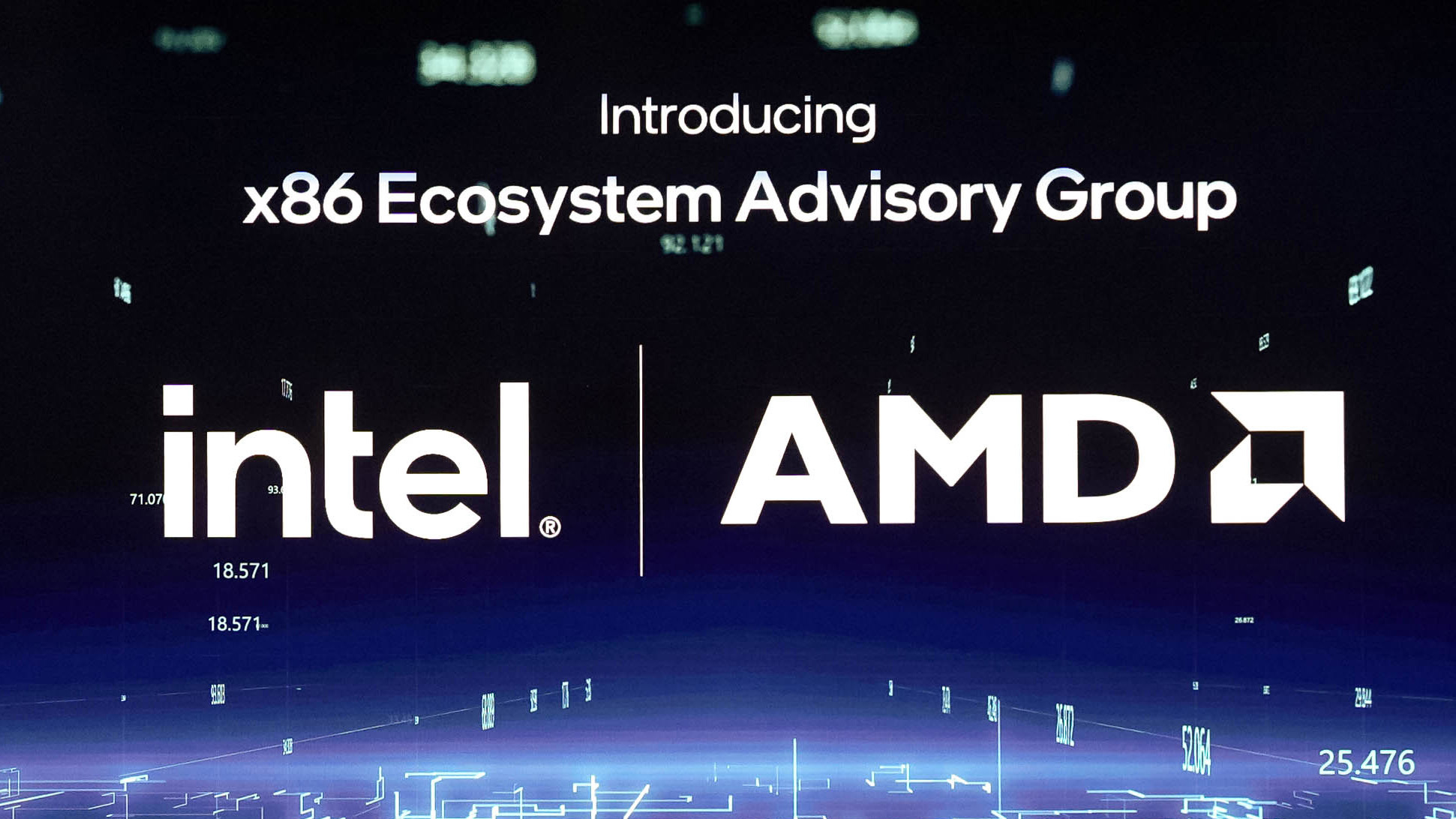
AMD and Intel are usually rivals, but both companies know that x86 needs a clearer plan for the AI era. Their work on ACE, or AI Compute Extensions, is part of that effort. The goal is to bring a standard matrix acceleration system to x86 processors, making AI workloads faster and easier to support across different chips.
ACE is not a random feature from one company. It comes from the x86 Ecosystem Advisory Group, where AMD and Intel have been working together to keep the x86 platform more unified. The group previously focused on features such as FRED, AVX10, ChkTag, and ACE. Now, the ACE whitepaper gives a clearer look at how the two companies want to improve AI performance on x86 hardware.
AMD and Intel are trying to make AI acceleration on x86 more standard instead of leaving developers to support many separate paths
The big idea behind ACE is matrix multiplication. This is a core part of AI workloads, including neural networks and large language models. Current SIMD extensions such as AVX10 can handle these tasks, but they are not always dense or scalable enough for modern AI needs.
ACE is designed to solve that by adding matrix acceleration that works closely with AVX10. That is important because developers can reuse existing AVX10 work instead of starting from zero. It also means the same general approach could scale across many types of x86 systems, from laptops to high-performance servers.
This matters because AI acceleration is often tied to special hardware. GPUs, NPUs, and other accelerators are powerful, but using them can add complexity for developers. ACE gives x86 CPUs a more direct way to handle some AI work without always sending tasks to separate hardware.
| ACE feature | Why it matters |
|---|---|
| Matrix acceleration | Helps speed up AI and neural network workloads |
| AVX10 integration | Lets developers build on existing x86 optimizations |
| Support for AI data formats | Works with INT8, FP8, MXFP8, MXINT8, and BF16 |
| Outer product operation | Offers much higher compute density than regular AVX10 multiply-accumulate work |
| Cross-platform design | Can scale from consumer PCs to supercomputers |
One of the strongest claims in the whitepaper is that ACE’s outer product operation can offer a 16x compute density benefit over an equivalent AVX10 multiply-accumulate operation while using the same number of input vectors. That does not automatically mean every AI app will become 16 times faster, but it shows why AMD and Intel see ACE as a major step for matrix-heavy workloads.
Software support will be just as important as the hardware. ACE is expected to be used in deep learning and high-performance computing libraries, Python-based tools like NumPy and SciPy, and machine learning frameworks such as PyTorch and TensorFlow. That kind of support is needed if ACE is going to matter outside technical demos.
The partnership also says something bigger about x86. ARM, custom AI chips, and GPU-based computing are all growing fast. If AMD and Intel keep building separate and incompatible solutions, developers may have less reason to stay loyal to x86. A shared standard helps reduce that risk.
This does not mean x86 CPUs will replace GPUs for large AI training jobs. That is not the point. Instead, ACE could make CPUs much better at handling AI-related tasks directly, especially where flexibility, compatibility, and easy deployment matter.
For users, the benefits may not appear overnight. ACE needs hardware support, compiler support, software libraries, and real applications before it becomes visible in daily use. But for the future of x86, this is an important move. AMD and Intel are not only competing with each other anymore. They are also trying to protect the wider platform they both depend on.

Discussion (0)
Be the first to comment.