




Global foundry revenue rose 3.7 percent in the first quarter as strong demand for AI chips helped offset the usual seasonal slowdown in smartphones. The increase shows how much the semiconductor market is now being shaped by AI hardware, high performance computing, and supply chain demand from PCs, notebooks, and consumer electronics.
The first quarter is normally weaker for foundries because smartphone demand slows after the major product cycle from the previous year. Large phone makers usually place heavier chip orders ahead of new device launches later in the year. Even with that seasonal weakness, the top 10 foundries still posted sequential revenue growth, helped mainly by AI related demand and stronger orders from other electronics categories.
The bigger concern is what happens next. As utilization improves across some manufacturing nodes, wafer prices may rise later this year. That means companies buying chips from foundries could face higher costs, and those costs may eventually reach customers through more expensive PCs, AI devices, phones, servers, and other hardware.
AI demand helped foundries avoid a weaker quarter
Foundries benefited from strong demand for AI high performance computing products during the first quarter. AI server GPUs, AI CPUs, XPUs, and related accelerator products require advanced manufacturing capacity, and that demand remains strong even when other parts of the market slow down.
The consumer electronics supply chain also helped. Demand from television, PC, and notebook makers supported higher foundry revenue, adding another layer of growth beyond AI.
| Market factor | Impact on foundries |
|---|---|
| AI HPC demand | Helped drive first quarter revenue growth |
| Smartphone slowdown | Created seasonal weakness |
| PC and notebook orders | Supported foundry utilization |
| TV supply chain demand | Added revenue support |
| Higher utilization | Could lead to higher wafer prices |
| Memory price pressure | Pushed some PC makers to pull orders forward |
This mix gave the foundry industry a stronger start to the year than expected, even though smartphone demand remained soft.
TSMC remains the biggest winner from AI chip demand
TSMC continues to benefit the most from the AI boom. Its advanced manufacturing capacity is critical for companies building high end AI chips, server GPUs, and custom processors. As demand for those products grows, TSMC’s position becomes even stronger.
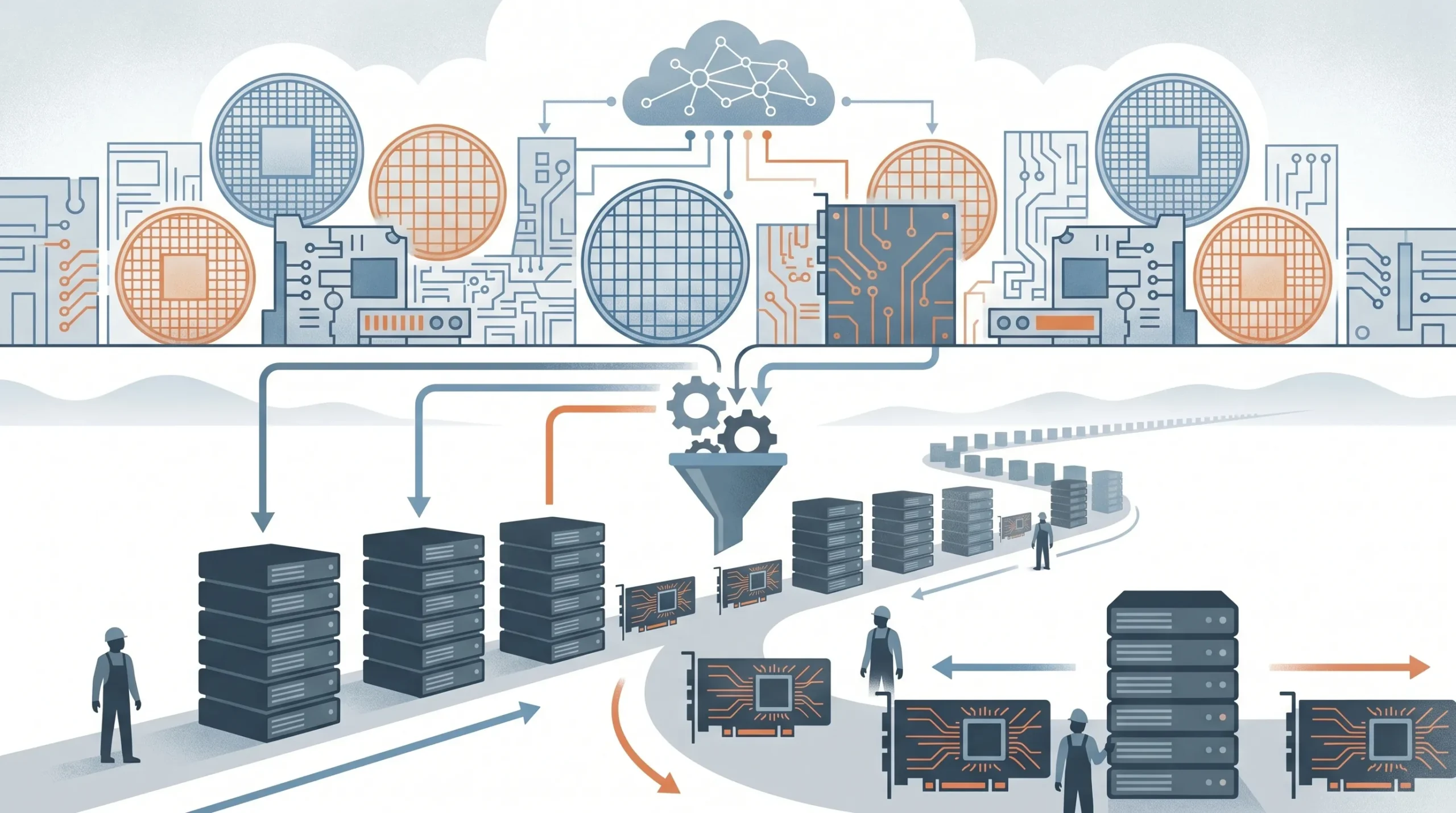
The company reportedly gained market share in the first quarter, making it the only major foundry in the top group to improve its share during the period. That is a sign of how much advanced node demand is favoring TSMC.
Samsung and SMIC also benefited from demand in PCs, notebooks, and televisions, but the smartphone slowdown limited their momentum. TSMC’s stronger exposure to high end AI hardware gave it an advantage.
Wafer prices could rise as utilization improves
The next issue for customers is pricing. When foundry utilization rises, chipmakers gain more room to increase wafer prices. TrendForce expects utilization to grow in the second quarter, and that could push wafer pricing higher later in the year.
Some companies may try to place orders early to lock in lower prices before increases arrive. This is especially likely in markets where memory prices are already high and supply planning has become more difficult.
PC makers are already dealing with expensive memory, and higher foundry pricing would add another cost problem. If CPUs, GPUs, AI chips, and other processors become more expensive to manufacture, finished devices may also become harder to price aggressively.
Higher foundry costs may reach consumers
A foundry price increase does not automatically mean every product becomes more expensive overnight. Device pricing depends on contracts, inventory, competition, and how much cost companies are willing to absorb.
But if wafer prices rise across important nodes, hardware makers will eventually have to respond. Some may accept lower margins, while others may pass costs to buyers.
This could affect several product categories:
| Product category | Possible result |
|---|---|
| AI servers | Higher build costs |
| Gaming GPUs | More pricing pressure |
| Laptops | Smaller discounts or higher launch prices |
| Smartphones | Higher premium model costs |
| Desktop CPUs | More pressure on platform pricing |
| Consumer electronics | Higher component costs |
The impact may be strongest in high end products that rely on advanced nodes and expensive packaging.
AI is changing the foundry business cycle
The semiconductor market used to be heavily tied to smartphones, PCs, and general consumer electronics cycles. AI has changed that balance. Even when phone demand slows, AI infrastructure spending can keep foundry orders strong.
That is good for foundry revenue, but it creates pressure elsewhere. Advanced manufacturing capacity is limited, and AI customers are competing for the same production resources used by other industries.
The result is a market where foundries can grow even in a seasonally weaker quarter, while hardware makers face rising costs and tighter planning windows.
For consumers, the concern is simple. If AI demand keeps pushing utilization higher and wafer prices rise later this year, the next wave of PCs, GPUs, AI hardware, phones, and electronics could become more expensive. The first quarter growth shows that foundries are benefiting from the AI boom, but the cost of that boom may not stay inside the chip industry for long.



Discussion (0)
Be the first to comment.