



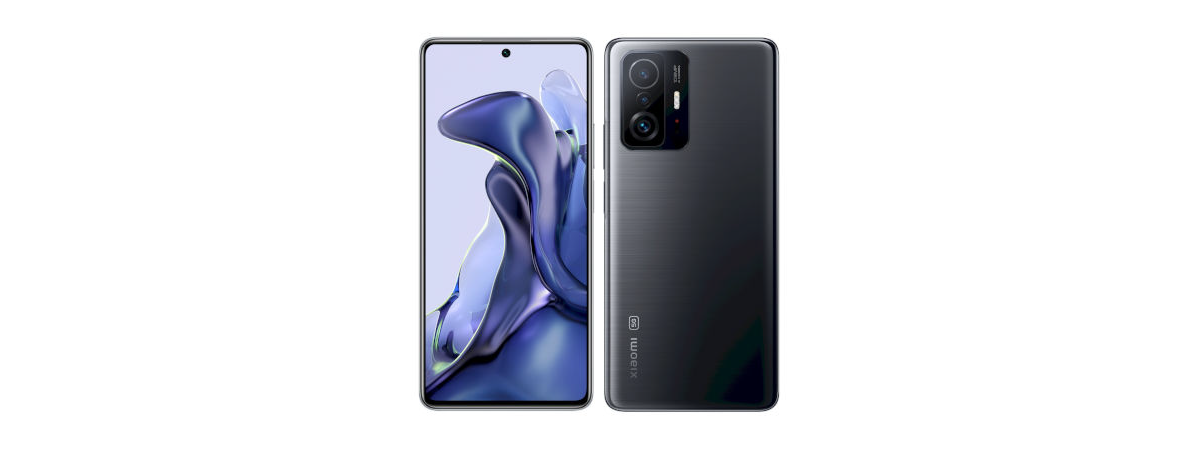
With Huawei out of the Android market for a while now, Xiaomi has quickly stepped up and filled the market with smartphones and tablets that are increasingly interesting. The latest smartphone in the Xiaomi 11 range, the Xiaomi 11T, is a mid-range phone with promising specs, set to debut at a competitive price compared to the likes of Samsung A52 and OnePlus Nord 2 5G. In this review, we’ll put the Xiaomi 11T through its paces and see if it’s as good in reality as it is on paper:
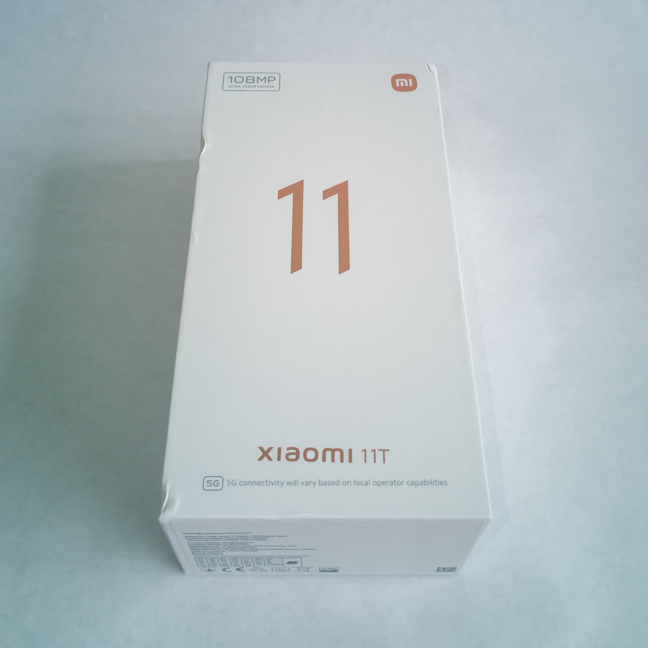
 The box Xiaomi 11T comes in
The package contains the smartphone, the charger, a USB-C cable, a transparent silicon case, the SIM ejection tool, and the manuals. Since the phone has no audio jack, there is no headset included.
The box Xiaomi 11T comes in
The package contains the smartphone, the charger, a USB-C cable, a transparent silicon case, the SIM ejection tool, and the manuals. Since the phone has no audio jack, there is no headset included.
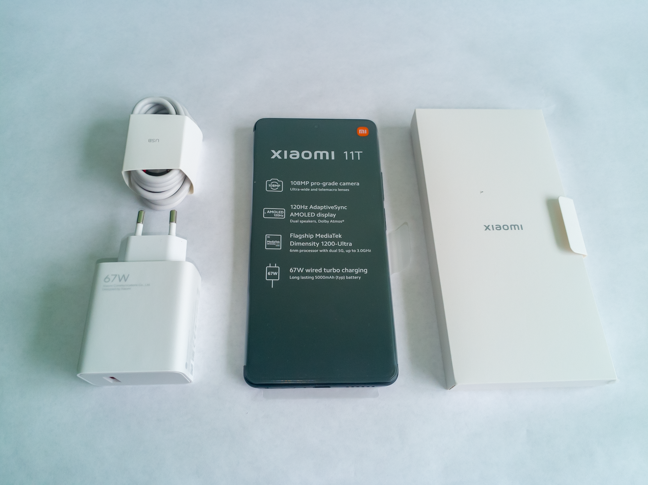
 The package contains the smartphone, the charger, the cable and the manuals
The relatively large charger is rated at 67W, a step down from the Xiaomi 11T Pro, which has a charger rated for 120W! However, as we’ll see later, the charging times are excellent nonetheless.
The package contains the smartphone, the charger, the cable and the manuals
The relatively large charger is rated at 67W, a step down from the Xiaomi 11T Pro, which has a charger rated for 120W! However, as we’ll see later, the charging times are excellent nonetheless.
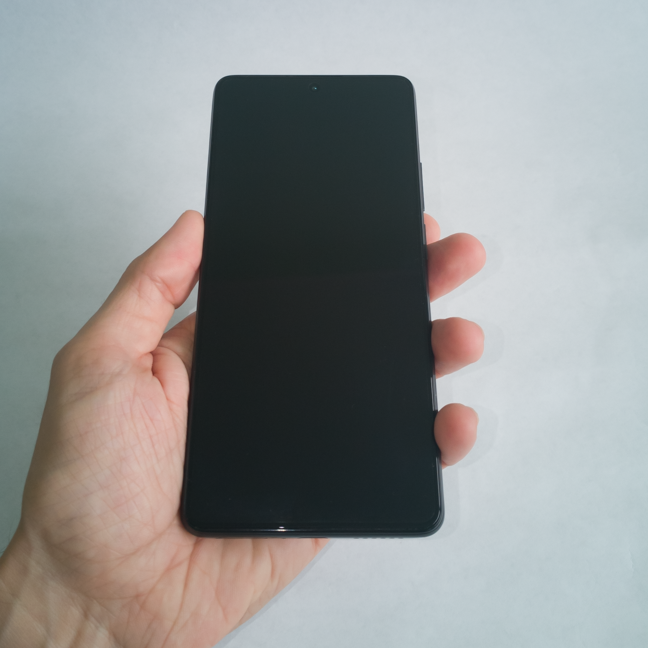 The front of the Xiaomi 11T
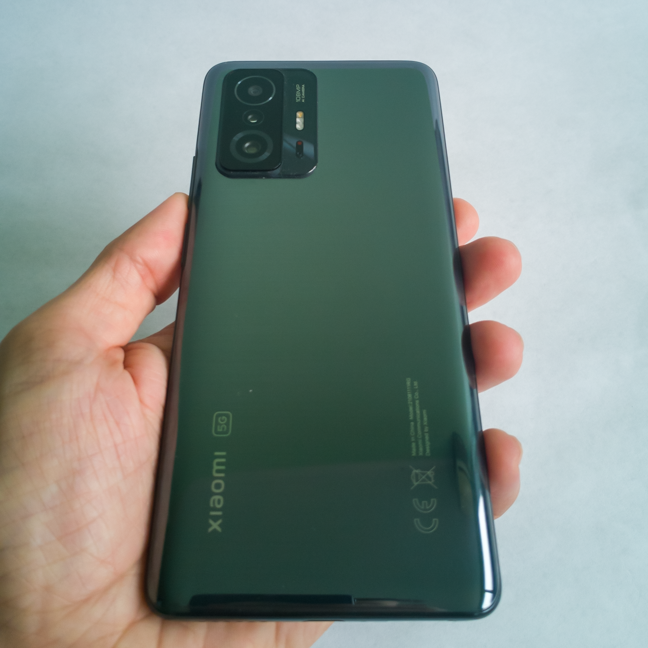
The back of the smartphone is glass-coated, with a brushed metal look. While the phone is guaranteed to retain smudges and fingerprints, it is also easy to clean. The camera cluster protrudes about 1 mm (0.04 inches) from the back, with the three-LED flash and one of the microphones right next to them. Finally, we have the Xiaomi logo and a reminder that the smartphone has 5G capabilities.
The front of the Xiaomi 11T
The back of the smartphone is glass-coated, with a brushed metal look. While the phone is guaranteed to retain smudges and fingerprints, it is also easy to clean. The camera cluster protrudes about 1 mm (0.04 inches) from the back, with the three-LED flash and one of the microphones right next to them. Finally, we have the Xiaomi logo and a reminder that the smartphone has 5G capabilities.
 The back of the Xiaomi 11T
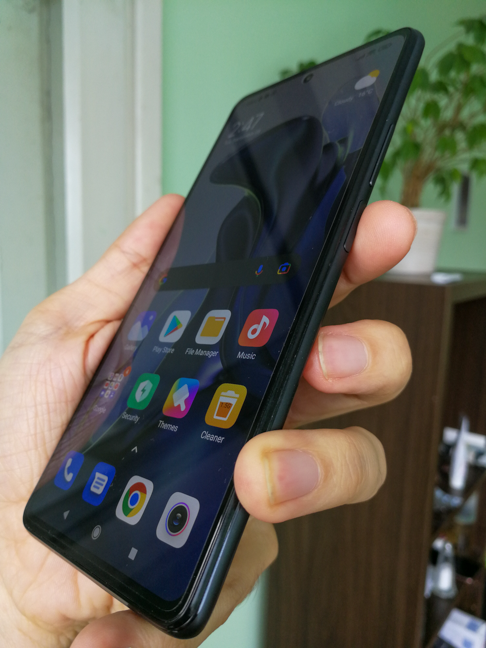
Moving on to the sides, the left edge of the phone is completely devoid of any features, while the right side houses the volume rocker and the power button. The fingerprint sensor is integrated in the power button, a very accessible placement… unless you’re left-handed.
The back of the Xiaomi 11T
Moving on to the sides, the left edge of the phone is completely devoid of any features, while the right side houses the volume rocker and the power button. The fingerprint sensor is integrated in the power button, a very accessible placement… unless you’re left-handed.
 All the buttons are situated on the right side
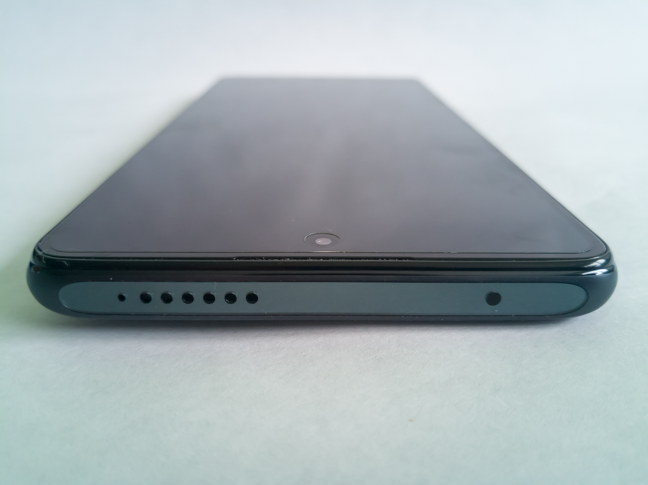
On the top side, you can find the infrared emitter, one of the microphones, and a speaker.
All the buttons are situated on the right side
On the top side, you can find the infrared emitter, one of the microphones, and a speaker.
 The top of the phone, with a speaker, a mic and an IR blaster
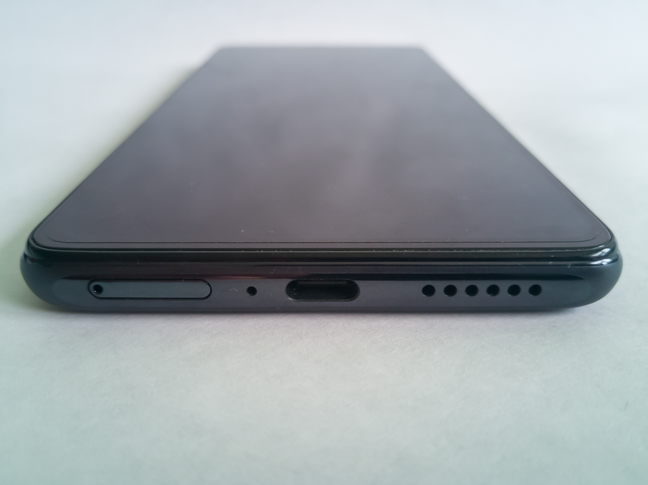
The bottom houses the other speaker, the SIM tray, the charging port, and another microphone. Because the microphone is so close to the SIM tray, you can easily insert the SIM tray ejection tool in the mic hole by mistake, but the mic is protected and cannot be damaged in this way.
The top of the phone, with a speaker, a mic and an IR blaster
The bottom houses the other speaker, the SIM tray, the charging port, and another microphone. Because the microphone is so close to the SIM tray, you can easily insert the SIM tray ejection tool in the mic hole by mistake, but the mic is protected and cannot be damaged in this way.
 The bottom part of the Xiaomi 11T is pretty crowded
The Xiaomi 11T is available in three colors: Meteorite gray (the device in this test), Moonlight White, and Celestial Blue. You can see them in the picture below:
The bottom part of the Xiaomi 11T is pretty crowded
The Xiaomi 11T is available in three colors: Meteorite gray (the device in this test), Moonlight White, and Celestial Blue. You can see them in the picture below:

 The colors available at launch for the Xiaomi 11T
Thanks to its rounded edges and a thickness of just 0.35 inches (8.8 mm), the Xiaomi feels smaller than it is, but the design can only do so much to hide its size. The materials are good-looking and pleasant to touch, and while the glass back is slippery (especially when you place the phone on cloth surfaces), the painted aluminum frame compensates with a good grip.
The Xiaomi 11T is a good-looking smartphone, albeit very similar in design with other devices from the Xiaomi line-up.
The colors available at launch for the Xiaomi 11T
Thanks to its rounded edges and a thickness of just 0.35 inches (8.8 mm), the Xiaomi feels smaller than it is, but the design can only do so much to hide its size. The materials are good-looking and pleasant to touch, and while the glass back is slippery (especially when you place the phone on cloth surfaces), the painted aluminum frame compensates with a good grip.
The Xiaomi 11T is a good-looking smartphone, albeit very similar in design with other devices from the Xiaomi line-up.
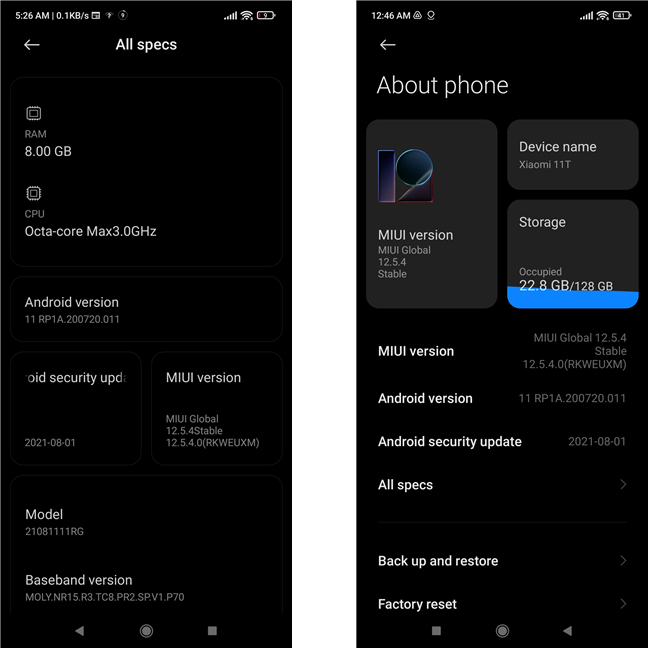 The Xiaomi 11T specs
The operating system occupies around 14 GB, with other files occupying another 8 GB. There is no card slot, so if you’re an app and video hoarder (like I am), you might run into storage space issues down the line. There is dual SIM support, although this will vary depending on the region.
The Xiaomi 11T specs
The operating system occupies around 14 GB, with other files occupying another 8 GB. There is no card slot, so if you’re an app and video hoarder (like I am), you might run into storage space issues down the line. There is dual SIM support, although this will vary depending on the region.
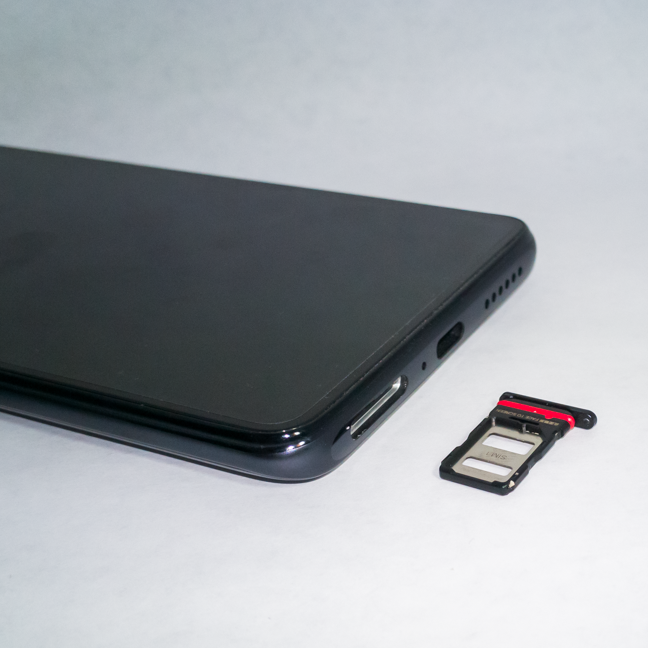 The dual SIM tray of the Xiaomi 11T
The AMOLED screen is identical to the one fitted on its more expensive brother, the Xiaomi 11T Pro. It has a resolution of 1080 x 2400 pixels, and a 395 ppi density. More importantly, it is capable of reproducing 1 billion colors at up to 120 Hz refresh rate, with HDR10+ support and an advertised maximum brightness of 1000 nits.
The dual SIM tray of the Xiaomi 11T
The AMOLED screen is identical to the one fitted on its more expensive brother, the Xiaomi 11T Pro. It has a resolution of 1080 x 2400 pixels, and a 395 ppi density. More importantly, it is capable of reproducing 1 billion colors at up to 120 Hz refresh rate, with HDR10+ support and an advertised maximum brightness of 1000 nits.
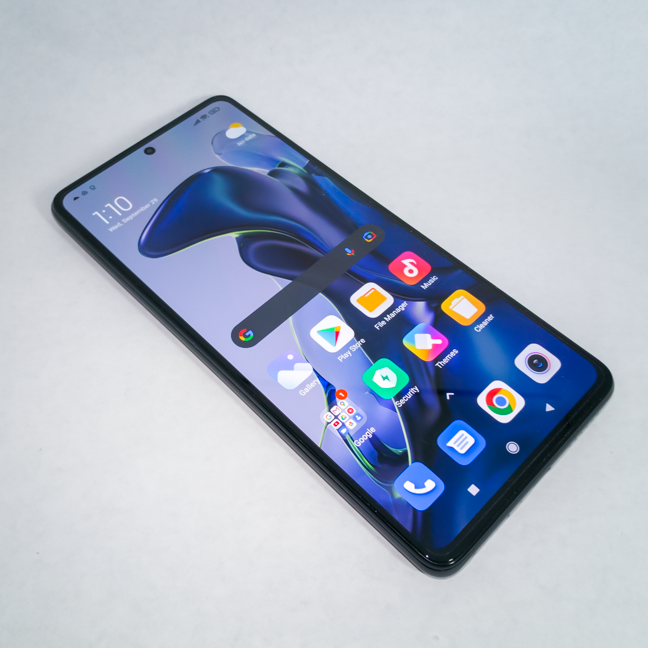 The screen fitted on the Xiaomi 11T is excellent
Complementing the amazing screen, the smartphone has two stereo speakers with Dolby Atmos support.
If you’re wondering about its photo/video capabilities, Xiaomi 11T has three cameras on the back:
The screen fitted on the Xiaomi 11T is excellent
Complementing the amazing screen, the smartphone has two stereo speakers with Dolby Atmos support.
If you’re wondering about its photo/video capabilities, Xiaomi 11T has three cameras on the back:
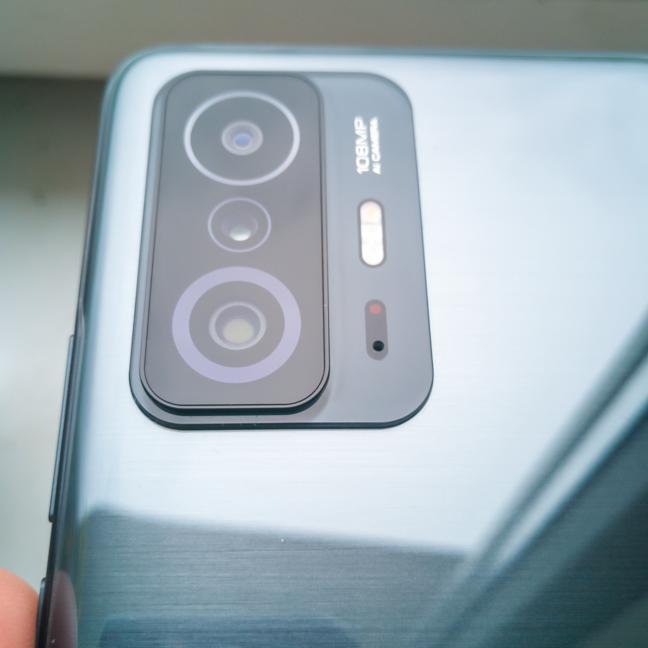 The camera cluster on the back of the Xiaomi 11T
The touchscreen records finger movements at a blazingly fast 480 Hz (it updates the position of the finger 480 times in a second, or once every roughly 2 milliseconds!). This is especially useful in high precision apps or high speed games.
The non-removable battery is rated at 5000 mAh and charges very quickly with the provided 67W charger: Xiaomi advertises a 2% to 100% charge in 36 minutes.
The camera cluster on the back of the Xiaomi 11T
The touchscreen records finger movements at a blazingly fast 480 Hz (it updates the position of the finger 480 times in a second, or once every roughly 2 milliseconds!). This is especially useful in high precision apps or high speed games.
The non-removable battery is rated at 5000 mAh and charges very quickly with the provided 67W charger: Xiaomi advertises a 2% to 100% charge in 36 minutes.
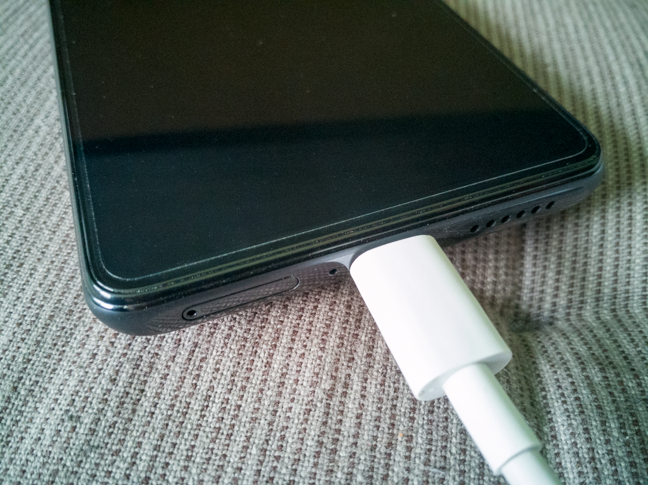 It only takes 36 minutes to fully charge the Xiaomi 11T with the included charger
Connectivity is brilliant: the Xiaomi 11T has Wi-Fi 6 support, Bluetooth 5.2, GPS, and NFC. The smartphone also has an infrared port. Beside the fingerprint sensor situated in the power button, the phone also has an accelerometer, a gyro, a proximity sensor, and a compass.
For a complete list of technical specifications, visit this webpage: Xiaomi 11T - Xiaomi Global Official.
Now let’s get down and dirty and see how the smartphone performs, how good the cameras are, and evaluate the overall usability. All this, on the second page of our review.
It only takes 36 minutes to fully charge the Xiaomi 11T with the included charger
Connectivity is brilliant: the Xiaomi 11T has Wi-Fi 6 support, Bluetooth 5.2, GPS, and NFC. The smartphone also has an infrared port. Beside the fingerprint sensor situated in the power button, the phone also has an accelerometer, a gyro, a proximity sensor, and a compass.
For a complete list of technical specifications, visit this webpage: Xiaomi 11T - Xiaomi Global Official.
Now let’s get down and dirty and see how the smartphone performs, how good the cameras are, and evaluate the overall usability. All this, on the second page of our review.
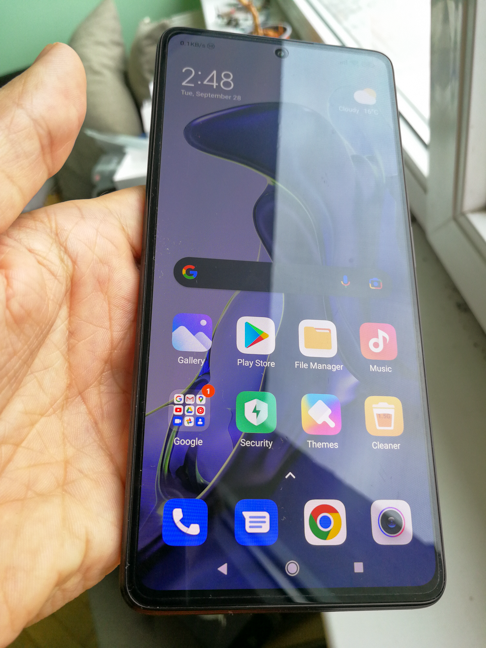 The screen is perfectly usable even in bright sunlight
Naturally, with such an amazing screen, we proceeded to play some high-quality videos. That’s when the quality of the speakers became apparent. The stereo speakers are loud and reproduce mid and low frequencies better than even some Bluetooth speakers. The bottom speaker is louder than the one on the top, but the sound setup compensates well for this when playing music or videos.
The next thing we noticed was the weight. At 7.16 oz (203 grams), the Xiaomi 11T is a heavyweight in more ways than one. While size may not be a problem if you have large hands, the weight makes the smartphone noticeable even when resting in your pocket.
Moving on to the software, Xiaomi 11T has a few bloatware apps that constantly nag you, like the Cleaner app. The phone constantly pushes notifications regarding App lock or Dual apps, while the Security app switches focus from other applications when it starts scanning a newly installed app. Not cool.
The screen is perfectly usable even in bright sunlight
Naturally, with such an amazing screen, we proceeded to play some high-quality videos. That’s when the quality of the speakers became apparent. The stereo speakers are loud and reproduce mid and low frequencies better than even some Bluetooth speakers. The bottom speaker is louder than the one on the top, but the sound setup compensates well for this when playing music or videos.
The next thing we noticed was the weight. At 7.16 oz (203 grams), the Xiaomi 11T is a heavyweight in more ways than one. While size may not be a problem if you have large hands, the weight makes the smartphone noticeable even when resting in your pocket.
Moving on to the software, Xiaomi 11T has a few bloatware apps that constantly nag you, like the Cleaner app. The phone constantly pushes notifications regarding App lock or Dual apps, while the Security app switches focus from other applications when it starts scanning a newly installed app. Not cool.
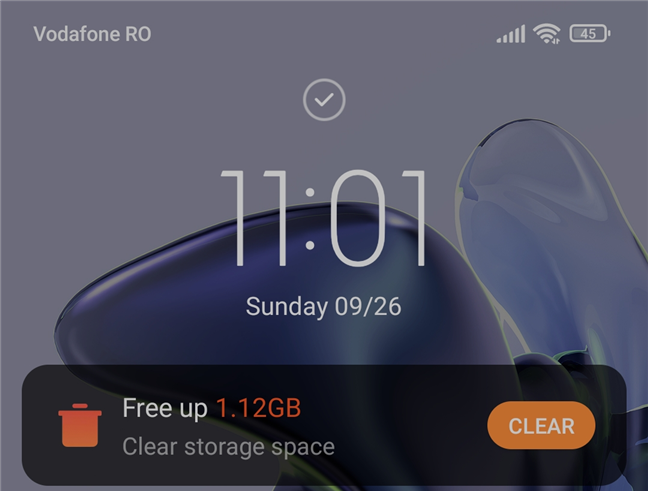
 The bloatware apps on the Xiaomi 11T constantly push notifications
Other than that, the operating system is good, with many personalization features, the menu animations look superb, especially with the 120 Hz refresh rate, and thanks to the capable chipset, the device feels fast and extremely responsive.
We played several demanding games, including Asphalt 9 and Shadow Fight 3, and the performance was great. Furthermore, the device did not get hot even after playing for over one hour.
The bloatware apps on the Xiaomi 11T constantly push notifications
Other than that, the operating system is good, with many personalization features, the menu animations look superb, especially with the 120 Hz refresh rate, and thanks to the capable chipset, the device feels fast and extremely responsive.
We played several demanding games, including Asphalt 9 and Shadow Fight 3, and the performance was great. Furthermore, the device did not get hot even after playing for over one hour.
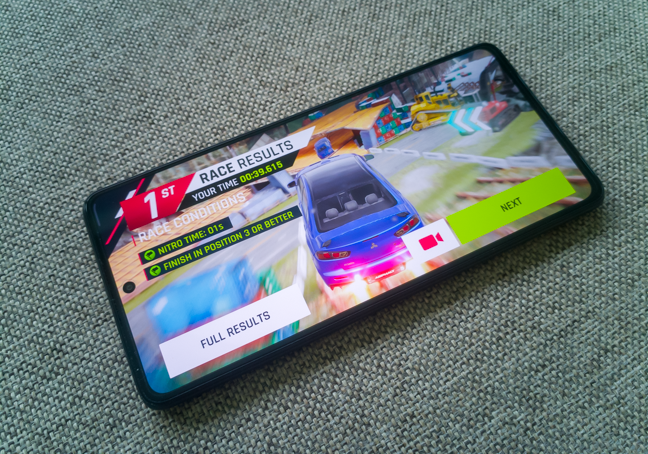
 The gaming experience on the Xiaomi 11T is great
Connectivity was great, with one notable exception: we had trouble accessing the internet when the smartphone was connected to our Wi-Fi 6-enabled router. The connection worked just fine at first, but after waking the smartphone after an hour or so in standby, we were greeted by a message saying that the Wi-Fi network had no internet access. The issue was resolved by disabling and re-enabling Wi-Fi on the smartphone.
The gaming experience on the Xiaomi 11T is great
Connectivity was great, with one notable exception: we had trouble accessing the internet when the smartphone was connected to our Wi-Fi 6-enabled router. The connection worked just fine at first, but after waking the smartphone after an hour or so in standby, we were greeted by a message saying that the Wi-Fi network had no internet access. The issue was resolved by disabling and re-enabling Wi-Fi on the smartphone.
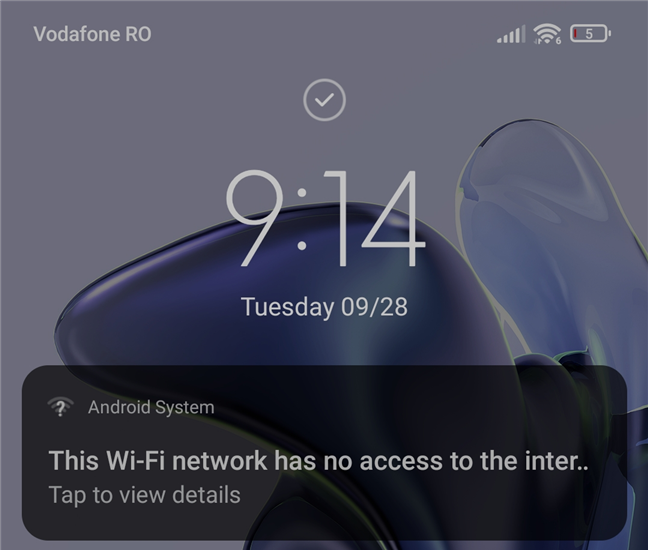
 Intermittent internet access when connected to Wi-Fi 6 on the Xiaomi 11T
Moving on, the call audio is loud and clear, and the same is true at the other end. We had no issues with calls, although the Phone app was clearly not made with a left-handed user in mind: as opposed to calling a contact in the Favorites list, which only needs one tap anywhere on the contact’s icon, calling from the Recents tab requires a precise tap on the icon that looks like a phone. The problem is, the icon is relatively small and located on the right side of the screen, which, combined with the size of the device, makes calling unnecessarily finicky.
Intermittent internet access when connected to Wi-Fi 6 on the Xiaomi 11T
Moving on, the call audio is loud and clear, and the same is true at the other end. We had no issues with calls, although the Phone app was clearly not made with a left-handed user in mind: as opposed to calling a contact in the Favorites list, which only needs one tap anywhere on the contact’s icon, calling from the Recents tab requires a precise tap on the icon that looks like a phone. The problem is, the icon is relatively small and located on the right side of the screen, which, combined with the size of the device, makes calling unnecessarily finicky.
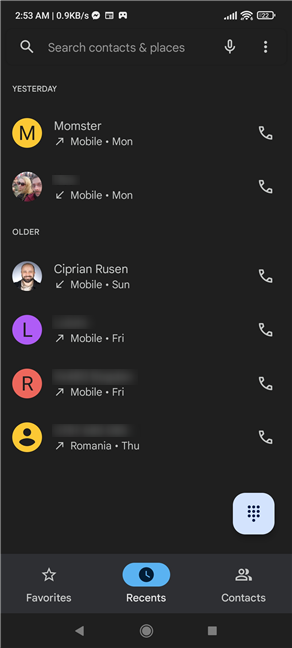
 The Phone app is not made for left-handed use
When the smartphone is used in the right hand, the fingerprint sensor is accurate and fast to unlock the device. However, when holding it in the left hand, it sometimes failed to recognize the fingerprint, possibly due to the wider range of positions the fingers can be in on the power button. The face unlock is precise and equally fast in unlocking the Xiaomi 11T.
The battery life is impressive. We had no way of testing the device’s 5G capability (it might have decreased the battery runtime), but with a 4G SIM inserted, a 120 Hz screen refresh rate and always-on Wi-Fi, the battery lasted two days. We can safely say that even with heavier use and 5G active, the battery can get you through a day without problems. That’s unless you shoot a lot of videos, which drains the battery extremely quickly. Charging the smartphone took roughly 42 minutes (from 0% to full). Have a look at the charging chart below.
The Phone app is not made for left-handed use
When the smartphone is used in the right hand, the fingerprint sensor is accurate and fast to unlock the device. However, when holding it in the left hand, it sometimes failed to recognize the fingerprint, possibly due to the wider range of positions the fingers can be in on the power button. The face unlock is precise and equally fast in unlocking the Xiaomi 11T.
The battery life is impressive. We had no way of testing the device’s 5G capability (it might have decreased the battery runtime), but with a 4G SIM inserted, a 120 Hz screen refresh rate and always-on Wi-Fi, the battery lasted two days. We can safely say that even with heavier use and 5G active, the battery can get you through a day without problems. That’s unless you shoot a lot of videos, which drains the battery extremely quickly. Charging the smartphone took roughly 42 minutes (from 0% to full). Have a look at the charging chart below.
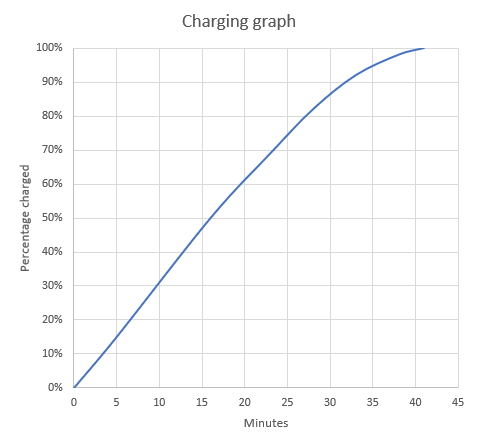
 Charging time graph on the Xiaomi 11T
As you can see, we got to 50% in around 15 minutes, and honestly, this might change the way you look at charging. Instead of leaving the smartphone overnight or for extended periods with the charger connected, you can just top-up the battery in quick charging sessions. You insert the charger at, let’s say, 30%, and in 15 minutes you’re at 75%.
Overall, the Xiaomi 11T was easy to configure and live with. The multimedia capabilities of the device are quite impressive, the connectivity is great, as is the battery life.
Charging time graph on the Xiaomi 11T
As you can see, we got to 50% in around 15 minutes, and honestly, this might change the way you look at charging. Instead of leaving the smartphone overnight or for extended periods with the charger connected, you can just top-up the battery in quick charging sessions. You insert the charger at, let’s say, 30%, and in 15 minutes you’re at 75%.
Overall, the Xiaomi 11T was easy to configure and live with. The multimedia capabilities of the device are quite impressive, the connectivity is great, as is the battery life.
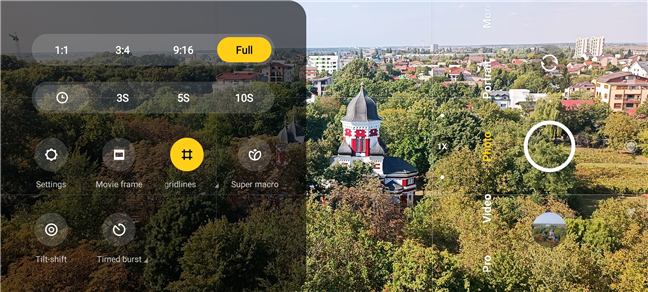
 The Super macro toggle is located in the hamburger menu
From the buttons on the screen, you can toggle HDR, AI Camera, the filters menu, the flash menu and Google Lens. There are four modes available on the main camera screen (Pro, Video, Photo, Portrait) with quite a few others available if you tap on More.
The Super macro toggle is located in the hamburger menu
From the buttons on the screen, you can toggle HDR, AI Camera, the filters menu, the flash menu and Google Lens. There are four modes available on the main camera screen (Pro, Video, Photo, Portrait) with quite a few others available if you tap on More.
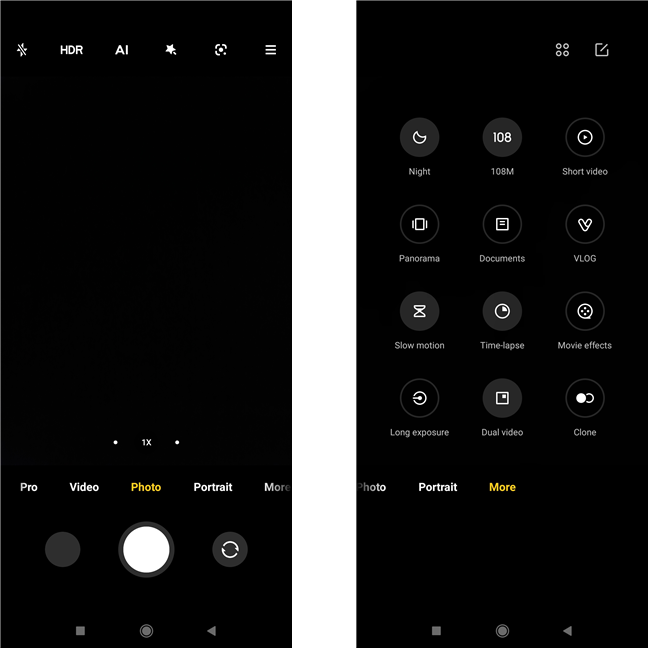 The camera interface is relatively easy to use
The main camera takes 12 MP photos by default, combining each 9 pixels from the 108 MP sensor into one in the photo. In good light, the results are excellent, with good dynamic range and level of detail. When zooming in, there is a bit of overprocessing, but it’s invisible at 1x zoom.
The camera interface is relatively easy to use
The main camera takes 12 MP photos by default, combining each 9 pixels from the 108 MP sensor into one in the photo. In good light, the results are excellent, with good dynamic range and level of detail. When zooming in, there is a bit of overprocessing, but it’s invisible at 1x zoom.
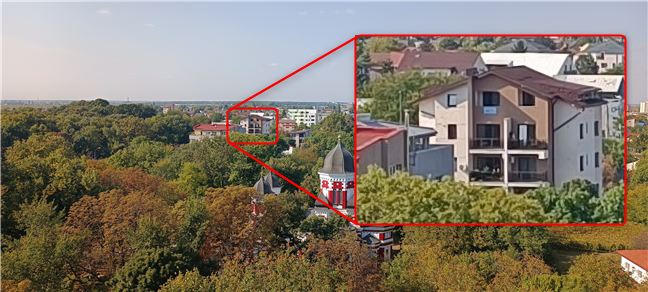 A standard 12 MP picture
You have the option to take photos at full 108MP resolution, an interesting alternative if you want to bypass the processing present in the 12MP photos. Compared to the 12MP picture above, the level of detail is clearly higher, although this would only be visible at very high zoom levels.
A standard 12 MP picture
You have the option to take photos at full 108MP resolution, an interesting alternative if you want to bypass the processing present in the 12MP photos. Compared to the 12MP picture above, the level of detail is clearly higher, although this would only be visible at very high zoom levels.
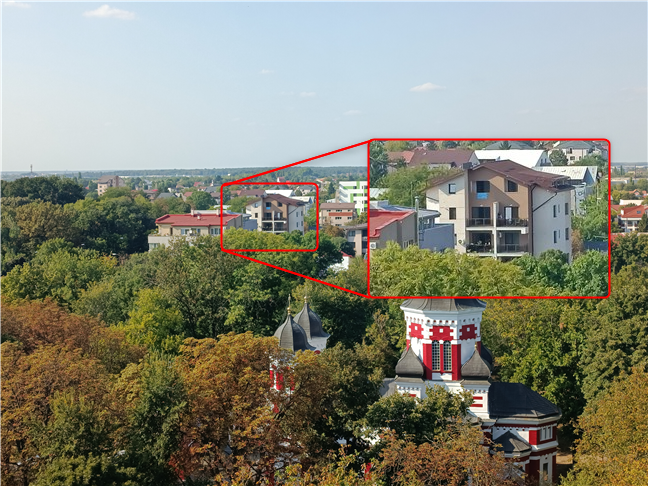
 The 108MP pictures taken by the Xiaomi 11T are very detailed
HDR is subtle, but visible, and the electronic stabilization does its job. We would have loved an optical stabilization system, it would have given the camera that extra edge it needed to match flagship quality. You can save the files in High Efficiency Image File Format (HEIF), and even in RAW format when in Pro mode.
The wide-angle camera is clearly inferior in terms of picture quality, but the pictures are not bad. There is a noticeable amount of distortion around the edges, but that’s to be expected from a wide-angle lens.
The dedicated macro camera is a big plus for the Xiaomi 11T, and can get really close (1.2 inch or 3 cm) to the subject. The level of detail is impressive, although the autofocus is sometimes slow to react.
The 108MP pictures taken by the Xiaomi 11T are very detailed
HDR is subtle, but visible, and the electronic stabilization does its job. We would have loved an optical stabilization system, it would have given the camera that extra edge it needed to match flagship quality. You can save the files in High Efficiency Image File Format (HEIF), and even in RAW format when in Pro mode.
The wide-angle camera is clearly inferior in terms of picture quality, but the pictures are not bad. There is a noticeable amount of distortion around the edges, but that’s to be expected from a wide-angle lens.
The dedicated macro camera is a big plus for the Xiaomi 11T, and can get really close (1.2 inch or 3 cm) to the subject. The level of detail is impressive, although the autofocus is sometimes slow to react.
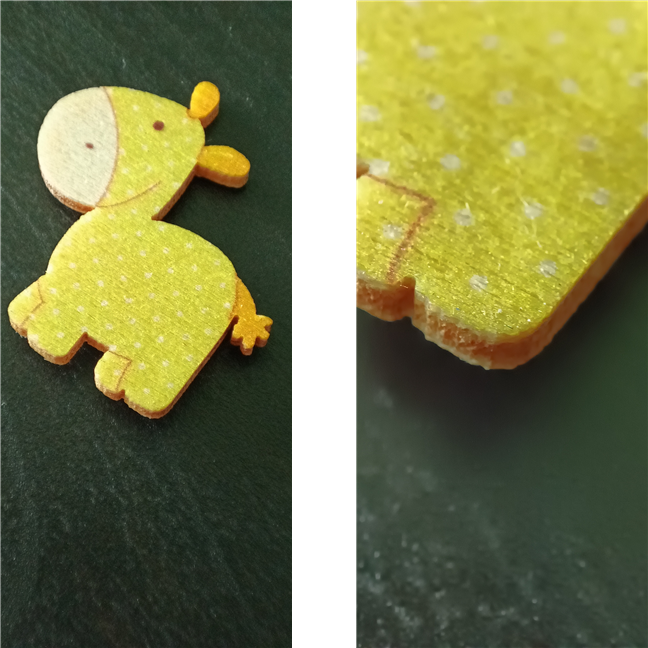 The macro camera can take photos at a distance of 1.2-2.75in from the subject
Of course, there is also a Night Mode, which works brilliantly. We were able to take some stunning photos in relatively low light, with ISO values upwards of 4000. The picture below was taken in total darkness, and for a picture taken by a smartphone camera, it looks very good.
The macro camera can take photos at a distance of 1.2-2.75in from the subject
Of course, there is also a Night Mode, which works brilliantly. We were able to take some stunning photos in relatively low light, with ISO values upwards of 4000. The picture below was taken in total darkness, and for a picture taken by a smartphone camera, it looks very good.
 The Night Mode yields impressive results
Videos are good, with a decent amount of detail and good colors. Below you can see a 1080p video at 30 frames per second (fps), the default mode for the camera. The lack of optical zoom is obvious when zooming in while shooting videos, since you can clearly see the change in quality as the zoom increases:
Videos at 1080p resolution and 60 fps are noticeably smoother, with the same level of detail:
The slow-motion mode works well, although it only records at 720p resolution. The timelapse has variable speed, from 4x to an amazing 1800x. Here’s a video captured at 120x normal speed:
The camera experience on the Xiaomi 11T is good. In most conditions, the pictures and videos look great. Especially at night, the level of resolved detail is particularly impressive. The macro camera is useful if you want to get really close to your tiny subject. Meanwhile, the wide-angle and the selfie cameras are just okay, and we sorely miss optical zoom and stabilization.
The Night Mode yields impressive results
Videos are good, with a decent amount of detail and good colors. Below you can see a 1080p video at 30 frames per second (fps), the default mode for the camera. The lack of optical zoom is obvious when zooming in while shooting videos, since you can clearly see the change in quality as the zoom increases:
Videos at 1080p resolution and 60 fps are noticeably smoother, with the same level of detail:
The slow-motion mode works well, although it only records at 720p resolution. The timelapse has variable speed, from 4x to an amazing 1800x. Here’s a video captured at 120x normal speed:
The camera experience on the Xiaomi 11T is good. In most conditions, the pictures and videos look great. Especially at night, the level of resolved detail is particularly impressive. The macro camera is useful if you want to get really close to your tiny subject. Meanwhile, the wide-angle and the selfie cameras are just okay, and we sorely miss optical zoom and stabilization.
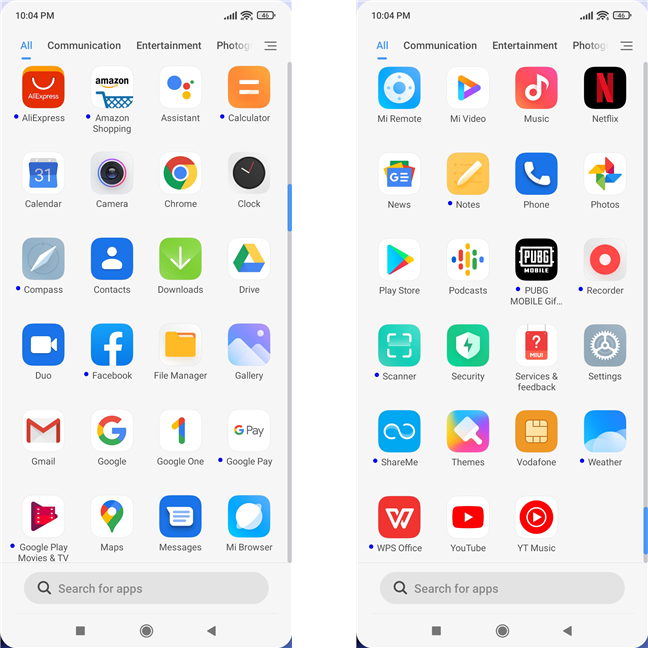 Installed apps on the Xiaomi 11T
Apart from the standard Android and Google apps, the Xiaomi 11T comes with the following preinstalled applications (subject to change depending on region):
Installed apps on the Xiaomi 11T
Apart from the standard Android and Google apps, the Xiaomi 11T comes with the following preinstalled applications (subject to change depending on region):
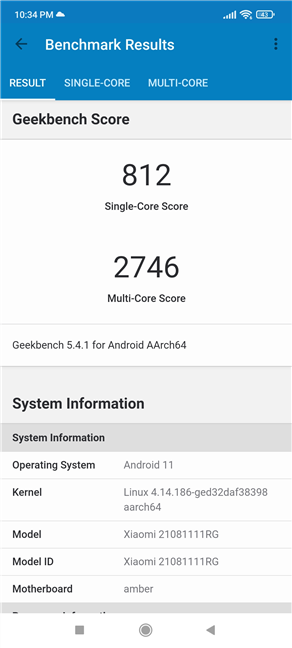 The results of the Xiaomi 11T in Geekbench 5
Next, we used PCMark for Android to test both the performance and the battery life of the Xiaomi 11T. The phone scored 12190 in the Work 3.0 test, a score that is comparable to last year’s flagships.
The results of the Xiaomi 11T in Geekbench 5
Next, we used PCMark for Android to test both the performance and the battery life of the Xiaomi 11T. The phone scored 12190 in the Work 3.0 test, a score that is comparable to last year’s flagships.
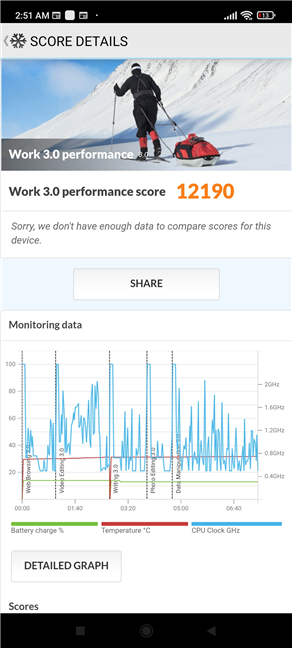 The score of the Xiaomi 11T in PCMark Work 3.0
We tested the graphic capabilities of the Xiaomi 11T using the Sling Shot and Sling Shot Extreme tests from the 3DMark suite, and the results were quite literally off the scale.
The score of the Xiaomi 11T in PCMark Work 3.0
We tested the graphic capabilities of the Xiaomi 11T using the Sling Shot and Sling Shot Extreme tests from the 3DMark suite, and the results were quite literally off the scale.
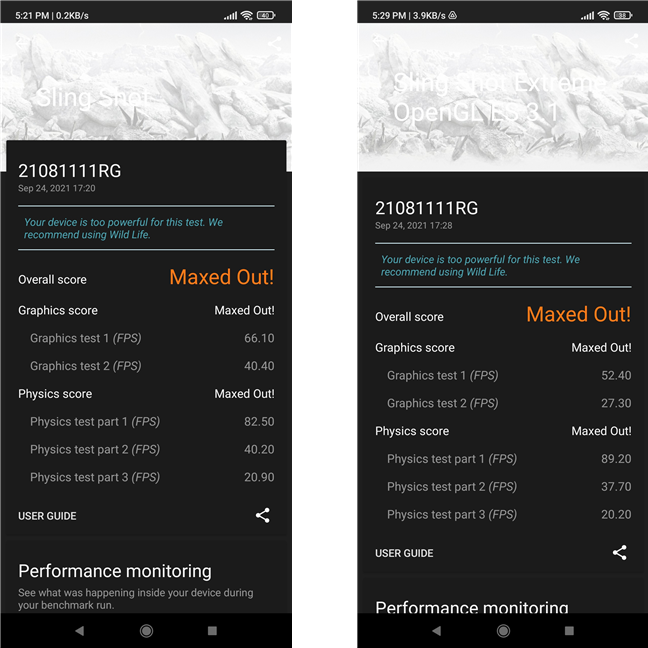 The Sling Shot results of the Xiaomi 11T are great
We also tested the device with the Car Chase and 1080p Car Chase Offscreen tests from GFXBench, and the framerates were again close to those of flagship phones from last year.
The Sling Shot results of the Xiaomi 11T are great
We also tested the device with the Car Chase and 1080p Car Chase Offscreen tests from GFXBench, and the framerates were again close to those of flagship phones from last year.
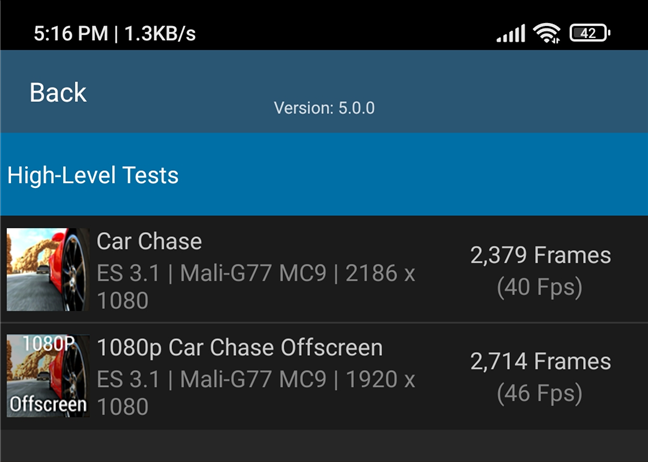
 Running GFXBench produces the expected results
The Work 3.0 battery life test from the PCMark suite was definitely the longest test of this benchmarking session, with a runtime of 11 hours and 29 minutes. It’s not great, compared to the 4500mAh battery of the OnePlus Nord 2 which lasted well over 14 hours, but in real-life conditions, the battery of the Xiaomi 11T performed very well.
Running GFXBench produces the expected results
The Work 3.0 battery life test from the PCMark suite was definitely the longest test of this benchmarking session, with a runtime of 11 hours and 29 minutes. It’s not great, compared to the 4500mAh battery of the OnePlus Nord 2 which lasted well over 14 hours, but in real-life conditions, the battery of the Xiaomi 11T performed very well.
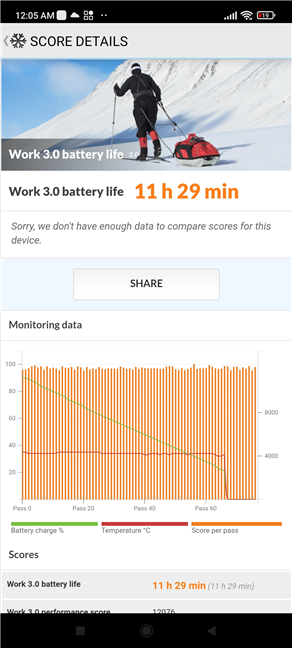 The battery test results are not great
We couldn’t test the 5G speeds, but we did perform a test with Ookla’s Speedtest on a Wi-Fi 6 network with a 1 Gigabit internet connection, and the results were 751 Mbps for download and 781 Mbps for upload.
The battery test results are not great
We couldn’t test the 5G speeds, but we did perform a test with Ookla’s Speedtest on a Wi-Fi 6 network with a 1 Gigabit internet connection, and the results were 751 Mbps for download and 781 Mbps for upload.
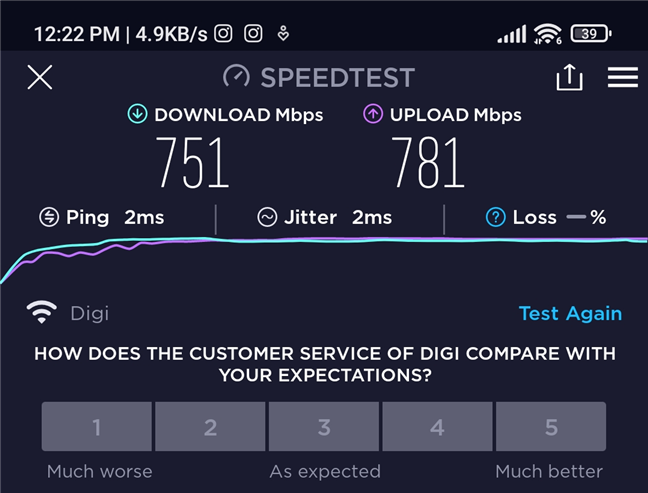
 Xiaomi 11T supports Wi-Fi 6
The Xiaomi 11T performs as expected in the benchmarks, positioning itself below this year’s flagship devices, but not very far off. If the price is right, the Xiaomi 11T will definitely make some waves in the mid-tier market.
Xiaomi 11T supports Wi-Fi 6
The Xiaomi 11T performs as expected in the benchmarks, positioning itself below this year’s flagship devices, but not very far off. If the price is right, the Xiaomi 11T will definitely make some waves in the mid-tier market.
Xiaomi 11T: Who is it good for?
This smartphone is a very good choice if you:- Want a great phone, but can’t afford the price of a flagship device
- Frequently listen to music on your device’s speakers
- Want your smartphone to have a long battery life
- Need super high-speed charging
- Appreciate a smartphone with high performance in games
- Don’t mind using a heavy, but also large smartphone
Pros and cons
There are many things we love about the Xiaomi 11T:- The AMOLED screen is bright, with good contrast, HDR10+ support, and the option to run at a refresh rate of up to 120Hz
- The integrated stereo speakers are excellent, rivaling some Bluetooth speakers both in volume and audio quality
- The battery life is enough for two days of normal use, and the device charges in roughly 40 minutes
- The main camera is good, with excellent noise suppression in low light
- Dust and water resistance (IP53 certification) will prolong the life of the device
- The performance is near flagship levels
- At 203g (7.16 oz), the device is very heavy
- The back of the smartphone is a dust and fingerprint magnet
- There is quite a lot of bloatware, and the included apps are also relatively intrusive
- The wide-angle and the selfie cameras are mediocre, and the lack of optical zoom or stabilization on the primary camera is a disappointment
- The position of the fingerprint sensor, combined with the size of the device, makes it hard to use by left-handed people
Verdict
The Xiaomi 11T is an excellent all-rounder that we enjoyed testing. The screen is brilliant, the sound is one of the best we’ve heard on a smartphone, and the 5000 mAh battery gets you two days of moderate use. The performance of its MediaTek Dimensity 1200 5G chipset is just shy of the top of the range and more than sufficient for a truly fluid Android experience, both in normal use and in heavy gaming. Xiaomi 11T doesn’t get too hot, whether you play games for hours or record your favorite event. We recommend it to anyone who wants an excellent smartphone at a reasonable price, and doesn’t mind its size and weight.Unboxing the Xiaomi 11T
The Xiaomi 11T comes in a plain, white, box, just like most of the Xiaomi range. The dents in the box are due to our local shipping company’s traditional parcel-throwing competition (valid throughout the year). The only specs visible at first glance are the number of Megapixels of the camera and the 5G connectivity.Design and build quality
The Xiaomi 11T is a large phone, with 6.46 inches (164.1 mm) in length, 3.03 inches (76.9 mm) in width, and a thickness of 0.35 inches (8.8 mm). Compared to the OnePlus Nord 2 5G, which has similar hardware, the Xiaomi 11T is not only larger, but also heavier, weighing in at a hefty 7.16 oz (203g). The weight can be justified, though, by the presence of a 5000 mAh battery, compared to the 4500 mAh of the OnePlus Nord 2 5G. Looking at the front of the smartphone, we can see the selfie camera placed centrally. The tiny speaker grille is barely visible between the screen and the frame, just above the camera. The screen is covered with Gorilla Glass Victus, and for extra protection, the phone has a pre-applied screen protector.Hardware specifications
The Xiaomi 11T is equipped with an octa-core MediaTek Dimensity 1200-AI System on a Chip with support for 5G mobile networks and a Mali-G77 MC9 graphics chip. The smartphone has 8GB of RAM, and 128 GB or 256 GB of storage space. We tested the 128GB variant.- The main camera has a Samsung 108 MP sensor, with an f/1.8, 26mm wide lens. It has a pixel size of 0.7µm and it uses phase-detection autofocus (PDAF).
- The second camera uses a 8MP sensor and a f/2.2 ultrawide fixed focus lens.
- The phone also has a 5MP macro camera with a 50mm f/2.4 lens and autofocus.
The smartphone experience on the Xiaomi 11T
One of the first things we noticed when we started using the Xiaomi 11T was the impressive AMOLED screen. The same screen is being used on several other Xiaomi devices, and with HDR10+ and 120Hz support, it’s frankly one of the best around. We had absolutely no issues with it, whether we used it outdoors, in bright light, or in total darkness. It’s responsive, the viewing angles are great and the camera notch is barely visible.The camera experience on the Xiaomi 11T
NOTE: The pictures in the article are resized for optimization purposes. You can find pictures and videos captured by the Xiaomi 11T in the gallery below: The camera is one area where the Xiaomi 11T isn’t a match for this year’s flagships. The quality is very good, but the lack of features like optical image stabilization and optical zoom keeps us from fully recommending it as a camera smartphone. The Camera app is relatively easy to use, with only minor quirks (like hiding the Super Macro option in a different menu than all the other shooting modes). The hamburger menu, accessible from the main view, also contains several important options, depending on the shooting mode you select.Android 11 and bundled apps
The Xiaomi 11T comes with MIUI 12.5.4 - Xiaomi’s operating system based on Android 11. It’s a robust operating system, with many personalization options, and at the same time has a distinct look and feel. It can sometimes be a little quirky, trying to implement design features from other operating systems (like the iOS inspired Control center). With Xiaomi committed to three major Android updates and four years of security patches, the 11T owners can rest assured that their devices will stay up-to-date for quite some time.- AliExpress - the popular market app
- Compass - a useful app for orientation, that also shows elevation and atmospheric pressure
- File Manager - an app for managing the files and folders on your smartphone
- Mi Browser - Xiaomi’s own browser, promising fast speed and secure browsing
- Mi Remote - this app controls various devices via Wi-Fi or the integrated infrared blaster
- Mi Video - a local video player, which can also be used for streaming services
- Mi Music - a local audio player with streaming support
- Netflix - the popular video streaming service that needs no introduction
- Recorder - a simple audio recorder app
- Security - the integrated centre for security, app and device management
- Services & feedback - an application for submitting feedback and for basic troubleshooting
- ShareMe - an app useful for transferring files via Bluetooth and Wi-Fi without connecting to the internet
- WPS Office - a software suite for document viewing and editing
Performance in benchmarks
We tested the Xiaomi 11T with our usual battery of benchmarks, starting with Geekbench. Xiaomi 11T scored 812 in the Single-Core test (slightly higher than the 807 score of the OnePlus Nord 2 5G, which has the exact same chipset), while the Multi-core test yielded a score of 2746 (again, slightly higher than the 2714 of the OnePlus Nord 2 5G).

Discussion (2)
I replaced my aging Huawei P20 Pro due to a taking battery and a crack in the screen (too costly to repair).
My chosen replacement is the £260 Xiaomi Redmi Note 10 Pro, which has overall very similar specs to the one reviewed above, with minor differences being a Snapdragon 720G CPU (about 50% faster than my old P20 Pro), 6GB RAM + 128GB storage, with the option for a further 512GB via Micro SD card, next to the 2x SIM card slots.
Screen is the same as above, camera setup also very similar (if not the same), 5020mAh battery nice too.
It doesn’t have 5G, but there no 5G where I am anyway, so no big deal. If I wanted 5G, I’d have got the £350 Xiaomi Poco F3, which is not far off flagship specs using a Snapdragon 870G.
There’s really no need to spend/waste money on £1000+ phones these days, unless you absolutely must have the latest tech. I’ll just be smart and only buy phones like these, which also happen to be excellent.
I couldn’t agree more! My “daily driver” is a Huawei P10, and apart from the camera performance, I don’t feel like there’s anything pressuring me to buy another phone. Especially since I’m a fan of small phones, and there’s almost nothing on the market for users like me.