


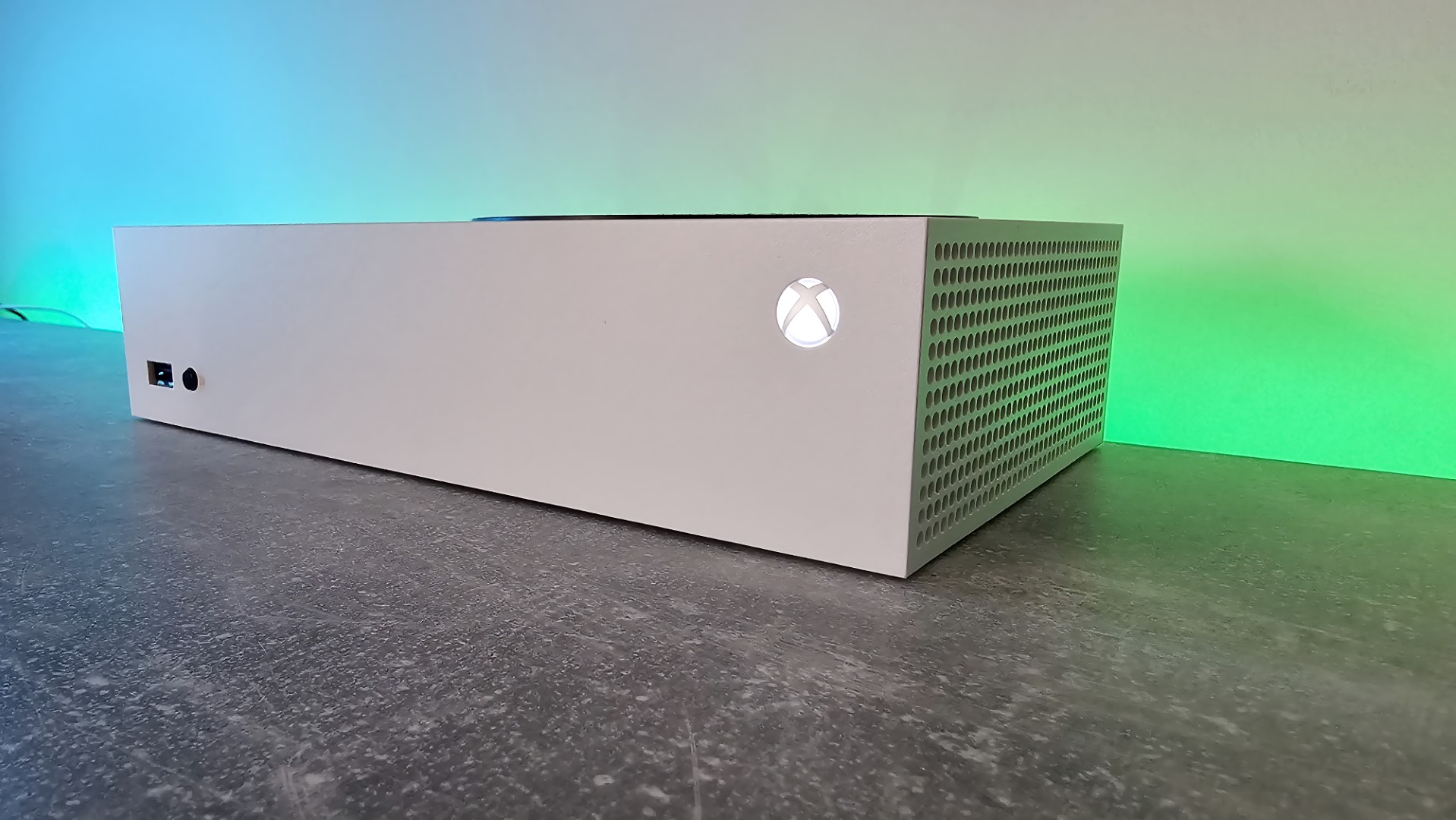
Microsoft's Xbox Series S could remain a practical gaming console until 2028, with AMD's upcoming FSR 4.1 technology expected to improve image quality and performance across supported Xbox games.
Microsoft and AMD recently confirmed plans to bring FidelityFX Super Resolution 4.1 to Xbox Series X, Xbox Series S, supported gaming handhelds, and additional AMD hardware.
The announcement comes as reports suggest Microsoft's next generation Xbox console, Project Helix, may not launch until 2028. If accurate, the current Xbox generation would remain in service for approximately eight years after its November 2020 debut.
For Xbox Series S owners, improved upscaling could help the less powerful console handle increasingly demanding games without requiring a hardware upgrade.
However, the technology will not automatically improve every game. Developers must implement FSR 4.1, and its performance benefits will depend on the title and available hardware resources.
AMD FSR 4.1 Could Help Xbox Series S Run Demanding Games
The Xbox Series S was introduced as a more affordable alternative to the Xbox Series X, offering access to the same generation of games with lower graphics performance.
Its hardware limitations have required developers to make compromises involving rendering resolution, image quality, and frame rates.
FSR 4.1 could help reduce some of those compromises.
The technology uses machine learning to reconstruct higher resolution images from frames rendered at lower resolutions.
By reducing the number of pixels the GPU needs to render, developers can potentially improve performance while maintaining acceptable image quality.
This could be especially useful for Xbox Series S, where rendering demanding games at higher resolutions can place considerable pressure on the GPU.
Improved image reconstruction may allow developers to use lower internal resolutions without the same level of visual degradation associated with older upscaling methods.
However, the results will depend on individual implementations.
FSR 4.1 cannot remove the console's limitations involving processor performance, memory capacity, or memory bandwidth.
Xbox FSR 4.1 Support Could Expand Across Multiple Devices
Microsoft and AMD are working to bring the technology to several hardware categories rather than limiting it to a single console.
The announcement includes Xbox consoles, supported Ryzen gaming handhelds, Ryzen APUs, and older Radeon graphics cards.
Here is how the upcoming rollout is expected to affect different devices.
| Device | FSR 4.1 support | Expected benefit |
|---|---|---|
| Xbox Series S | Confirmed | Improved upscaling and potential FPS gains |
| Xbox Series X | Confirmed | Better image quality and rendering efficiency |
| Xbox Ally handhelds | Planned for supported models | Improved portable gaming performance |
| AMD Ryzen APUs | Planned expansion | More efficient graphics rendering |
| Radeon RX 6000 series | Planned support | Access to newer AI upscaling |
| Project Helix | Future FSR Diamond technology | Next generation graphics improvements |
Although support is expanding, the actual implementation may differ between devices.
For example, Xbox Series S uses less powerful graphics hardware than Xbox Series X, meaning the two consoles may not achieve identical results.
AMD has also indicated that different GPU architectures can require different methods of running the technology.
Xbox Series S May Receive Smaller FPS Gains Than Series X
One important limitation involves the way FSR 4.1 operates on older AMD graphics hardware.
Unlike newer processors with more advanced AI acceleration capabilities, Xbox Series S relies on an older GPU architecture.
The console is expected to use INT8 shader operations for the new upscaling technology.
This approach can introduce additional processing overhead compared with implementations running on newer hardware.
As a result, Series S may experience smaller performance improvements than Series X in some situations.
The exact differences have not yet been established through publicly available benchmarks.
FSR 4.1 may still improve visual quality even when the increase in frame rate is relatively modest.
For example, a developer could potentially maintain a similar performance target while using a lower internal rendering resolution and improved image reconstruction.
This would allow graphics resources to be allocated more efficiently.
However, players should not expect the technology to transform Xbox Series S into a console with performance equivalent to Series X.
The hardware differences between the two systems will remain.
First Xbox Games With FSR 4.1 Could Arrive in Late 2026
Although Microsoft and AMD have confirmed the technology, its availability across individual Xbox games remains uncertain.
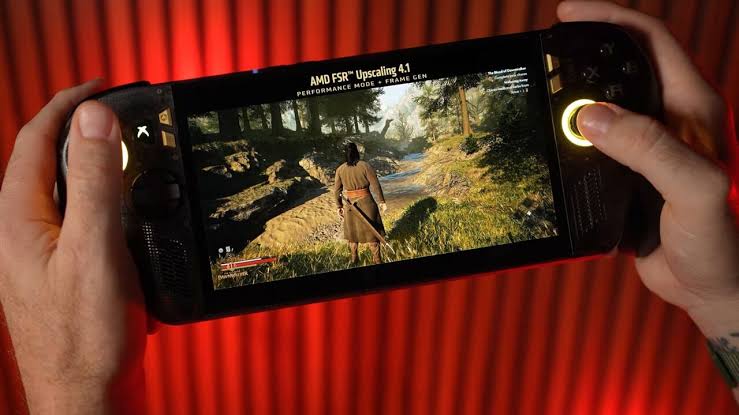
According to emerging reports, developers could gain access to FSR 4.1 within the next couple of weeks.
A small selection of Xbox games may receive support before the end of the 2026 holiday season.
More games are expected to adopt the technology throughout 2027 and potentially beyond.
However, Microsoft has not confirmed a complete list of supported titles or a detailed release schedule.
The rollout is expected to depend heavily on individual developers.
Existing games may require updates to integrate FSR 4.1, while future releases could potentially include support during development.
Here is the reported rollout outlook.
| Period | Expected development |
|---|---|
| Late October to November 2026 | Developer access reportedly expanding |
| Holiday 2026 | A small number of supported Xbox games expected |
| 2027 | Broader adoption across additional titles |
| 2028 | Possible arrival of next generation Xbox hardware |
These dates reflect current expectations rather than guaranteed delivery schedules.
The effectiveness of FSR 4.1 will become clearer once supported games are tested on retail Xbox hardware.
Project Helix Reportedly Delayed Until 2028
The announcement is especially relevant because Microsoft's next generation Xbox hardware is reportedly targeting 2028.
Project Helix is expected to represent a significant advancement over the current Xbox Series X and Series S consoles.
However, Microsoft has not officially confirmed the reported 2028 release date.
If the timeline proves accurate, Xbox Series S owners could have approximately two more years before the next generation arrives.
That creates additional pressure on developers to continue supporting the console as games become more technically demanding.
FSR 4.1 could provide a useful tool for maintaining acceptable performance during that period.
The technology may also help developers manage the differences between Xbox Series X, Series S, and compatible handheld devices.
A shared upscaling system could simplify some aspects of developing games for multiple hardware configurations.
However, supporting the same technology across devices does not eliminate the need for platform specific optimization.
Microsoft Is Preparing FSR Diamond for Future Xbox Hardware
Microsoft's partnership with AMD extends beyond the FSR 4.1 update.
The companies have also confirmed plans to use FSR Diamond with Project Helix.
FSR Diamond is being developed as a future graphics technology intended to support Microsoft's next generation gaming hardware.
Detailed technical specifications have not yet been announced.
However, the strategy suggests that AI assisted rendering will become increasingly important across the Xbox ecosystem.
Microsoft appears interested in establishing technologies that can support consoles, gaming handhelds, and Windows PCs.
Such an approach could benefit developers by providing related graphics features across different platforms.
It may also help Microsoft maintain compatibility and performance expectations as newer hardware enters the market.
For current Xbox owners, FSR 4.1 represents an earlier stage of that strategy.
Xbox Series S Owners Will Still Need Developers to Adopt FSR 4.1
The biggest challenge facing the update is developer adoption.
Even if FSR 4.1 becomes available through Xbox development tools, it will not automatically improve the entire game library.
Developers will need to integrate and test the technology before releasing compatible updates.
Some games may benefit considerably, particularly those limited by GPU rendering performance.
Others may experience smaller improvements because of CPU limitations, memory constraints, or engine related bottlenecks.
There is also no guarantee that older games will receive updates.
Developers may prioritize upcoming releases rather than revisiting titles that are no longer receiving regular support.
Nevertheless, wider adoption could make Xbox Series S more capable of handling demanding games during the remaining years of the current console generation.
With gaming hardware prices continuing to rise, improvements delivered through software may be particularly valuable for customers who do not want to purchase new equipment.
FSR 4.1 will not eliminate the Xbox Series S hardware limitations, but it could help developers achieve better results with the console's existing resources.
If enough games adopt the technology and Project Helix arrives in 2028 as reported, Xbox Series S could remain a viable option for budget console gaming throughout the remainder of the current generation.

Discussion (0)
Be the first to comment.