



Microsoft reportedly has no plans to stop releasing Xbox games on Steam, despite earlier claims that the company could eventually move away from Valve’s storefront.
The revised information suggests Xbox will continue supporting Steam while investing more heavily in the Xbox PC app, Battle.net, Play Anywhere, backward compatibility, and connections with third party launchers.
The strategy appears to focus on building a broader Microsoft gaming ecosystem rather than forcing PC players into one store. Steam would remain an important sales channel, while Xbox’s own services would offer stronger cross platform features and account integration.
The report remains unofficial, so Microsoft’s final plans may differ. However, the new details present a more practical strategy than abandoning the largest PC gaming storefront.
Microsoft is not expected to remove its games from Steam
Earlier speculation suggested Microsoft could stop releasing its PC games on Steam as part of a major Xbox strategy change.
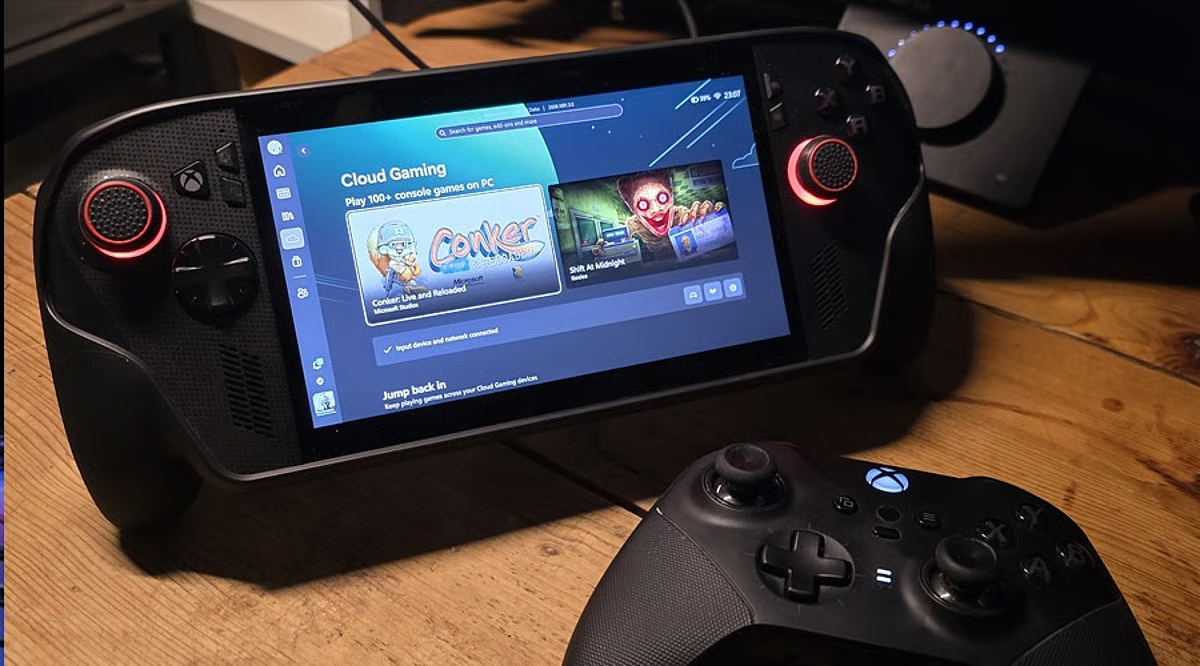
That claim has now been reconsidered after additional checks with sources. The latest information indicates that Xbox does not intend to leave Steam.
This approach would allow Microsoft to keep reaching Valve’s large audience while developing its own platforms in parallel.
| PC platform or feature | Reported direction |
|---|---|
| Steam | Xbox games expected to remain available |
| Xbox PC app | Receiving continued investment |
| Battle.net | May open to more third party publishers |
| Play Anywhere | Expected to expand |
| PC backward compatibility | Reportedly under development |
| Ubisoft Connect integration | Deeper support planned |
| EA app integration | Deeper support planned |
| Game Pass | Remains central to Microsoft’s ecosystem |
Leaving Steam would carry considerable risk. Microsoft would lose access to many PC players who prefer buying and managing their games through Valve’s store.
Continuing to support Steam allows Xbox to earn direct game sales while giving players a choice of storefront.
Battle.net could open to more publishers
Battle.net has traditionally focused on Blizzard games, although its role has expanded since Microsoft acquired Activision Blizzard.
The launcher now carries some Activision releases and selected Xbox published games. Reported examples include Avowed, The Outer Worlds 2, and DOOM: The Dark Ages.
Microsoft is now said to be considering opening Battle.net to more third party developers and publishers.
| Battle.net stage | Type of content |
|---|---|
| Original role | Blizzard games |
| Later expansion | Activision titles such as Call of Duty |
| Microsoft era | Selected Xbox published releases |
| Reported future | More third party games |
Opening Battle.net could turn it into a broader competitor to Steam, the Epic Games Store, and other PC platforms.
Microsoft would need to offer attractive revenue terms, useful publishing tools, strong discovery, and a large enough audience to convince external companies to participate.
The report does not confirm when third party publishing could begin or which companies are involved.
Xbox is investing in a connected PC library
The Xbox PC app is expected to become more important to Microsoft’s gaming plans.
Rather than functioning only as a Game Pass launcher, it could develop into a central place for accessing games across multiple stores and services.
Deeper links with Ubisoft Connect and the EA app may allow players to view or launch more of their libraries from one interface.
| Possible Xbox app improvement | Player benefit |
|---|---|
| Launcher integration | Fewer separate apps to manage manually |
| Combined library view | Easier access to owned games |
| Play Anywhere support | Shared purchases across Xbox and PC |
| Cross platform saves | Continue progress on another device |
| Game Pass access | Subscription library in the same app |
| Backward compatibility | Access to more older Xbox games |
The success of this approach will depend on how complete the integrations are.
Simply opening another launcher from inside the Xbox app would offer limited value. A more useful system would combine libraries, installations, achievements, cloud saves, and account management with fewer interruptions.
Positron may convert physical discs into digital licences
Microsoft is also reportedly preparing a program known internally as Positron.
The system is expected to let players convert eligible physical game discs into digital licences. A public announcement may take place later in August 2026.
The exact process remains unknown.
| Unanswered Positron question | Why it matters |
|---|---|
| Which games qualify | Older or third party titles may be excluded |
| Whether the disc is surrendered | Could affect resale and ownership |
| Conversion cost | May be free or require a fee |
| Supported regions | Licensing rules differ by market |
| Console requirements | May need specific Xbox hardware |
| Licence permanence | Determines long term access |
A disc conversion program could help players move physical collections into Microsoft’s digital ecosystem.
It may also support future Xbox hardware that includes optional drives or places a greater emphasis on digital libraries.
Microsoft will need to explain how it prevents one disc from being converted repeatedly while protecting legitimate ownership.
Play Anywhere remains an important part of the plan
Xbox Play Anywhere allows one digital purchase to work across supported Xbox consoles and Windows PCs.
The feature can also include shared saves and achievements, making it easier to move between devices.
Microsoft reportedly plans to increase its investment in this program. Wider adoption could make the Xbox store more appealing even while games remain available on Steam.
| Purchase option | Likely advantage |
|---|---|
| Steam version | Steam community, library, and platform features |
| Xbox store version | Play Anywhere and Xbox integration |
| Game Pass access | Subscription based play |
| Battle.net version | Activision Blizzard ecosystem features |
Microsoft does not need to remove games from Steam to encourage purchases through its own store. It can instead offer additional benefits through Play Anywhere, subscriptions, and cross device ownership.
That creates competition through features rather than exclusivity.
Backward compatibility may expand to PC
The report also mentions continued work on backward compatibility for PC.
Microsoft has maintained a strong backward compatibility program on Xbox consoles, allowing selected games from earlier Xbox generations to run on modern systems.
Bringing part of that catalogue to PC could increase the value of the Xbox app and Microsoft accounts.
Important details remain unclear, including whether players would need to buy older games again and how original ownership would be verified.
Technical challenges could also limit the number of supported titles. Older console games may require emulation, licensing approval, online service changes, and compatibility testing.
Steam remains necessary for Microsoft’s wider hardware plans
Microsoft is reportedly developing future Xbox hardware around a more flexible PC style environment.
One project, reportedly known as Helix, is expected to support PC games and storefronts such as Steam. If that direction is accurate, maintaining a strong relationship with Valve would be commercially useful.
Steam support could make future Xbox devices more attractive by giving players access to existing PC libraries.
| Strategic goal | Why Steam helps |
|---|---|
| Reach more PC players | Steam has a large established audience |
| Sell first party games | Generates revenue beyond Xbox hardware |
| Support future devices | Existing Steam libraries add value |
| Improve cross platform access | Players can choose where they buy |
| Reduce platform barriers | Xbox becomes less tied to one store |
Removing Xbox games from Steam while designing hardware that runs Steam titles would create an inconsistent strategy.
The revised report therefore fits more naturally with Microsoft’s current movement toward broader access across console, PC, handheld devices, and cloud services.
Xbox appears to be choosing expansion over exclusivity
Microsoft’s reported plan is not to replace Steam immediately. It is to strengthen the services surrounding Xbox games while continuing to sell through Valve’s platform.
That means Steam can remain a major storefront, Battle.net can grow beyond its traditional role, and the Xbox app can become a more connected library and subscription hub.
Positron, Play Anywhere, launcher integration, and PC backward compatibility could all support the same goal. Microsoft wants more purchases, saves, accounts, and libraries to remain connected to Xbox even when players use different hardware.
The final details have not been officially announced, and some reported programs may change before release. Still, the updated picture is clear: Xbox is unlikely to abandon Steam, but it wants its own PC ecosystem to offer stronger reasons for players to stay connected to Microsoft.



Discussion (0)
Be the first to comment.