




CD Projekt Red has published a full set of PC system requirements for The Witcher 3: Wild Hunt Remastered, and one row stands apart. The Path Tracing tier is the only configuration in the chart that names a 3D V-Cache processor.
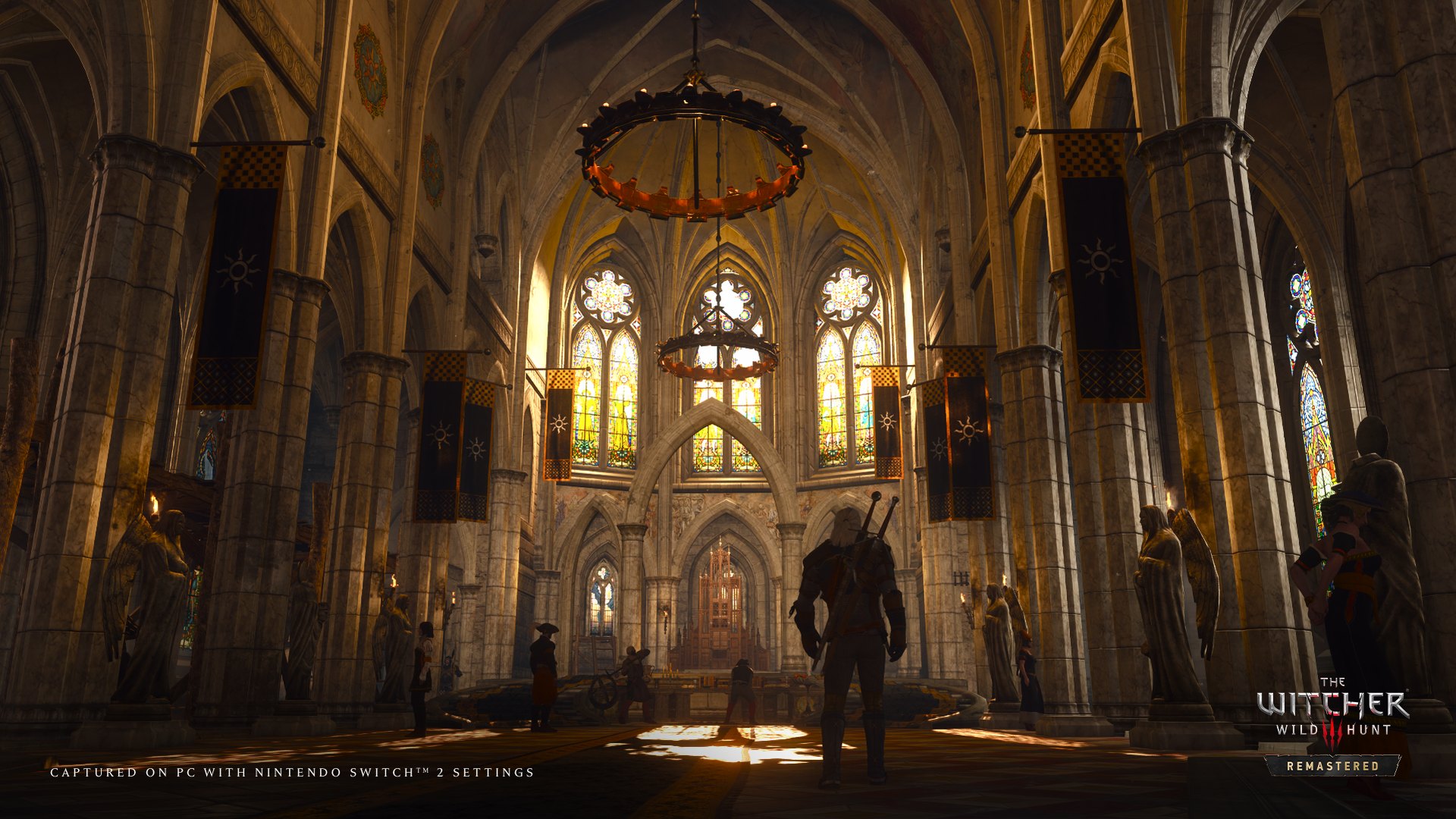
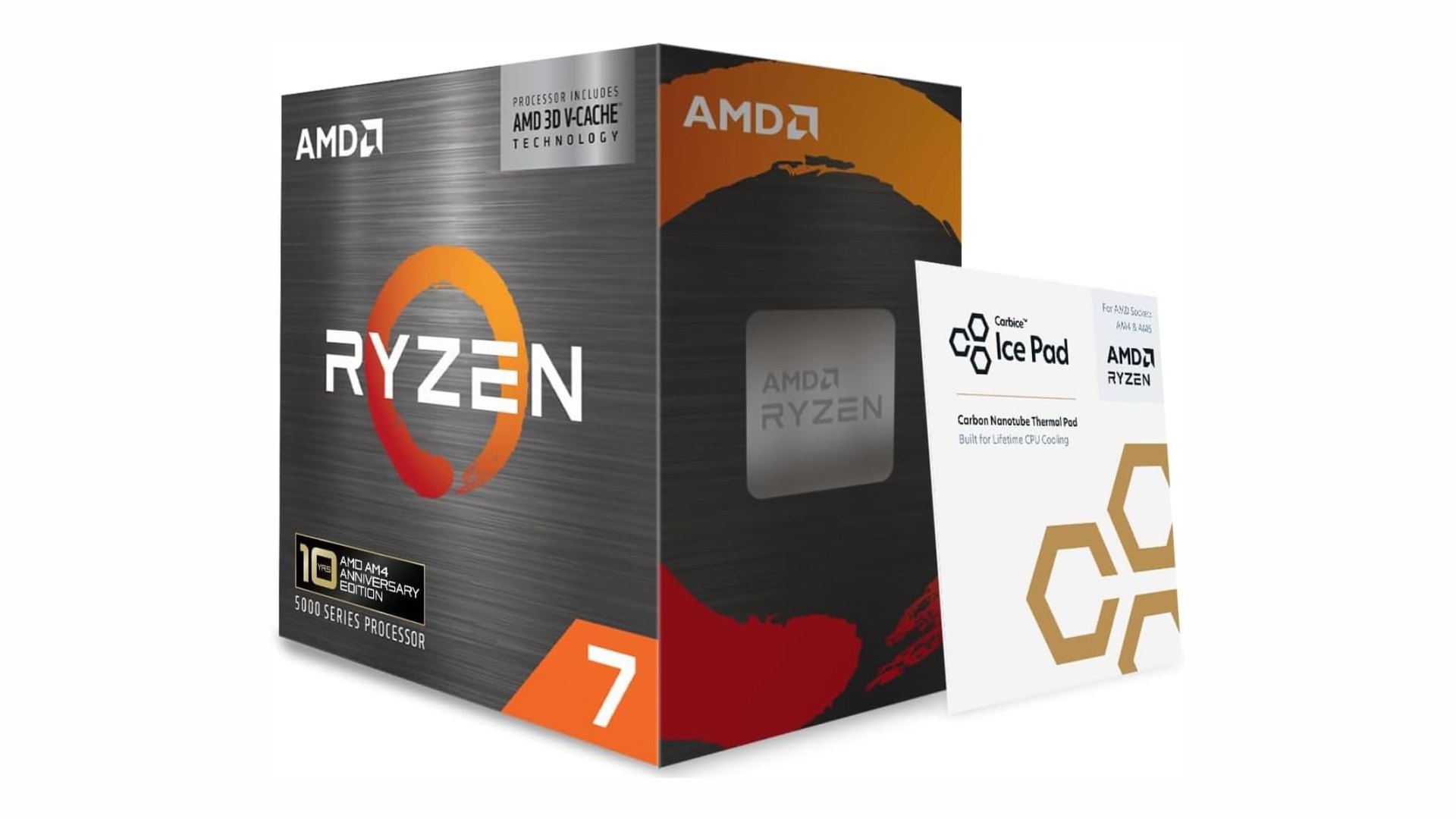
That part is the Ryzen 7 9800X3D. Every other AMD entry in the table, including the tier directly below it, is a standard Ryzen chip.
The path tracing configuration runs the RT: Ultra preset at 2160p with DLSS. CD Projekt Red lists the target as 60 FPS with Frame Generation, on a GeForce RTX 5080 with 16GB of VRAM and 24GB of system memory.
The studio does not explain the choice. It also lists no AMD or Intel graphics card for path tracing at all, marking both of those rows "Not Applicable".
What CD Projekt Red published at each ray tracing tier
The updated requirements article expands a minimum spec the studio announced in May. "We're expanding them to include Recommended, Ultra, RT Minimum, RT Recommended, and Path Tracing configurations," CD Projekt Red says.
The frame rate figures are the studio's own. "The expected FPS targets in the table above are based on our QA tests," the article says.
| Setting | RT Minimum | RT Recommended | Path Tracing |
|---|---|---|---|
| In-game preset | RT | RT: Ultra | RT: Ultra |
| Resolution | 1080p (DLSS/FSR/XeSS) | 1440p (DLSS/FSR) | 2160p (DLSS) |
| Expected FPS | 30 | 60 | 60 with Frame Generation |
| CPU Intel | Core i7 11700K | Core i7 13700K | Core i9 13900K |
| CPU AMD | Ryzen 7 5800X | Ryzen 7 7700X | Ryzen 7 9800X3D |
| GPU Nvidia | RTX 2060 Super | RTX 4080 | RTX 5080 |
| GPU AMD | Radeon RX 6600 XT | Radeon RX 9070 XT | Not Applicable |
| VRAM | 8 GB | 12 GB | 16 GB |
| RAM | 16 GB | 24 GB | 24 GB |
Upscaling is switched off in the presets that do not list it. CD Projekt Red says the ray traced and path traced rows were measured with DLSS, FSR or XeSS set to Auto, and that the path tracing row also used Frame Generation.
The jump between the last two columns is the interesting part. The AMD entry moves from a Ryzen 7 7700X to the 9800X3D, while the Intel entry moves from a Core i7 13700K to a Core i9 13900K.
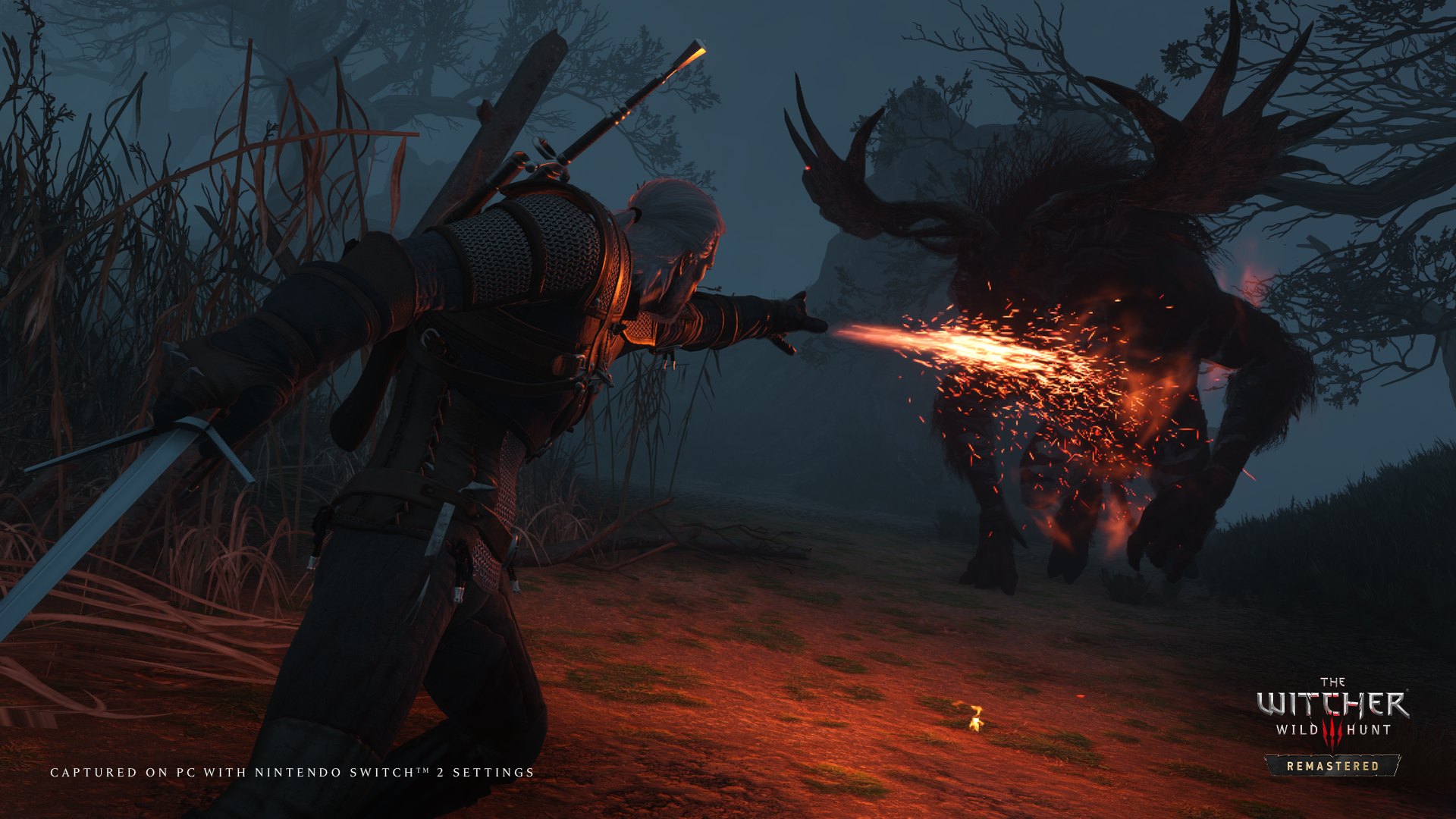
Why path tracing asks more of the processor
Nvidia describes path tracing as a technique that simulates "the true physics of light, which uses ray tracing as one component of a larger light simulation system". Most of that simulation runs on the graphics card.
The structure those rays are traced against does not come for free. A bounding volume hierarchy, or BVH, has to be built and kept current as the scene moves.
Nvidia's developer guidance is blunt about where some of that lands. "Generating AS building commands can include a considerable amount of CPU-side work, like the culling of objects," the company writes, and it advises moving the job to worker threads.
AS there means acceleration structure, the BVH itself. Nvidia also says to "rebuild BLASes after large deformations", and warns that "many rebuilds on a single frame can lead to stuttering".
The size of those structures is an active problem across the industry. Digital Citizen has covered an AMD technique that cuts BVH memory from 80GB to 1.7GB and Nvidia's RTX Mega Geometry 2.0, which streams ray tracing geometry into VRAM as it is needed.
What AMD says about 3D V-Cache
AMD sells 3D V-Cache on latency rather than clock speed. "The 64MB cache memory has been relocated below the processor," the company said when it introduced the 9800X3D, which it says helps keep the cores cooler and the clocks high.
AMD claims the part delivers "up to an average 8% gaming performance improvement" over the previous generation, and up to an average of 20% over the competition. Those are AMD's own figures, from AMD's own test systems.
In its wider material on the technology, AMD frames the benefit as a better cache hit-to-miss ratio, with larger blocks of data sitting in cache "instead of falling into the main memory". The company has published nothing specific about this game.
That is the honest limit here. The mechanism is documented by the vendors, and the tier jump is documented by CD Projekt Red, but neither is a measurement of path tracing in The Witcher 3.
What has not been published
CD Projekt Red has not stated that path tracing in Remastered is limited by the processor. It has published no frame time breakdown, no CPU scaling data, and no reason for the 9800X3D entry.
Independent testing describing path tracing as unusually hard on the CPU has been reported since launch. Those results are not from CD Projekt Red, AMD or Nvidia.
The Steam listing publishes only the minimum and recommended tiers. Both ask for 60GB on an SSD, and a footnote on the official chart raises that to 95GB on the Epic Games Store.
Storage figures that specific are becoming normal on PC. The same level of detail turned up in the final Gears of War: E-Day requirements.
CD Projekt Red also says Windows 10 is no longer officially supported, and that "an SSD is now required". Remastered arrived on September 29, 2026 as a free upgrade, and the studio says players will be able to revert to version 4.04 if they prefer it.

Discussion (0)
Be the first to comment.