



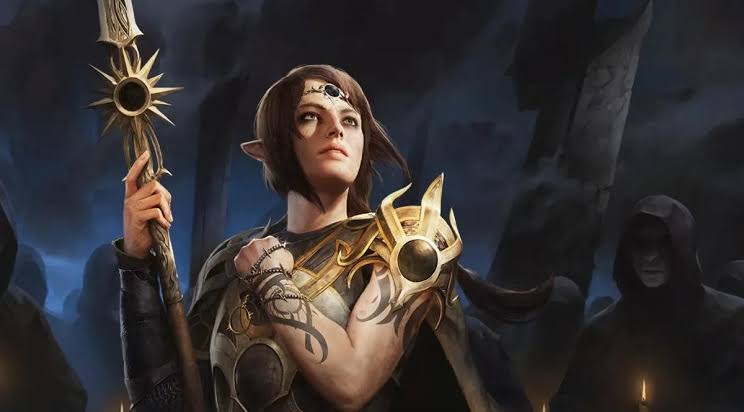
Baldur’s Gate 3 set such a high standard for role-playing games that even experienced developers are reluctant to take on a sequel. James Ohlen, who helped lead development on Baldur’s Gate 2, reportedly declined the chance to work on Baldur’s Gate 4 because competing with Larian Studios’ work would be extremely difficult.
The issue is not only that Baldur’s Gate 3 was successful. It is also the scale of the game, the depth of its systems, the quality of its writing, and the amount of technology Larian built specifically to support it. Any studio following that game would face pressure to match its choices, reactivity, combat, cinematic presentation, and player freedom.
That makes the future of the series uncertain. Hasbro and Wizards of the Coast may eventually choose a new developer, but that team would need to decide whether to imitate Baldur’s Gate 3 or take the franchise in a very different direction.
Baldur’s Gate 3 Created a Very High Expectation for RPGs
Baldur’s Gate 3 became one of the most celebrated role-playing games in recent years because it offered a huge amount of player choice. Conversations could change quests, companions could react to decisions, combat allowed creative solutions, and many story paths could unfold differently depending on how players approached the world.
That kind of game takes years to build. It also requires a large team with experience in narrative design, systems design, motion capture, writing, programming, cinematic production, and testing.
| Challenge for a sequel | Why it matters |
|---|---|
| Player choice | Fans will expect the same level of story freedom |
| Reactive world design | More decisions create more development work |
| Turn-based combat | Systems need to support many possible strategies |
| Cinematic presentation | Dialogue scenes require extensive animation and acting |
| Companion writing | Characters need strong stories and detailed reactions |
| Technical tools | A new studio may need to build or adapt an engine |
A sequel that feels smaller, less reactive, or less polished would likely face immediate comparisons to Baldur’s Gate 3.
Larian’s Engine and Internal Knowledge Are Hard to Replace
Larian Studios did not simply make Baldur’s Gate 3 with a standard set of tools. The studio built a custom engine and development pipeline around the type of RPG it wanted to create.

That includes tools for dialogue branching, quest logic, combat interactions, environmental systems, cinematic scenes, multiplayer support, and large amounts of player choice.
Another studio could potentially license technology or build something similar, but that would still take a major investment. The challenge is not only the engine itself. Larian also has years of experience using its tools, improving them, and designing games around them.
A different developer would need to build its own workflow while also making a sequel that fans expect to be as ambitious as its predecessor.
A New Baldur’s Gate Game May Need a Different Identity
Trying to make Baldur’s Gate 4 as a direct copy of Baldur’s Gate 3 may be the riskiest option. Larian’s style is closely tied to the game’s success, from its humour and companion interactions to its systems-driven combat and freedom of choice.
A new studio could instead take the series in another direction. That may disappoint players who want more of the same, but it could also give the game its own identity.
The Baldur’s Gate series has changed before. Baldur’s Gate 1 and 2 used a different style from Baldur’s Gate 3, yet all three games remain important RPGs for different reasons.
The Series Still Has a Strong Future
There is no confirmed Baldur’s Gate 4 developer or release plan at the moment. However, the franchise remains one of the most valuable names in role-playing games, and it is unlikely to stay inactive forever.
Larian is continuing work on a new Divinity project, while reports suggest that remakes of the first two Baldur’s Gate games may also be in development. That means fans may still see more from the wider Dungeons & Dragons universe before a full sequel to Baldur’s Gate 3 becomes reality.
Whoever takes on Baldur’s Gate 4 will face enormous expectations. The next game will need more than a familiar name. It will need a clear creative vision that gives players a reason to return to the Forgotten Realms.



Discussion (0)
Be the first to comment.