



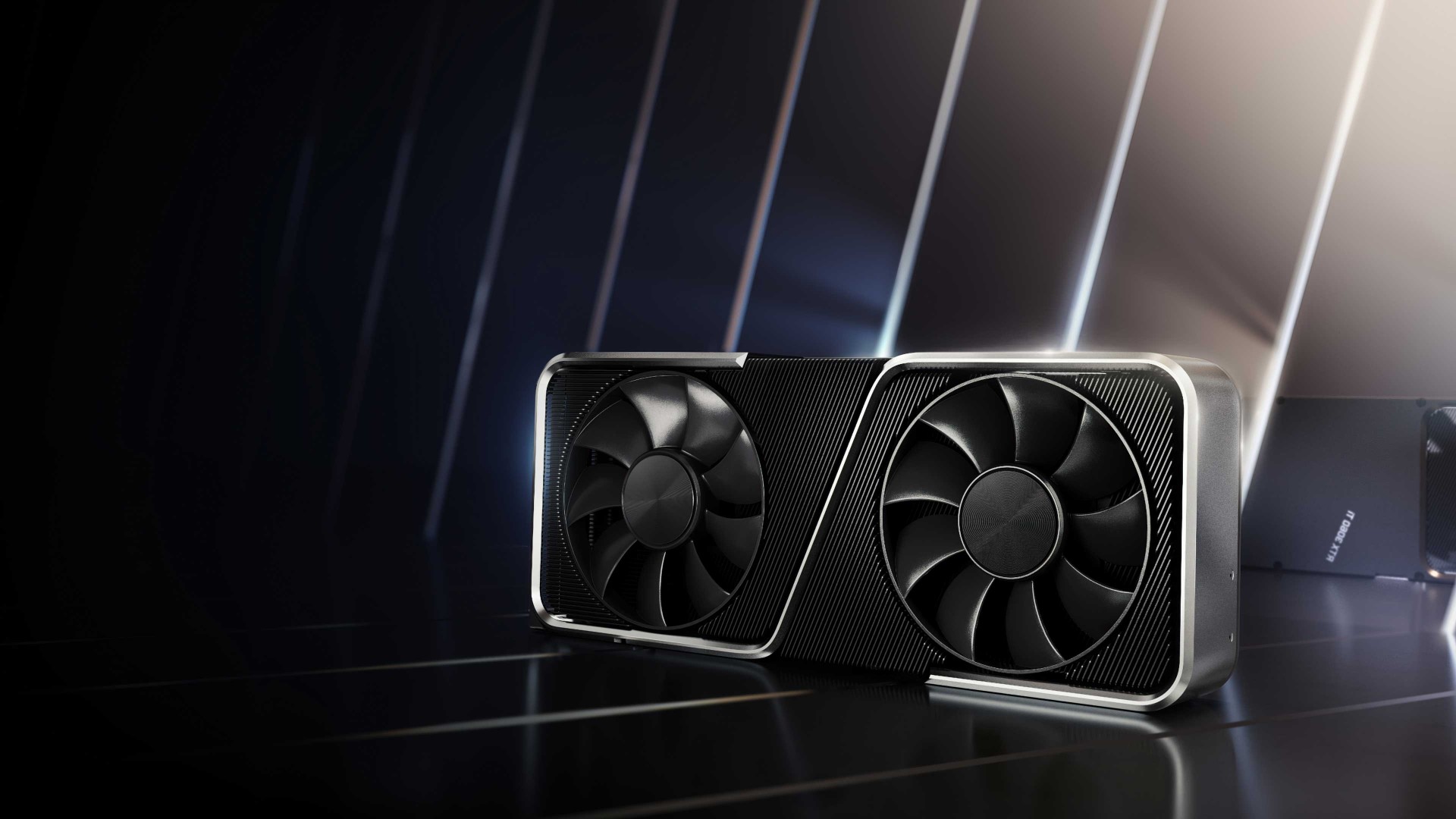
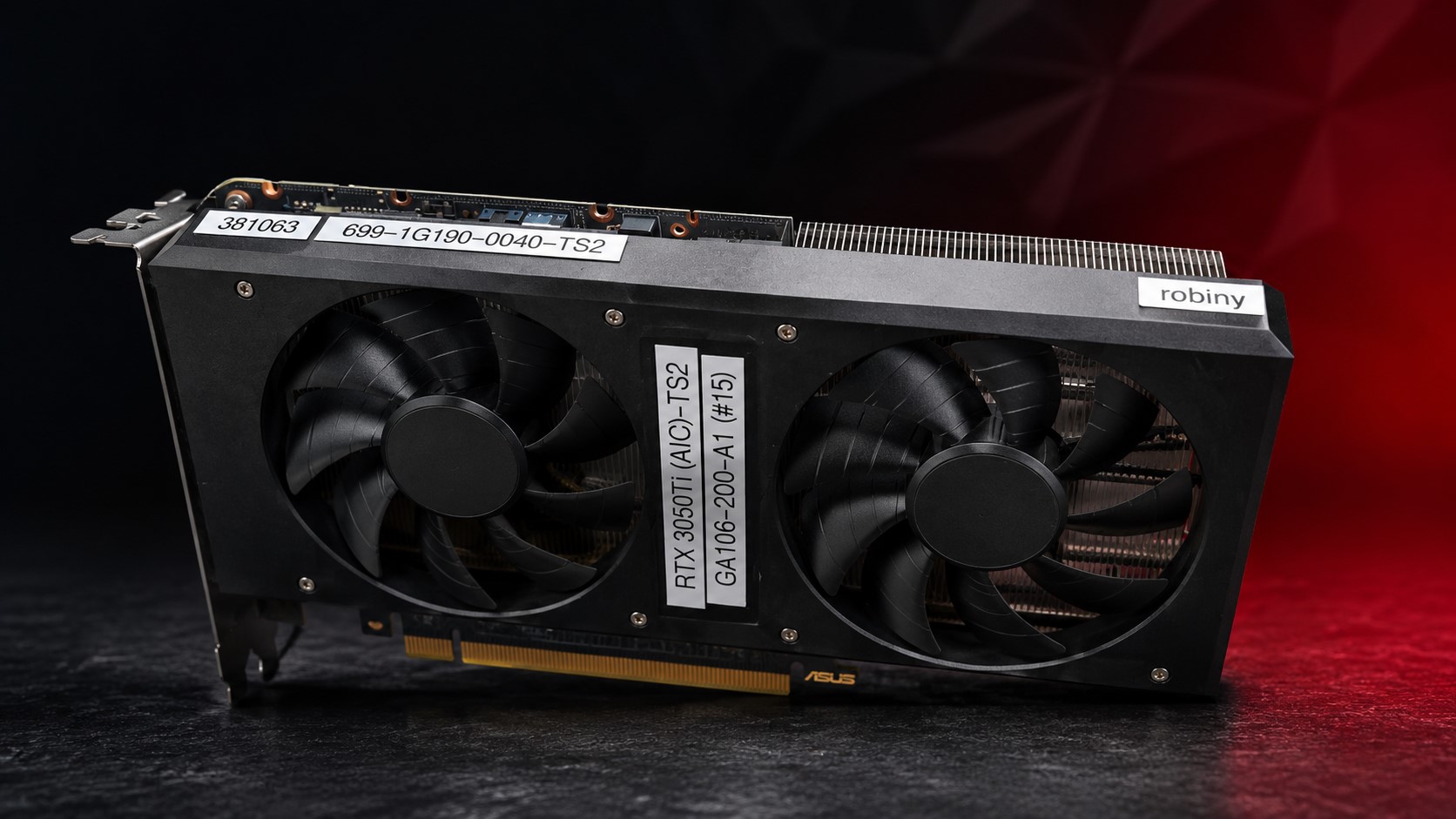
An unreleased GeForce RTX 3050 Ti desktop graphics card has appeared online, giving a rare look at an Ampere generation model that NVIDIA never brought to retail. The card appears to be an engineering sample and uses a GA106 GPU, placing it above the regular RTX 3050 desktop in several key areas.
The sample was shown with GPU Z screenshots and a 3DMark Time Spy result. GPU Z does not identify the card by its retail name and only reports it as an NVIDIA Graphics Device, but the physical stickers on the card identify it as an RTX 3050 Ti sample. That suggests this was a real prototype tied to earlier Ampere desktop planning, even though the final product was cancelled or never publicly launched.
The card uses the GA106 200 A1 GPU and a PG190 SKU 40 board. According to the screenshots, it has 3328 CUDA cores, 48 ROPs, and 104 TMUs. That gives it 30 percent more CUDA cores than the official RTX 3050 8GB desktop card, which launched with 2560 CUDA cores.
The memory setup is also different. This unreleased RTX 3050 Ti sample carries 6GB of GDDR6 memory on a 192 bit bus. GPU Z reports a 1750 MHz memory clock and 336 GB/s of bandwidth. By comparison, the regular RTX 3050 8GB uses a narrower 128 bit bus.
The prototype sits between the RTX 3050 and RTX 3060 in performance
The sample appears to have been designed as a stronger entry level Ampere card, sitting somewhere between the standard RTX 3050 and lower RTX 3060 variants. Its 3DMark Time Spy graphics score is listed at 7787, which puts it above typical RTX 3050 desktop results and close to RTX 3060 8GB results shown in the original comparison.
| Specification | Unreleased RTX 3050 Ti desktop sample |
|---|---|
| GPU | GA106 200 A1 |
| Board | PG190 SKU 40 |
| CUDA cores | 3328 |
| ROPs | 48 |
| TMUs | 104 |
| Memory | 6GB GDDR6 |
| Memory bus | 192 bit |
| Bandwidth | 336 GB/s |
| Base clock | 1410 MHz |
| Boost clock | 1665 MHz |
| Power limit | 120W default and maximum |
| Time Spy graphics score | 7787 |
The clock speeds are listed at 1410 MHz base and 1665 MHz boost. The BIOS page shows a 120W default and maximum power limit, with the minimum set to 100W. That makes it a modest power design by Ampere standards, but still stronger than what many entry level cards usually target.
The card was tested using NVIDIA 516.61 beta drivers from June 2022. That detail helps place the sample within the Ampere era and suggests it was active internally or in partner testing long after the earliest RTX 3050 Ti desktop rumors first appeared.
NVIDIA had plans for more RTX 3050 desktop variants
The desktop RTX 3050 Ti was discussed in early Ampere rumors years ago, especially around GA106 based PG190 configurations. This newly surfaced card seems to partially confirm that those plans existed in hardware form.
NVIDIA eventually released the RTX 3050 desktop in several versions, including 8GB and 6GB models, but it never released a desktop RTX 3050 Ti. The laptop RTX 3050 Ti did exist, which made the missing desktop version more noticeable. The prototype now shows that NVIDIA at least tested a desktop class version with a wider memory bus and more CUDA cores than the standard RTX 3050.
There are several possible reasons why the card never reached stores. NVIDIA may have decided the gap between the RTX 3050 and RTX 3060 was too narrow. The company may also have wanted to simplify the product stack, avoid pricing overlap, or use GA106 silicon for other models. Supply conditions during the Ampere generation were also unusual because of high GPU demand, crypto mining, and shifting market needs.
Whatever the reason, the prototype looks like it could have been a stronger budget gaming card than the RTX 3050 8GB. A 192 bit memory bus and 336 GB/s bandwidth would have helped in bandwidth sensitive games, while the higher CUDA core count would have improved shader performance.
The card is more useful as a look at what NVIDIA skipped
This unreleased RTX 3050 Ti desktop card is unlikely to matter for buyers today, since the GPU market has already moved far beyond Ampere entry level hardware. Its value is historical. It shows how close NVIDIA may have come to launching a more capable low end desktop card during the RTX 30 generation.
The sample also highlights how many graphics card designs never reach retail. GPU companies test different configurations before deciding which products make sense for the market. Some become official models. Others remain engineering samples, partner boards, or internal validation hardware.
For collectors and GPU enthusiasts, this RTX 3050 Ti desktop sample is interesting because it connects old rumors to real hardware. It also shows that NVIDIA had a possible middle option between the RTX 3050 and RTX 3060, but chose not to release it.
In hindsight, a 6GB RTX 3050 Ti desktop card with a GA106 GPU, 3328 CUDA cores, and a 192 bit memory bus could have been a useful budget option. Instead, it now exists as a rare prototype and a reminder that unreleased GPUs can sometimes tell us just as much about product strategy as the cards that actually make it to stores.



Discussion (0)
Be the first to comment.